All posts by nomad4all

Why travel someone asked me. I replied, simply exercising the enthusiasm in me to the see the beyond! I have traveled to a few places - some just round the corner; mostly remote with a dash of hiking and beyond. I would like to share these moments especially the people and culture, scenery and the landscape with everyone. Please enjoy.

Nara – Tōdai-ji

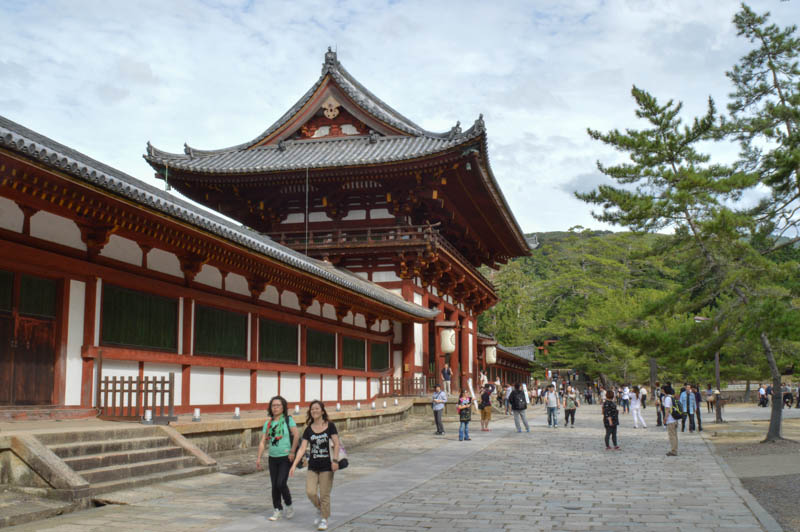
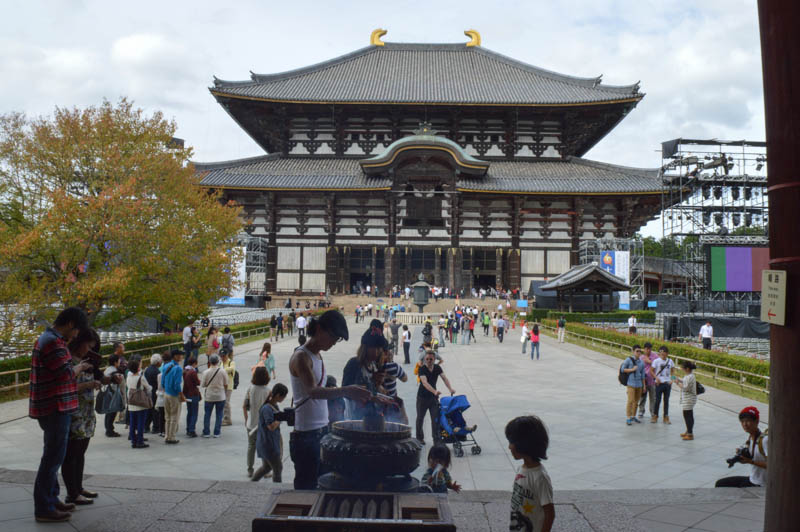
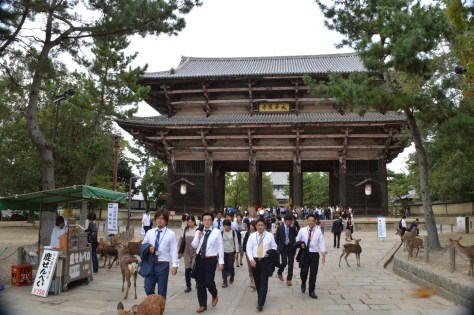
untitled-345We approached one of Japan’s iconic temples, Tōdai-ji, via a serene and vegetated pathway. Tōdai-ji was established in 752 and is now a Kegon-shu sect of Buddhism. The centre of a long vermillion coloured building, Chu-mon, is the main entrance into the temple. However, the west end was used today. This building lay opposite a lake, “Kagami- Ike”. Even from a distant, this “Great Eastern Temple” looked impressive. A wide paved path led towards the entrance of the “Daibutsu-den”, Great Buddha Hall. Measuring 57m long and 50m wide make this building the world’s largest wooden structure. This temple is sometimes called Nara “Daibutsu”, Great Buddha of Nara.

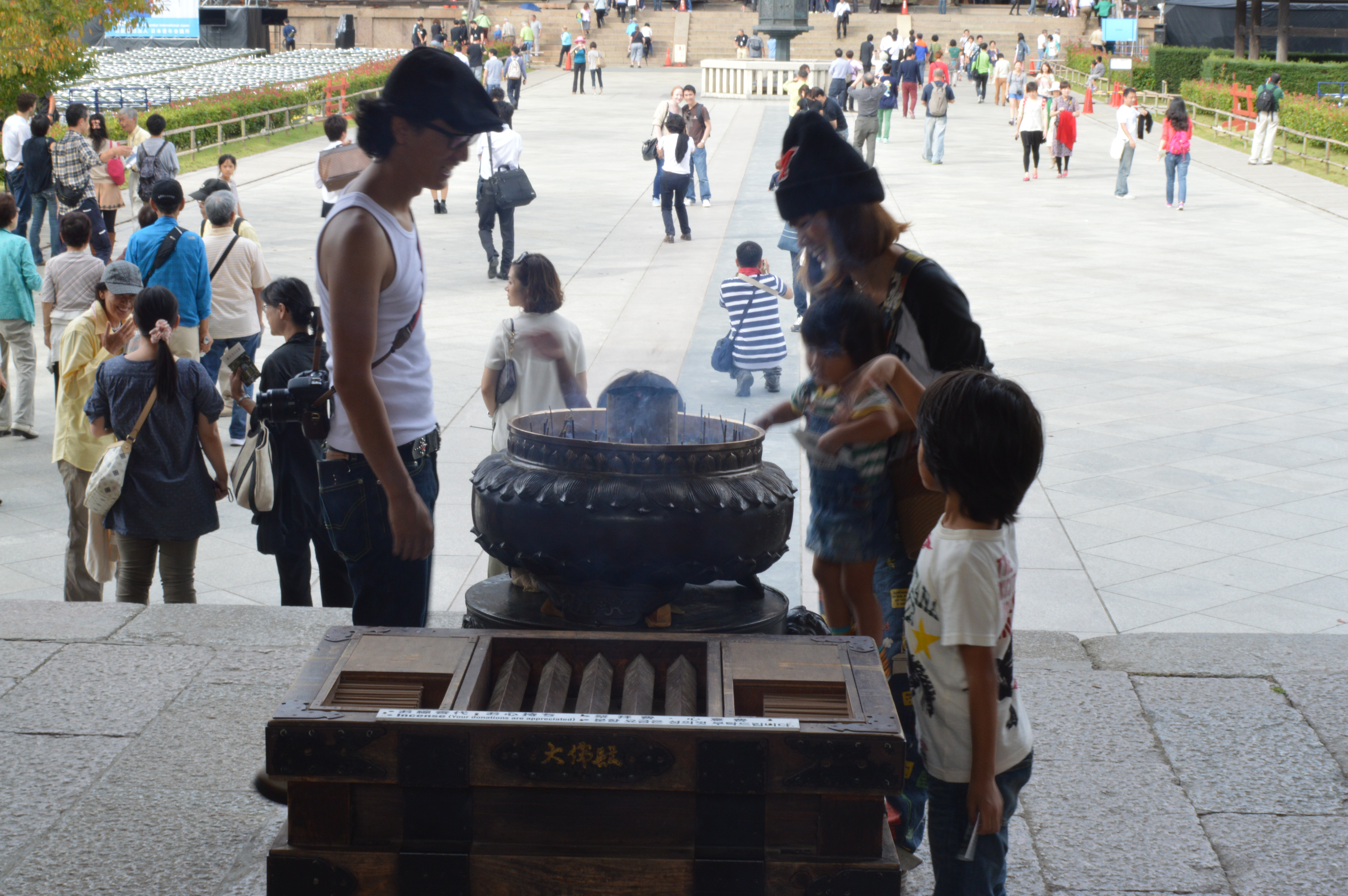
Under the Chu-mon Gate, visitors placed incense into a large bronze container. The smell of the incenses and sight of the grand temple added a sense of being aware and being present in a place of worship. I loved this moment – “being prepared for the yet to come”. We made a slow walk towards the grand “Daibutsu-den”.

untitled-343At its core is a magnificent golden bronze statue of the 15 meters tall Buddha. Worshippers and visitors alike mingled in the dim lit large hall with the air filled with incense. Although built during the Edo Period, these structures, including the Buddha statue, had been rebuilt. Today, although only two- thirds its original size, it is still very impressive and overwhelming.

In one corner, people shook a bamboo canister enthusiastically until a stick emerged with a number on it. This number is checked against a corresponding piece of paper. Their faces said it all. Fortunes are available in English too!

As I walked around this giant statue, I wondered why this wooden building and bronze statue was made the biggest. It did not fit with the Japanese psyche – reverence and worship of nature. The simpler things in life! These structures were intentionally made bigger. Was the motif to be over – powering? A huge human effort and endeavours, and certainly a huge cost must have been incurred in its construction. However, it is a magnificent piece of work.

A passage through a hole in one of the giant cypress pillars ensured partial deliverance from sins. Great effort is summoned by some to squeeze through and much to their delight, having completed the process successfully. I sensed relief. Me, not quite there yet! Towards the exit, queues formed. Temple officials busily offered opportunities for donations. Their novel way was through donating individual grey tiles. Personal words and symbols can be inscribed onto the tiles. I inscribed out our family names. Just before the exit at the Chu-mon gate, I looked at the grey tiles on the monumental structure highlighted by the rather cloudy overcast. Someday, a single tile, somewhere in the Tōdai-ji complex, will carry our family’s names.

DSC_0674I was contended. We passed the lake and reached the Great South Gate, “Nandaimon”. This impressive wooden structure is guarded by two imposing warrior-like statues. Outside the gate, sika deer gathered in numbers as usher’s to Tōdai-ji. More likely that their favourite sika crackers,”shika sanbei” are sold by vendors and fed by enthusiastic visitors. We ended on the main roads and replenished with some ice cream – “macha” ice. It turned out to be just that with no other ingredient. It was too little and too much. This was the only single “dish” that I did not consume completely. Soon, we were back in the din of Nara’s shopping arcades. Today’s excursion had been great, unhurried and quite inspiring. The nostalgia of Nara had truly gripped me.

DSC_0684

Nara

DSC_0085 Nara did not disappoint me. It fulfilled all the ‘want to see things’. There was a sense of nostalgia – a journey through the history books of ‘Old Japan’. The historic temples, immaculate Zen gardens, preserved ancient streets, and above all the cultural identity had been retained. Being a compact city, walking seemed to be the best option of seeing and absorbing this atmospheric city.

Auntitled-354lthough Japan is one of the most developed countries, hanging on to the past seems relevant. The society moved seamlessly between the old and modern. In many places, ancient relics, traditions and historic structures had become museum pieces. However, here in Nara and the wider Japan, it is lived and continues to flourish. The Japanese people had successfully integrated traditions with modernism. To me, this had been a highlight of our journey.
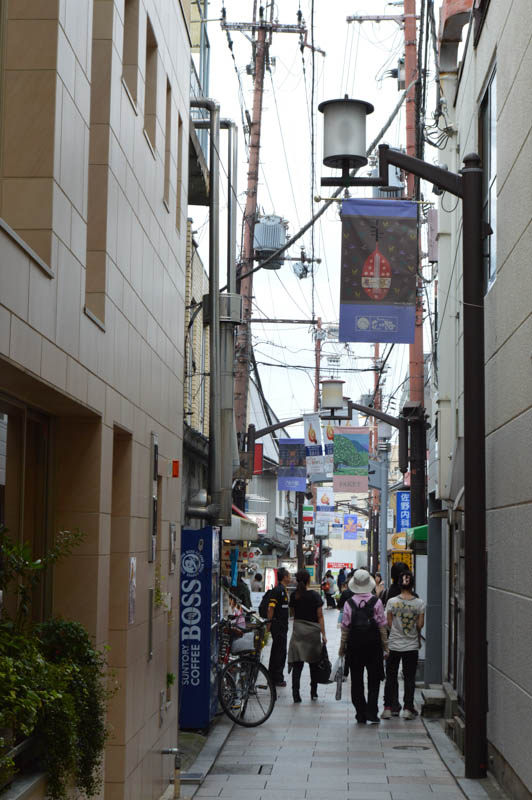
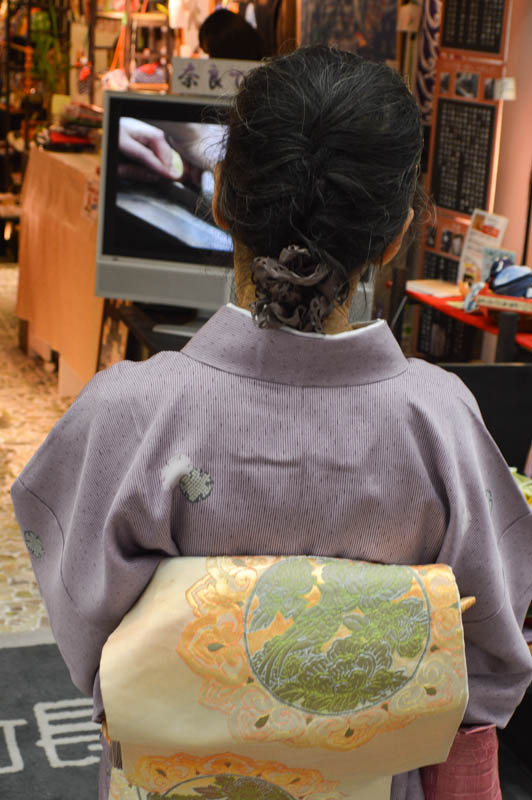
Naramachi is one example. At every corner, a new discovery may be waiting. Artesian working on traditional textiles and materials, artwork or calligraphy, and our favourite, traditional food. I felt privileged to have been here, the first imperial capital of Japan.

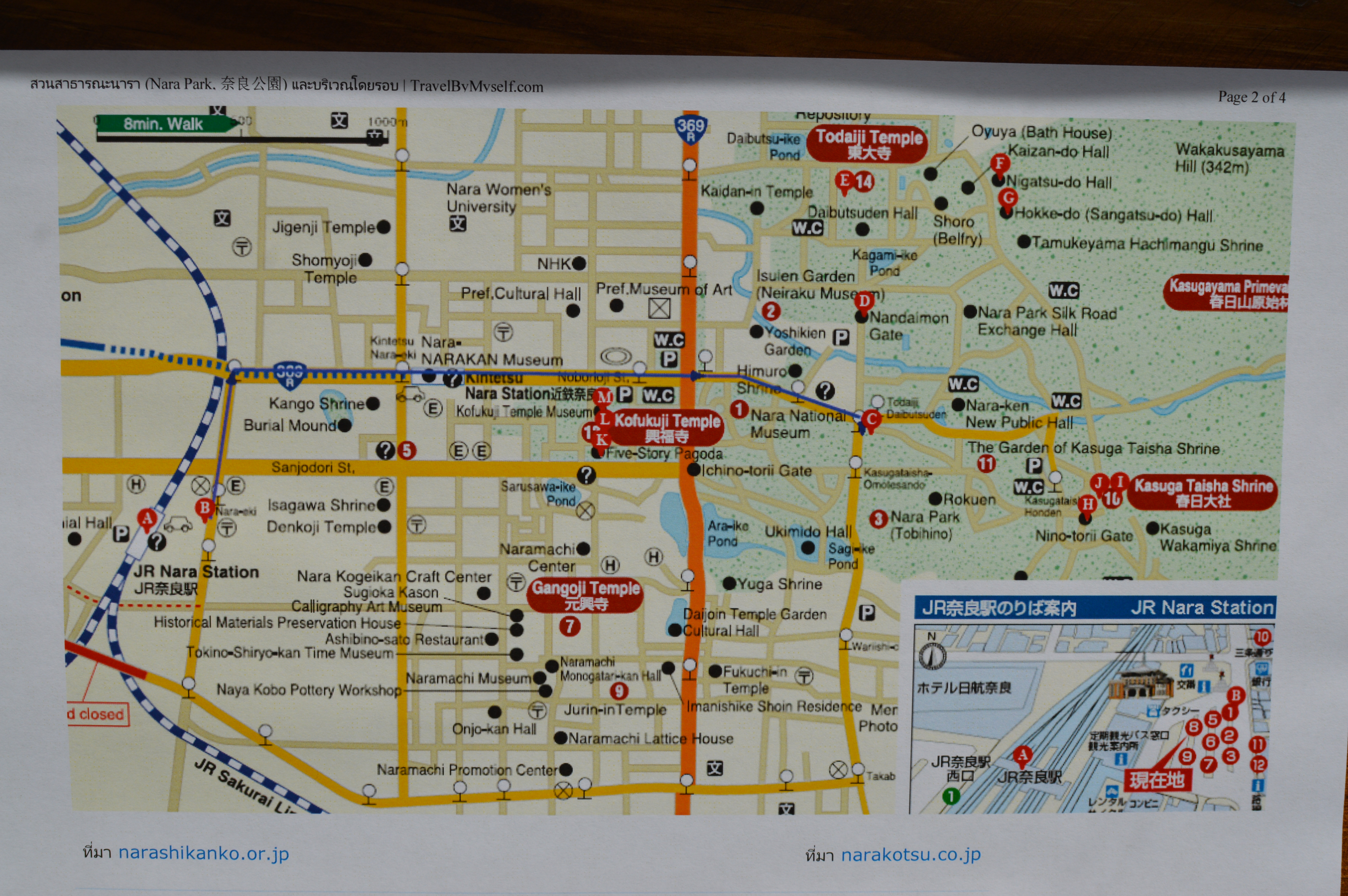
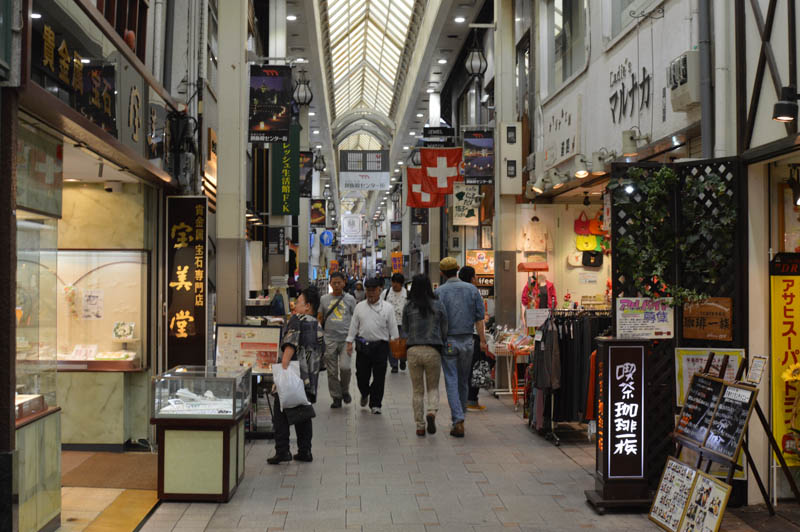
untitled-347Walking around Nara and Naramachi is pleasant and is easily covered just by walking. Three major shopping centres lie adjacent to each other. Higashimuki Shopping Street starting at the Kintetsu Nara Station and ends at Sanjo Dori. The Mochiidono Shopping Street begins from Sanjo Dori and ends at the old town district of Naramachi. Both these pedestrian only shopping centres are covered arcades. The main road of Sanjo Dori Avenue is the other major centre.

untitled-349 untitled-350 untitled-348untitled-351A variety of items that makes a good gift to take home include round fans, “uchiwa”, Nara dolls, “ittobori”, bags and handkerchiefs, arts and crafts, cloths – all made from traditional Nara fabrics. We entered into a kitchen ware shop and obtained some beautiful handcrafted lacquer ware bowls and spoons. A local woman suggested to us the better materials to buy. I also bought a small ceramic with Fujisan on it as a memento. It was busy but relaxed. One common feature all around Japan are the 100Yen Shops.

Beautiful kimonos and traditional cloths were displayed behind glass windows. Between these retail shops, there are numerous restaurants and eateries. It is a delightful place to people watch as well.

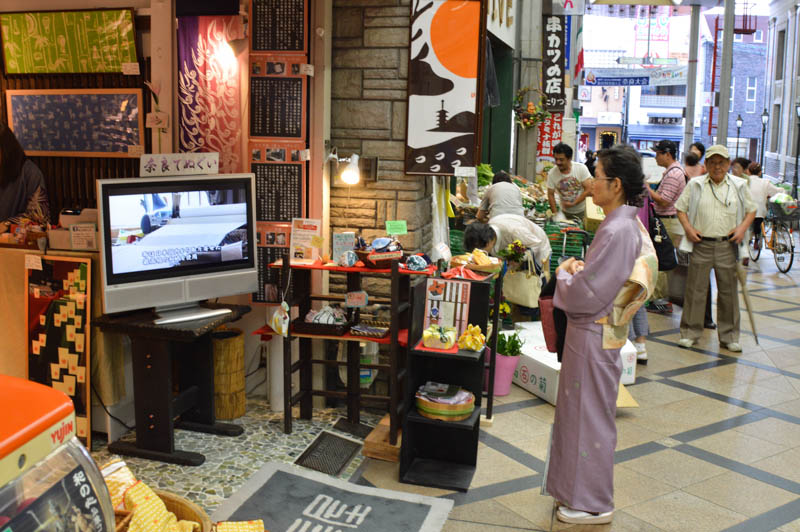
In one of the arcades, three friendly girls dressed up in local traditional dress wished visitors. They are part of the team promoting Nara organised by the local council. I watched an elderly lady dressed in a lovely kimono watching intently a sewing program on the television. The pace here is slow and people smiled often. From these three shopping centres, several narrow alleyways branched off with more places to explore. On one street was an Indian restaurant. There is always something waiting to be discovered, perhaps even spotting the only “maiko” in Nara’s “hanamachi” in Ganri’in cho!

Nara – Sangatsu-dō and Nigatsu- dō temple

Sangatsu-dō Temple

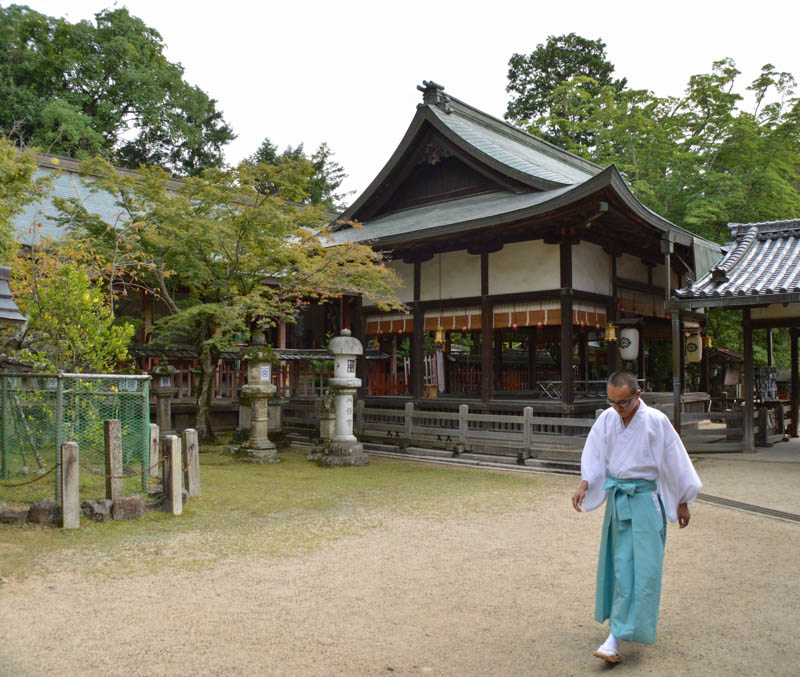
untitled-332After a wonderful meal and with our tummies filled, we continued our walk through a series of steps into another temple. However, the group of temples here now came under one of Japan’s most famous temples, Todai-ji. There were several temples clustered together. A few worshippers had gathered in this spacious temple ground, the Sangatsu- dō. A priest, with his mind pre- occupied, walked past us without any acknowledgment. Sangatsu-dō is the oldest temple in the Todai-ji group of temples. This shrine is sometimes referred as Hokke-do, “Hall of the Third Month”. The architecture of the tile roofed structures was quite impressive.

Nigatsu- dō Temple

untitled-337Next to this cluster of buildings, a steep series of stone steps ascended to the popular Nigatsu- dō temple, “The Hall of the Second Month”. It was founded in 752. Sited on the hillside of Mount Wakakusa, the balcony presented a commanding view of the sprawling city.
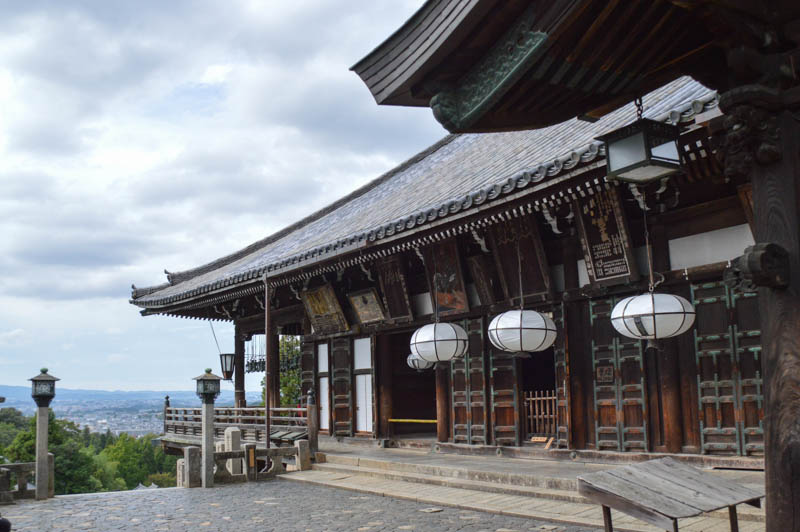
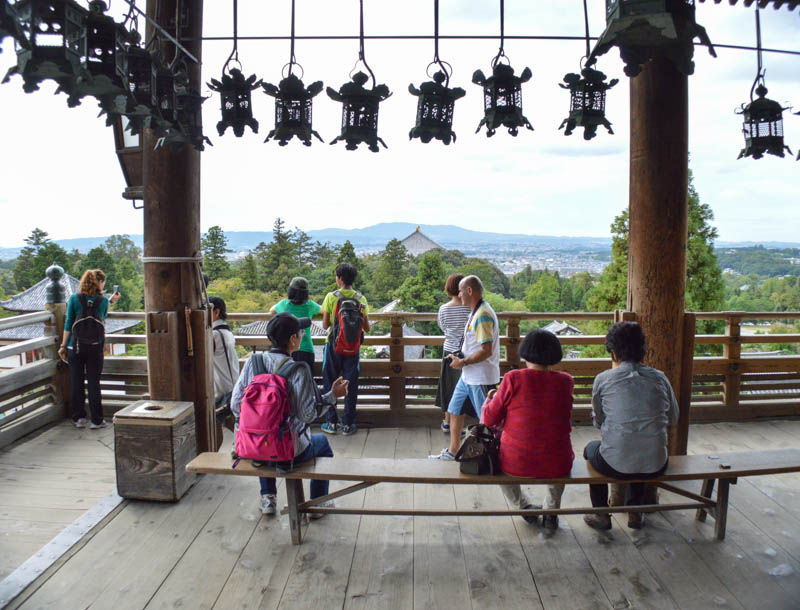
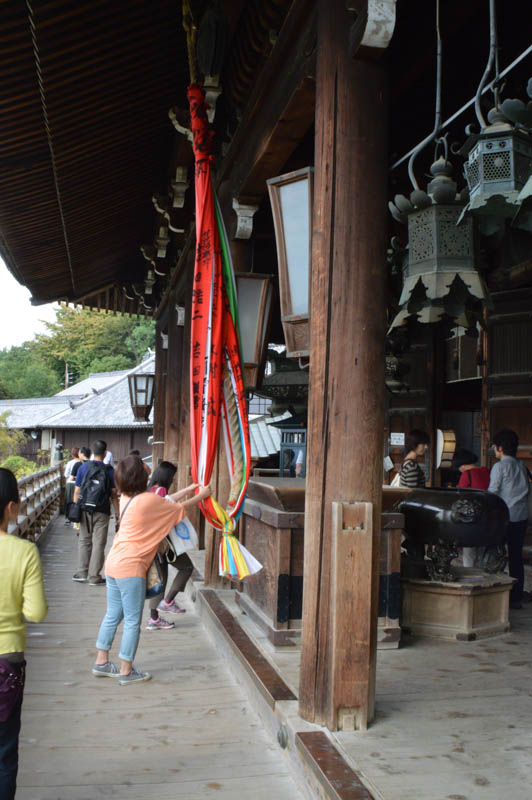
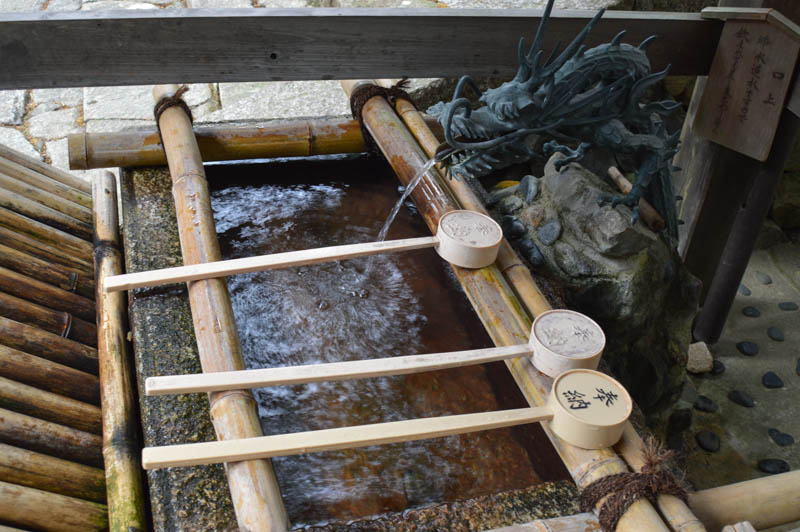
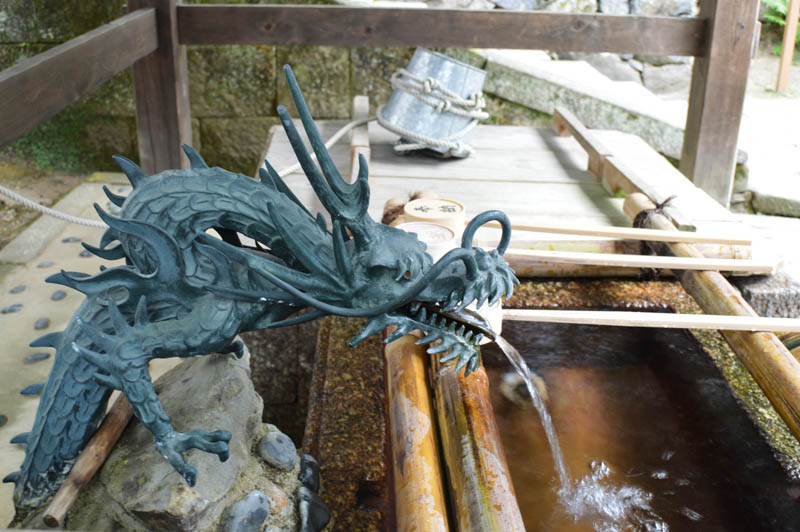
The main hall is over 350 years old and the beautiful architecture reflected old Nara designs. Over-sized oval shaped paper lanterns hung along the courtyard hang from the ceilings. Framed pictures and art hung above the doors. At the end of the spacious cobble stone courtyard, surrounded by tall trees and vegetation, worshipers cleansed their bodies at a dragon water fountain with the bamboo ladles provided.

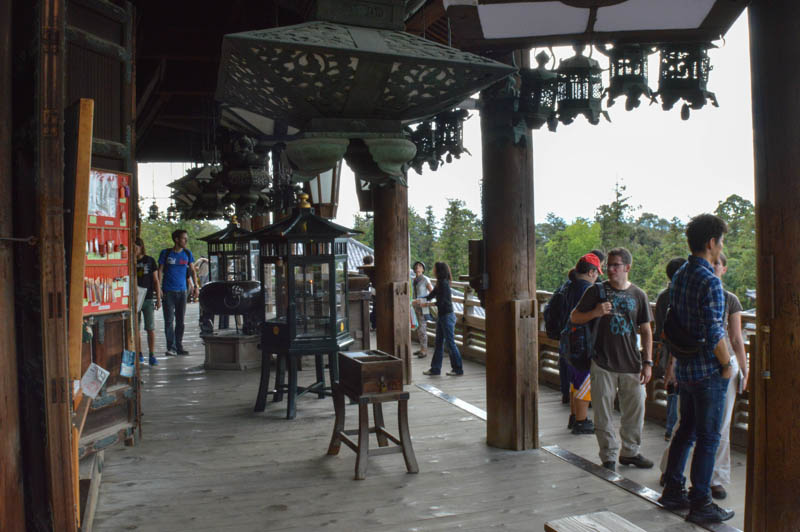
untitled-336 untitled-339 untitled-340 untitled-341Under a row of bronze lantern hung above, the expansive views of Nara, from this elevated position, are visible. Both, the old and new buildings existed side by side in a densely planted city. At a closer proximity, is Todai-ji’s widespread temple complexes incorporated within Nara Park. There was an air of serenity. Everyone on this balcony looked out contemplating their own lives, young and old. Incense fumes filled the still air and worshipers prayed with clasped hands against their chest. They bowed several times in reverence.

Occasionally, a bell was rung using a multi- coloured cloth hanging from the ceiling. Statues of the Buddha were placed inside the rather poorly illuminated hall. Silhouettes of people moved quietly, both with respect and consideration. Tiny flames from lamps flickered in the light breeze.

Around the corner, the space opened up to a small internal courtyard. The floor was paved with granite stones and miniature plants sprouted from a rock garden. More oversized paper lanterns hung along a corridor. Nearby, a tea house was busy as steam from hot tea rose towards the ceiling. It was cozy and atmospheric. The interior was dark with strands of light streaming through a few open windows.

We walked out of the complex by descending a steep covered step. This led us to a picturesque and delightful narrow concrete pathway through local homes.

Nara – Nara Park

untitled-324Vehicles, congested roads, noise and the usual buzz of a city were all absent here. As we continued our walk through the forested area, just the sounds of rustling leaves, the occasional softened chatter, gushing water in a nearby stream, could be heard. It seemed distant from the din of the city nearby.

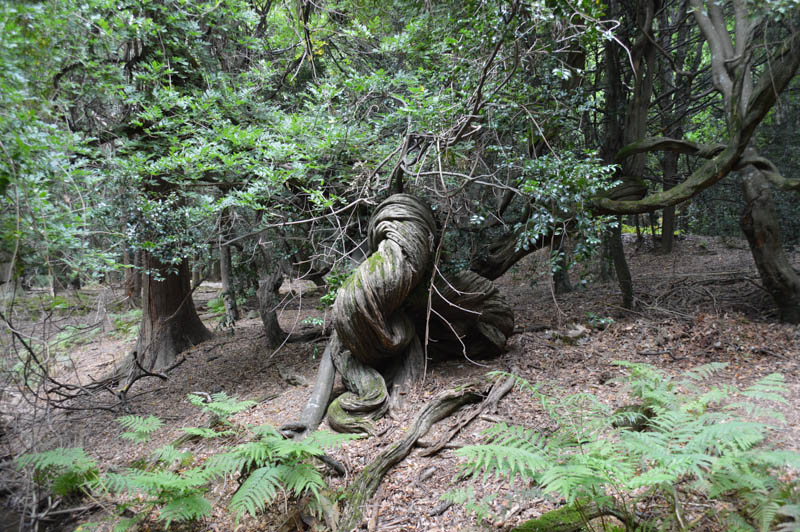
untitled-323 untitled-322Along the path, a tree, twisted trunk with spreading buttress roots caught my eye. It was exceptionally captivating both in structure and form. The ground was bare apart from a few ferns. Such is the natural environment here. Maples and a variety of trees, both young and old, occupied this cool part of the forest.

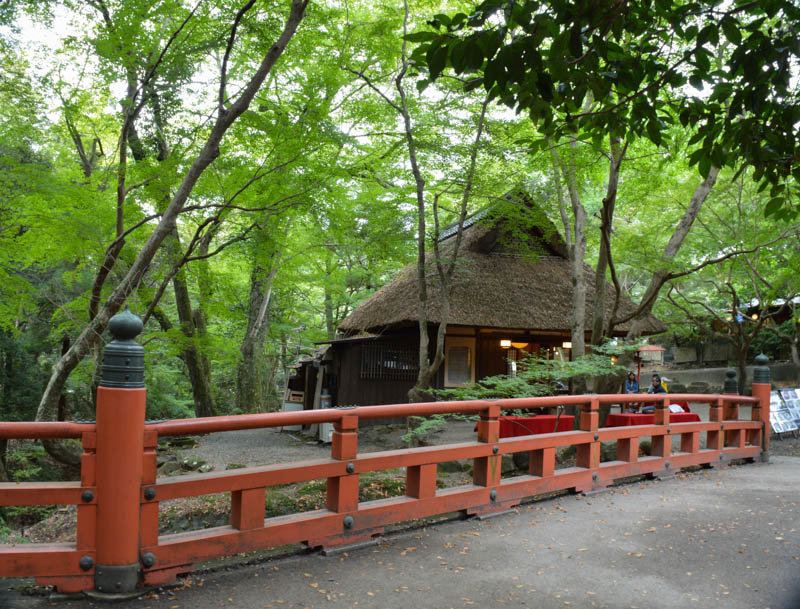
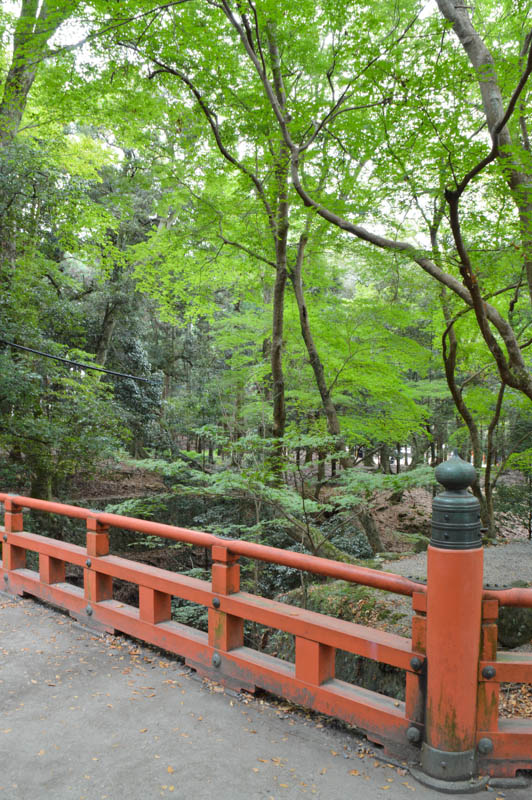
Not far, near a vermilion painted bridge over a slow flowing stream amidst the wooded forest is picturesque thatched-roof teahouse, “chaya”. A few low tables were set up outside under the trees. Across the bridge were a few more shops. We entered into a restaurant. It must be the most atmospheric place to eat, amongst this wonderful and refreshing greenery. The location was exceptional. Not quite under the trees but strips of bamboo roof instead.

untitled-329untitled-328untitled-326

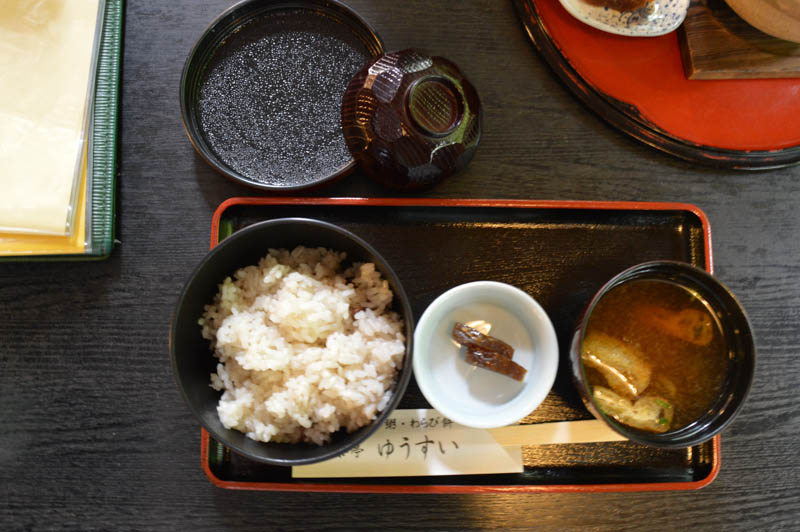
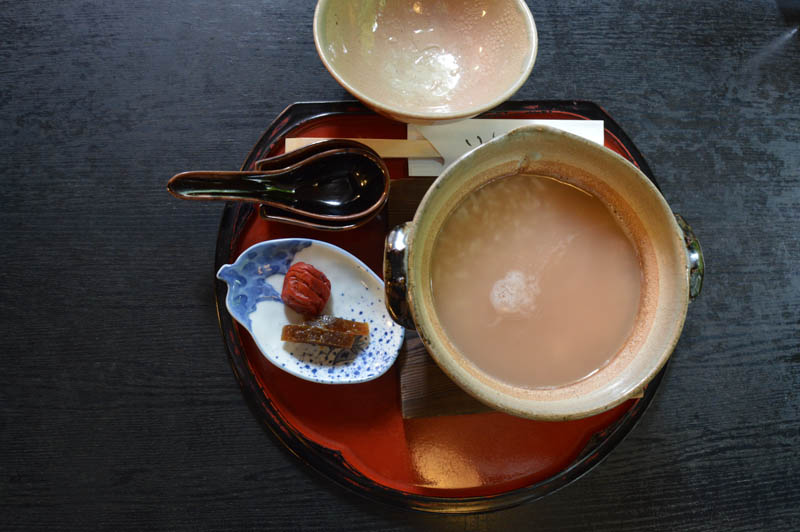
“Eating with one’s eyes is truly meaningful when it comes to the presentation of Japanese food. It’s appealing, appetising and could almost taste them. This, is even before consuming the dishes”. One bowl of rice porridge with “omeboshi”, “tsukemono”, pickled vegetables and fruits, and another boiled rice with tofu in “dashi” broth. These are accompanied with four dishes – tofu with steamed slice of ladies finger and crisp fried shrimp; boiled lotus root, a slice of courgette, potato; preserved daikon, four angled bean, mushroom, a mix of sweet potato and a gingko nut; fish meat wrapped with “nori” and a green stick of vegetable. The dishes are either boiled, steamed or cooked with a riot of flavours – sweet, sour, salty, umami, “savoury”, slightly bitter, tangy and especially the pickled vegetables, tangy. All this, slowly washed with miso and green tea. We are in paradise! Added to this is the green and serene environment. Nirvana perhaps but certainly close!

Nara – Kasuga Taisha

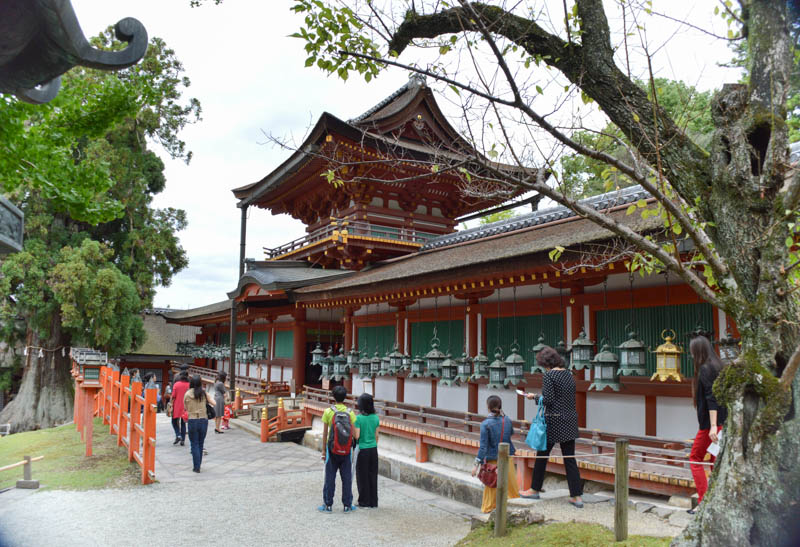
untitled-315Kasuga Taisha, a Shinto shrine, is the most celebrated shrine in Nara and is famous for its numerous lanterns which had been donated by worshipers and was established in 768AD by the Fujiwara family.

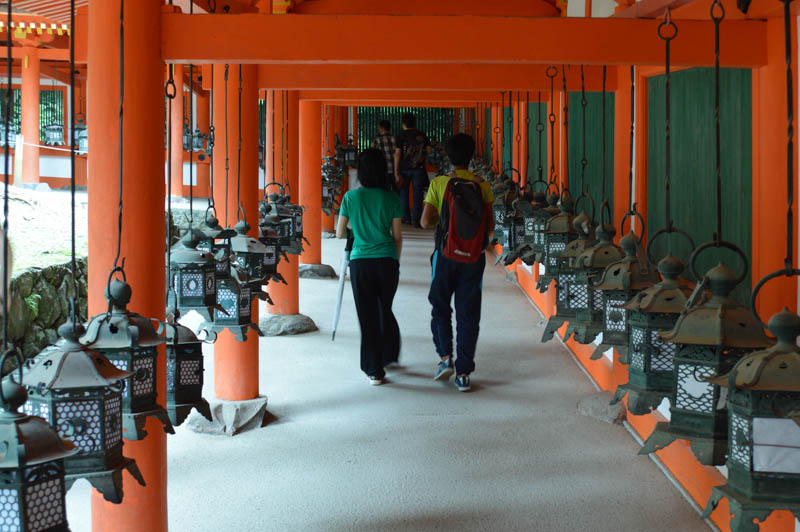
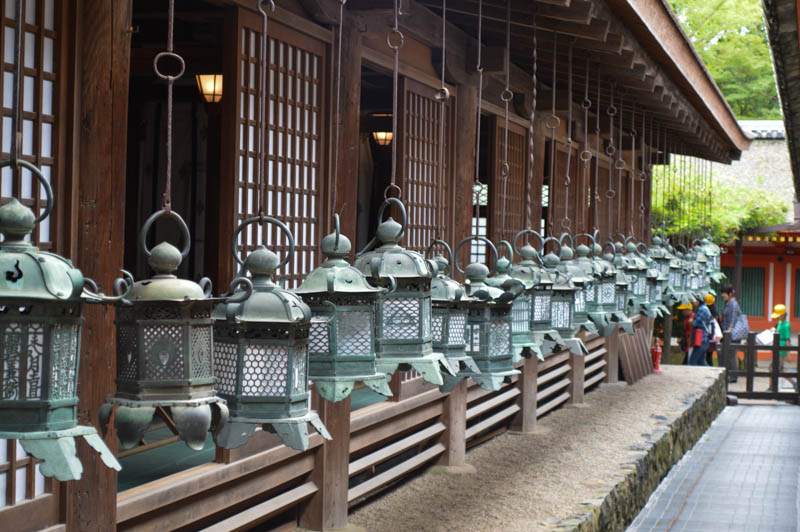
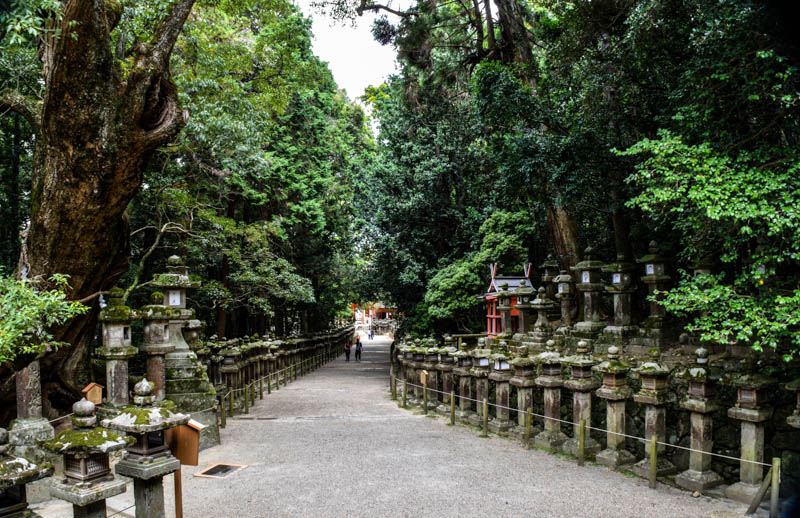
untitled-310We arrived at the shrine through a path surrounded with matured forest and numerous stone lanterns with the top encrusted with lime green moss. We entered the shrine through a large vermilion gate, “minamimon”, past the ticket office. I noticed a large signage which read “Fortunes in English”. Instead of stone lanterns, here, hundreds of bronze lanterns hung from the ceiling. Walking through these corridors of lanterns gave an impression of being in a “wonderland”. I can only imagine how it would look when the lanterns are all lit up which happened only twice a year.

untitled-316Although there were a few people wandering around, the atmosphere here was serene. A structural wisteria tree with barely any leaves was positioned on the east end of the rather long vermilion and gold lacquered building. We continued towards the “chumon” gate. Inside the Main Hall, “Honden”, a wedding ceremony was in progress. The groom and bride were dressed in white flowing robes. In attendance were the family members, seated on the floor, and a Shinto priest assisted by a white top and orange gowned miko. A small clump of purple wisteria was attached on her forehead. It was a sombre ceremony. On the wall was a colourfully painted mural.

untitled-319untitled-317 untitled-320The cypress-bark roof of the shrine buildings stood in harmony with the natural surroundings. The west end, was dominated by a 20m tall with over 7m width giant Japanese cedar (Cryptomeria japonica), “sugi”. A sacred rope, “shimenawa”, made from braided rice straw is coiled around this tree. This scared tree is said to be over 1000yrs old. It certainly had a grand look. There are over 1000 bronze lanterns hung around the corridors in this shrine. All donated by worshipers. Some painted in gold and mostly in bare emerald bronze.

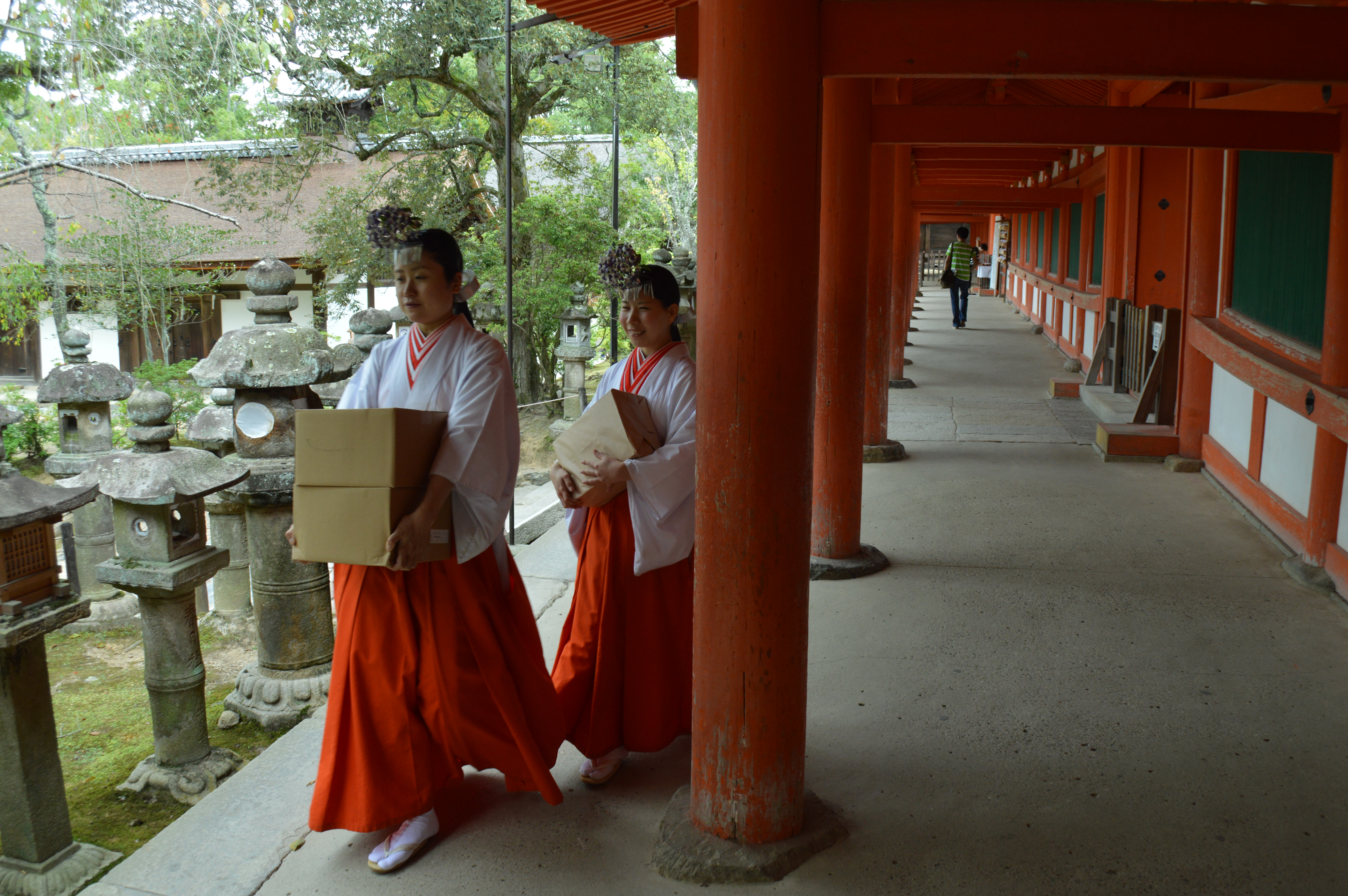
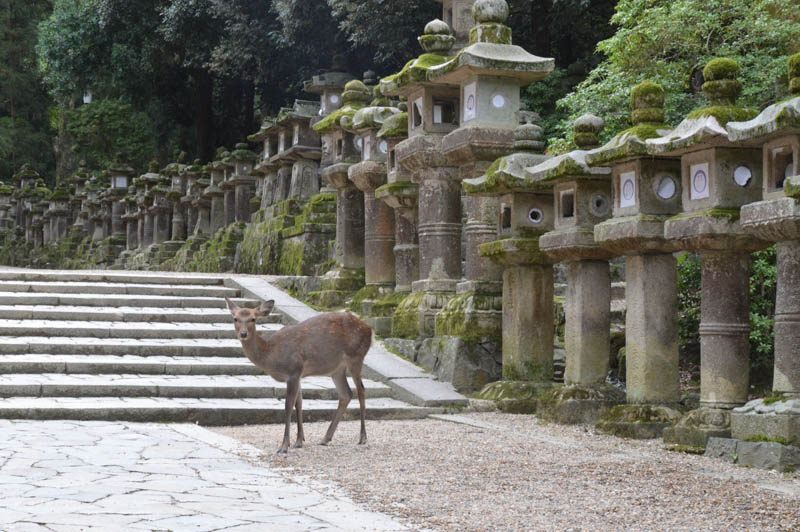
DSC_0630The wisteria flower, “nodafuji”, is considered very important for the shrine. The name Fujiwara could also be read as ‘Wisteria field’. Near the exit of the shrine we encountered a couple of “Mikos”, temple assistants, whom had wisteria worn in their hair. A sika deer greeted Navindd on the exit corridor. The deer that roam freely are protected and said to the messenger of the Shinto Gods. They are not only protected but also revered and adored. We passed several sculptures around this green Nara Park.

Looking back, the shrine is in the midst of woods. The celebrated Kasuga Primeval Forest, Mountain home of the Gods, covered the mountains behind this shrine. However, it was closed to public.

Nara – Nara Park

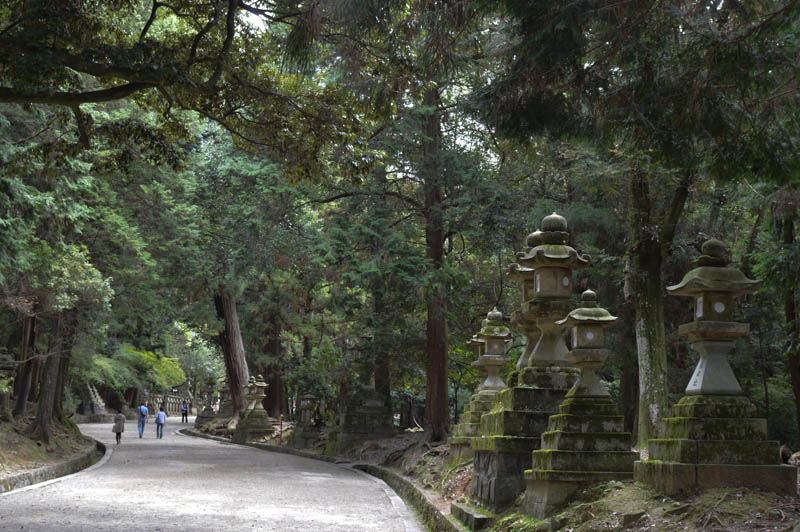
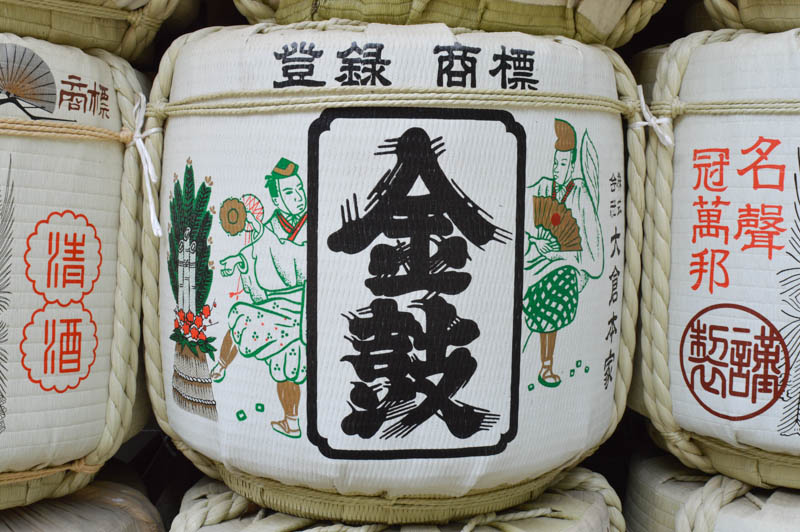
untitled-295One entrance is marked with a red “torii”, “Ichi-no-mochi”, The First Gate of Shinto, was first built in 836. “Nara Kōen”, Nara Park, was established around 1810 with a few temples and shrines dotted around this central park. Under the canopy of tall trees in the forest- like park, sika deer roamed freely in the cool environment. The deer, numbering over one thousand, in the unfenced park are said to be scared based on historical legends of the then newly built capital of Heijō- kyō, Old Nara. People fed the deer with deer crackers, “Shika- senbei”. Thousands of stone lanterns, “tachi- doro”, encrusted with lime green moss lined the winding street. Under a shed, several brightly labelled sake barrels were stacked up. The leisure walk brought us to a shrine.

untitled-299untitled-298

untitled-306untitled-305untitled-304untitled-302

Stone steps led the way towards a vermillion painted entrance. Some lovely and colourful posters depicting certain characters brought some colour to this green landscape. We passed another temple. The lines of stone lanterns add an element of a spiritual environment. With this element, the walk in this park was quite poignant. This forest is scared and is reflected with the ancient trees, some twisted with buttress roots spreading wide. It was certainly not just a walk in a park!

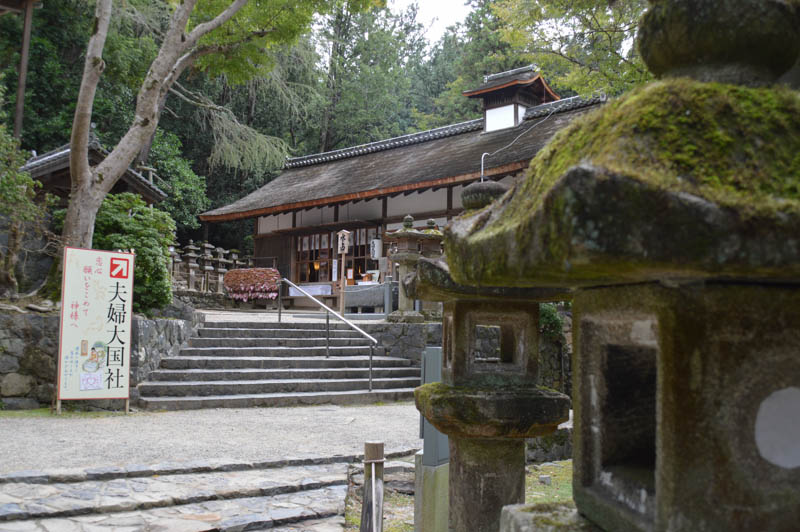
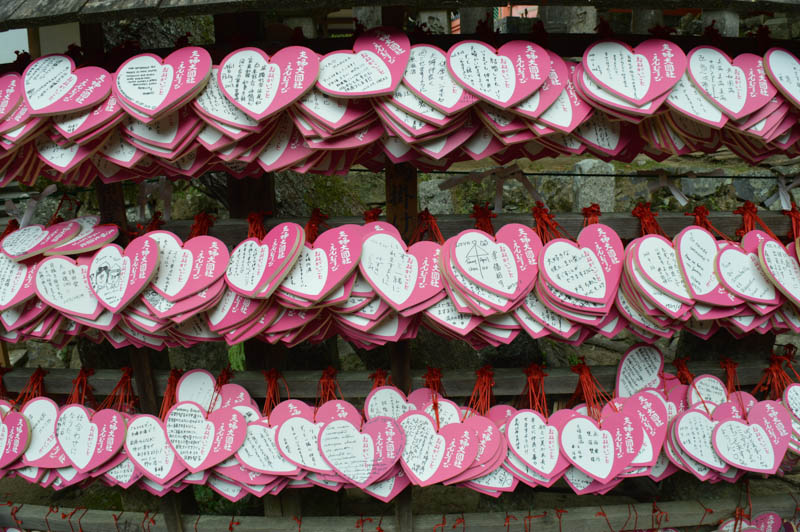
untitled-308We reached Kasuga Wakimiya Shrine via a flight of stone steps. Wakamiya-jinja is a branch shine of Kasuga Taisha Shrine and founded in 1135. It was quiet and hardly any people around. The straw thatched roof added an appeal of spiritualism in this ambient wooded hill. At one end of the building, a wall of pink heart or love shaped “ema” hung on a wall. The deities enshrined here are for married couple, so prayers made here are mostly for happy marriage and fortune in matters of love.

untitled-312 untitled-311

Hence, the “ema”. Water sprouted off a dragon’s mouth into vessels. Bamboo ladles are placed here for worshippers to wash their hands and face. A tranquil place indeed! Beyond this shrine, a path leads uphill into the mountains to a few smaller shrines. We exited the shrine via another flight of stone steps lined, on both sides, with numerous stone lanterns. This path led towards the most celebrated shrine in this park, Kasuga Taisha.

untitled-314

Nara – Kōfuku-ji Temple

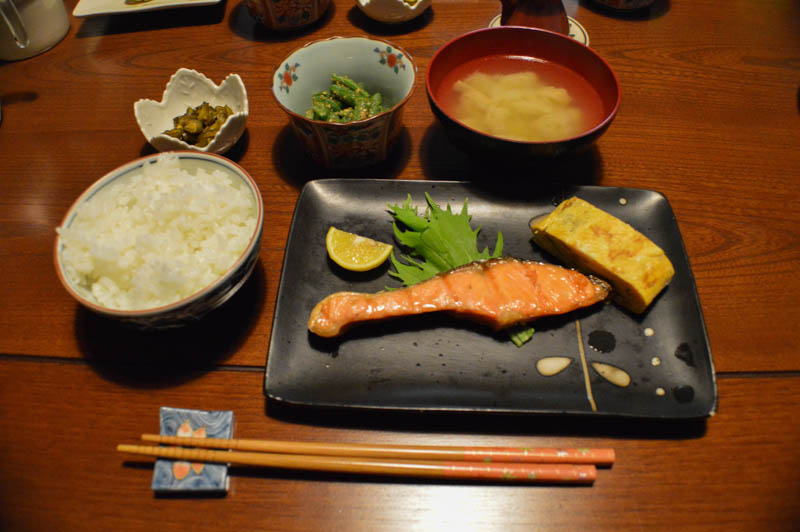
untitled-286Breakfast was provided with the booking. In the cool morning, we dined at the low table with a ‘cut out’ bottom to stretch out our legs. It was like sitting on a chair with no back rest. Steaming bowl of rice, pink teriyaki salmon, pickled vegetables, egg roll and a bowl of warm miso soup was served. A hearty breakfast indeed! It may not be everyone’s cup of tea having rice for breakfast. In Japanese culture, this is a norm. Kayoko was always attentive and asked if topping up rice and miso was required. This is a great way to start the day.

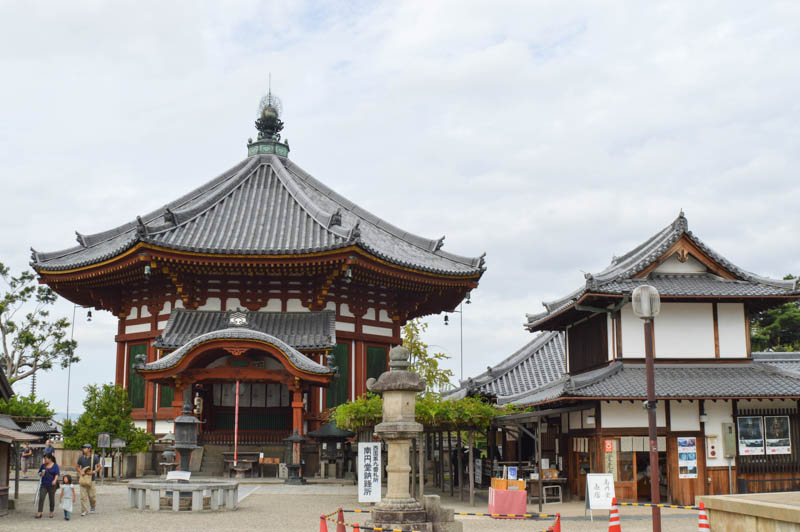
untitled-293untitled-292 untitled-294From Naramachi, we walked towards Mochidono Arcade and into one of the many side streets. There was an Indian restaurant, amongst several retail shops and eventually ended at the Sarusawa Pond surrounded with willow trees with a view of a pagoda. This is Kōfuku-ji Temple, a Hosso Buddhist Temple. Across Sanjo Dori is a steep flight of steps. At the top, on the left, is an octagonal wooden building, Nan’en- dō, and a path, on the right, towards the five storey pagoda.

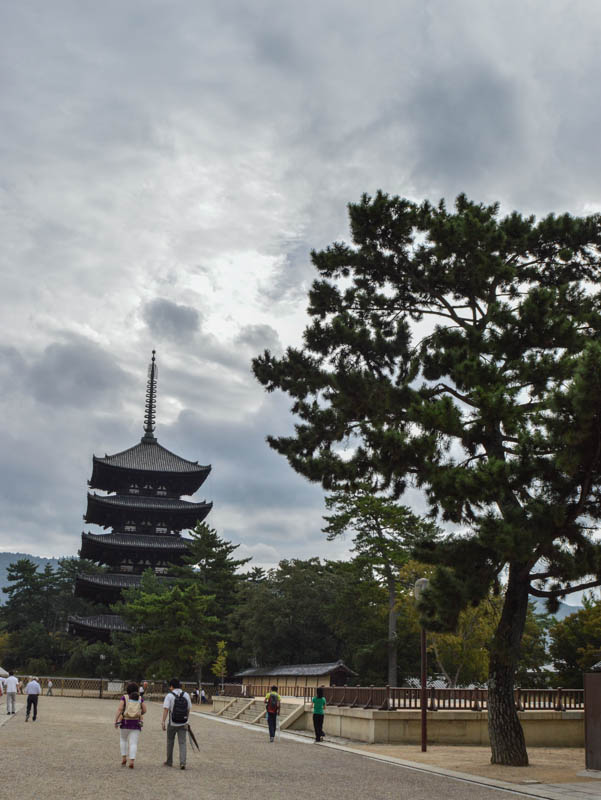
untitled-291Tall pine trees lined this wide gavel path. Kōfuku-ji Temple was established in 710AD and used by the Fujiwara clan during the Nara and Heian Period. Today, however, only a few buildings remained. It included the 50m high five storey pagoda, “gojū-no- tō”, the second highest pagoda in Japan. The enclosure was locked. Apparently a large image of the Healing Buddha, “Yakushi Nyorai”, is located here. We passed the Great Eastern Hall, “Tōkon-dō”. Further walk brought us past a huge construction site – the Central Golden Hall. Then to the Northern Octagonal Hall, “Hoku’en-dō” was originally built in 721. These pair of octagonal structures are quite unique and interesting – the architecture, and are valuable as they both hold irreplaceable and priceless national treasures.

The streets were uncrowded and the walk was pleasant. Finally we reached the green lung – Nara Park, “Nara Kōen”. One entrance is marked with a red “torii”, “Ichi- no- mochi”.

Nara – Naramichi 3

untitled-284DSC_0547

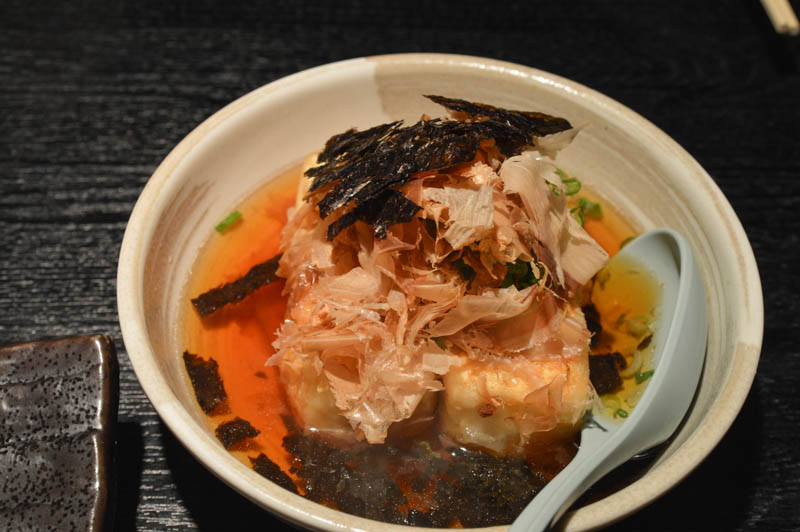
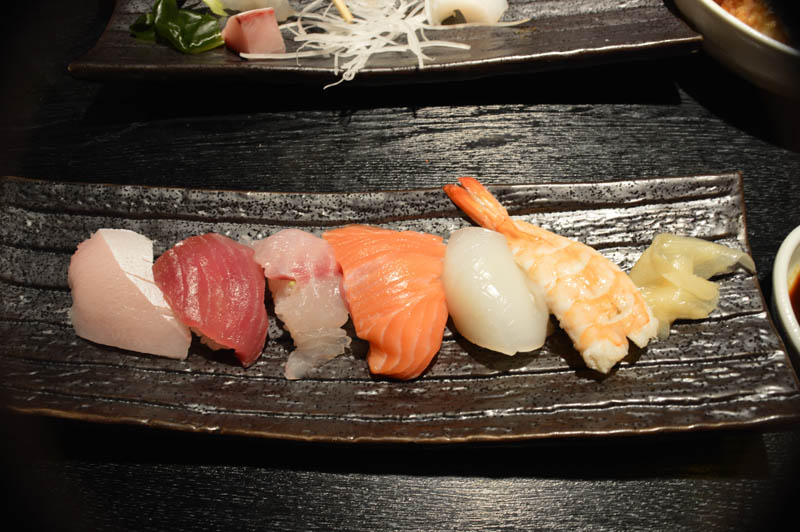
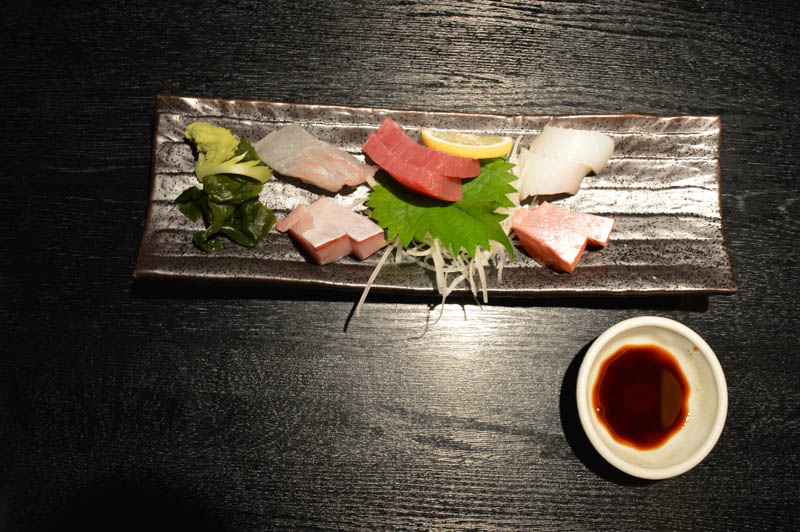
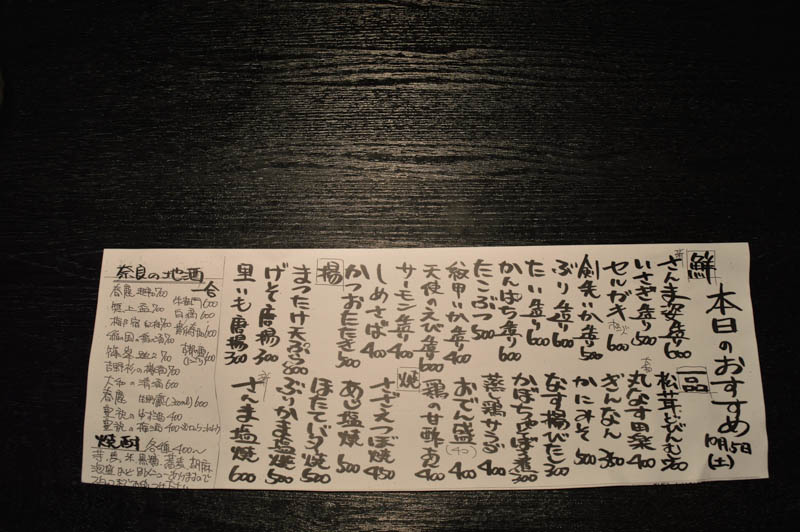
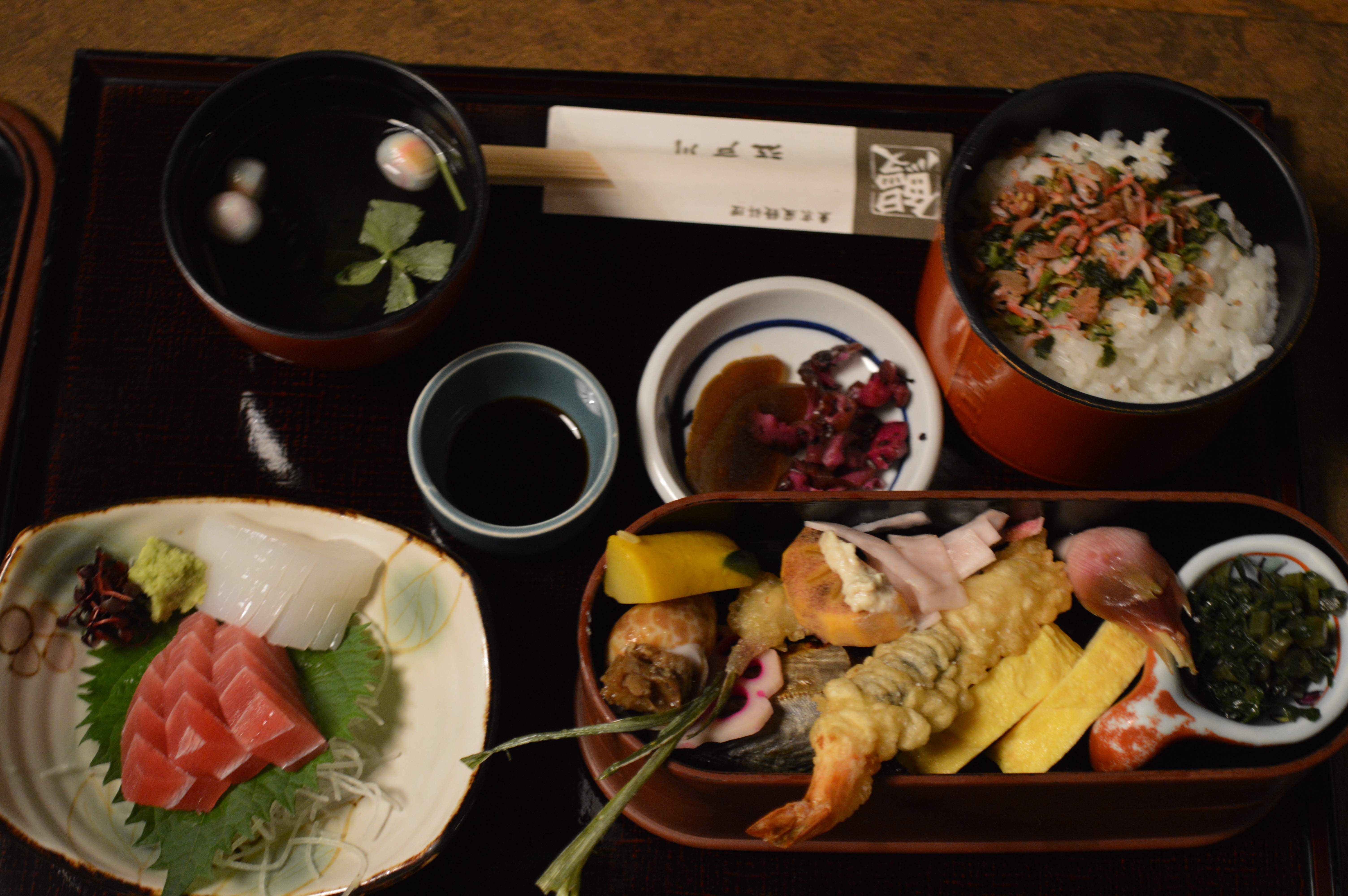
DSC_0552In the evening we decided to go to a nearby restaurant in Naramachi recommended by Kayoko. The place was busy and a hive of activity. We waited outside and eventually were ushered inside to a room with a few low tables scattered around. The interior was wonderfully by simply decorated and the dark woodwork glowed in the low lighting. The staff walked around quickly but quietly and always giving a smile. We sat at our low table on tatami floors. Prawn and vegetable tempura, steamed tofu in a delicate sauce, addictive miso soup, fresh sashimi of yellow fin tuna, “maguro” and a white fish, steamed sweet potato and ladies finger. All these served with steaming rice and a selection of local pickles – “narazuke”. That was just my dishes.
Lee Cheng had the simple eel, “unagi”, cooked with light teriyaki sweet sauce, pickles and miso with rice. Navindd ordered a platter – tuna sashimi served with daikon, battered prawn tempura, an exotic escargot (snail) which surprised us all, soft egg rolls and complemented with more assorted pickled vegetables, miso and rice topped with skipjack tuna shavings, “katsuobushi”. We loved the food in all the places we have been and this looked great too.We consumed quite a bit of the aromatic green “ocha” tea during the course of the evening.

The meal was an enjoyable way to finish a leisure day. This is our second last day in Japan. The ambient setting and the welcoming service by the staff contributed immensely to the evening. To give you an idea, the cost of our meals was about ¥8000, roughly US$85. It is definitely worth it. As we left, I noticed that the snail was left untouched. It turned out to be a great recommendation.
Back at Sakuraya, we all sat down for more tea, tasty soft biscuits and pleasant conversations. This would perhaps be the most ‘homely’ stay we have had in Japan. Finally, we snugged into our soft and comfortable futon beds.

untitled-283 untitled-289

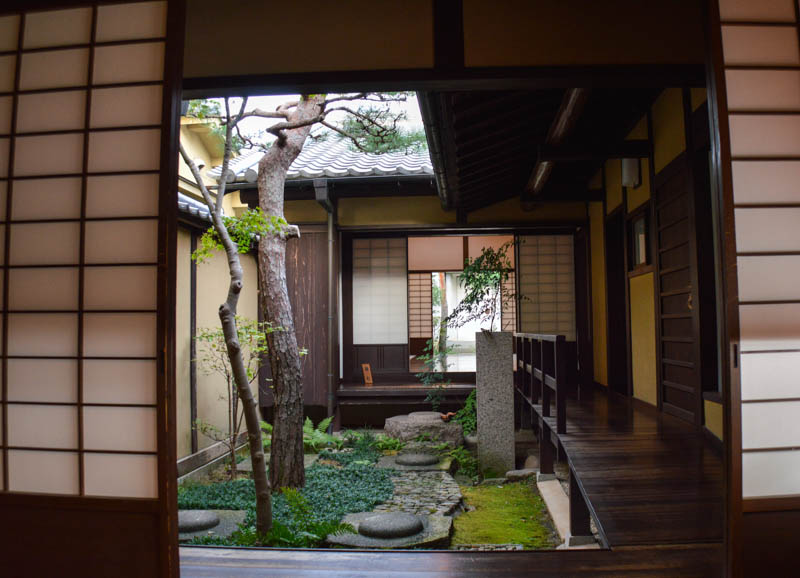
Sakuraya is “machiya” style home and has only three Japanese style tatami floor rooms. The dining hall faced the refreshing inner garden complete with water basin, palms and pine trees. Granite rocks and stepping-stones added further appeal to the rather small but delightful garden. A pair of wooden slippers were placed, pointed outwards, on a stepping stone.

Nara – Naramichi 2

untitled-278

untitled-277 untitled-280

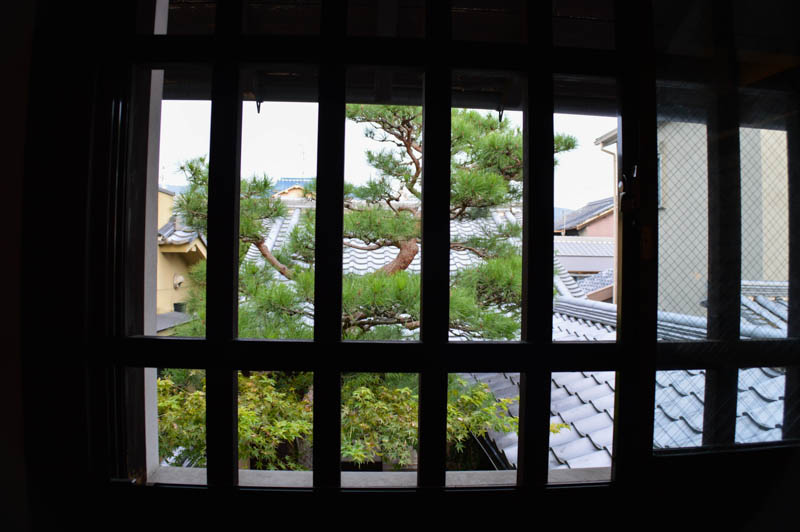
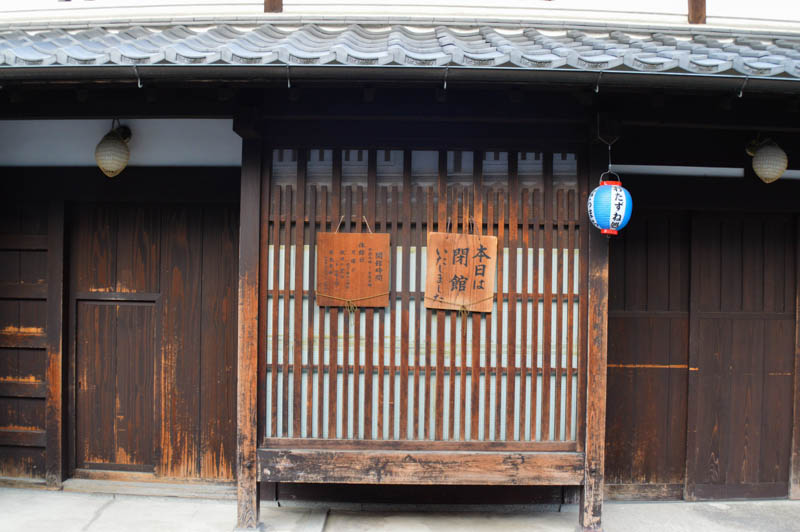
Clothing, quilted bedding and mattresses hung on lines to dry in the sun. Typical daily life continued here. However, it was strangely quiet. This is the magic and charm of this preserved Naramachi. Cosy tea and cake shops allowed time to rest and soak in the atmosphere. There are several temples and shrines hidden amongst these alleyways. Museums, sake breweries, gift shops and “onsen” are scattered in this area. One museum we visited was the “Naramichi Koshi no- le”, the Naramachi Lattice House. It is a restored traditional “machiya” townhouse of a merchant’s house. It was just past closing time but the caretaker allowed us entry. I loved the dark wood floors and staircase. There is a certain ambiance that it creates. A small but refreshing inner garden, “naka-niwa” complete with water basin and stepping stones, occupied the centre of the long townhouse. From the upper floor, the slated windows allowed for views of the tiled roofs, garden and light to enter into the rooms. At front of the house, slatted wooden lattice windows allowed for views of the street but concealed the interior.

A White gem unknown of man –
Be it so if no one knows!
Since I myself know its worth
Although no other –
Be it so if no one knows!
– a monk of the Gango-ji Temple

untitled-276 untitled-281

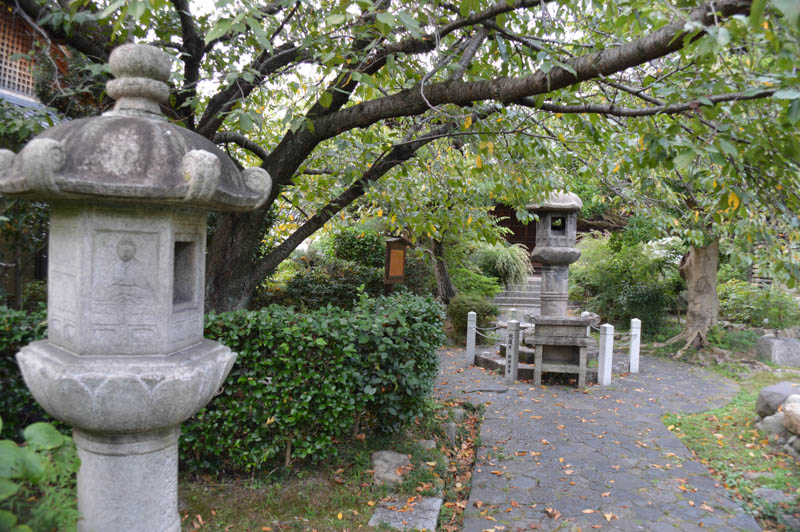
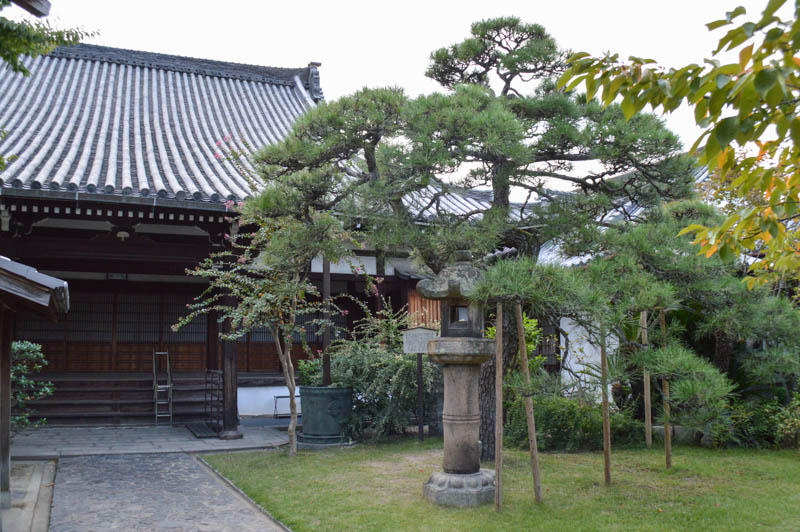
We stumbled into a temple gate. Gangō-ji Temple site used to occupy a large area in the present – day “sitamachi”, old town. We had no idea if this temple was part of that former complex. It was a serene site with large trees and well-kept grounds. A few stone lanterns decorated the place. An ornate stone footprint lay at the base of an aged tree surrounded by buttress roots. At another street, we entered Toku- ji Temple. These are little surprises we encountered as we strolled aimlessly in Naramachi. Tourist shops are always exciting – little mementos and gifts to take home. We found a “noren” maker at a street corner. These are curtains (usually made of cloth). They are hung at the entrances of houses or as partitions between rooms. Here, there were hand woven hemp cloths, either plain or dyed with vegetable colours. However, we were unable to get the size we wanted. These would make great gifts. Traditional Japanese gifts abound at every corner. On the streets, there were few local tourists today. The walk around is a perfect way to end the day, wandering in leisure. Nowhere to go, but succumb to the charms of ancient Japan!

Nara – Naramachi 1 – old town

Our “don’t leave home without it” JR Rail Pass had expired. Our onward journey to the place I had daydreamed about in school days – Nara, is via the Kintetsu Railways. Nara is only a short ride from Kyōto. It is the first capital of Imperial Japan from 710AD – 784AD, during the Nara Period. It is now over 1300 years old. Fortunately, today, this old world, “shitamachi”, charm exists in Nara Old Town, “Naramachi”.

untitled-275 untitled-274 untitled-282untitled-352

Gangō-ji Temple was moved to Nara in 718 and the temples grounds occupied a large area. Most of these structures disappeared and gradually the locals established their home on these grounds, which is today’s Naramachi district. Parts of Gangō- ji Temple still remain. Many of the buildings built by merchants were in the “machiya” style – long and narrow townhouses with tiled roofs. A mix of wood and stone were used. White plaster walls with wooden lattice windows mingle with dark wooded walls and interiors. Over time, many of these traditional “machiya” architecture style homes of the former merchant district had been converted into tourist and artesian shops, accommodations, cafes, restaurants and museums. However, the old world charm of Naramachi which had been wonderfully restored, retained and lived. A living museum indeed!

Within the beauty of green (tiled roofs) and
vermillion (pillars),
The imperial city of Nara is now in its glory,
Like the brillance of flowers in full bloom.
– Ono-no-Oyu, Man’yōshū(circa 759AD)

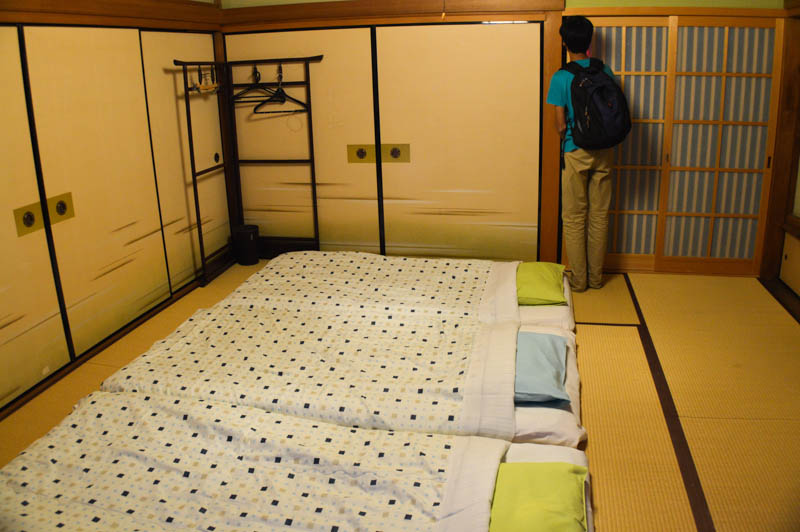
Nara is our last stop and we decided to stay in a nice Japanese style home. Our accommodation was Sakuraya Guesthouse in the heart of Naramachi. Kayoko met us at the door and I immediately had a liking to her. We were immediately invited to some tea in the dining hall which faced a lovely inner – courtyard garden, “tsubo-niwa”. Later we were led upstairs to our Japanese style tatami mat floor and sliding door room. It was called the ‘Kaze’, Wind, room. From an adjoining screened balcony, we could see the garden. Futon beds were already laid out. Downstairs, we had another round of tea and some lovely biscuits. We did not feel like we were staying in an accommodation but at a friend’s place. What a place! It felt like a ryokan than a guesthouse as the name suggests. Kayoko was like a long lost friend. It was a good feeling.

We wandered the narrow streets of Naramachi. Besides the lovely restored wooden homes with tiled roofs, one common sight is the overhead electrical wires. As we walked, I noticed that there were hardly any people around. Doors closed, “noren”, curtains, flowing in the light breeze and hardly any sound. An elderly lady dressed in a lovely colourful kimono appeared from her home and disappeared into an alley. The streets branch off into complicated alleyways. We were unsure of where we were going but it did not matter. Getting lost here is a good thing. We came across gift shops and small eateries. The more we walked in this laid back old town, the atmosphere of the 19th century oozed out. A lady dressed in kimono, emerged out of her shop and poured a bucketful of water onto the street. Then she swept the street of dust and re- entered the shop.