Category Archives: Japan

Tokyo

DSC_0086

Tokyo is a city of contrast but embodies Japan. The metropolis is crowded with concrete and steel high rise buildings. In its tidy road network, all kinds of vehicles are employed – rapid trains, metro systems, bullet trains, road vehicles including bicycles and even pull carts (mainly in tourist areas). Then there are the huge train stations, incorporated within the mega department store buildings, providing rapid movement of people and utilisation of limited and expensive real estate. We loved these stations, particularly Tokyo and Shinjuku stations. The city is clean and we hardly found any rubbish bins. With neon lit signage of all sizes in practically every street, there are in contrast, the “merchant” streets with subdued advertisements. Temples and shrines, some ancient, shared the same air space as the towering buildings. Asakusa, in particular is such a place.

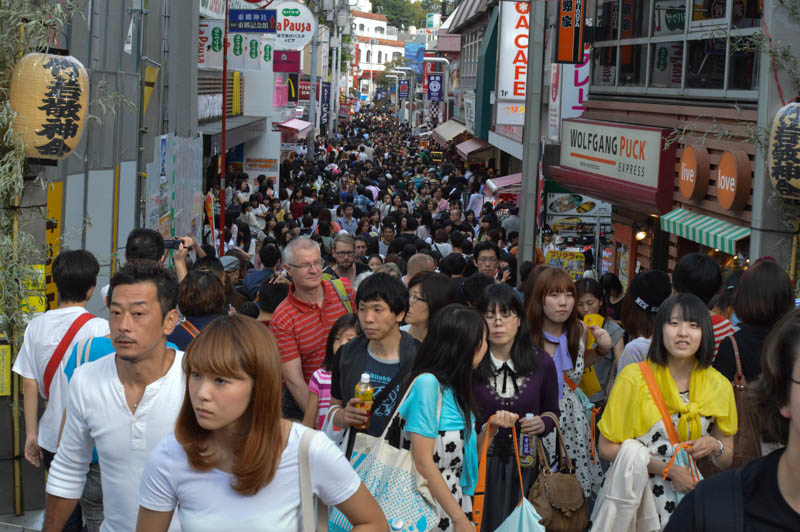
The people, however, unlike the iconic kimono clad images we were familiar with, were mostly in western style dressing. Then, there are the eccentric dressed young people, mainly girls, in places like Harajuku. They break all the traditions and adopted the new “cosplay” and storytelling “anime” characters. However, the people with their “Japanese way” are a wonderful asset and credit to Japan. I am glad that this aspect of the culture is retained. In a mega city like Tokyo, people actually connect, acknowledge and even say a few words. In most large cites of today, we have become more distant. With innovations in technology, the gap had widened. People to people interactions are declining.

Last but not least, the food. The wonderful food had been retained. Every meal is delightfully presented, from take away to dining-in. Food outlets are generally small sized with 15 -20 seats. Outlets specialized in a particular type of food – noodles or tempura or sashimi. Then there are the wonderful “izakaya”, a pub like eatery with mixed street food fast- food style. The older, I feel more atmospheric, establishments are those under the railway lines, “gado-shita”. In places like Yurakocho and Omoide Yokocho, the old quarter joints prevail. This pleasant and charming mix of old and new; the glittering and ancient, give Tokyo its life. We loved it.
untitled-72

Tokyo – Tsukiji Market, Hama Rikyu

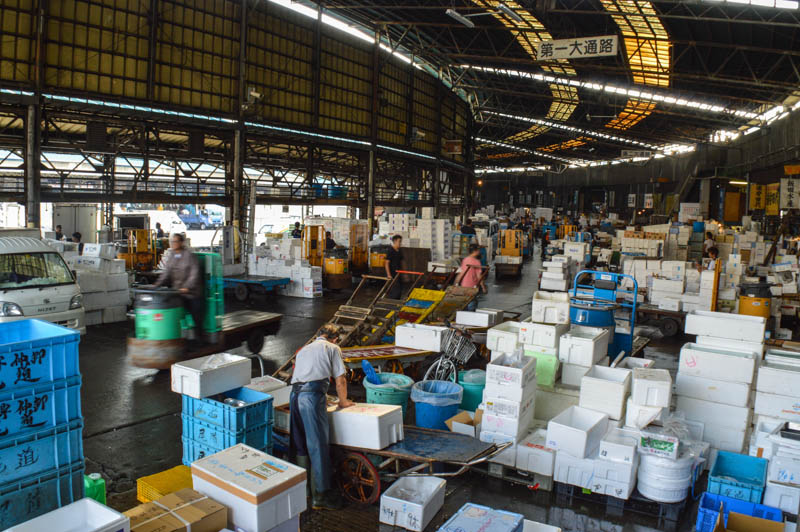
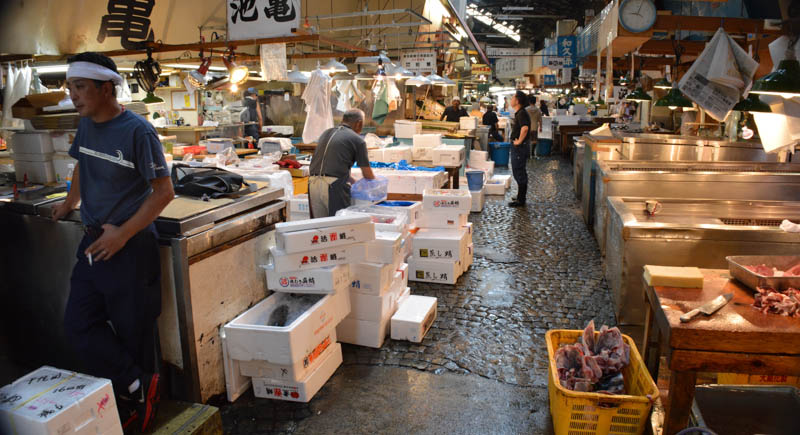
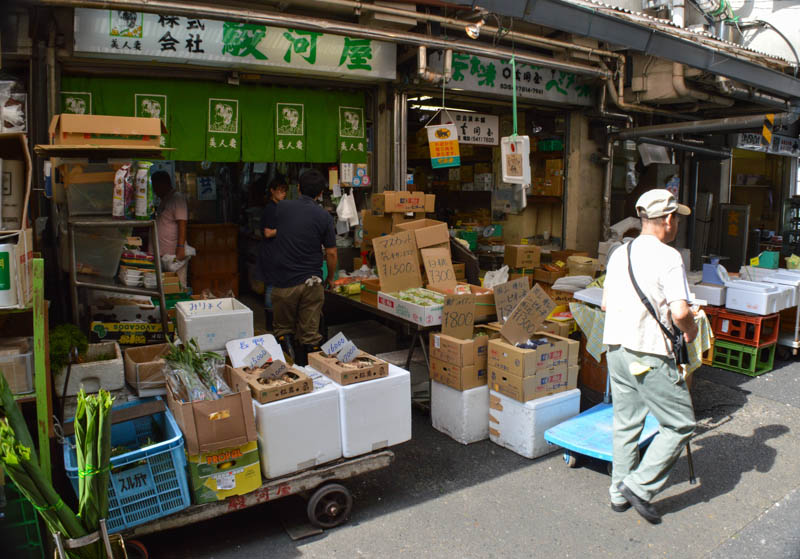
The loading zones, which are off limits, were stacked with stacks of polystyrene boxes and quick moving scooter like contraptions. Beside the inner market, we explored the outer markets. Small retail shops packed with home utensils, cutleries and kitchen items enticed buyers. In another part of the huge complex were the wholesale vegetable and fruits markets. These areas are not off limits and the locals shop here.

untitled-11

Apparently, there are plans for this atmospheric market to be moved. With this move, although justified as businesses grows, surge in visitor numbers and to cater the needs of everyone with safety in mind, the ambiance of a old market will certainly be lost.

On the adjacent main road, the usual traffic of cars, busses and pedestrians’ completed the picture. This is a typical working class neighbourhood almost a stone’s throw away from the shiny Ginza district.

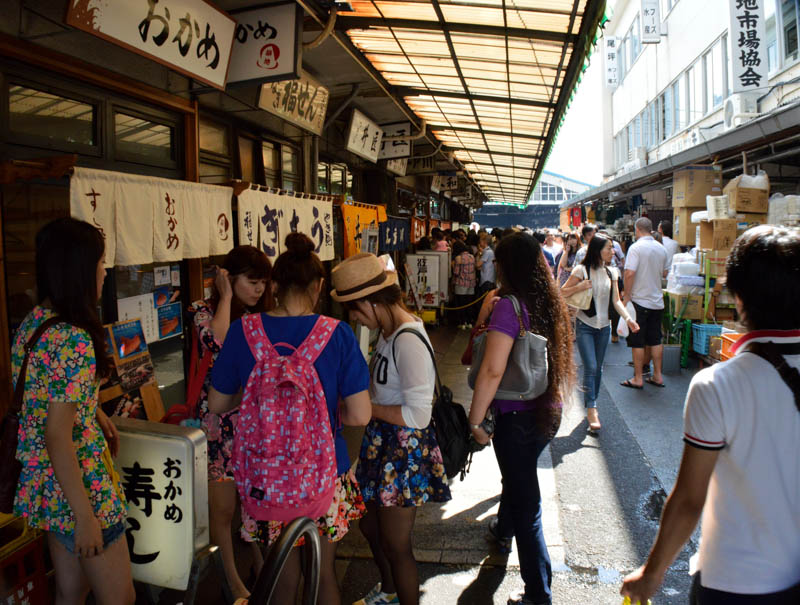
Several restaurants in blocks opposite the market offered the freshest seafood. Unfortunately, this Sunday, long queues of over sixty had already formed in almost all the outlets. I thought they were queuing up for the bus. Each outlet had only about fifteen seats. We wandered around to see what was on offer and to seek the shortest lines. This ended up being futile.

untitled-16

The sun was blazing and the time past 10am. Our stomach began to grumble. The most expensive dishes are sashimi, over ¥2000 per serving. We were all tormented with aromas wafting throughout these narrow and crowded walkways. We peeped inside a few restaurants. It was frantic, in a good way. A continuous flow of people flowed through the narrow doorways under fluttering “noren”. There are several rows of pathways in these blocks of restaurants.

We ended up at a Tempura-Ya (only sold tempura). A few tables and a long bench catered for about 12 people. A lovely couple dished out hot tempuras of all sorts. Language is a challenge but fun. In the kitchen, the cook dressed in white continued to dip and fry those beautiful tempuras in an oversized wok filled with hot oil. The aroma was mouth- watering. I was salivating.

untitled-15untitled-12

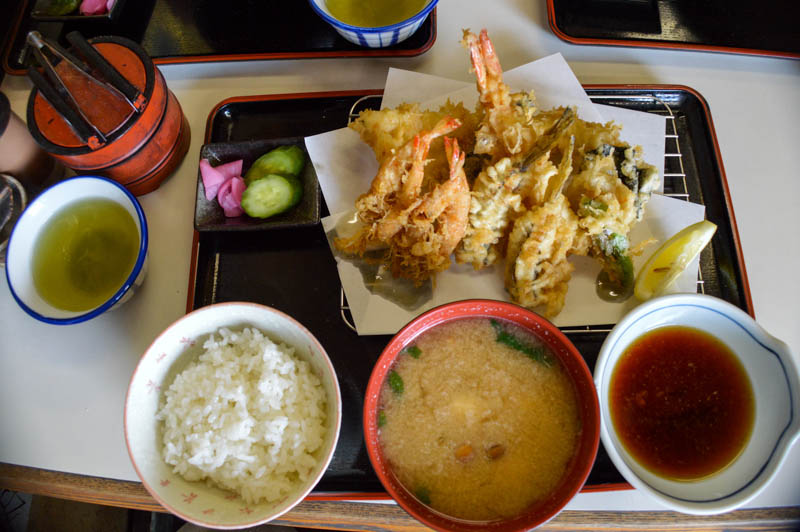
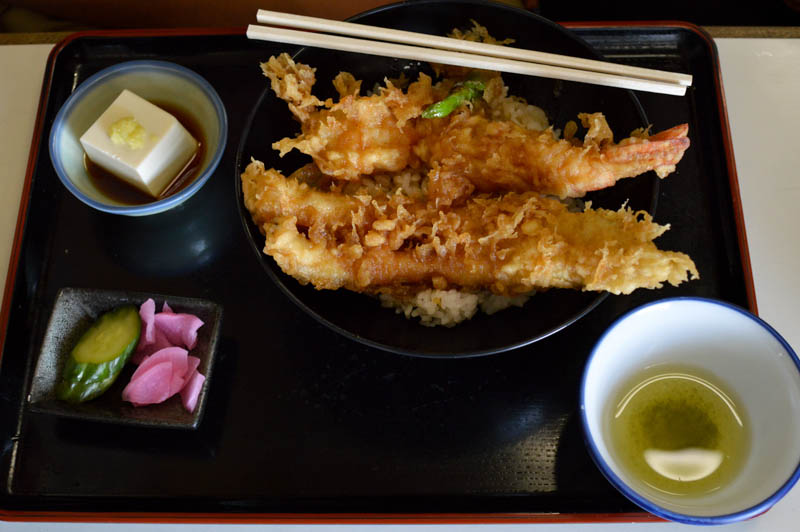
Seafood and vegetable tempuras in light batter, miso, vinigered rice, cold tofu with soy and pickled vegetables was the ideal breakfast to start the day. Heavenly flavours of sweet, sour, savoury and salty mingled on my palate. Navindd and I selfishly finished the red berry pickled fruit that was meant as an accompaniment. This was our first local experience of a typical Japanese cuisine. It was delicious and fulfilling. The small cosy setting gave us a sense of home cooking. Navindd was delighted as he loved Japanese cuisines.

“the presentation of food was impeccable and the food itself was delicious and satisfying” – Navindd

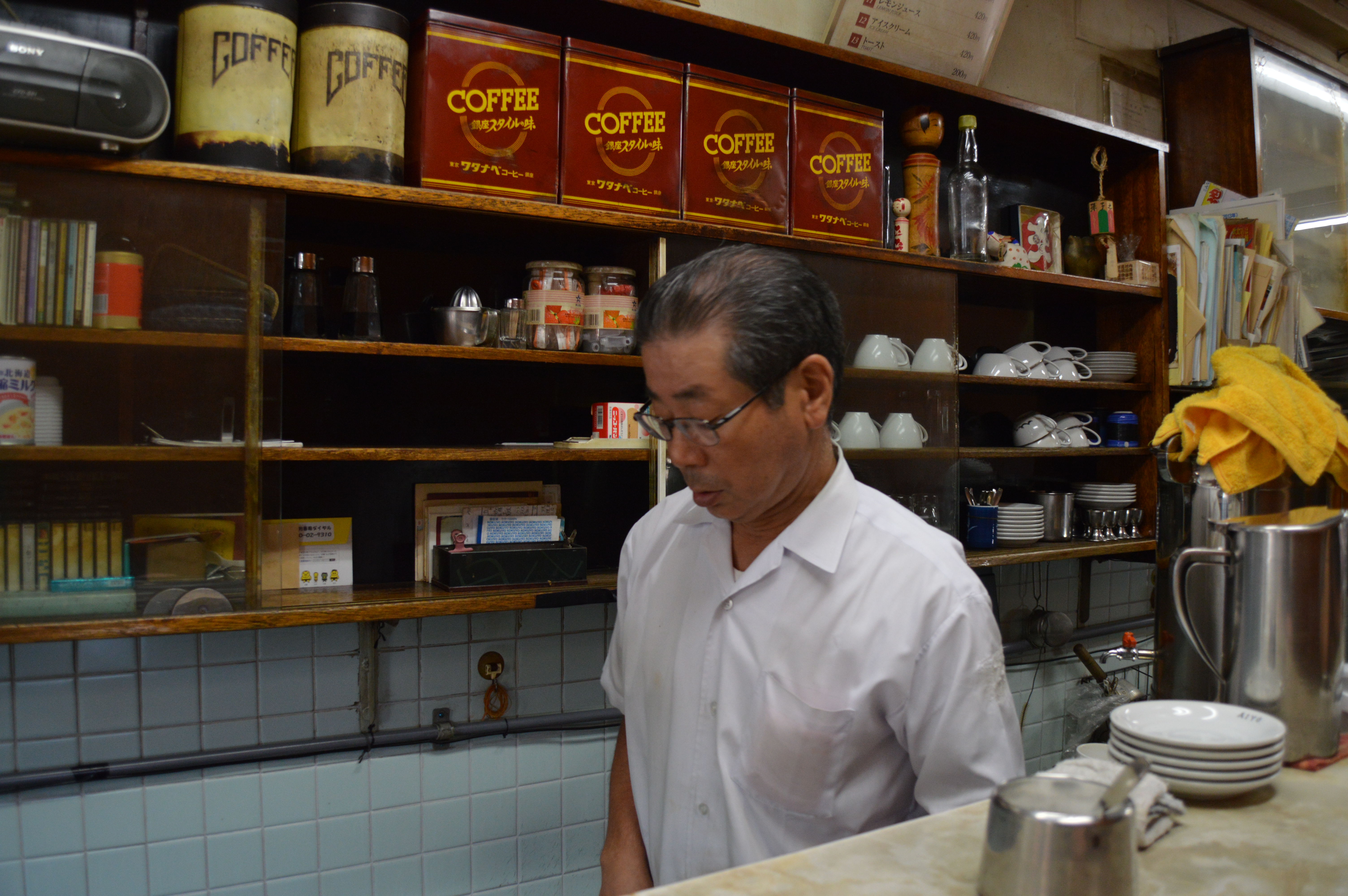
Next to the Tempura shop was a coffee shop. This was a pleasant surprise. An elderly man offered coffee to customers seated on a long bench. The coffee beans are blended here. Large tin containers were stacked on shelves. It was strong but the aroma was pleasant. The atmosphere was homely. I had 3 in 1 (ready to drink) tucked away, just in case.

DSC_0048

Hama Rikyu

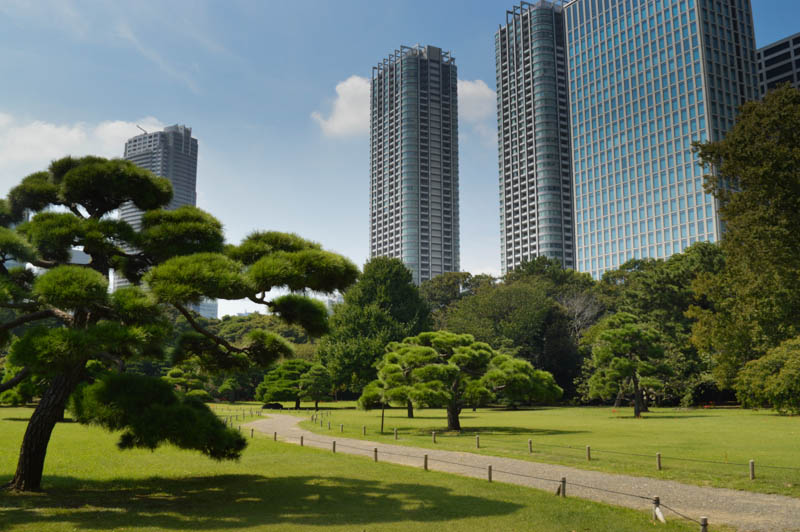
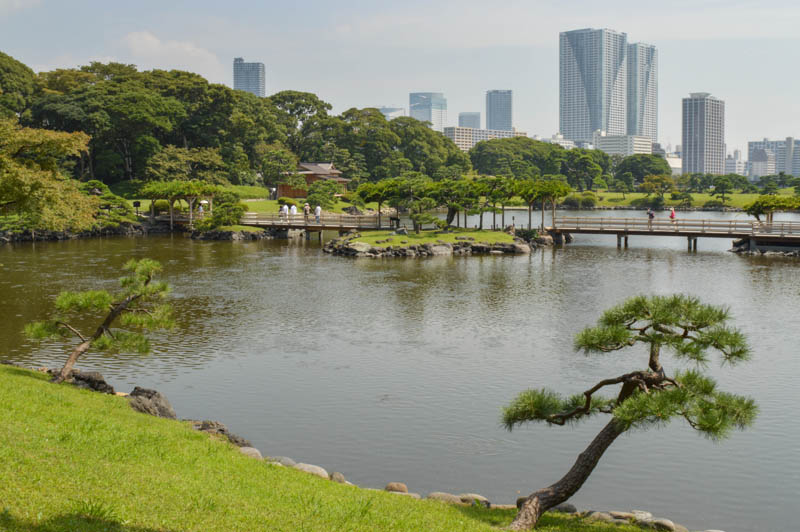
A short walk from the Tsukiji market is the delightful green lung – Hama Rikyu. The garden is decorated with pruned pines, ponds and manicured lawns. This park is adjacent to the shiny buildings of Shiodome. It is nice just to wander and contemplate in an unhurried manner. Some ponds are sea water managed intricately via flood gates. There is a lovely tea house to rest and taste. From here, we caught the water boat and sailed on the Sumida River to Asakusa. This is a lovely alternative way to see Tokyo.

untitled-17 untitled-20

“…..when you look up, you can see towering bodies of shimmering silver up above and green trees below. This contrast….makes Hama Rikyu a little bit more special” – Navindd

Tokyo – Tsukiji Market

untitled-2

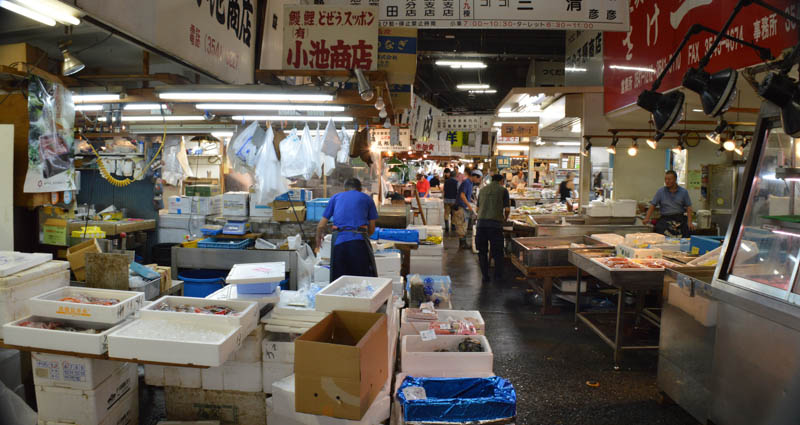
Our first visit was to the biggest seafood market in the world – Tsukiji Market, “Tsukiji Shijō”. From Tokyo Station, we caught the Yamanote Line to Shimbashi Station in Ginza District. We were dwarfed and enclosed by towering shinny buildings. Being a Sunday, the streets were quiet. From here, it was a short walk, based on the map we had. However, too many junctions and roads made it difficult to follow. Fortunately a local man was going in the same direction. It was around 9am and was already frantic as small motor vehicles darted and swerved as they carted styro foam boxes of seafood. Inside the covered building, all kinds of seafood were on display. Some of which we had no idea at all.

“…as we entered the warehouse, an overpowering smell of the ocean hit me like a brick wall. The scale of this place was absolutely huge”  – Navindd

untitled-4 untitled-6

Parts of this wholesale area are off limits before 9am. The popular tuna auctions take place very early in the morning and visitor numbers are limited. It was busy and the wholesalers were focused on their business. The pathways are narrow. Getting out of the wholesalers way is wise. Locals also shop here. Seafood here is carted and distributed daily around the country.

“Distributors drove small forklift- like machines, delivering goods for the thousands of shops there. I sometimes wondered how they found their way along this labyrinth of shops.” – Navindd

untitled-8

Tokyo – 1

This article is taken from my self published book – Beyond Sushi and Sashimi

After a ten hour flight to Kuala Lumpur, we quickly got acquainted with the much missed local food – “laksa”, “curry mee”, white coffee and toasted bread with “Hainanese” kaya. After a three hour transit, we were on our journey to Tokyo. At Tokyo’s Narita Airport, around 8pm, armed with a rail voucher, we headed for the Japan Rail office. We finally received our Japan Rail Pass in exchange. After a quick dinner of ramen and sushi, we boarded the Narita Express directly to Tokyo Station. It was a restful journey with views of towering buildings and neon lights. Tokyo Station was massive and throngs of people moved in all directions. It was 10pm. Restaurants and other retails shops were still doing brisk business. It looked like shopping mall crossed with a food court. Wonderful arrays of local delicacies were on display. People moved in all directions.

“The clouds, lit by the city lights, made it seem like the buildings were moving” – Navindd

untitled untitled-53

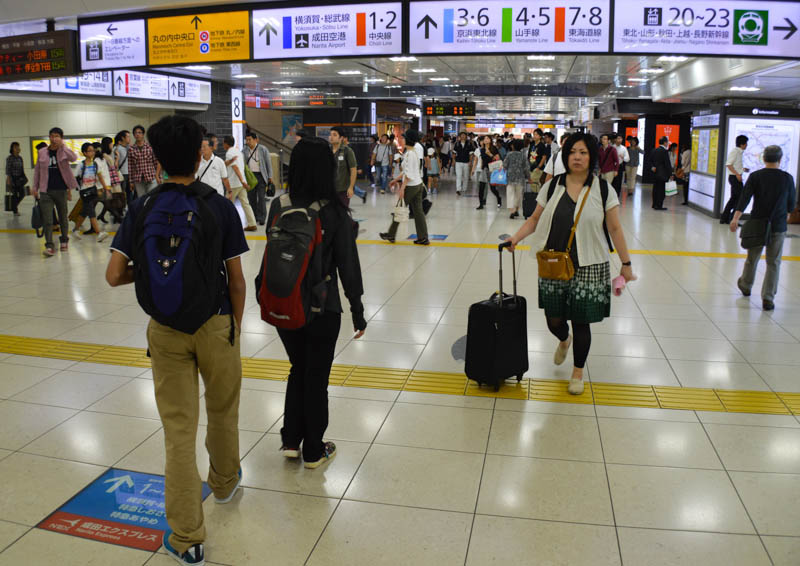
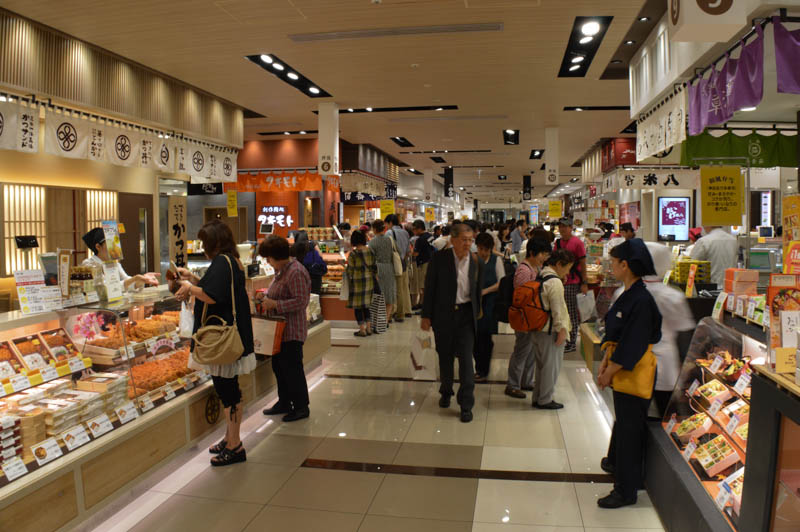
Tokyo Station is massive with several major lines passing through it. The underground seemed like a district by itself. Numerous food outlets dished out delicious delicacies from cooked food, bento boxes, and “mochi” deserts to restaurants – all within the Daimaru building. This alone covered three stories! The aroma, sight and the rumbling stomach all come together here. This complex is massive. Mind you, there are numerous exits and pathways. Being lost here seems like a delight. The calls and smiles of the vendors is a wonderful spectacle. We loved it here. Something new is discovered daily.

Our hotel was a short walk from the station in Yaesu and Nihonbashi Disrtict. There were all smiles at the hotel’s front desk. Bowing heads and uttering “sumimasen” and “Dōmo arigatō gozaimashita”, were the norm. The room was smallish but adequate to fit the three of us, and very clean. We choose this hotel for its proximity to the train station. After shower, we dressed up in the black and white chequered “Yukata”, robes that were provided. I expected the weather to be cooler but in contrast, pretty balmy. Tired but excited to begin our family adventure in Japan.

“My first impressions of Japan were that it was clean, organised and friendly” – Navindd

Japan – A family Adventure

JAPAN – Beyond Sushi and Sashimi

ADJUST-2

The Land of the Rising sun, though briefly above a sea of clouds, is truly amazing from the freezing summit of Mt Fuji. The land with ancient and unique temples with rising tiered pagodas and manicured Zen gardens ; densely populated metropolis where neon light compete with blurry stars ; cosy eateries and complicated menus; ever punctual and speeding bullet trains and the irreplaceable Japan Rail Pass; exquisite cuisine and culinary delights ; beautiful and immaculate “Geisha”; silky kimono clad women and school girls in short skirts ; tidy “Ryokan” and “Minshuku”; mouth- watering and petite sweets ; soothing naked hot baths in “Onsen” ; additive manga; colourful anime and the constant banging sounds of Pachinko machines; the food – “Tempura”, “Sushi”, “Omuraisu”, “Yakatori”, “Okonomiyaki”, “Sashimi”, “Gyoza”, “Bento”, “Agedashidofu”, “Tsukemono” and more. However, the remarkable people – their politeness, work ethics, congeniality, helpfulness, language and beautiful smiles – had been a highlight of this journey. This is extraordinary……… Japan.

Japan had intrigued me since school where I had to memorise the economic and historical facts, from the Shogunate to the then modern and industrial Japan. My interests were the ancient capitals of Kyōto and Nara – their array of temples with expansive grounds and towering pagodas, manicured Zen and gravel gardens. Then, there were the Samurai, Ninja and “Ultraman”. The Geisha and women in Kimono with dainty feet were all etched in my mind. Finally, with my family in tow, the long-awaited journey had come to frutation. There was a plan to see and do – climb, walk, taste and reflect. This, early fall in September, is our family’s foray into modern and ancient Japan.

Takayama – 1

DSC_0762untitled-238

It was past midday when we arrived at Takayama. Along the train journey, we passed mainly rural villages and wheat farms. We criss-crossed several slow flowing rivers. Takayama is located in the mountainous Hida Region in Gifu Prefecture. Here, we stayed at a traditional Japanese guesthouse, “Minshuku” where “tatami” mat floors, sliding doors and creaky wooden houses are the norm. It was a very hot day. The town looked quiet and the atmosphere relaxed. For lunch, we stopped at a restaurant where the local speciality is Hida beef. Marbled slices of beef grilled with some teriyaki sauce. Apparently, these animals are fed apples and beer? To get vegetarian meals was tricky. Hot pot, “nabemono” and grilled dishes are popular. I felt like we were in a sauna inside these restaurants. Takayama is known for its preserved old town, sake breweries, festival and its proximity to the Japan Alps.

untitled-250

The Miyagawa River intersects the town and the old town lies on the east. Several bridges connect the banks of the river. The most popular is the red Nakabashi Bridge. It is a compact town and walking is the best way to enjoy this slow pace town. This includes the temples, shrines, museums, restaurants, the old neighbourhoods and the preserved old town. However, the weather was hot and humid which made walking demanding. Kids played in the shallow river. Cherry trees lined the banks of the river.

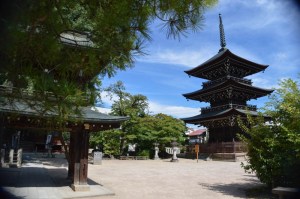
The Hida-Kokubunji Temple, the oldest temple untitled-234in Takayama, was initially built around 760AD. It started with seven tier wooden pagoda but reconstructed during the Edo Period to the current three storeys. The pagoda is visible from our “Minshuku”. Just past the steps at the main hall is gong struck with a long cloth adorned with totems. The interior is intricately carved. However, there were no English explanations. At the open courtyard, a handsome and lush lime green Gingko tree, over 30m tall and estimated to be over 1000 years old, provided shade in this hot day. Buttress roots swirled around its base in a protected area.
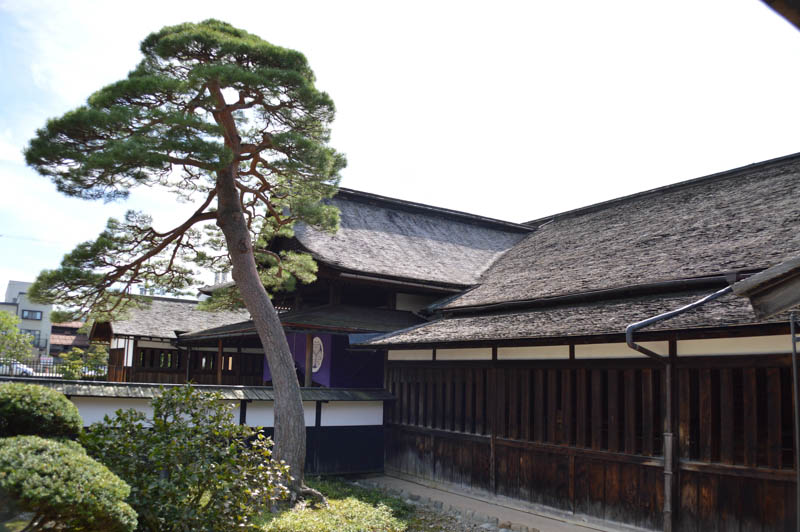
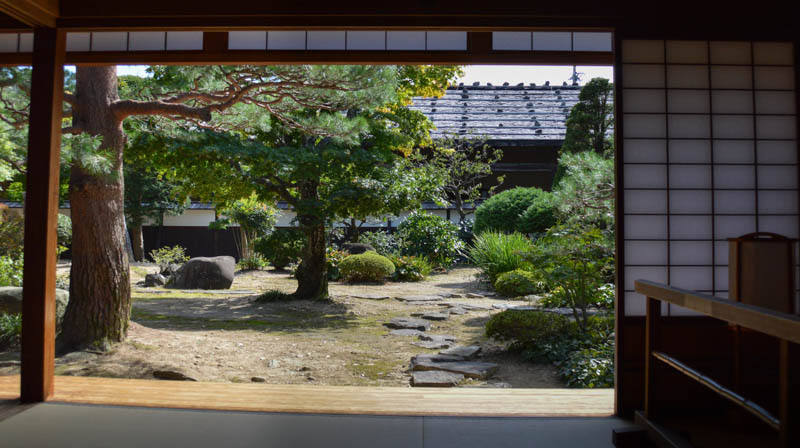
Today, the Takayama Jinya is a museum. During the Edo Period, it was the administrative centre for the Hida Region under the Tokugawa Shogunate. It is a large wooden complex with wide “tatami” floor halls, sliding doors and residential places. The inner courtyard has lovely manicured garden and stone walkways. I envied these designs – with pleasing views from inside the hallways. A large annex building acted as a rice storehouse. All made from the priced wood this region was once famous for. Delicately pruned pine trees add an old world appeal.

untitled-236untitled-235DSC_0781untitled-237

This complex is located at the edge of the old town, “sanmachi”. Two lovely women dressed in bright traditional kimono added colour to the brown and white exterior.

Tokyo – Omoide Yokocho

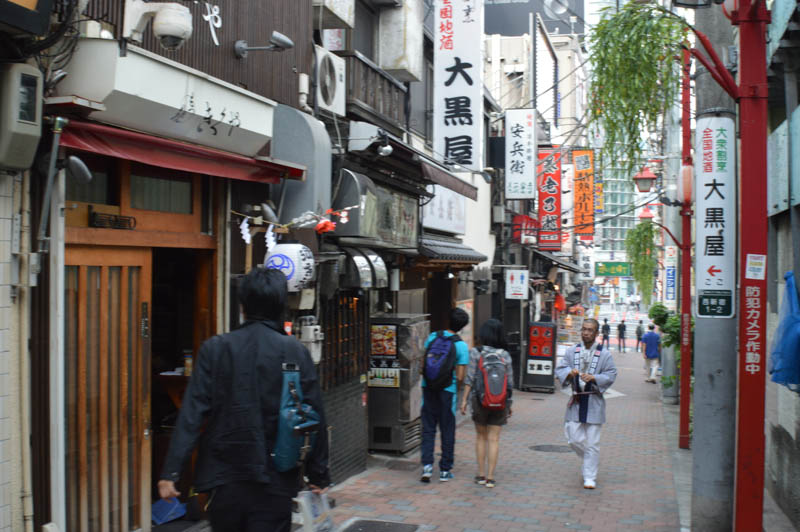
At Shinjuku, we headed to an old area called Omoide Yokocho. Although armed with a map, it was tricky to locate it. Just asked a few locals and we were there. It is a network of alleyways behind the main drag and under the rail tracks. Omoide Yokocho means Memory Lane. Other names associated with this old world neighbourhood include Piss Alley and Yakitori Alley. Walking through the narrow pedestrian only lanes, we passed a colourful collection of neon signage advertising each shop’s specialities. These small eateries specialised in “yakitori”, “ramen”, “soba” and seafood. Beer, sake and other drinks usually accompany these diners. “Izakaya” is a pub like establishment and is iconic in Japan. It basically caters for the average salary man. It is a strange mix of this small old Japan surrounded by towering skyscrapers. We arrived here for lunch. Perhaps it is much more vibrant after sundown with lights from the neon signage and lanterns shining brightly. Hopefully, these small number of eateries will continue to provide hearty comfort food to many more locals and travellers alike.

untitled-58 untitled-65 untitled-62 untitled-61

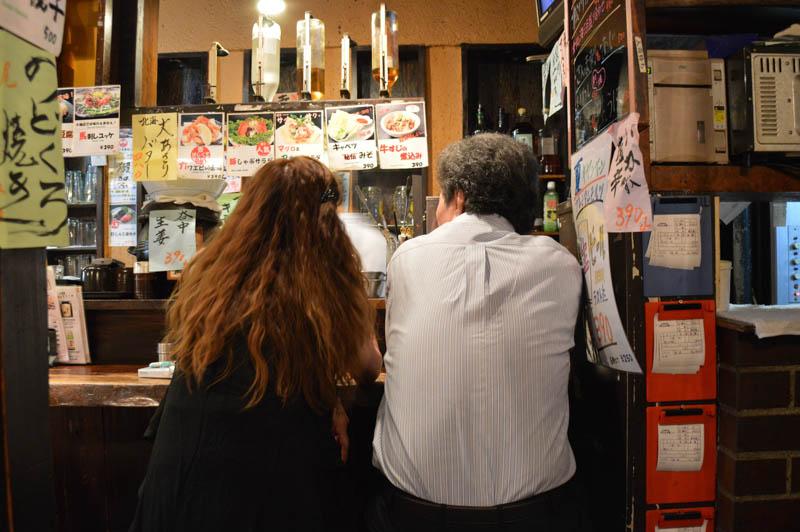
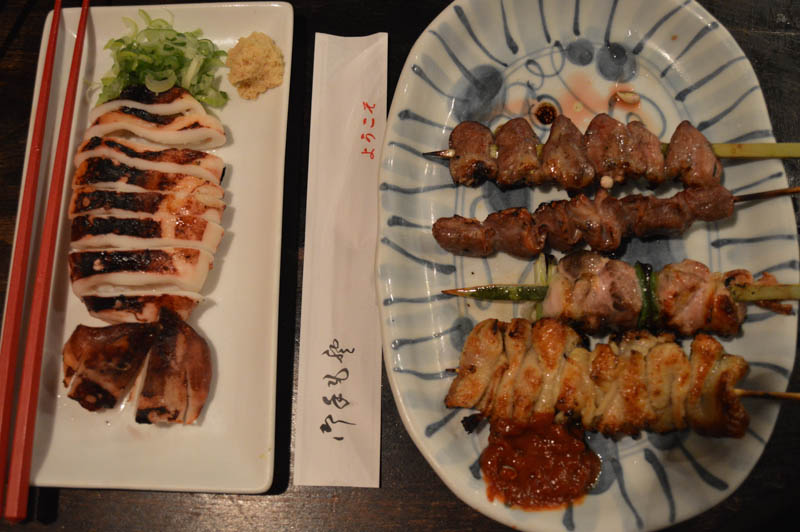
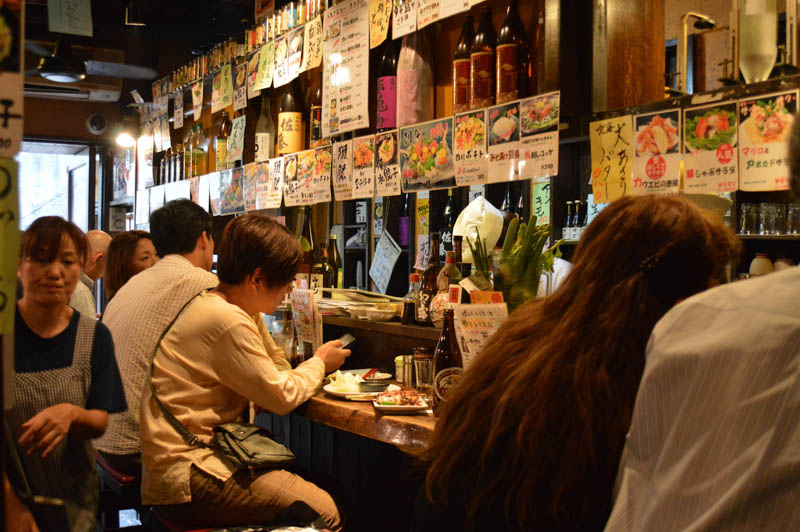
The “izakaya” we went had one long bench table and three small sitting tables which could accommodate about fifteen people. The atmosphere, with bright red lanterns at the entrance, endurable smoke levels and the cosy feeling of the interior all added an appeal. Colourful posters of dishes and prices hung almost everywhere possible. The staff, although could hardly speak English, were helpful. Using pictures, pointing out to other patrons’ dishes and with words like – “no butaniku”, “no- gyuniku”, “toriniku”, “bejitarian”, “sakana”, all helped to break the ice. Sometimes we got it wrong. We ordered the safe option – sushi, some fish which later turned out to be squid, “yakitori” chicken – which came with a range of meat, liver, fat and gizzard. As an accompaniment, vegetable tempuras were served. “Izakaya ” establishments are great as we get a mixture of dishes. Plus, the people are generally easy- going.

untitled-63

“Izakaya’” like this one offer some cheap eats with a variety of choices. There is one almost everywhere around the city. Just look out for the red lantern outside an establishment. Night time is much more vibrant and therefore means, as the establishments are small with limited seating, it can get filled up quickly.

Tokyo – Shinjuku


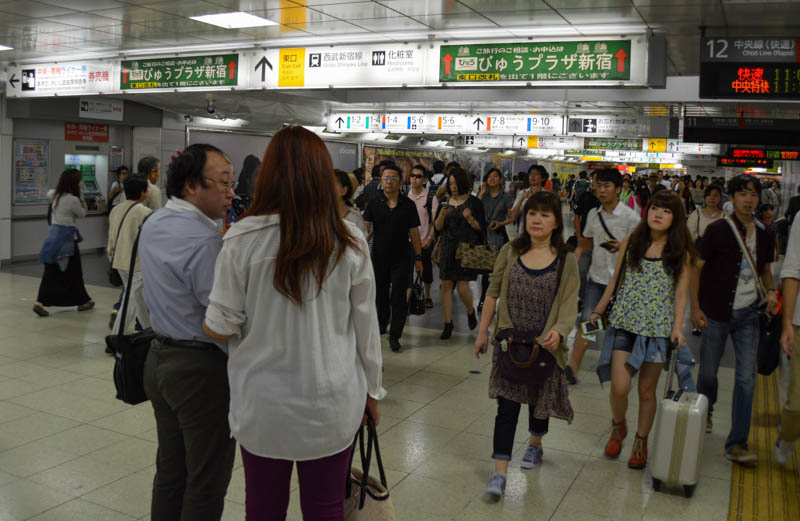
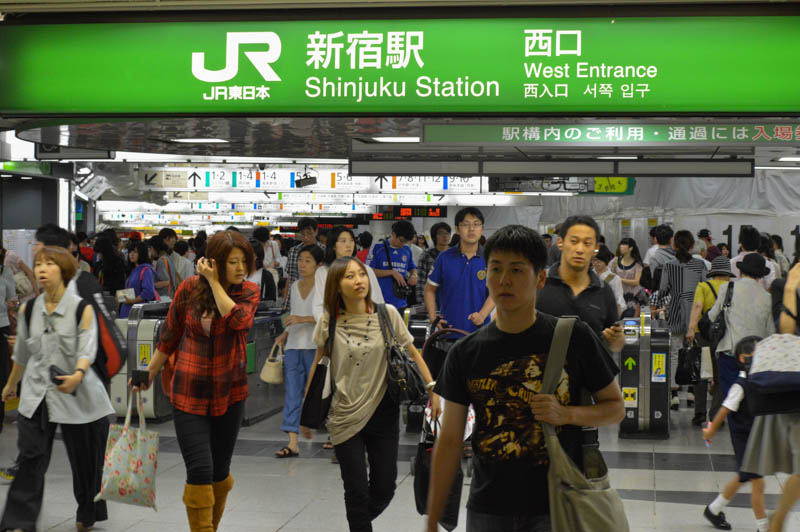
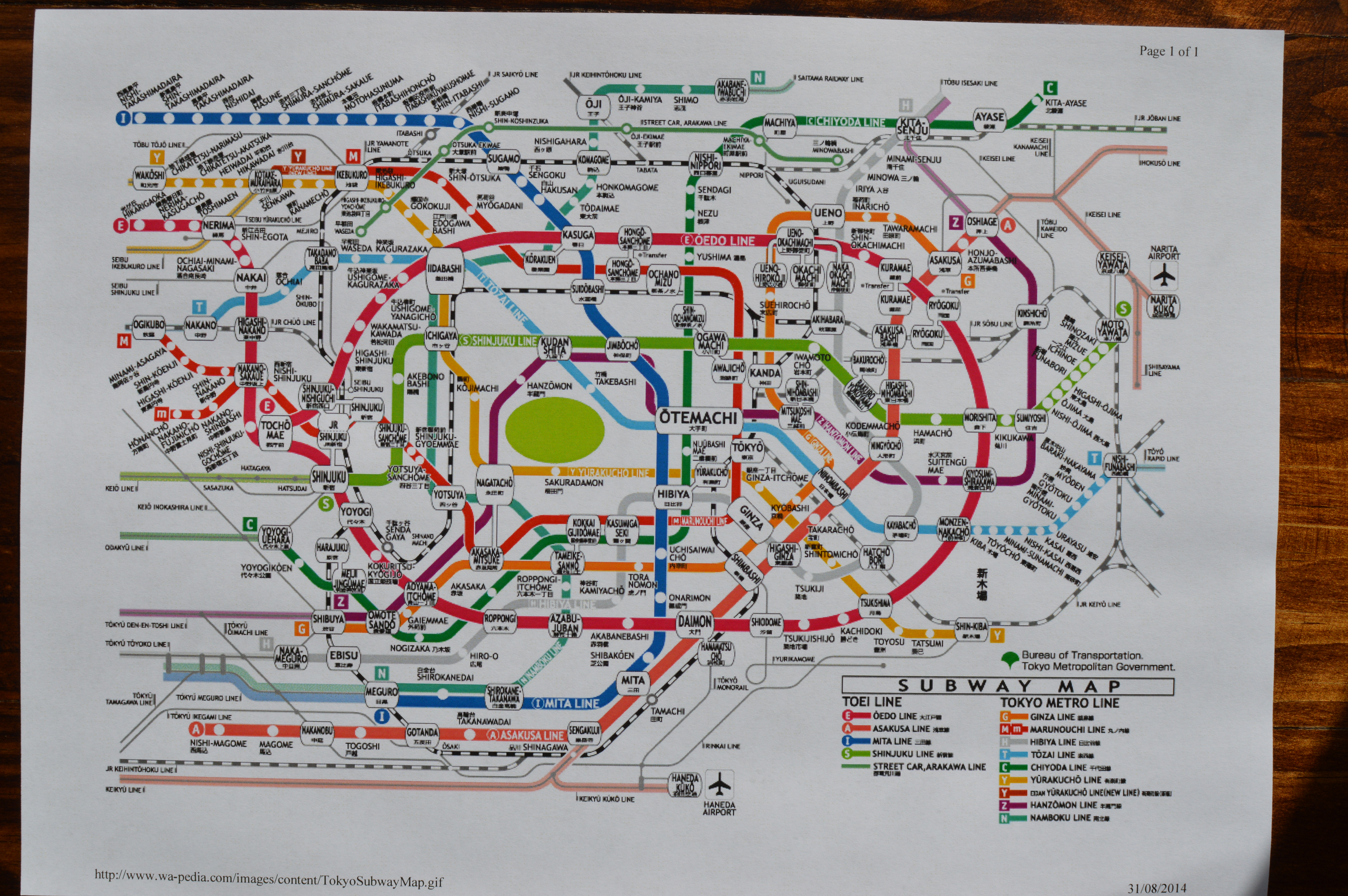
The Yamanote Line took us from Tokyo Station to the sky scrapper district – Shinjuku. This train station is the busiest in the world with over two million passengers daily. Several line including the subway, metro, Odakyu and more use these numerous tracks. This included the Shinkansen – bullet trains. As confusing and busy it can be, it was easy to navigate. Just ask the staff. Most have basic understanding of English and are extremely helpful. The site Hyperdia.com is valuable in checking schedules, options, track numbers, transit and transfer times. The station looked like a self- contained city. It is similar to Tokyo Station but much bigger. The atmosphere – busy and bustling as numerous bodies moved efficiently.

untitled-54 untitled-56

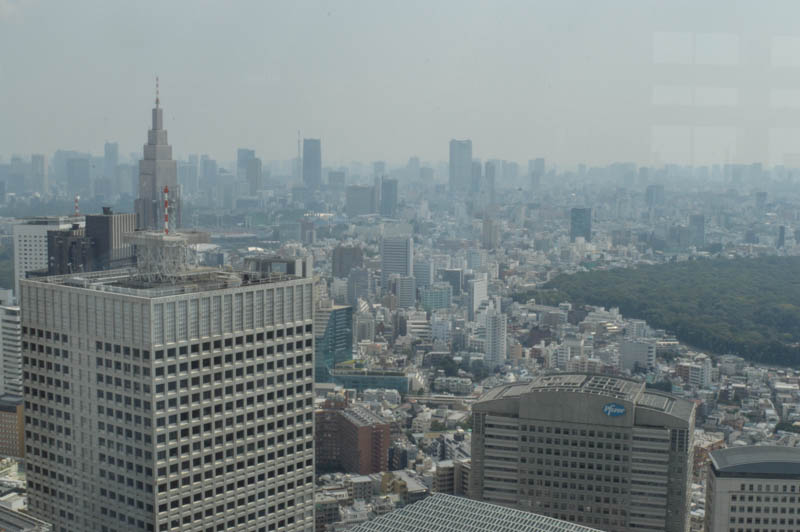
From the west exit on a tree lined road, we headed for the Tokyo Metropolitan Government Buildings. Two shiny towers leaped towards the sky. From one of them, at above 200m, we viewed the hazy shinny city towers and beyond. There were no views of Mt Fuji today. A green lung occupied the southern view – Yoyogi Park. Tokyo is a very clean and efficient city. We could hardly even see rubbish bins.

untitled-57 untitled-66

untitled-67

Shinjuku has the highest concentration of tall building in Tokyo. It is also a great shopping district especially on the east – camera, giant retail clothing department stores and numerous restaurants. Nearby is also Tokyo’s red light district with bars, nightclubs, love hotels and more. The Golden Gai area is also another popular nightlife particularly Kabukicho district. Most eateries in these areas and in most places we had been are small and quite specialised in their meals. There are many “izakaya” establishments here too. The buildings are mostly draped with bright signage and bill boards. With a high density area, people watching here is fabulous – chic outfits, hairstyles, branded clothing and accessories, the straight, the queer and much more.

“It was only early in the morning but already people were flocking to the TMG to get a good look of Tokyo……lines were filling up fast and the wait was almost an hour” – Navindd

Tokyo -Tokyo Station

untitled-53

Located in the bustling Marunouchi District, Tokyo Station is a fascinating place. Thousands of people move through it every day. This was our first gateway into Tokyo city. It has a wonderful array of retailers. From eateries including up- market restaurants to outlets selling clothing and souvenirs. At the Daimaru building, incorporated within Tokyo Station, a floor is dedicated to a variety of mouth-watering “okashi”, snacks. My favourite is “mochi”, sticky balls with sweet fillings. I was just spoilt for choice. On another floor, an enormous variety of food was sold – bento lunch boxes, cold seafood, dumplings, cakes, mixed greens and many more. Price ranged from ¥800 up to ¥1800 depending on the dishes. Generally bento lunch boxes are priced around ¥1200 to ¥1500 [depending on the dish itself]. Any dish with fish is generally priced higher. This is the most economic for the discerning traveller. We did splash it out at restaurants to get a wider experience of Japanese food. We loved these eateries at all the train stations. They basically cater for the train commuters to and from work as well as travellers alike. Other buildings nearby also have food courts in their buildings. How convenient for the people working in these and nearby buildings.

untitled-52 untitled-51

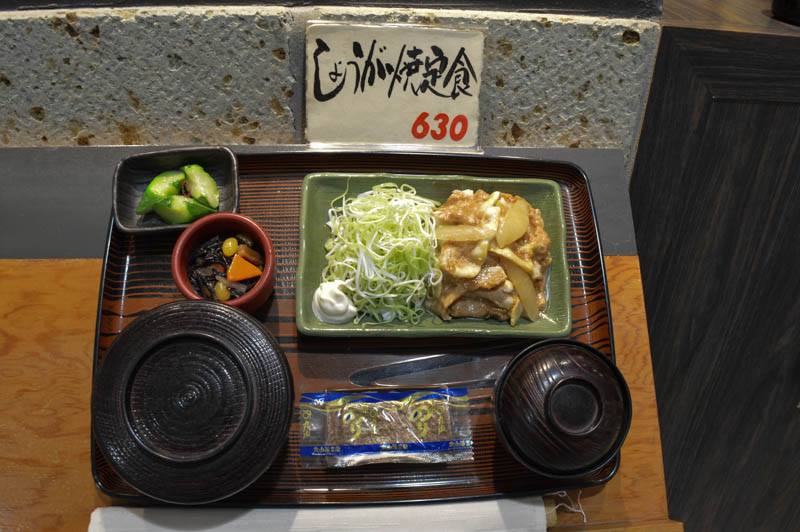
For breakfast, we surveyed the dishes displayed in glass windows. They were all fake. Plastic models imitated real food – noodles, meat, eggs, vegetables like carrots and mushroom. Prices were listed underneath each dish. A coin operated machine spits out a token of our order. We walked into the restaurant. A waitress came over and collected the token and few minutes later, steaming bowls and plates of aromatic meals arrived at the table. Salmon is popular amongst others. This set breakfast came with miso soup and are priced reasonably around ¥700 to ¥1000. By the way, the dishes and arrangement delivered to us were exactly as those displayed at the front glass window.