Tag Archives: Higashiyama

Kyoto – Shinbashi Dori and Gion, Higashiyama District

untitled-175

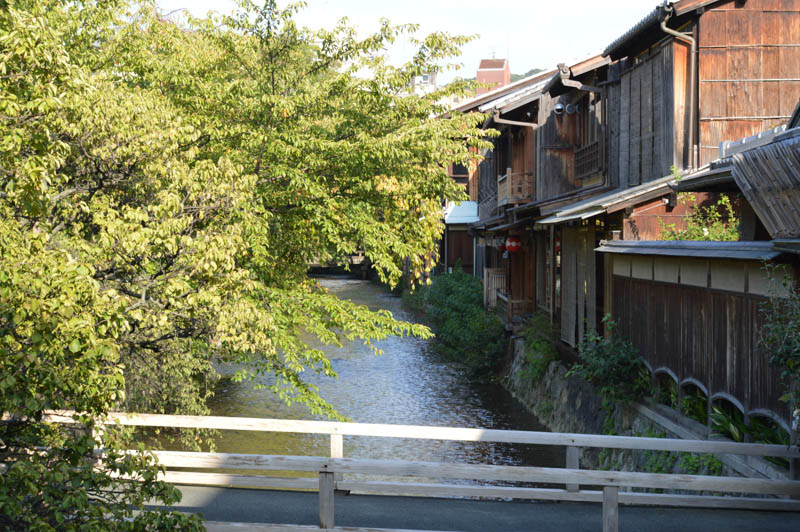
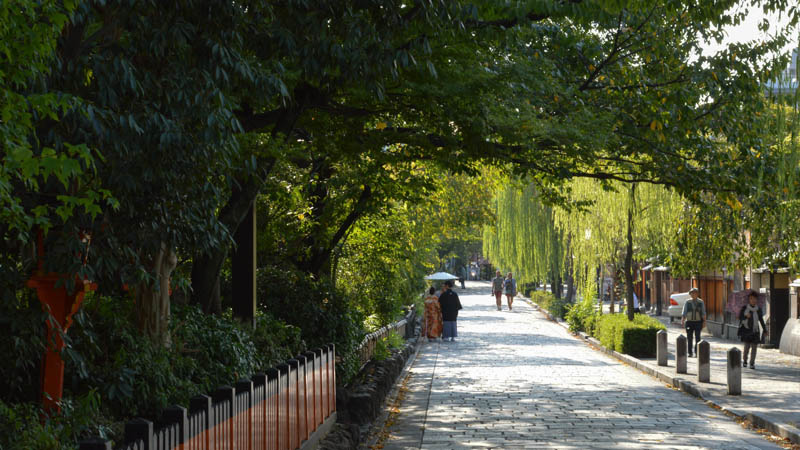
After a Zen experience at Shoren-in Temple, we returned to the reality of this bustling and lively city at Higashi-oji Dori, the main road at Higashiyama. We stopped at a lovely desert shop to refuel. We walked along a quieter Shinbashi Dori. Within minutes, we seemed to a million miles away from the frantic cityscape as we crossed the Tatsumi Bridge near a row of dark orange hued railings. A small shrine, in the north, with a vermillion gate temple, marked the beginning of this street. This is Shinbash Minami-dōri, a lovely cobbled street densely planted with cherry and weeping willow trees along a canal, “Shirikawa”, White River. This is a very picturesque street, particularly the south bank, with trees overhanging over the river and connected by narrow bridges. Suddenly, we seem to have entered into another world. On either side of the street, rustic double storey merchant houses, mostly converted into high end restaurants, tea houses, “ochaya” and probably a few homesteads. Behind wooden lattice windows, slatted doors and bamboo screens “oisudare”, high paying guests are probably entertained by Geishas’ in the evening. Flowing “noren”, cloths hung above the entrances, identified each establishment. During the cherry blossom season, this street is packed with people. This area is the most scenic and quieter part of Gion. We loved it as it was a reprieve from the heated fumes and bustling traffic.
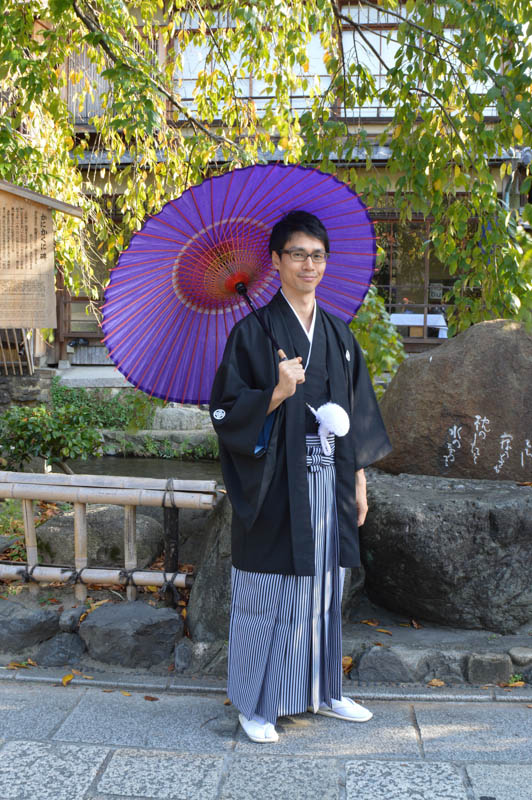
untitled-183 untitled-181 untitled-180 untitled-178Close to the Tatsumi Bridge, a lovely and traditionally dressed couple, who had just married, were having their pictures taken against the leafy and atmospheric street. The bride wore a beautiful and colourful kimono. Both the couple had his and hers umbrella. With a little smile and “sumimasen”, they allowed me to photograph them. I should have done the same with my opportunity when I encountered the “geiko” and “maiko” in Arashiyama! Through a narrow bridge, we continued our walk towards the heart of old Kyōto in Gion, Hanami- kōji, Flower Town.

Gion, Higashiyama District
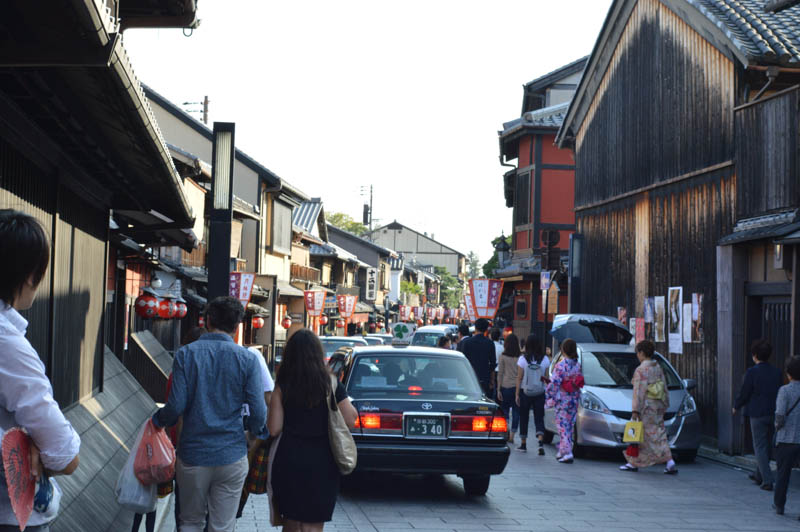
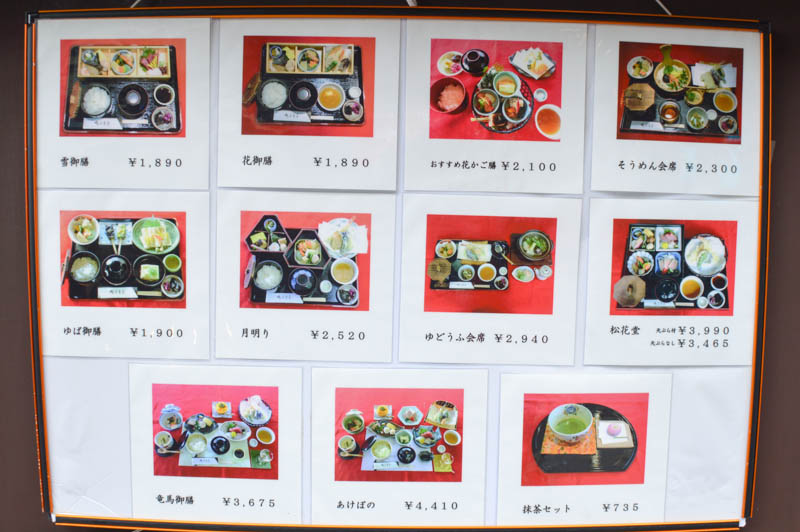
untitled-185This is the most popular area in Gion, Hanami-kōji, located between the busy Shijō- dōri and Kenninji Temple. The main street and the side alleys were lined with rustic double storey “Machiya”, town houses which had mainly been converted into restaurants, shops and tea houses. Red lanterns hung at the entrances all along the street. It was lunch time and we wandered on the street looking at the prices quoted at the entrances. This is an exclusive and therefore expensive area for meals. In the evenings’, behind screens and doors, high paying clients wine and dine with the company of the magnificent geishas’ and “maikos”, a “geiko” apprentice. Possibly served the Kyōto style Kaiseki Ryori (elegant Japanese cuisine). This is one of the licensed geisha areas, “hanamachi”. Tourist will never be entertained by a geisha unless they have an introduction and an invitation to a tea house, “ochaya”. Fortunately, there are other avenues to witness Geisha perform. Today, this paved street was crowded the people and traffic. Watching kimono clad women walking daintily along the street was a delightful sight in the late afternoon heat. This is a good place to watch lavishly dressed and beautifully poised geisha make their way to an evening engagement. We headed towards Yasaka Shrine where we finally indulged in some “ramen”, noodles.

Kyoto – Sannenzaka Steps and Ninenzaka Steps

untitled-127 untitled-128 untitled-122

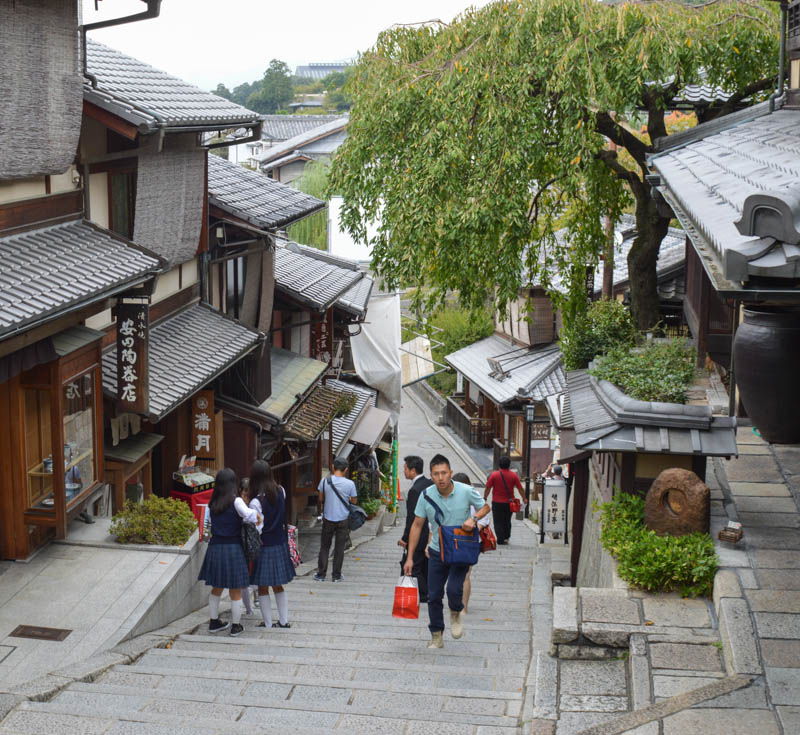
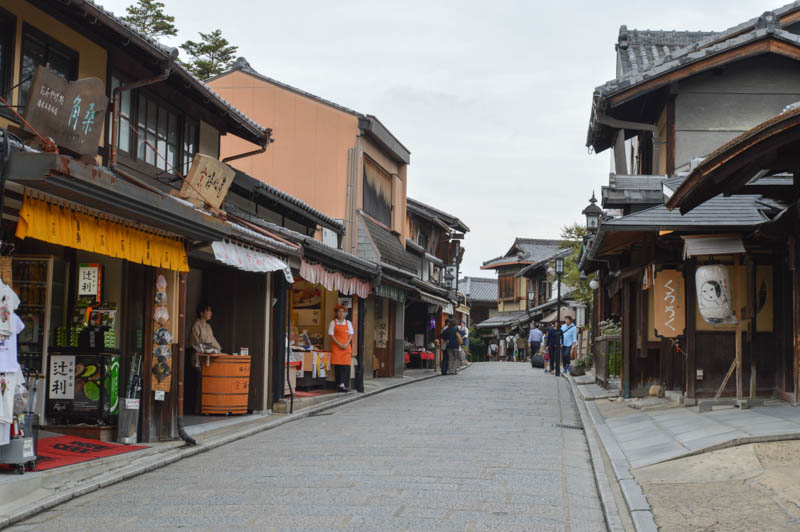
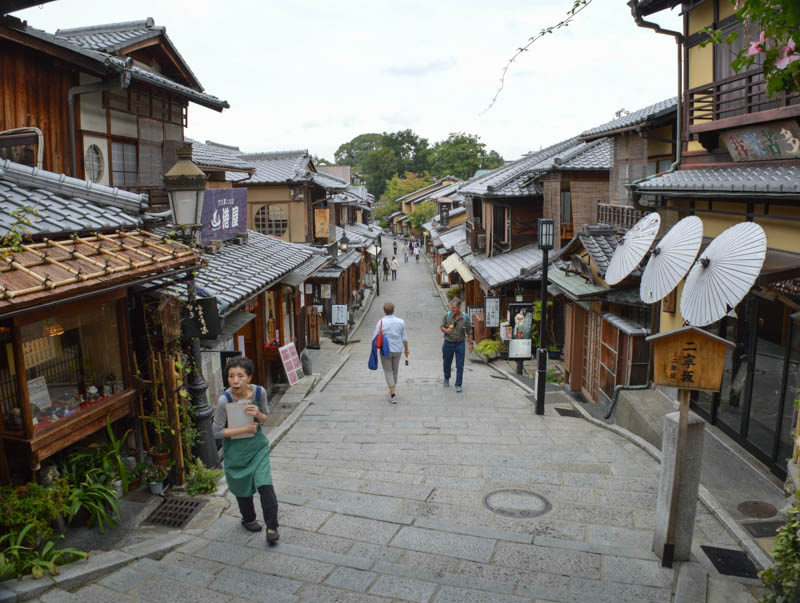
These two paved pedestrian only streets are preserved historic streets located between Kiyomizudera and Kodai-ji Temples in Higashiyama. The narrow streets are reached via steep steps and are lined with some of the best restored traditional wooden houses in Kyōto. Nowadays, most are restaurants, souvenir shops, cafe, inns and cosy tea shops. Therefore it can be touristy and crowded. Surprisingly, it looked deserted this afternoon. Perhaps due to the cloudy day! Legend said that, if you fall at Ninen- zaka, you will die within two years. If you fall at Sannen- zaka, you will die within three years? Best not to run in these streets, be mindful!

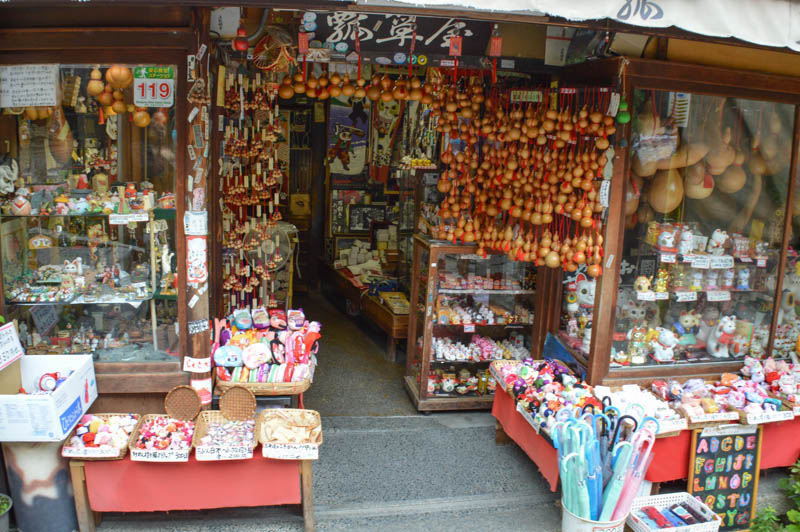
Our approach to firstly, Sannen-zaka was via the crowded Kiyomizu-zaka. A signage led us to a descending flight of concrete steps. The myriad of shops on the main street continued here as well. An aged cherry tree on an elevated corner leaned towards these steps. The restored wooden houses with clay tiles were charming. This is a shopper’s paradise. A variety of items were sold here – lanterns, umbrellas, ceramics and pottery including tea cups and bowls, bamboo baskets, novelty shops with musical instruments and weaved baskets and pretty fluffy dolls including cats to name a few. Then, there were all the eating shops – local specialities included, from “ramen” and “sushi”, ice cream and “gohei”, “sanbei” to nice cosy cafe. As we walked down the street, vendors called out to give away samples. The food here are mostly local specialities and homemade. I can’t resist the varieties of “mochi” on offer. The sweet smell of green tea, “ocha” and the stronger “macha” wafted through in some areas. At one corner, Yasaka Pagoda, Ho-kanji Temple established in 589, towered above these neat streets and tiled roofs. This is the oldest pagoda in Kyōto. We arrived at Nene-zaka, another flight of steps. These pedestrians only paved streets made walking pleasant. The crowds added colour and sometimes a spectacle. Kimono clad women in dainty footwear added beauty to this unique bygone atmosphere.

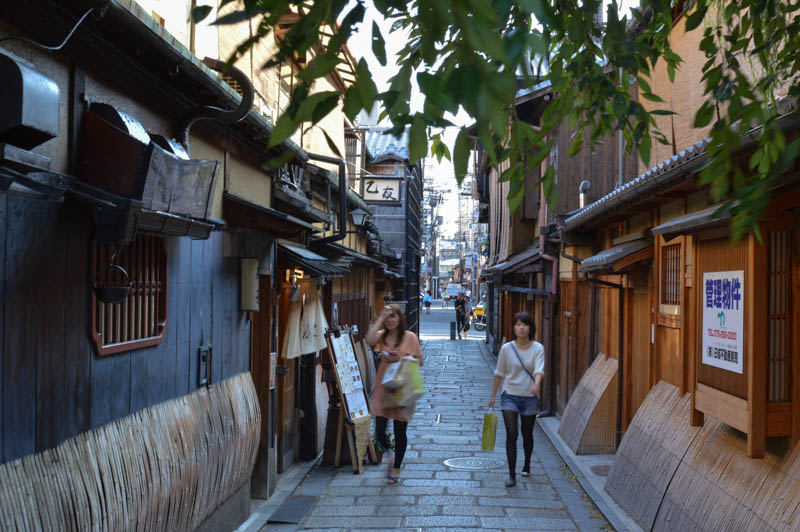
untitled-125 untitled-124 untitled-129 untitled-126There are numerous side streets originating from the main street. The sight of these rustic wooden building, some established over a thousand years ago, gave a genuine opportunity to appreciate the life of a past era. Ryokans, inns, upmarket restaurants, shrines and homes of the locals inter- mingled with the gift shops, eateries, and tour groups with flag waving leader, pull- rickshaws with red blankets, melodious call to buy and sample local delicacies and flowing “noren” inviting visitors. This is definitely a great place to people watch – bowing, low tone talking, nimble walking, picture-taking, local etiquettes and mannerism, flowing silk kimono and modern style, etc. The ambiance of old Kyōto is quite visible here, whilst touristy. With cherry, “sakura” and maple, “momiji” trees; sprouting pagodas and quaint houses – this is one of the best walking and atmospheric streets we had experienced. Here, the culmination of the arts, cultures and traditions (new and old) are explicitly and wonderfully exposed. This is a rare brief glimpse into the past. We continued on the unique street and finally reached Kodaji Temple. This flagstone path, Nene-no- michi street, lined with tea houses and restaurants, led to Yasaka Shrine, the heart of old Higashiyama.

Kimono

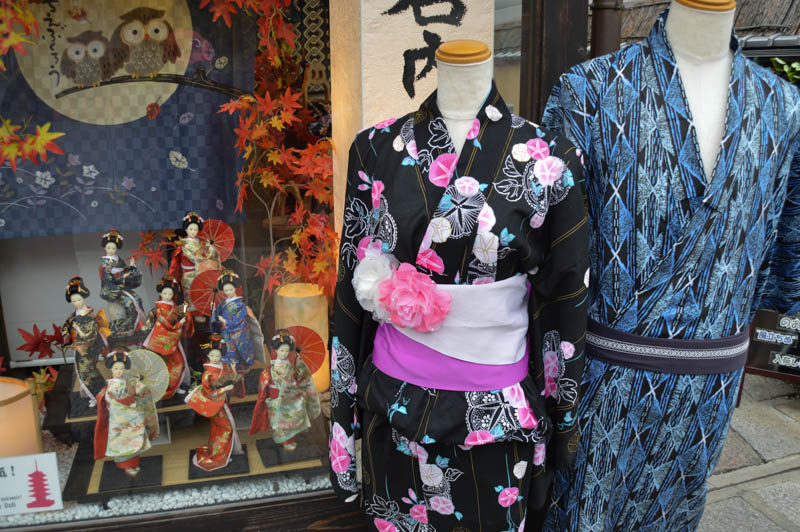
untitled-131One of Japan’s iconic images is the beautiful free-flowing kimono. They are not cheap or as simple as it looks. Sometimes in layers with undergarments, mainly silk or cotton, mostly floral with a few colours and at occasions, like those worn by geisha are very colourful. There are many styles, designs and attachments. I don’t know or want to attempt to describe all these. All I know is that they are beautiful, feminine, and atmospheric and just catches the eye on any street or place. Based on Wikipedia, here are some terms for further reading:-

women’s kimono style……………….Furisode; Hmongi; Iromuji; Komon; Edo komon; Mofuku; Irotomesode;

parts of a kimono……………………..Dura ; Fuki; Sode; Obi ; Maemigoro ; Miyatsukuchi; Okumi; Sode; Sodeguchi; Sodetsuke; Susomawashi

Accessories and related garment……Datejime; Eri- sugata; Geta; Hakama; Haori; Haori-himo; Hiyoku; Nagajuban; Kanzashi; kimono surippu; Koshihimo; Obi; Susoyoke; Tabi; Zori

Kyoto – Kiyomizu-dera Temple

untitled-101 untitled-117

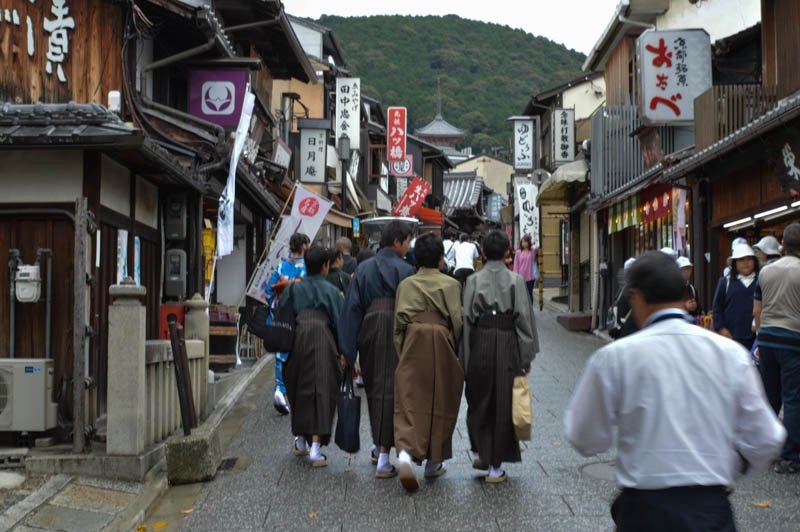
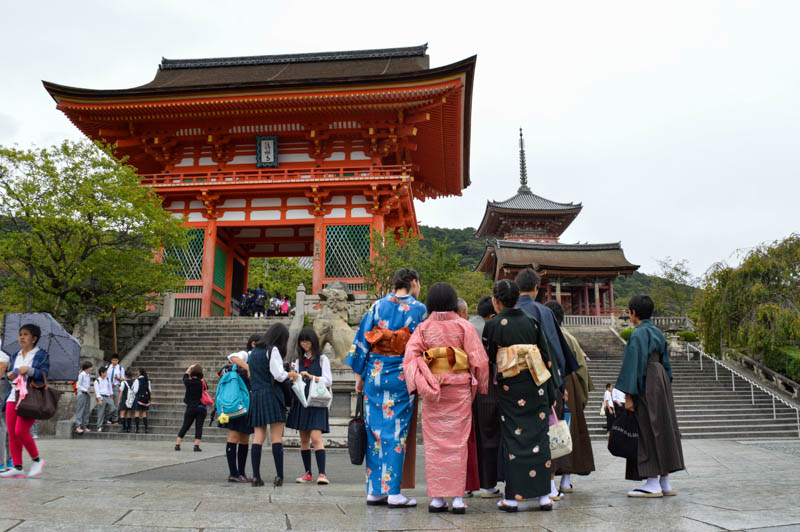
We arrived early at the historic Higashiyama district in Eastern Kyōto by bus and walked on a narrow uphill paved road toward Kiyomizu-dera, a Kita-Hosso- Shu sect temple. All the usual tourist trappings were lined up on this street, Chawan Zaka. It included souvenirs and pottery shops, quaint restaurants, snack food outlets, prayer incenses and ice cream shops. This morning, there were no children, with colourful backpacks and uniform hats, on school trips. However, the streets had a more ascetic and traditional feel – women in bright coloured kimono and men in the dark plain dresses. The cool cloudy weather added an appeal especially around the mountains. On the horizon, a towering pagoda leaped into the sky. The slow walk is a great introduction to this temple.

untitled-103

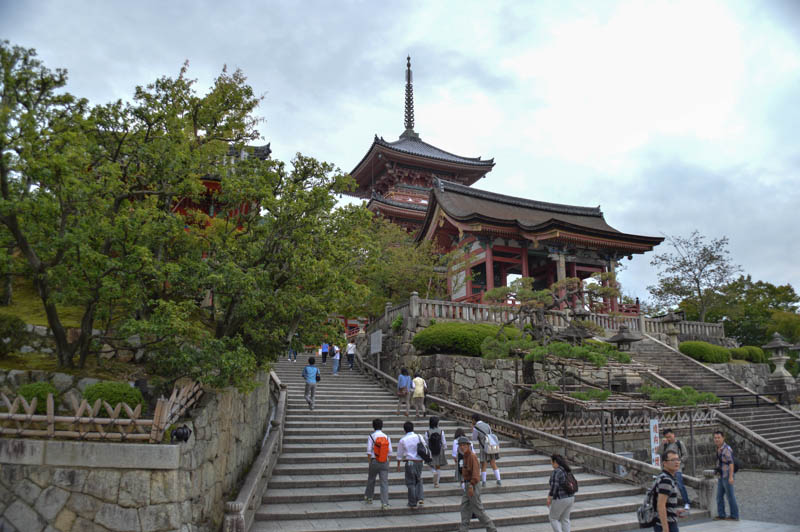
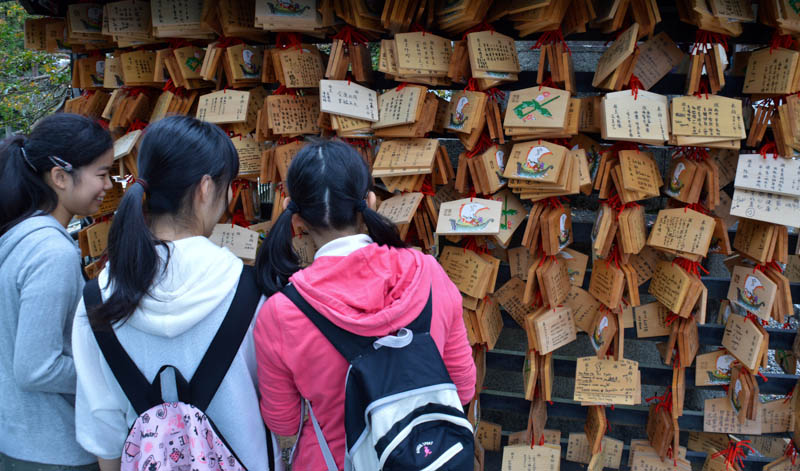
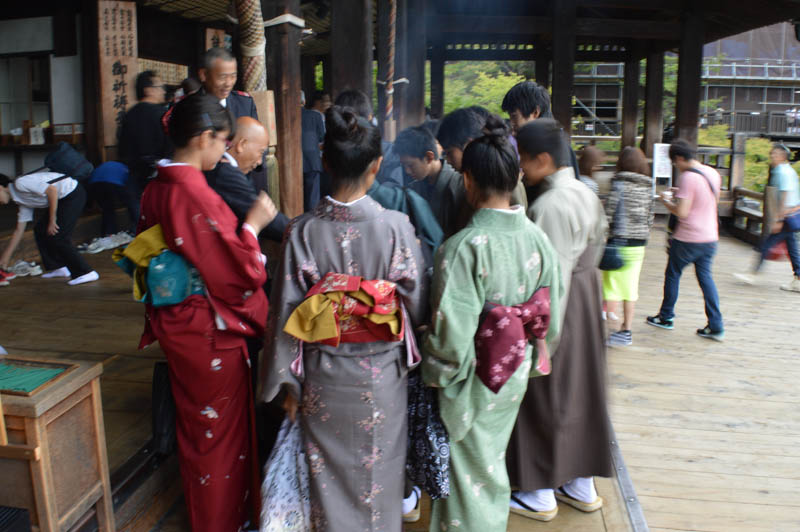
Kiyomizu-dera, “the temple of clear water”, half way up Ottowa Mountain, is a historic Kita-Hoso sect temple established by Enchin in 778. It was named after Otowa Waterfall, where spring water from the mountain has been falling since its foundation. A series of concrete steps led uphill towards the entrance, a vermillion Niōmon, “deva gate”. Two deva (god) guard the entrance. Beyond that, a three- storied pagoda, Sanjunoto, rose above the ground. Numerous buildings occupied this large temple complex. The beautiful and elegant kimono clad girls and women and the men with kimono top and flared skirt-like “hakama” added a wonderful array of colours and atmosphere in a rather cloudy day. School girls in navy blue skirts and knee high socks with light daypacks paused at the entrance. Another flight of steps through the Niōmon gate brought us deeper into the complex. Beside a sub- temple, “Ema”, wooden prayer plaques, hung on a wooden frames. Colourful pictures and letters gave some comforting words. Three girls read some “Ema” with delight.

untitled-107 untitled-108

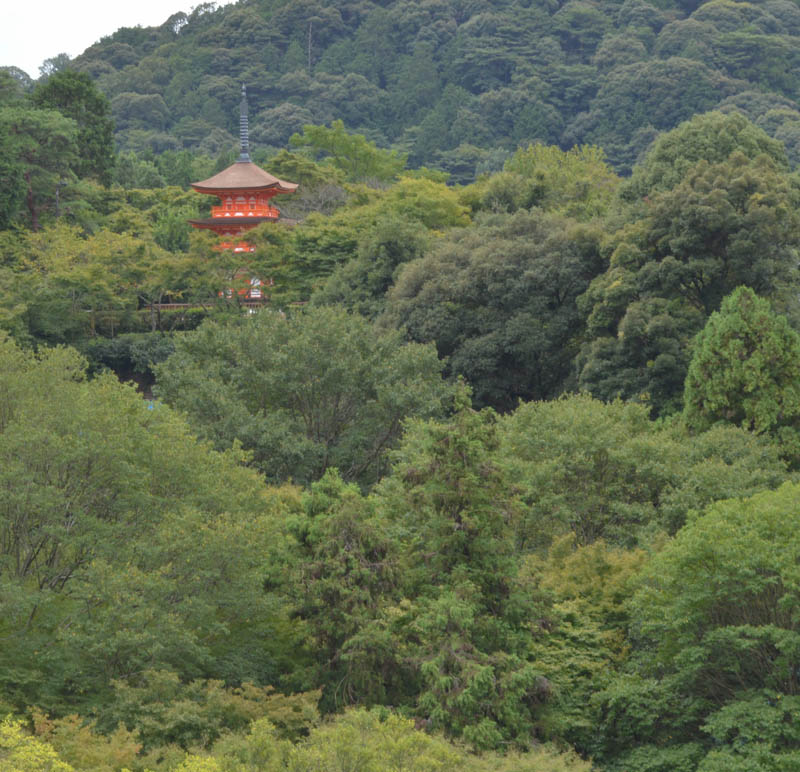
From here we entered the “Hondo”, Main Hall, a national treasure. It was amazing to see the imposing veranda or stage made of cypress, “hinoki” boards literally suspended above the dense green vegetation. 12m high “keyaki”, Japanese Zelkova pillars supported the structure without the use of a single nail! Wooden braces run through these gigantic support pillars. It is a very impressive construction indeed with distant views of Kyōto City and the surrounding mountains. In the south, the orange three storied Koyasu Pagoda emerged out of the forest floor. The smell of burning incense perforated through the thick still air. A few worshippers gathered round a large bowl and placed incense in prayer. Inside the hall is an Eleven- faced and one- thousand- armed Bodhisattva of Compassion.

untitled-112 untitled-110

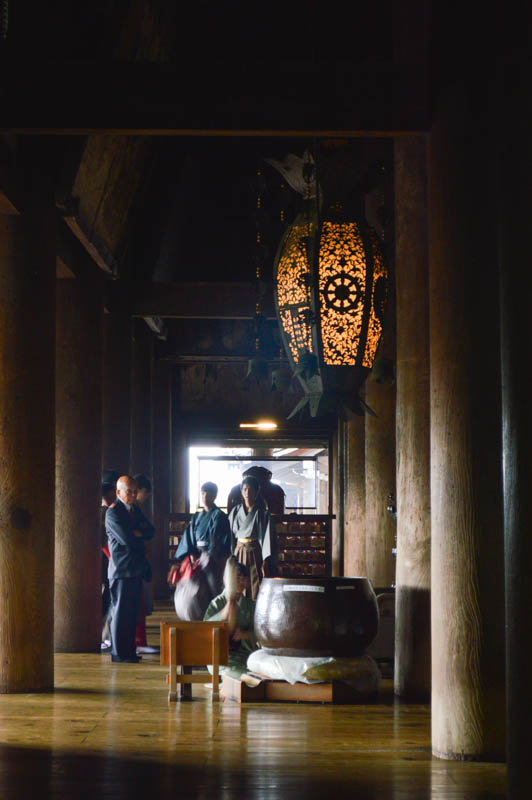
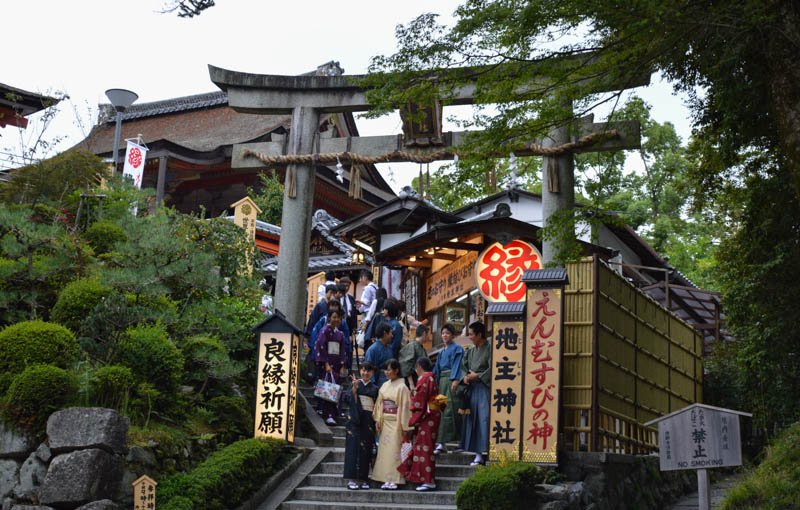
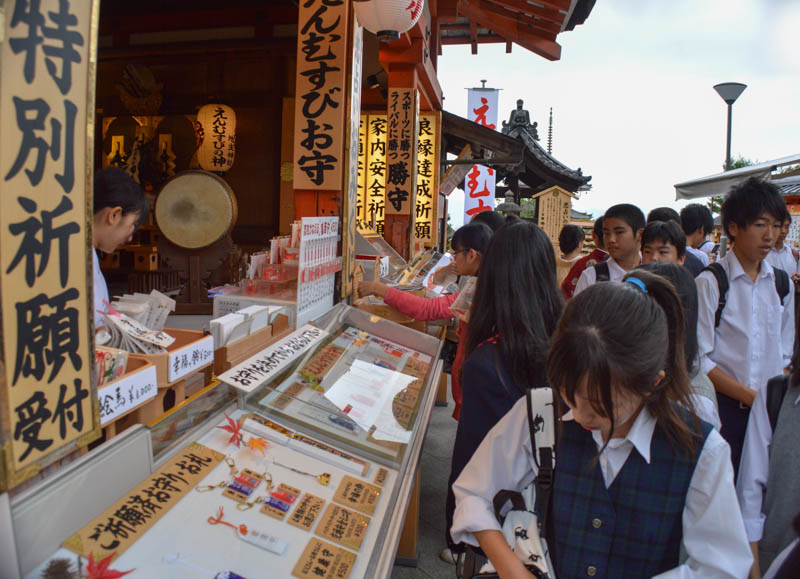
A lantern hung above the “Hondo” entrance provided a little illumination to the low lit hall. A steady procession of people flowed through the inner sanctuary with every step measured. Murmurs of prayers could sometimes be heard intermixed with shuffling of footwear on the wooden floor boards. Behind the hall is the Jinshu Shrine, dedicated to the deity of love and match-making, Okuninushi. Through a flight of steps under a grey stone torii, surrounded by greenery, we reached the shrine. It was crowded mainly with young girls. A souvenir shop was doing a brisk trade. Items included “ema”, wooden plaques written with inspirational words, “omikiji”, fortunes written on strips of paper, totems in colourful pouches – “for conception:1000 yen; for easy delivery, for against disaster, safety travel : 500yen”. Opposite, the shrine, individuals with eyes shut, paced themselves, some with encouragements and some with whispers, between two stones 18 meters apart. This is said to bring luck in finding love. It wasn’t a ritual but carried out with fun and good spirits. A thick straw rope, “shimenawa”, hung on the stones. A statue of the god and his messenger was sited at the entrance

untitled-113

In another corner was a Nade-Daikoku-San, written on a board with the words – “Fulfilment of various wishes. If you pat the bronze statue, your prayers will be answered”. The big bellied statue with a sack on his back is a bearer of good fortune. I rubbed his shinny belly too. There is never too much luck!

untitled-114

Kyoto – Ginkakuji Temple

untitled-72 untitled-71

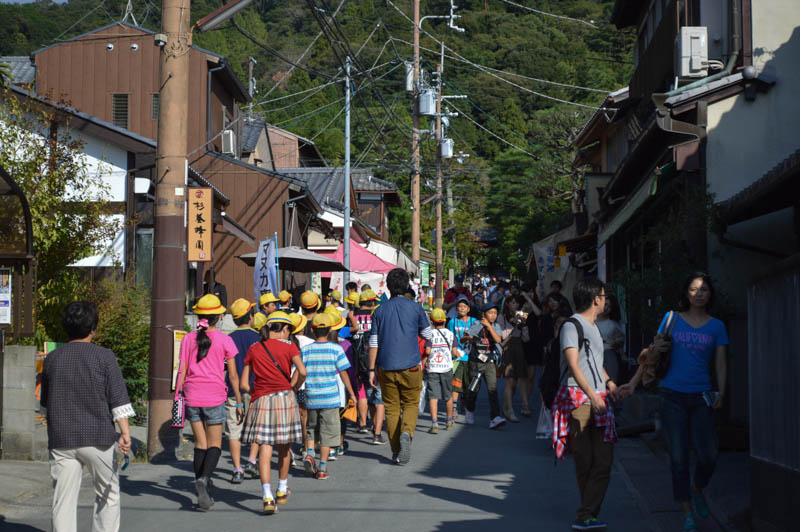
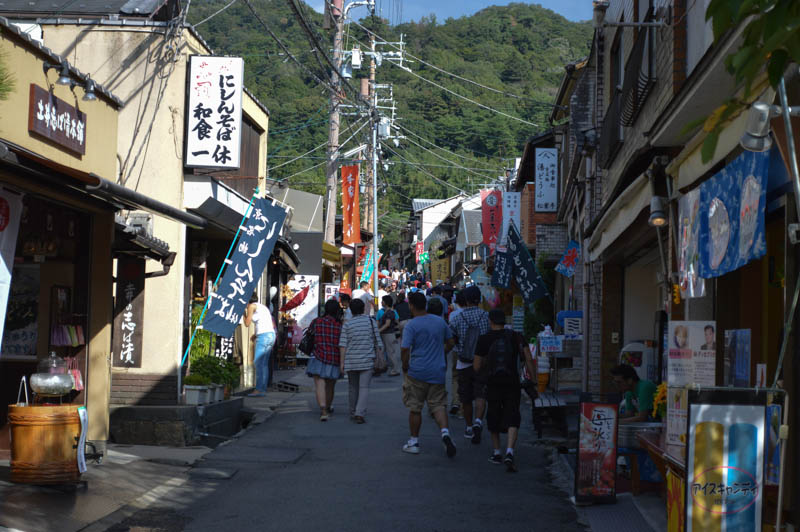
We hopped into a bus and continued our temple journey to the mountainous eastern Kyōto (Northern Higashiyama District). Walking away from busy Imadegawa Dori, we entered a narrow Ginkakuji- cho. This street was crowded with pedestrians, mainly kids on a school trip. The street was lined with restaurants, souvenir and retail shops. The road led uphill towards a lush mountain. The sounds of kids chatting away, with a cheerful attitude, curiosity and innocence, created a heart- warming atmosphere. Ice cream parlours and fruits drinks outlets had queues of people lining up. The sun, although hidden, radiated much heat and it was humid.

We entered a narrow passage, “Ginkakuji-gaki”, lined with tall trees, and entered through the So-mon Gate. The street had tidily trimmed hedges on both sides, and a neat bamboo fence. We then entered the Chu-mon Gate. It was crowded today. The views opened up with contrasting sand and gravel against lush mountainous greenery. A two storey dark exterior, “Kan’non- den”, commonly known as Ginkaku, the Silver Pavillion, is set amongst tall pines and landscaped lake and garden. This was built as a retirement villa for Ashikaga Yoshimasa, a shogun, in 1482 and later converted to a Zen temple in 1490. He modelled it after Kinkakuji (the Golden Pavilion) in Kyōto’s northern mountains. The pavilion was never covered in silver.

untitled-76

“The entrance to Ginkakuji was a long street, packed with people and shops everywhere. It felt like I was back in Magome!” – Navindd

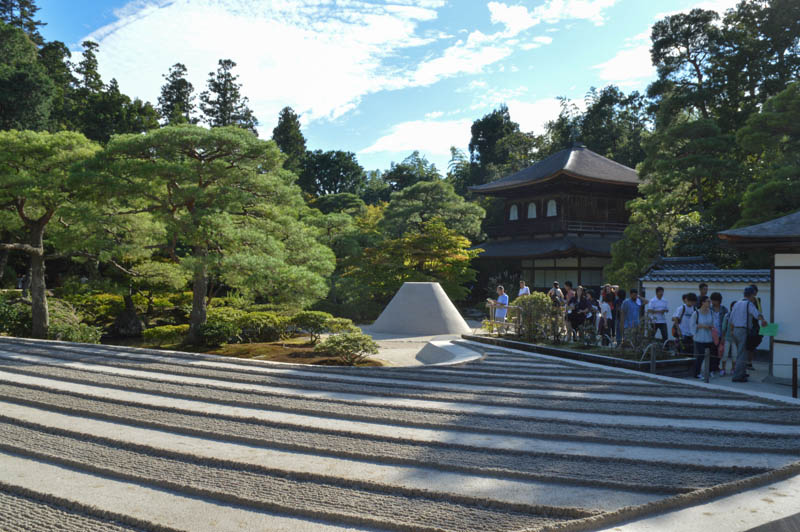
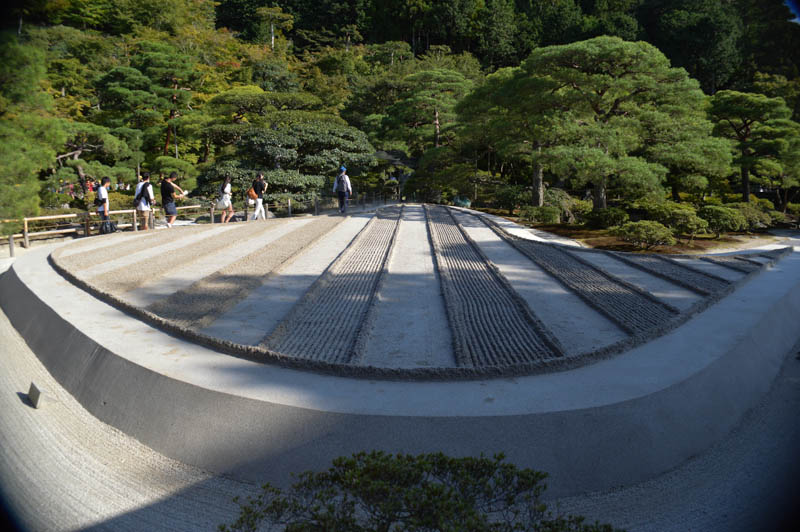
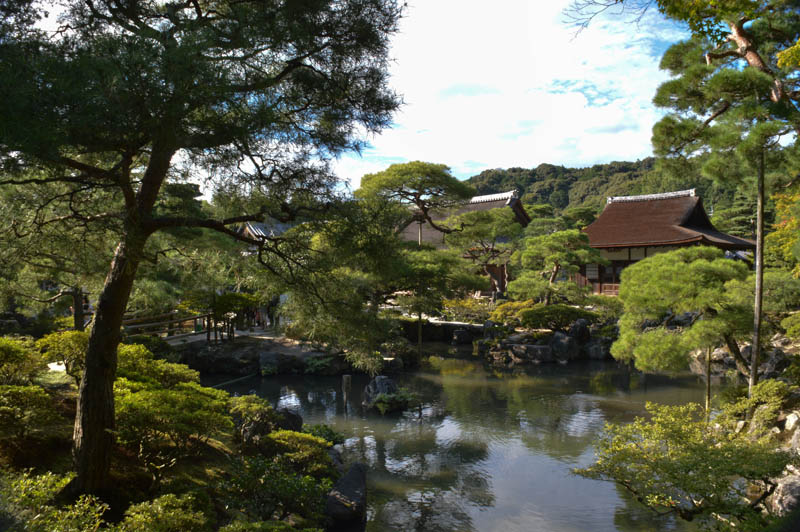
untitled-81Next, we came to an expansive dry sand garden with a rather large truncated cone, 2m high, made with fine white sand, “Kogetsudai”, Moon Viewing Platform. It stood out against the raised and raked coarse sand, “Ginshadan”. Kogetsudai is said to resemble Mount Fuji amongst others. On full moon nights, the moonlight is reflected onto the “Ginkaku”, Silver Pavilion. Magnificent greenery surrounded the “karesansui”, dry garden, and the beautifully architectured building flanking the “Sea of Silver Sand”, including the “Hondo”, Main Hall and “Tōgudō” which are national treasures. A wonderfully landscaped pond, “Kinkyochi”, the Brocade Mirror Pond, with large sculpture pine trees leaned towards the pond and hugged this dry sand garden and the adjacent buildings. This pond is punctuated with islands connected by stone bridges. Ginkaku-ji’s “chisen- kaiyushiki”, pond-stroll garden, was also modelled after the garden of Saiho- ji. A moss garden appeared under the shades next to the pond. A nearby small waterfall, “Sengetsu- sen”, Moon Washing Falls fed this pond. The water is continuously replenished.

untitled-74

A meandering path crossed stone bridges, past moss covered gardens and flowing ponds, as it continued uphill. Looking back towards the majestic “Ginkaku”, Silver Pavilion, reflected on the “Kinkyo-chi” pond, I can easily imagine the tranquillity derived from these surroundings.

Islands and stone bridges had their own colourful names. Shadows of trees and buildings reflected off the clear water of the pond created a surreal and vivid appearance. With the ever changing light, although cloudy today, the dramatic views continuously changed. Perhaps reflections of our own lives are represented here!

“The temple was also famous for its 2m high sand cone, which sat perfectly on the side of one garden, with not a single mark on the sides……..the Silver Pavilion…trees surrounded it and it seemed to be floating on the pristine green pond….It was worthy of a front page of any travel book. Inside the pavilion though, there was nothing much. It was just an empty room” – Navindd

untitled-77 untitled-78 untitled-80

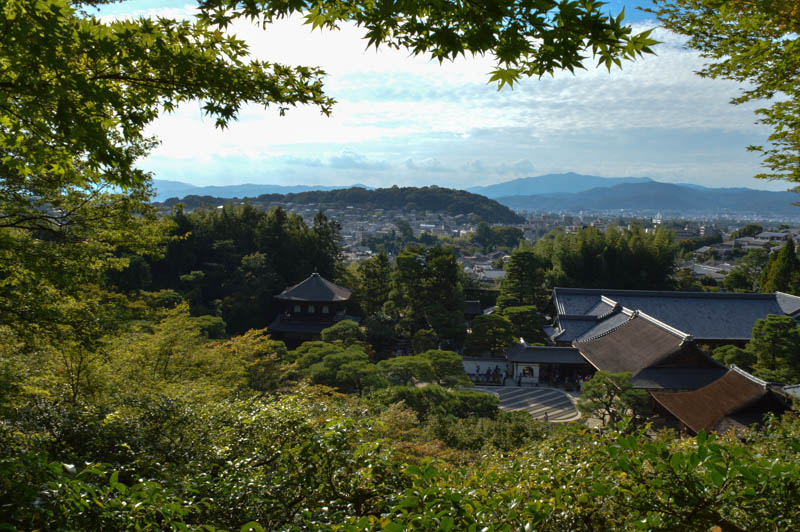
The path wound uphill surrounded by a mixed forest. Numerous maple trees were scattered around this forest. Moss covered vast areas of the shaded ground under the forest canopy. I could imagine the dramatic autumn colours of the expansive temple grounds. From the hill top, there was a lovely scenic view of the temple complex with a backdrop of Kyōto. The usage of minimum natural elements such as sand, stones, water and plants; strategically placed allowed us to see different perspectives as we strolled around this tranquil landscape. It is not hard to understand the immense pleasure that can be gained with simple things. Ginkaku- ji does just that!