Tag Archives: Shōren-in Temple

Kyoto – Shōren-in Temple 2

untitled-165

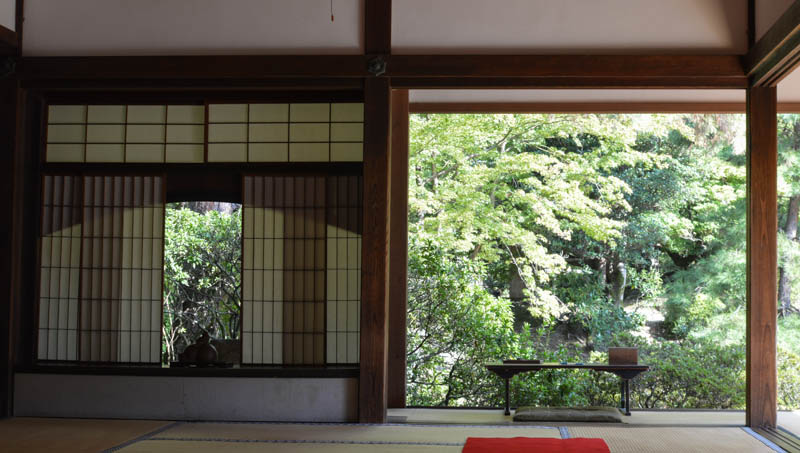
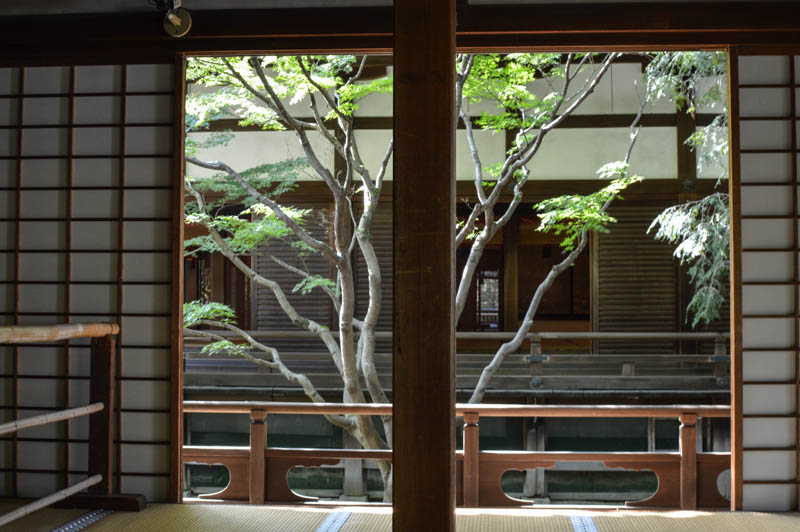
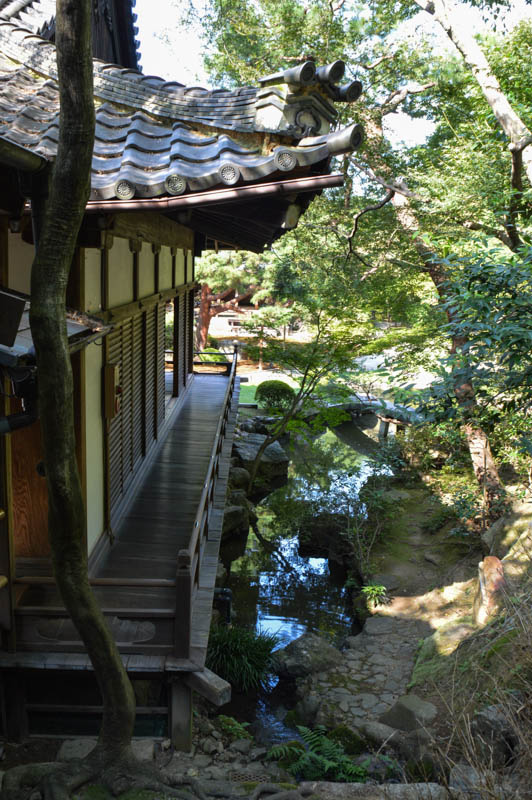
We dragged ourselves out of this relaxing Kacho-den Hall to the next building, Kagosho, connected by narrow wooden walkways.  It has a few tatami-matted rooms separated by “fusuma”, sliding doors. At one end of this hall is a typical image; a framed view of a low branching either a maple or cherry with young shoots emerging. The contrast of the darkened interior by dark wood refracted exterior light and the lime green leaves of the tree created a delightful view. “Fusuma” walls were painted with pines and birds. The whole room was sparsely decorated with items. This is something that I liked; uncluttered, simplicity at its best. The building has a veranda on all three sides, and with a great view. I loved the idea of a veranda surrounded by nature. The “Ryujin-no Ike”, Dragon Heart’s Pond, lies just beside on one side. A little stream gently flows by. Through another narrow wooden corridor, we passed an almost rectangular raised “tsukubai”, stone water basin. This one has a name, Ichimonji Chozubachi – symbolized valiance. It is said to have been donated by Toyotomi Hideyoshi during the Momoyama Period [1573- 1603].

untitled-160

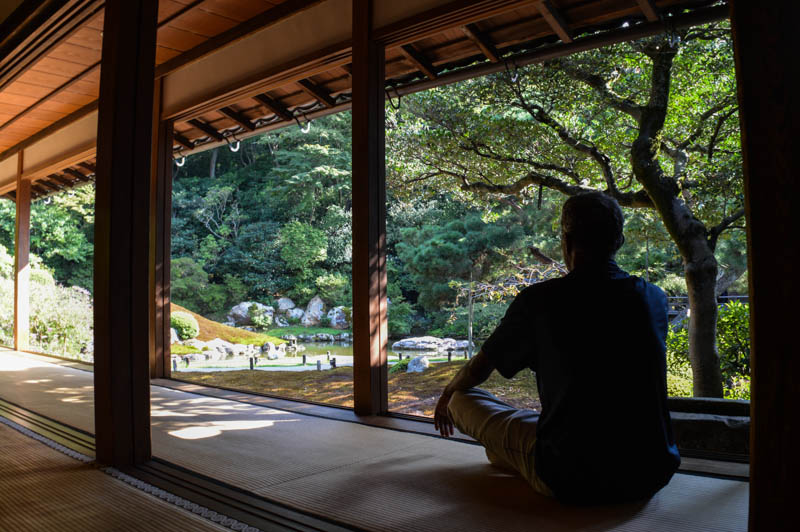
The Shidoko-do Hall houses the temple’s main objects of worship, two paintings – a Mandala (not commonly displayed) and a replica drawing of Fudo Myo-o, a fearsome deity of wisdom who is surrounded by flames and holds a sword. The view of Kogosho and the “Ryujin-no Ike”, Dragon Heart’s Pond, with the backdrop of the Higashiyama Mountains is enchanting. This picture is complete with a “tsukiyama”, artificial hill, a thirteen-story stone pagoda, pond and mindfully selected plants – combines palms, pines, shrubs, evergreens and deciduous trees, flowering plants, etc. A large stone, “Koryu-no-hashi” in the pond is supposed to remind one of the back of a dragon bathing in the pond. A stone bridge connected the two banks. On the right of the pond, is the Garden of Omori Yuhi, along the slopes. This is one of the most beautiful Japanese gardens that I had seen that effectively utilizes its surrounding natural beauty.

untitled-164Behind the pond, on the slopes is the Garden of Kirishima, planted with “Kirishima”, azaleas. A path leads towards the barely visible tea house, Kobun-tei. This is a strolling garden with paths meandering through. The next building is the Shinden. A large palanquin with the imperial chrysanthemum crest on it was displayed. Behind, on the white “fusuma” walls were painted with storks amongst pines and cherry trees. In another room is a large painting of a beech and pine tree by Sumi Yoshi. In the courtyard, there is a great view of one of the ancient camphor trees.

Shōren-in Temple had been a wonderful experience. Perhaps its original design as an imperial palace; three different but wonderfully landscaped gardens utilising the natural surrounding hills or perhaps there were few distractions, people. This is now one of my favourite places.

Kyoto – Shōren-in Temple

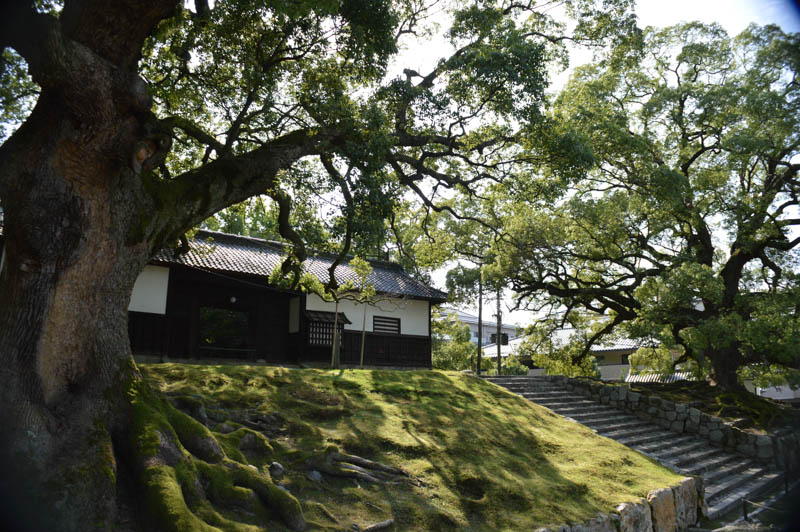
untitled-156 untitled-158We wandered the secluded streets from Chion-in Temple to Shōren-in. It front of us were two majestic and ancient looking “kusunoki”, camphor trees with the Nagaya-mon building elevated on a slope. The trees are said to be 800 years old and were planted by Shinran. The sun was already setting and the wide tree canopy cast a dark shadow. Buttress roots protruded above a beautiful velvety moss surface. We followed the stone pathway towards another gate, Yakuimon Gate. This brought us to the inner temple. It was founded in the 9th century as a retirement palace for the emperor and is sometimes known as the Awata Palace. The retired Emperor Toba (1097- 1155) named the temple Shōren-in and eventually, his son Prince Kakukai- shin’no (1134- 1181), became the head priest. Since then, until the Meiji- era (1868- 1912), each head priest of Shoren- in was from the imperial family or the regent family. In 1788, a great fire broke out in Kyōto and the Imperial Palace was reduced to ashes. Shōren- in became the temporary Imperial Palace.

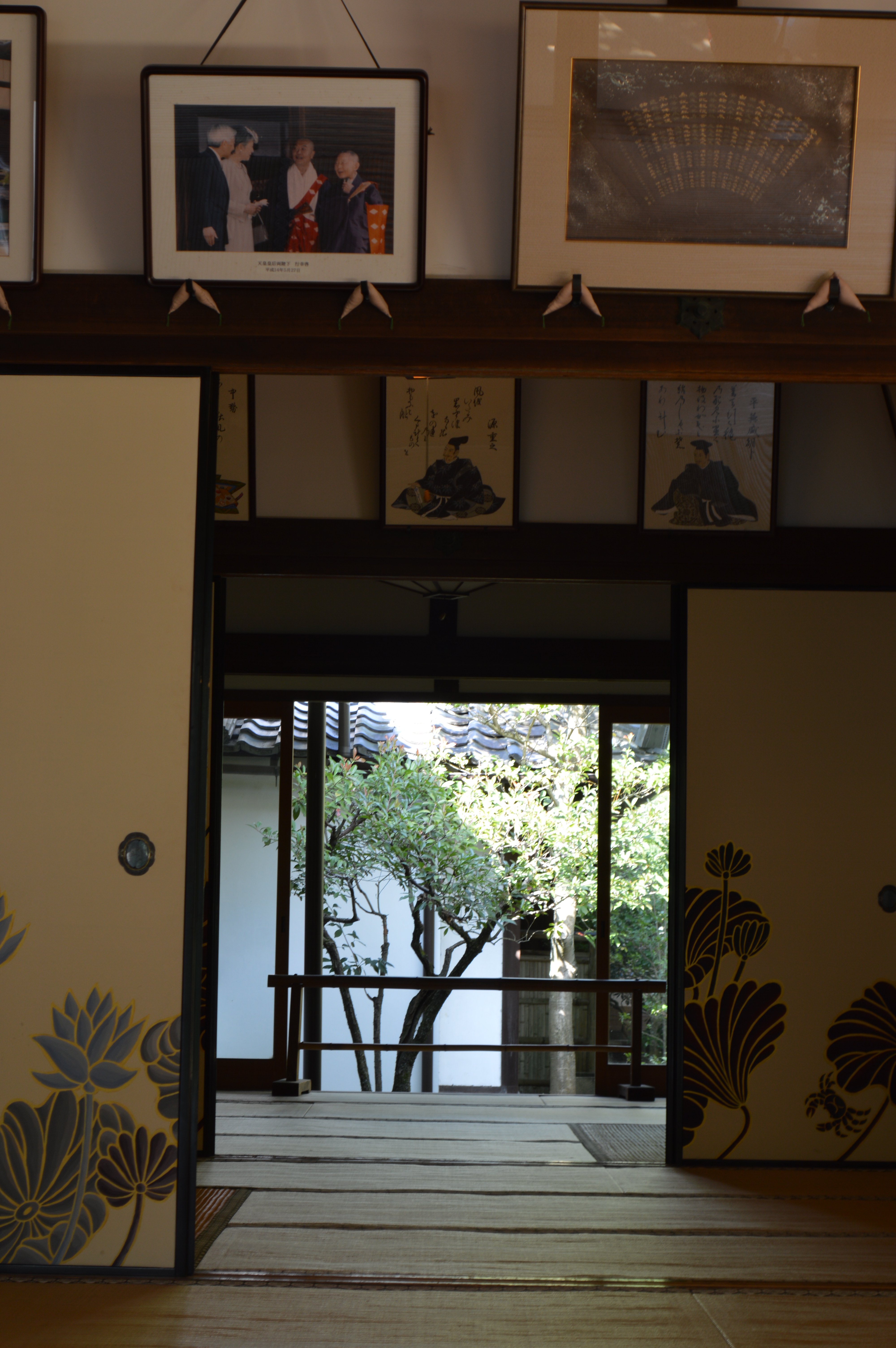
untitled-162 DSC_0333After the reception, having removed our footwear, we entered a large tatami floor room, “Kacho- den”, drawing room. There are not many colours used in temple buildings but here in the room, all the “fusuma”, paper sliding doors had beautiful lotus flower painting by Kimura Hideki. Above the doors, 36 framed pictures with poems were hung on the wall. The portraits are of monks, aristocracies and politicians. Through each open “fusuma”, a delightful view was framed. Either, the exterior garden or colourful lotus flowers decorated with dragonflies, frogs and tortoises. These doors also help create ‘rooms’ merely by shutting and opening these “fusuma” and “shoiji”, rice paper sliding doors. Then we entered a wide tatami room – delightfully named – garden viewing room, with a lovely veranda. Light beamed into this room with unobstructed views of the garden.

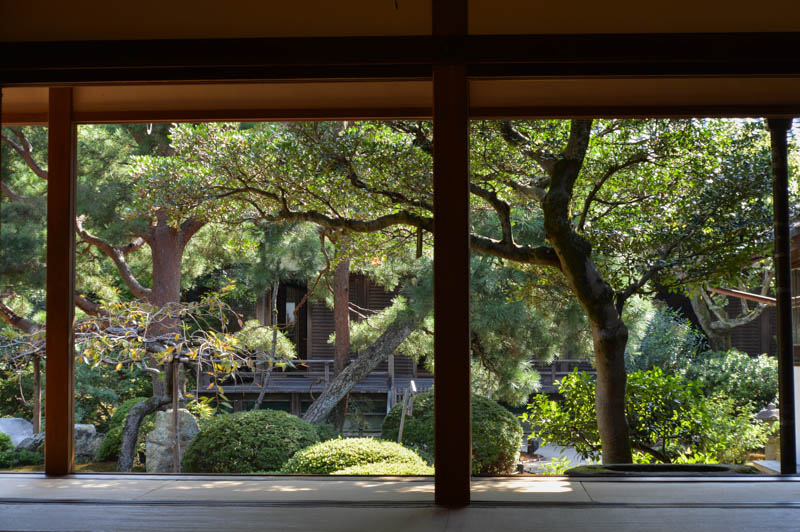
untitled-171 untitled-169A few magnificent Japanese Red Pines with lovely lime green needles, was the focal point, surrounded by shrub topiaries, maples and cherry trees. Further down, a pond surrounded with artistically and ecstatically planted trees, mixed plants and natural stones created an appealing sight. Beyond that, the natural surrounding hills. This garden is attributed to Soami, and is called “Soami-no- niwa”, Soami’s Garden. A stone water basin, “tsukubai”, was placed at the edge of the veranda. This is one of the most beautiful gardens I had seen.

untitled-170 untitled-167

There were only a few visitors today. Thus, this hall was quiet. Sounds of birds chirping and rustling leaves in the gentle breeze accentuated the tranquil feeling. We, like others, sat on the mats and admired the magnetic views in silence. Sitting on a raised building with no barriers to the garden gave me almost a levitated feeling. I was floating in an oasis, a Garden of Eden. Even the creaking sounds of people walking barefoot on the wooden boards on the adjoining veranda became faint. Such is the intoxicating appeal of these surroundings, particularly the gardens.

There were only a few visitors today. Thus, this hall was quiet. Sounds of birds chirping and rustling leaves in the gentle breeze accentuated the tranquil feeling. We, like others, sat on the mats and admired the magnetic views in silence. Sitting on a raised building with no barriers to the garden gave me almost a levitated feeling. I was floating in an oasis, a Garden of Eden. Even the creaking sounds of people walking barefoot on the wooden boards on the adjoining veranda became faint. Such is the intoxicating appeal of these surroundings, particularly the gardens.

Shōren-in is not a place to hurry. Just take a place on the edge of the room on the tatami mats. Perhaps have some tea. Then, gaze through the sculptured branches, clipped shrubs, easing towards the pond and beyond it, the rolling densely vegetated hills. The trees and shrubs are intentionally pruned to abstract and accentuate the best views. The eyes, like the meandering paths, encourages one to explore all corners of this magnificent garden.

untitled-163