Category Archives: Japan

Nara – The final day in Japan

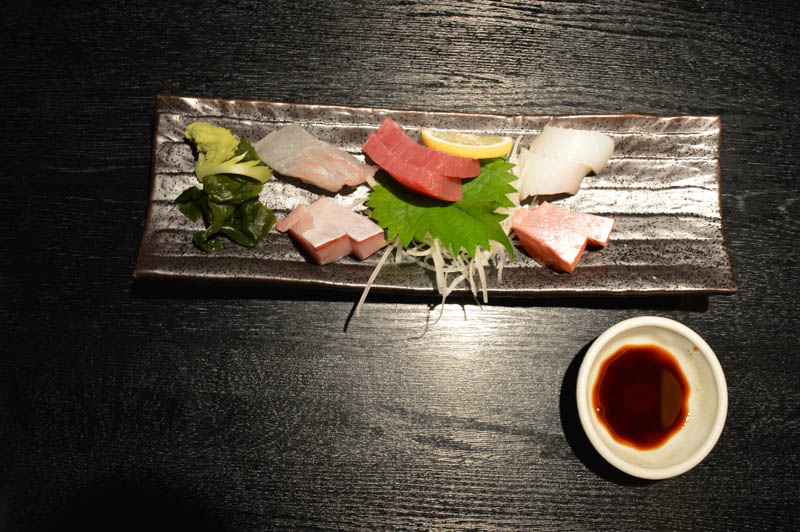
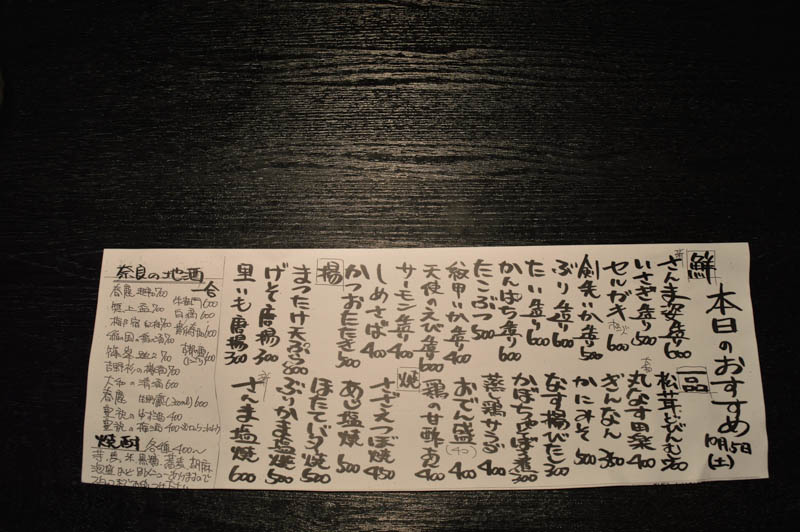
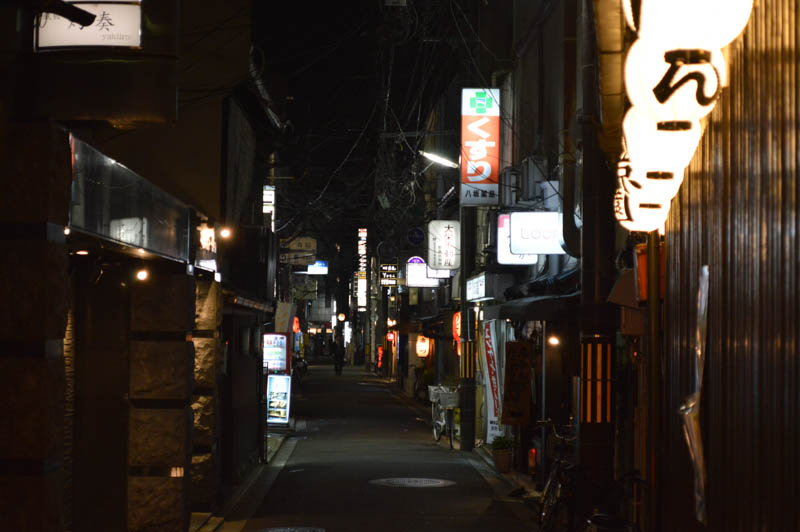
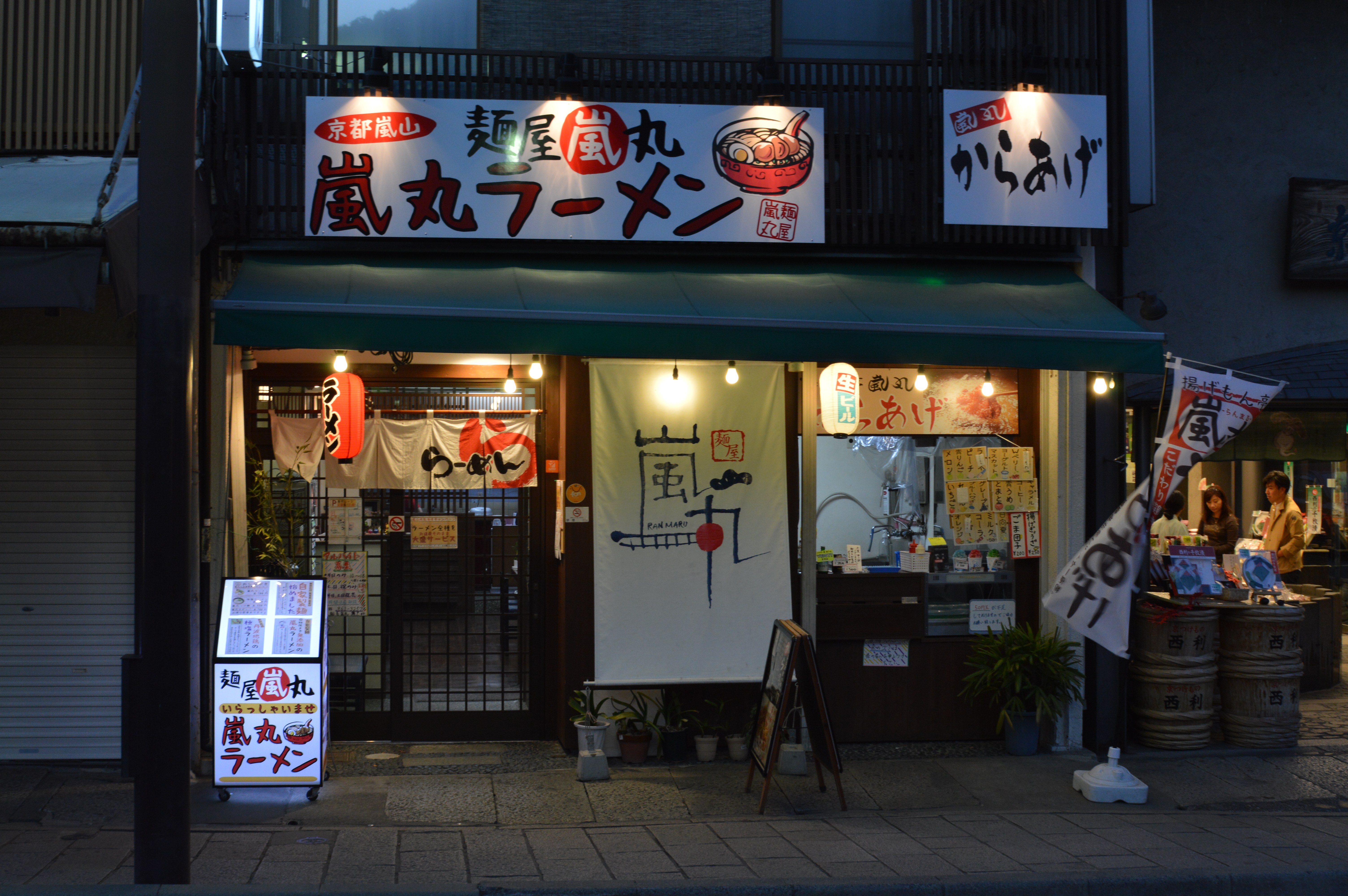
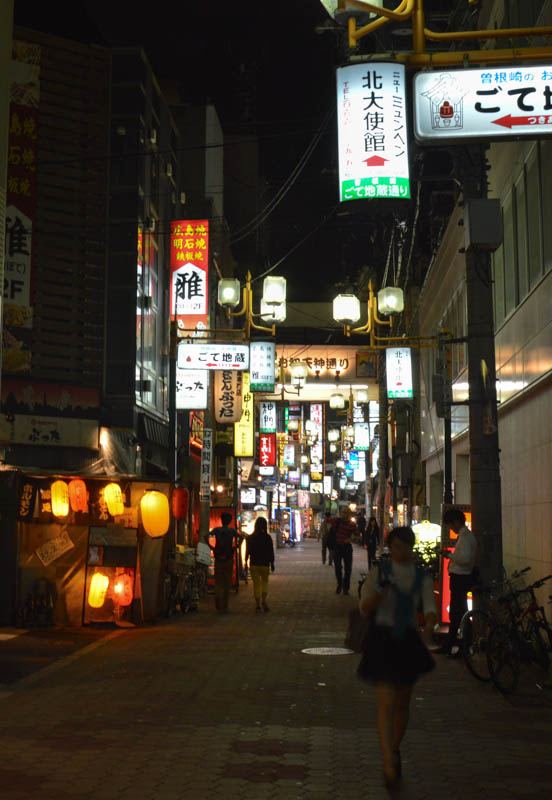
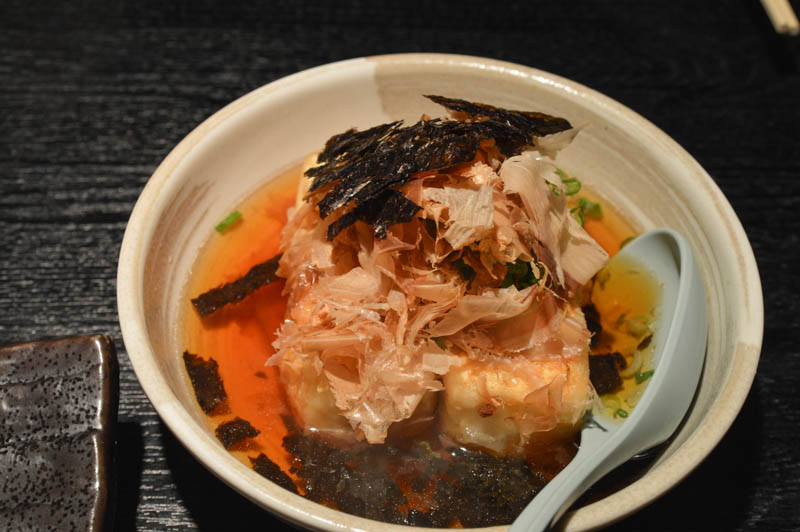
untitled-360Tonight we wandered along the popular Sanjo Dori. Tucked between financial institutions and official looking buildings are quaint little restaurants. We found one, an “izakaya”. This was our last night in Japan before we head off home. The friendly chefs spoke little English and the menu was in Japanese.
untitled-358 untitled-357 untitled-356 untitled-355 untitled-359

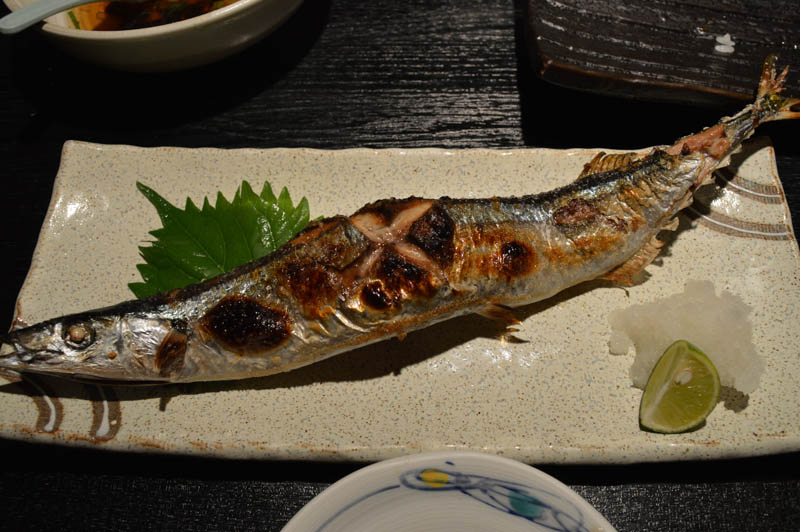
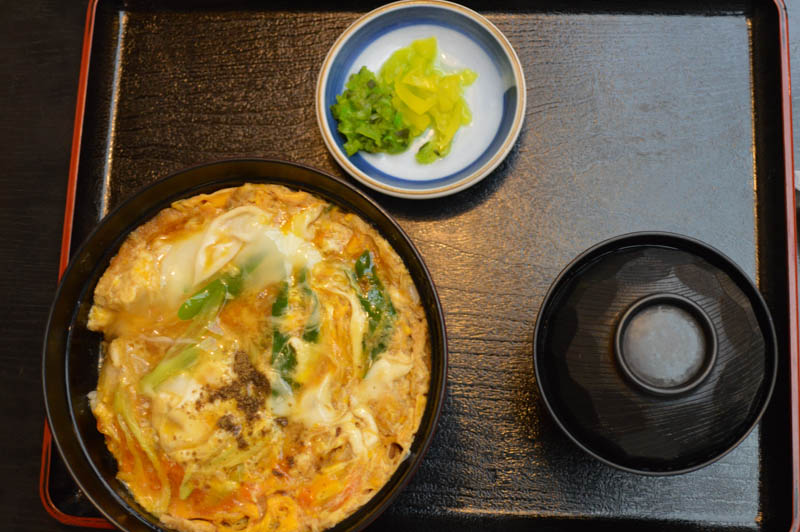
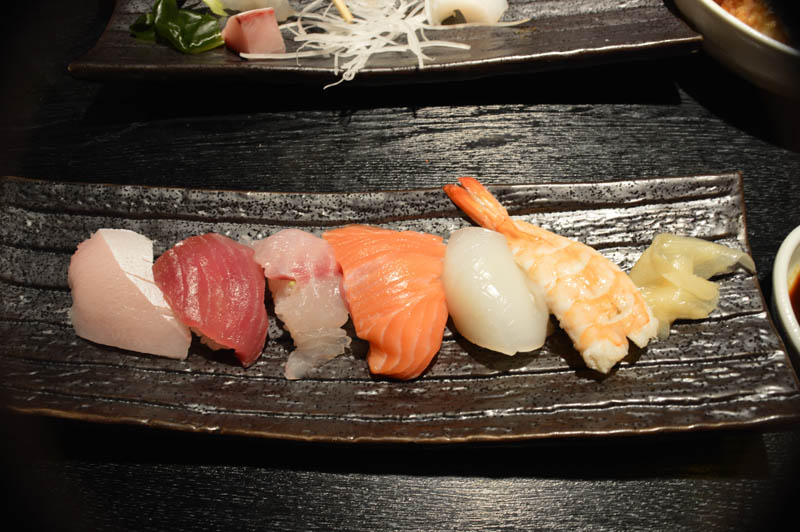
We were by now well acquainted with the proceedings and confidently ordered our dishes. Yes, more sashimi, grilled Sanma fish and a delicate broth with dumplings. The atmosphere here; like throughout our dining experiences in Japan, was warm, sometimes hilarious and definitely light. As always, appealing presentation, exquisite and delightful taste and flavours. These experiences had set a high mark of Japanese food elsewhere.

We returned to our lovely ryokan styled guesthouse. The smiling and inviting face of Kayoko greeted us and ushered us for some hot green tea. Her son joined us. He aspired to be involved in conservation. For now, we encouraged him to finish his school and perhaps consider New Zealand to further his studies and career.

Later, we packed up our luggage and quietly walked on the tatami floors and snugged into our soft futon beds. In the morning, Kayoko prepared an early breakfast before a taxi brought us to the Nara Station. From here, we caught a train that took us directly to Osaka’s Kansai International Airport.

This journey through mostly central Japan had been an eye- opener to the nature of the Japanese people, their customs, magnificent ancient and historic temples, their delicate culinary, efficient transportation system, did I mention the wonderful Japanese people, and many more.

The memories of Japan from my school history books were delivered through this memorable journey. Connecting was convenient with a existence and approachable remains of history – the temples, museums, culture and charming living museums pieces. The stories can be relived and therefore retold. My dreams were fulfilled. This journey is more significant as we had travelled and experienced Japan as a family. Now that’s priceless!

“jā mata ne, Nihon”
Kyoto – Daitokuji Monastery 4

Kōtō-in Temple

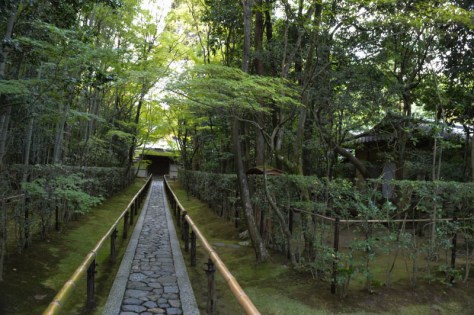
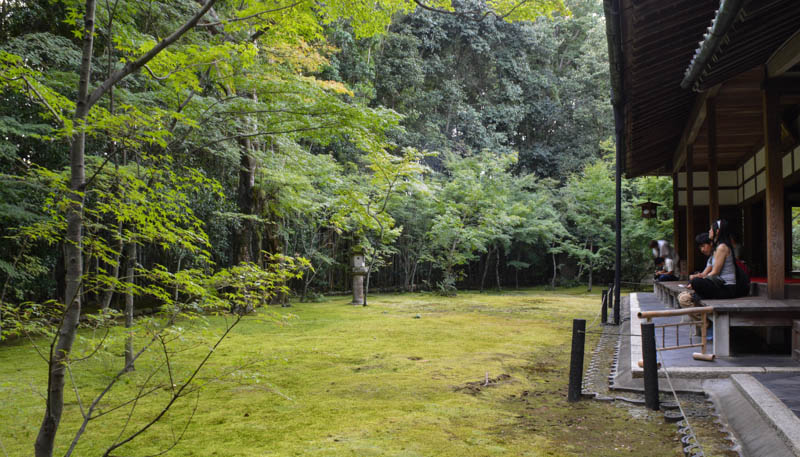
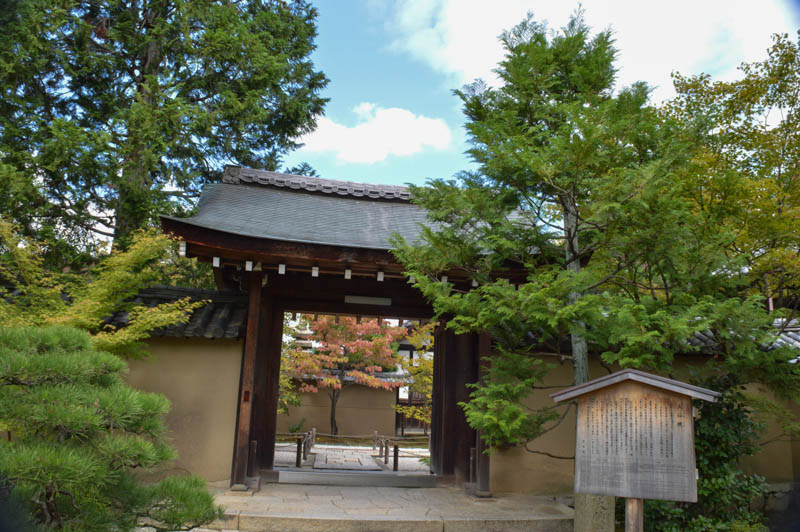
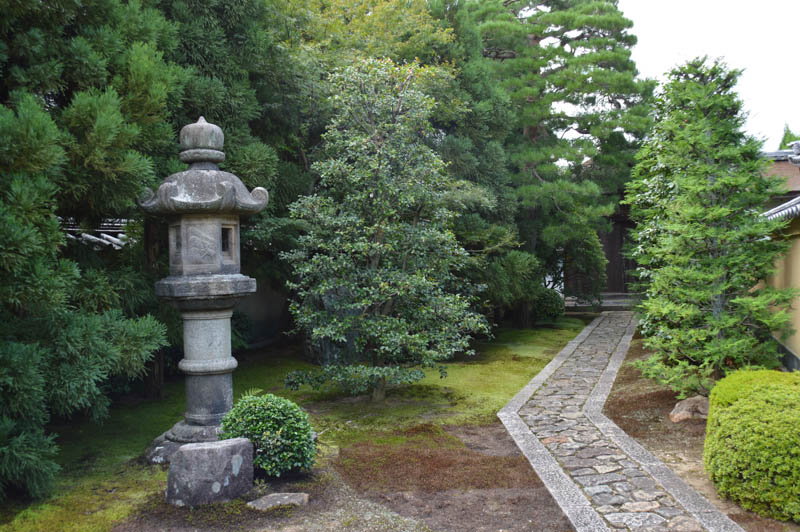
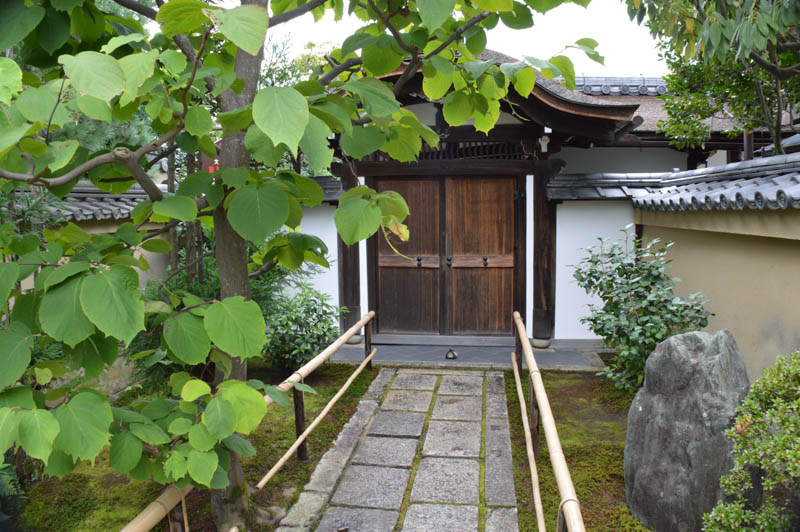
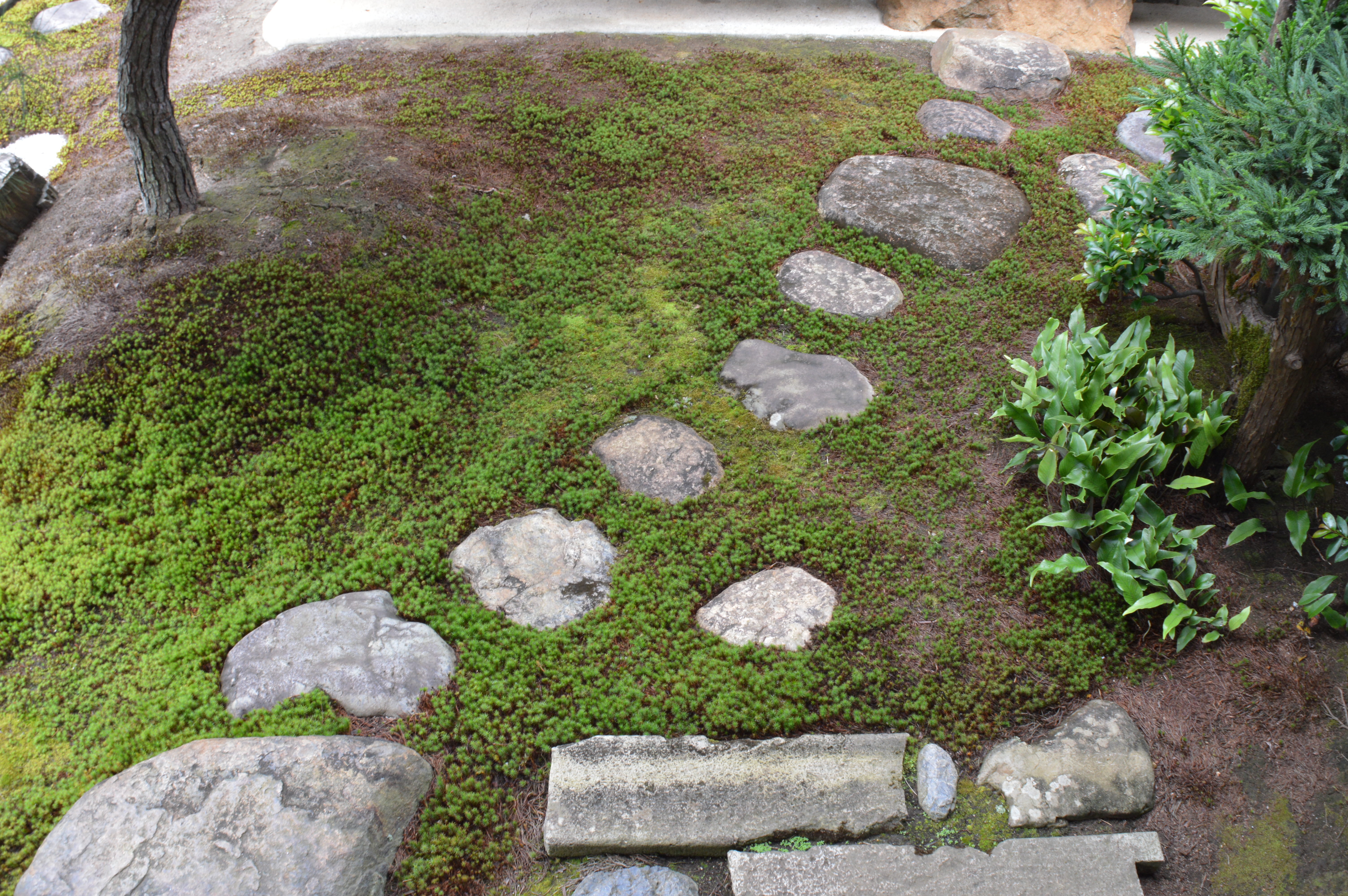
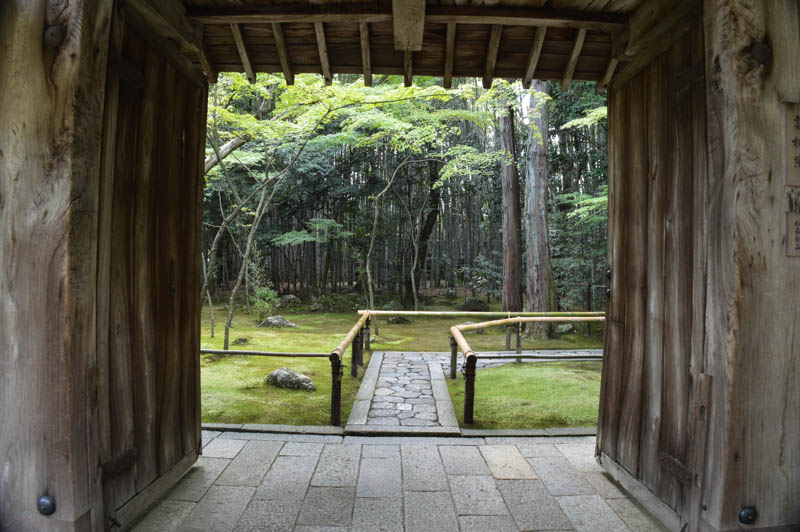
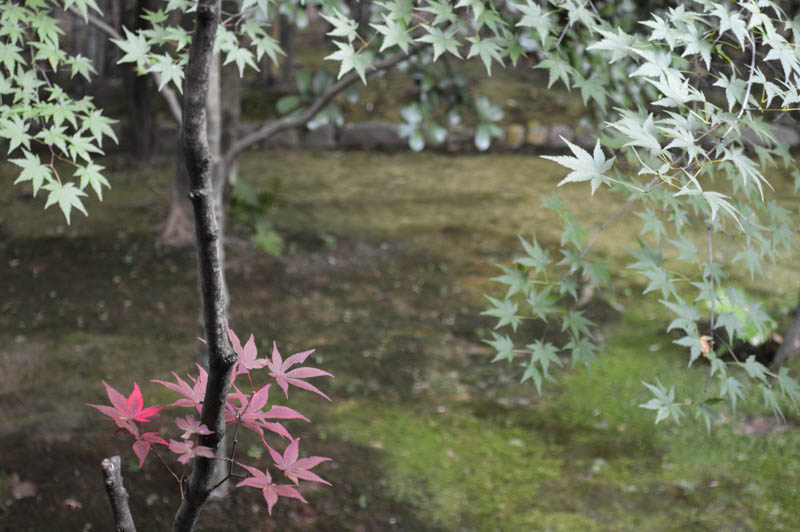
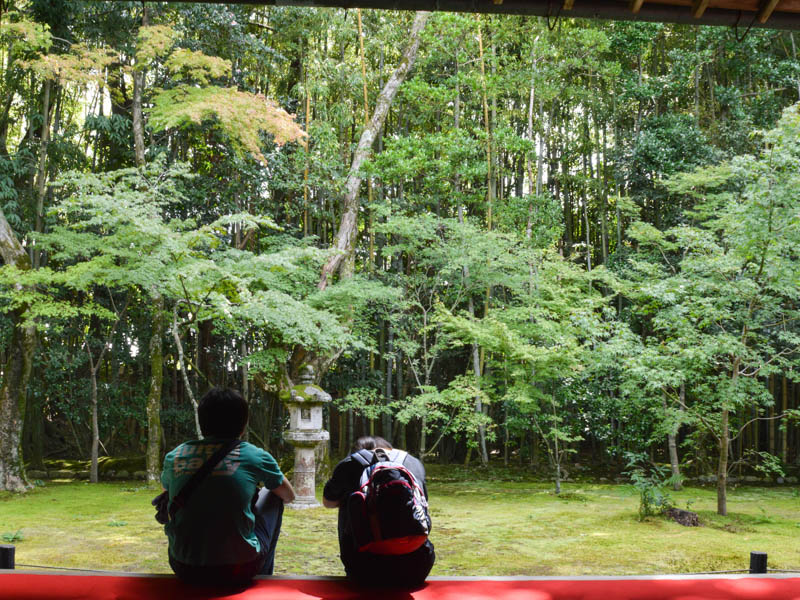
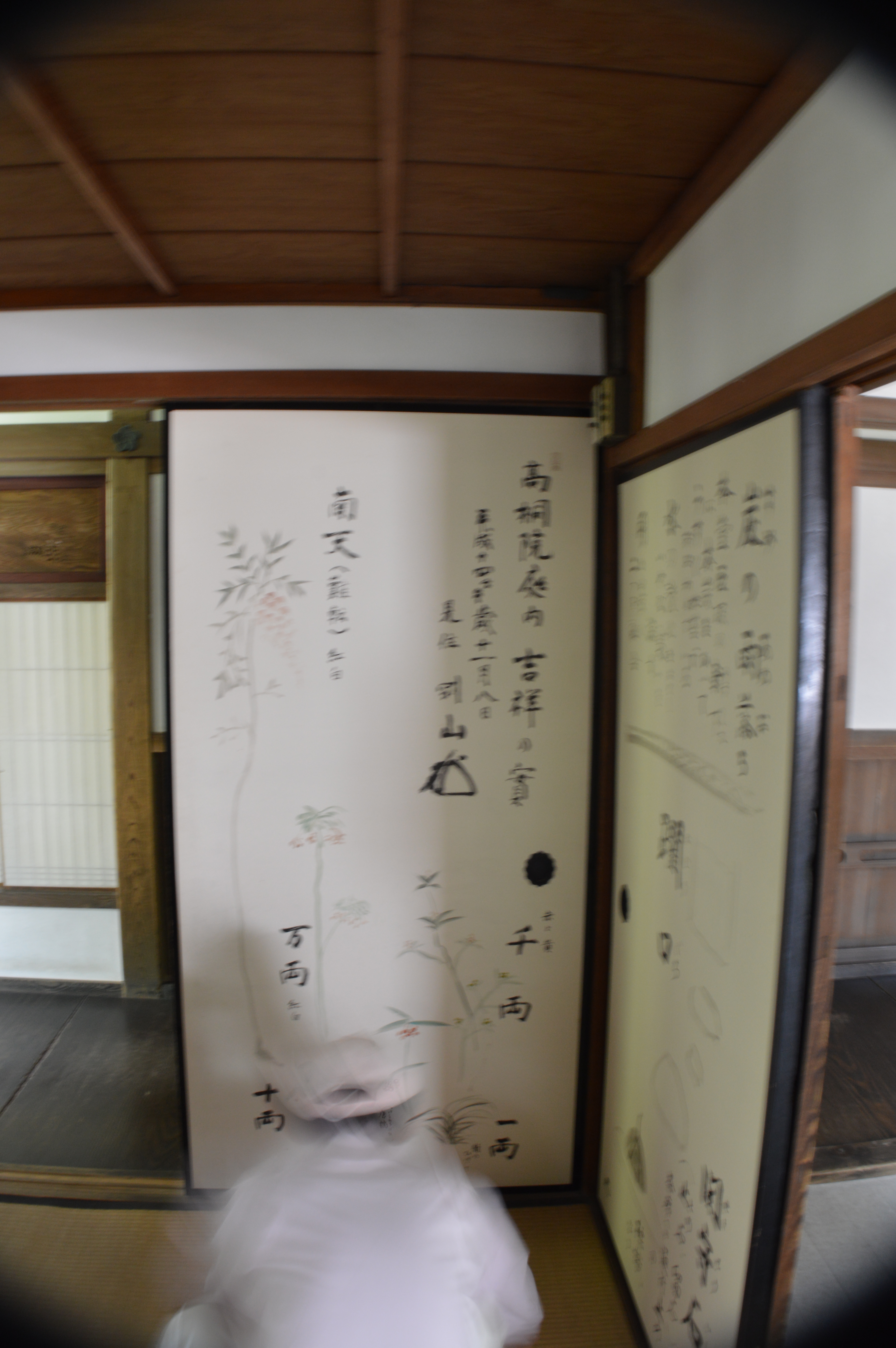
untitled-32It was built in 1601 by Hosokawa Tadaoki, a Samurai who was also a tea master. We entered Kōtō – in through a rustic wooden gate that framed young Japanese maple, “Momiji” trees, which are used extensively in the foreground and matured bamboo in the background. The ground is covered with a carpet of velvety moss. The path is on a long but segmented stone pathway. With each turn, the width, depth and dimensions gave a different perspective. All these are intentionally designed to create distance, space and symbolic to the trials and tribulations of life and the spiritual path. It requires the visitor to slow down and observe a specific ‘framed view’. Clay tiled roof were encrusted with moss as on the ground. The twisted path, “roji” led from the garden entrance to the “Hojo”, main hall. The main garden, at the “Hojo”, is sparsely planted with a few maple trees, a single stone lantern and in the background a living grey-green wall of bamboo. The level foreground is covered with a carpet of moss. Comparatively, this front garden design accentuated simplicity. The moss encrusted stone lantern created untitled-33a focal point. This garden had been my favourite so far. In one corner, a single maple tree had only a few bright pinkish leaves that were just starting to colour. I could only imagine the colours of these maples in late autumn. A couple sat on the red carpet reflecting their own lives. Within the “Hojo”, walls are painted with murals and calligraphy. An elderly man, seated on tatami floors, was absorbed with one particular painting.
untitled-36 untitled-46 DSC_0107

Seated on the veranda below a wooden hanging lamp, I found tranquility. I imagined living here surrounded by natural beauty and the lack of modernity. The visual effect of this Zen garden is addictive. For the moment, Kōtō- in Temple is a green garden. On one wall was the “tokonoma”, the main alcove with an “ikebana” arrangement on a raised platform. This is certainly a heart-warming place. Such is the magnetic appeal of these rustic wooden temples and their surrounding manicured gardens.

untitled-35

” Paintings without brushes,
sutras (Buddhist teachings) written without characters “
– ancient Zen Master describing
Zen Gardens

untitled-41untitled-43untitled-47untitled-44

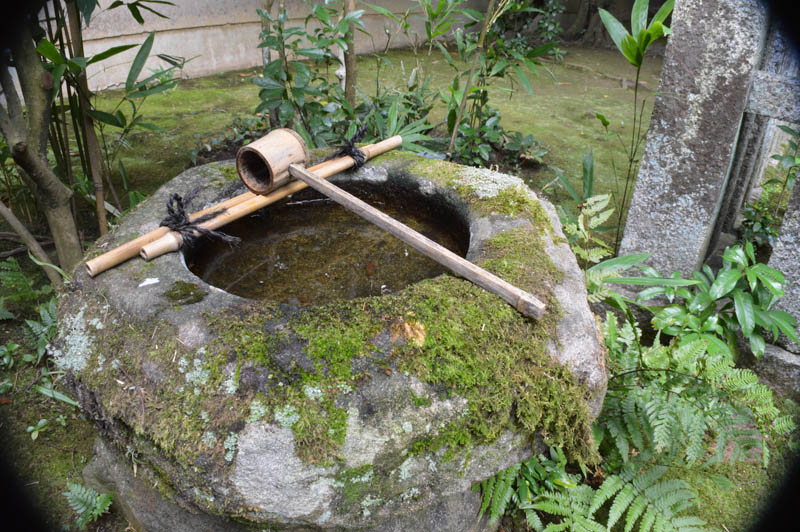
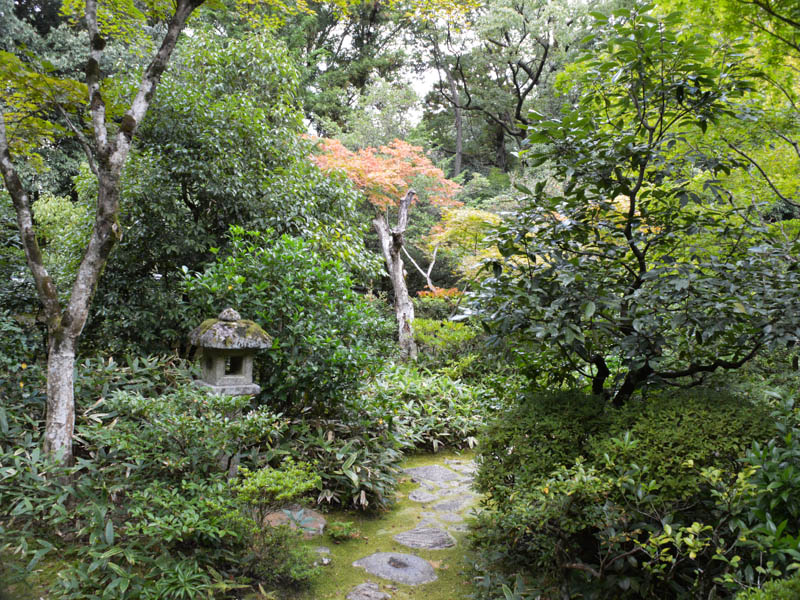
On the western front of the  “Hojo”, a few roughly places natural stones connected to the adjacent warm dark wood coloured tea rooms. This tea garden, in contrast with the “Hojo” courtyard garden, however, is densely planted with variegated grasses, shrubs, sculptured pines, more maples and structural cycads. I loved the subtle variations in the foliage colours and their textures, particularly in the partially filtered light today. Flowering plants are nowhere to be seen. In a secluded corner is a “tsukubai”, stone water trough teeming with moss and ferns. A bamboo ladle is placed on top. We strolled with no words spoken in this enchanted temple garden.

“Aside from house and family, it is nature that gives me the most pleasure, the changes of the season, the blossoms and leaves of autumn and spring, the shifting patterns of skies”  – Prince Genji, Heian Era

untitled-42

It is hard to explain how and why a Zen Garden affects an individual. One is overcome with a sense of calm and happiness. Slowly, details emerge with great clarity – the shapes and hues of plants and rocks, light and shadow heightened, sounds of chirping birds enhanced, creaking of bamboo, even the carpet of moss is appreciated. The idea is to move through (visually and physically), around it, embrace, pause and reflect. Those with little or no knowledge of Zen or Buddhism will also be touched. Interpretations may vary but there is a longing to prolong this moment. A simple answer – it just does!

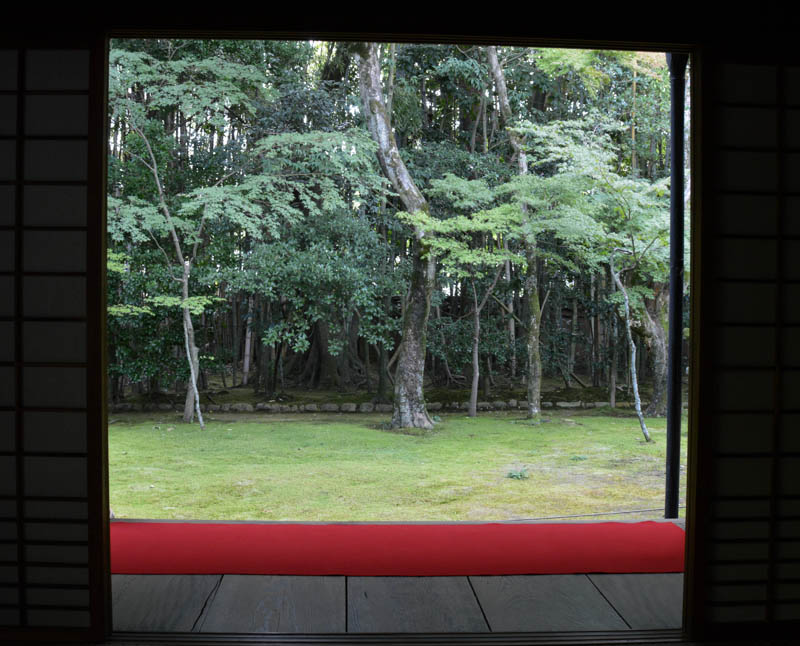
untitled-34Beginning from the entrance and within the buildings, the garden seemed to be framed – through doorways, slatted sliding doors, and windows – in every direction. The indoor and outdoor flow is seamless, as if the garden is within.

Kyoto – Daitokuji Monastery 3

Daisen Temple

untitled-29 untitled-28The temple was founded in 1509 by Kogaku Soko. A single autumn coloured tree stood at the entrance. The temple has one of the best Zen gardens in Japan. Large rock had been arranged to represent mountains and rivers in a very confined space. It is torrent and passage- way narrow. Eventually, the river of sand opened out into “middle sea” where the sea is calm but with a few obstacles. As we continued the walk round the “Hojo”, the ‘river’ widened and emptied into the ‘Ocean’. Here, two cone-shaped hills of gravel, suggesting mountains hinder the final path and eventually lead to enlightenment. A lone Bodhi trees lay at the end of the ‘Ocean’. This design is a metaphor on the journey of life and the rocks – trials and tribulation in life. Like paintings, the scripture is depicted in abstract form in a myriad of rocks, stones and gravel. It is somber with no immediate awakenings but thought provoking. Paintings and rustic architecture further enhanced the wonder of Zen – Buddhism. A time here is a time well spent. Unfortunately, no photography was allowed inside.

Kyoto – Daitokuji Monastery 2

Ryōgen-in Temple

untitled-53DSC_0142Ryōgen-in, the head temple of the South School of Rinzai-shu Daitoku-ji sect was constructed by Priest “Tokei” in Muromachi Period in 1502. We walked through a heavy wooden Omote- mon, gate which is an original feature of this temple. A winding stone pavement past an “ishidoro”, stone lantern led us towards the “Hojo”, Meditation Hall. The first of the four “karesansui”, dry landscape garden, Koda-tei, is set in a narrow path. Sometimes referred as Aun no Sekitei or A- Un Stone Garden which means inhale and exhale; heaven and earth; positive and negative; yin and yang or male and female. This garden expresses the universal truth of inseparable pairs. The original gardens here were created by Saomi.

untitled-54

We entered a large uncluttered dry stone garden, the Isshidan, in front of the “Hojo”. Three main features are a moss covered mount, Kama- jima, Turtle Island; two stone features, Tsuru- jima, Crane Island and the two large upright stones , said to represent Horai-san, Mt Horai a mythical and scared mountain that will bring about awakening to the living. A sea of white gravel of varying shades encompassed all the features – a symbol of the universe. Sitting on the wooden steps of the “Hojo”, one cannot help but to reflect and contemplate on the mere sight of this simple raked gravel and strategically placed stone garden. A simple dressed priest sat quietly in a corner of the “Hojo”. Perhaps meditating or merely observing. Painting of dragons and other images added a little colour to the interior walls.

untitled-57

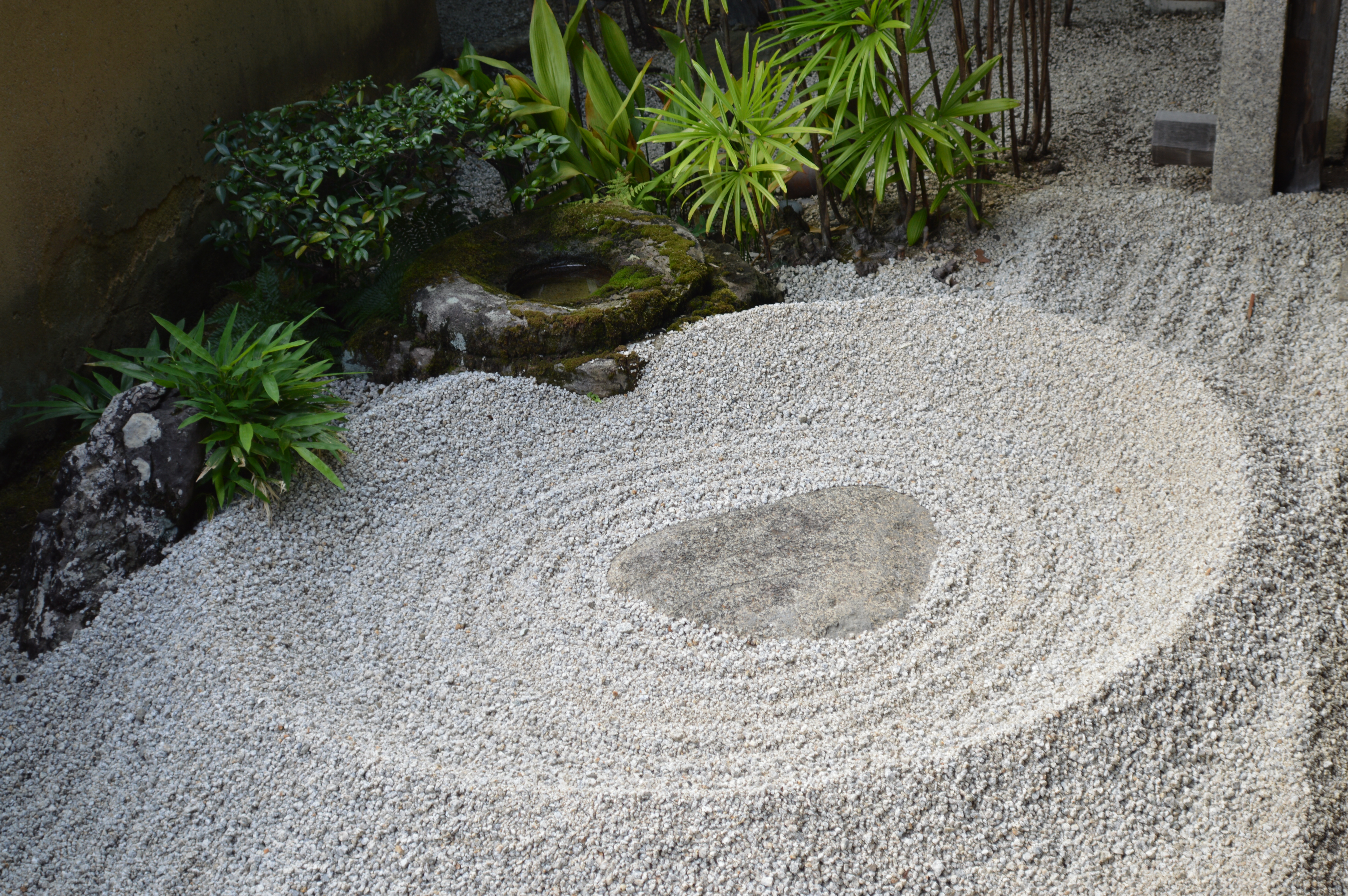
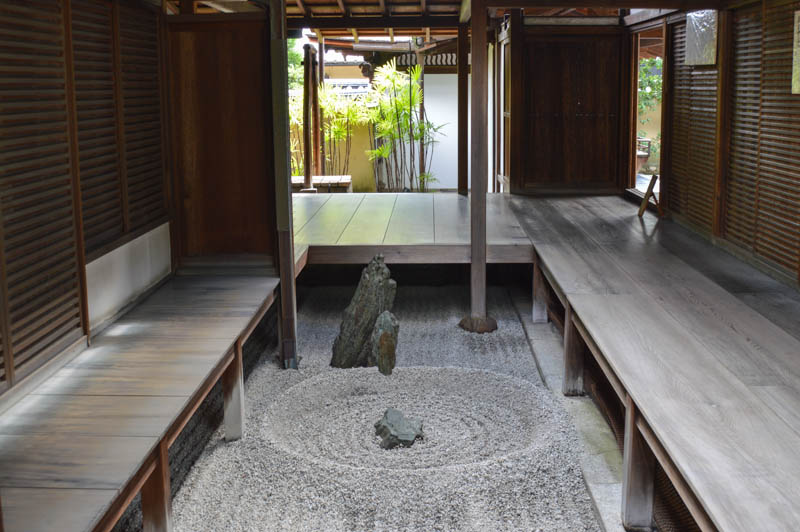
The next garden is the oldest garden in Daitoku-ji, Ryogin-tei garden. The moss covered garden represent the ocean or universe. The tallest stone, Shumisen-seki at the back represented the centre of the universe and a round stone in front of it is called Yohai-seki. These are representation from a Buddhist perspective. For some, it is time to reflect, for some it is time for relaxation and for some it is just being here. The simple things in life! In another corner is an inner rock garden, Totekiko, said to be the smallest “karesansui” in Japan! It is said the stronger the power of the stone (truth) thrown into water, the higher the ripples on the surface. We left with a deeper appreciation of the simple things.

untitled-58

“Ryogen-in also featured the smallest garden in Japan, but still maintained simplicity, elegance and most importantly a story to tell” – Navindd

untitled-62

Kyoto – Daitokuji Monastery 1

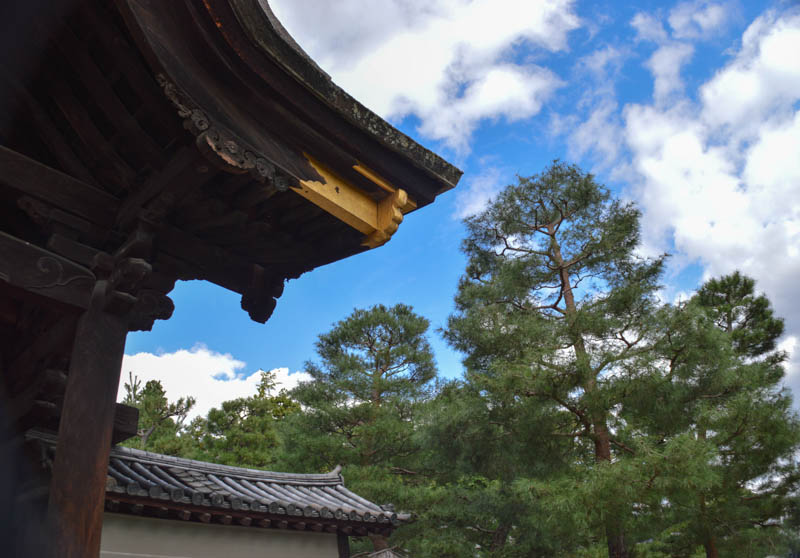
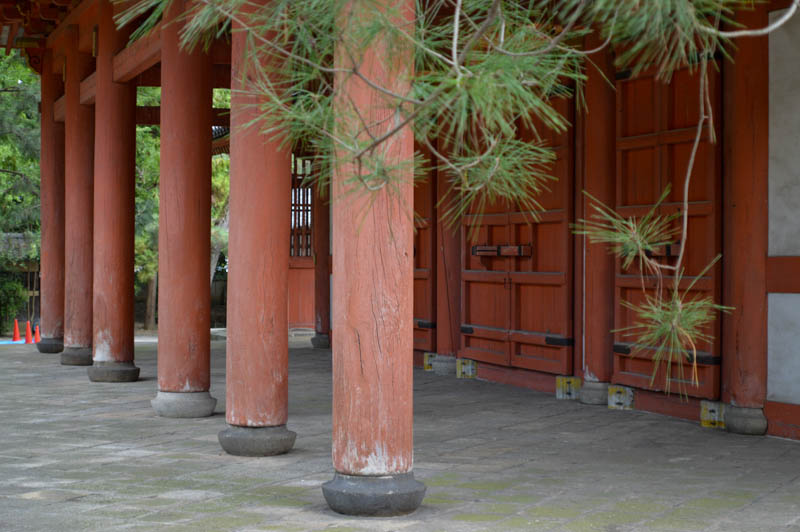
There are numerous temples in Kyōto and is impossible to see them all in the time we had. Early today we headed to Daitokuji Temple in Northern Kyōto. It is a walled temple complex with 22 sub- temples. However, the main temple was closed. A group of student were on the upper floors of a building admiring the views. Thick pillars foundations supported the building. The exterior is mainly planted with pine.

untitled-52 untitled-49

DSC_0073Chinese influence in architecture is evident here. With the introduction of the Zen sect of Buddhism, this evolved and matured with a Japanese flavour. Today, they include “tatami” floors, “tokonoma”, alter, alcoves and “fusuma”, sliding paper doors, amongst others. In the feudal days, Daitokuji catered for the elite Samurai class and aristocracy as well as headquarters of Rinzai Zen. It also has a strong connection to tea ceremonies particularly in 1573 – 1603. Generally, the monastery follows the traditional Japanese format of “shin- gyo-so”, formal, semi-formal and informal design. Only four temples were open to the public. It is a great place to get an insight of Zen Buddhism and the famous dry gardens.
Zuihō-in Temple

untitled-23

DSC_0075

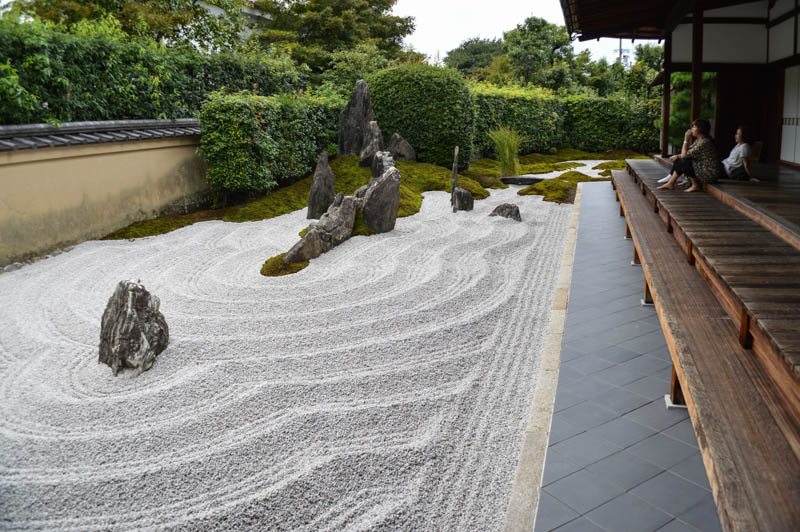
Zuihō-in, a Rinzai Zen Buddhist Monastery, was founded in 1546 by Lord Otomo. The Chinese characters mean Alone-Sitting-Garden and refer to an island of the Taoist mythology. Initial ideas of these types of gardens were derived from China and later localised. The approach to this temple is through a rustic wooden Omote-mon, front gate. After walking a few turns through an informal garden on stone pavements past an “ishidoro”, stone lantern, we entered the “Hojo”, main hall. Facing the “Hojo” is the formal “karesansui”, dry “Dokuza-tei”, front garden aptly named “Garden of Solitary Meditation”. The gardens were designed by Mirei Shigemori. A combination of stones, minimal plants and raked stones occupy the vista seated on the wooden veranda of the “Hojo”. It was quite and the atmosphere subdued. First it was intriguing seeing the whole landscape. Slowly, I was engrossed in the details of the design. Senses and emotions are stirred just looking at the various elements of the design. The minimum use of elements and lack of colour is to minimise distraction. The sand is raked high to symbolize rough seas. Pointed rocks embedded into moss covered ground imitate mountains. A narrow stone bridge connected to the back with smaller and levelled river of waves indicated calmness.  Interpretations may vary with every individual. Some may see their own tribulations of life reflected in these designs. Mine was an appreciation of the interaction between design, human emotions and landscape. However, there is no denying that there is a sense of peace by just looking at the dry garden. Noise, is a manmade inconvenience. Fortunately today, there were very few people here. With whispers in our ears, we gingerly walked to the back garden. With every turn, a delightful view awaited.

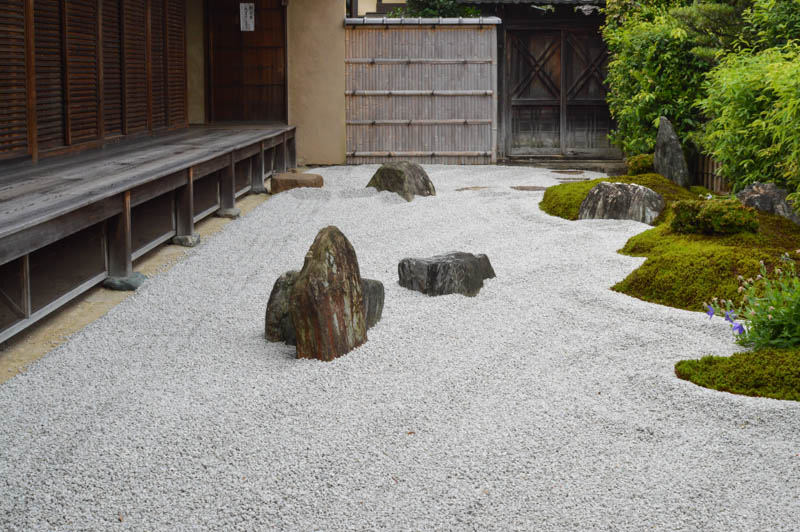
untitled-24Seated on the veranda, we viewed the back garden or “Kanmin-tei garden or “Quietly Sleeping Garden” or commonly called Garden of the Cross. It was established by Ōtomo Sōrino, a daimyo, whom had converted to Christianity but the religion was then banned. Seven stones are placed to form a cross. Mirei incorporated this into the final design alongside the traditional features. This garden is much more compact and intimate. The tea house is adjacent to this garden. Small rounded stepping stones, “tobi- ishi”, created pathways to little corners of the garden. The atmosphere today is quiet and calm.


untitled-25 DSC_0083 

“There were lines and circles everywhere, along with large rocks seemingly placed randomly. But when I read the signboard next to me, I found that the stones were strategically placed around the gravel and the lines and circles were the equivalent of pictures on a storyboard. The whole garden had a story to tell!” – Navindd

untitled-27untitled-26” A garden that will stand the test of scrutiny is not just one whose material qualities will endure. Instead, is it a garden that, even as people’s outlooks change over time, is suffused with permanent beauty ” – Mirei Shigemori

Kyoto – Japanese Garden

untitled-36

“Visualize the famous landscape of our country and come to understand their most interesting points.Recreate the essence of these scenes in the garden, but do so interpretatively, not strictly” – Sakutei-ki, Records of Garden making, 11th century

Gardens had existed since Nara Period (710-794). During the Heian Period (794- 1185), it evolved with the pond, being the centre of the design. This element had continued till today. The Japanese religions, Shinto and Buddhism, had influenced the way gardens and architecture is designed and built. They believed that, in nature, all natural elements have spirits. As such, gardens are created to imitate nature or sometimes referred as ‘borrowed sceneries’, “shakkei”. Plants, both evergreens and deciduous are selected and carefully planted to reflect impermanence – seasonal changes – life itself. This is evident particularly in the use of maples, “momiji” and cheery, “sakura” trees. Additional elements are added to enhance the garden include bodies of water, either moving or stagnant; stone water basins, “tsukubai”; stone lanterns, “dai- dōrō” and stepping stones, “ise”. In architecture, historical period elements are used to recreate, especially, in the design. Art and nature are inseparable, likewise, the indoor and outdoor flow. It seems that art, nature and religion have become one. Examples of these are the Zen Gardens. Religious messages and teachings are created, not on a canvas or sculptures, but in a living form – the garden. In dry “karesansui” gardens – sand, stones, rocks and plants are mindfully arranged to reflect these messages. Fine examples include Zuhoi In and Daisen Temples. Symbols like hills, mountains, streams, and universe are immaculately and carefully incorporated into the design. Gardens had taken a spiritual discipline. Having done the hard work, today, these gardens are continuously and meticulously maintained to keep form and true to its historical origins that had survived for centuries. These places remain an abode for tranquility and solitude. A silent retreat! I am personally intrigued, touched by a sense of calm and the images etched in my mind by the mere sight of these treasures.


Kyoto – Geisha

One of the most enigmatic and alluring symbols of Japan, besides Mt Fuji and cheery blossoms, are the Geishas. These are women whom had gone through rigorous apprentice training in the fine arts of dance, music and as a hostess. These arts are centuries old and some with notorious connotations or inferences. Let’s get this right. Geishas are not prostitutes. In early history, now outlawed, “pleasure quarters” were established by the regime which included sex. These were never part of the ‘hanamachi” world. Incidentally, the first geisha were men dressed as women.

untitled-15

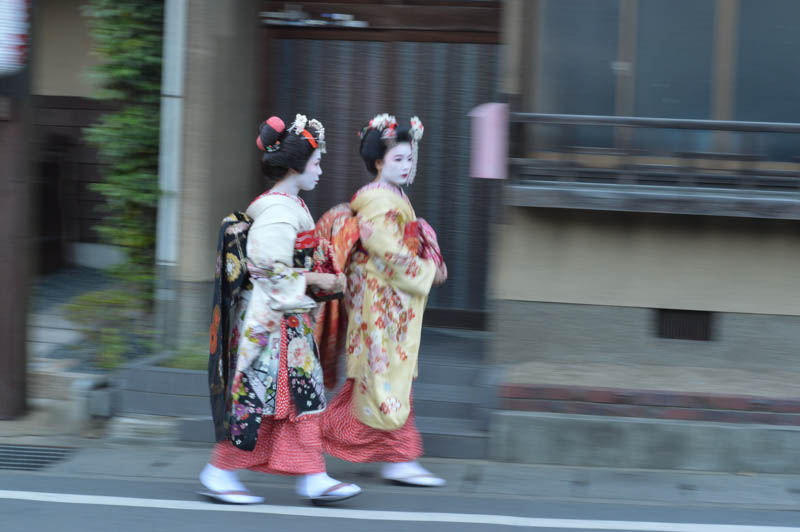
Geishas are immaculately dressed and made up from head to toe. The most striking features are their white painted faces, flowing intricately designed silk kimono and their dainty footwear. Their hair-dos, accessories and just their mere presence, fills up the area. Not only the foreigners, even the local Japanese, both men and women, seemed infatuated by them.

Geishas are single women, living, learning and working in a strictly matriarchal society under the guidance and care of the house mother, the “okāsan”. The lodging for the geisha and maiko is the “okiya” where they will spend their life. Many women run and manage the tea houses, “ochaya”, where the geisha perform. The area where they live and perform is referred as “hanamachi – flower towns”.

In Kyōto, the most number of geisha in the country, numbering less than 2000, are found. They are called “geiko” and the apprentice is “maiko”. The most popular ‘hanamachi” districts are Gion, Pontochō and Miyagawa- chō.

Seeing a geisha or a maiko is a privilege in my opinion akin to climbing Fujisan. They do leave a lasting impression after they are long gone. Well at least it did for me.

“The geisha system was founded, actually, to promote the independence and economic self-sufficiency of women. And that was its stated purpose, and it actually accomplished that quite admirably in Japanese society, where there were very few routes for women to achieve that sort of independence”.– Mineko Iwasaki, Geisha, A Life

“Geishas are not submissive and subservient, but in fact they are some of the most financially and emotionally successful and strongest women in Japan, and traditionally have been so.”
— Mineko Iwasaki, Geisha, A Life

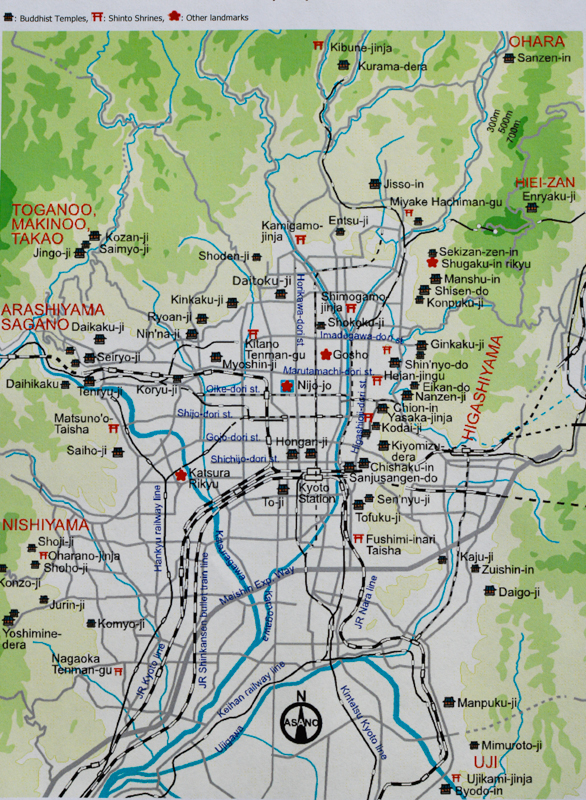
Map of Kyoto

DSC_0087

Kyoto – Arashiyama and Sagano – 2

untitled-9

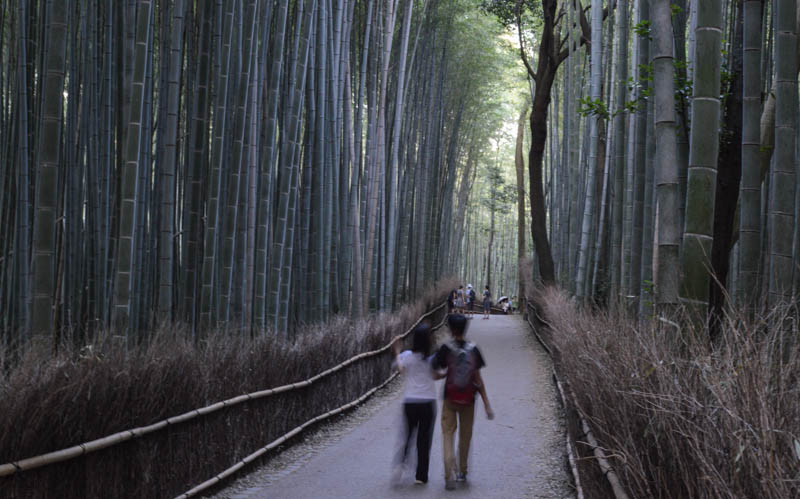
The Bamboo Groove in Arashiyama is a very poignant place. There seem to be a magnetic force that beckons one to listen and be mesmerised by the tranquil beauty of the slender lime green and upright swaying stems. A concrete pathway cut through the forest. Now, we felt as part of the forest. The breeze picked up and the whole vista literally swayed. An eerie but soothing sound of rustling leaves and rasping stems became a constant. Occasionally, when the tall stems collided, a deafening squeaky sound resonated throughout the park. Dusk added another unnatural dimension to this environment. Enlightening, perhaps! It’s fascinating how a grass held sway emotions of those present here. The slow stroll was strangely soothing.

untitled-6“….the only light that was present was a shard of sunlight managing to pierce the thick amour of the tall bamboos, towering into the sky. The slow crack, crack sound could be heard all around us, as the wind blew the masses of huge trees as one. As I looked forward, I saw lines and lines of bamboo, grouped up as close as they could be, swaying in the wind……To look at the forest from the side on the pathway, it was like looking at an enormous green wall” – Navindd


untitled-15
In the cloudy dusk, street lights and red lanterns dimly illuminated the main street in Arashiyama. Lee Cheng alerted me to an impending sight. Across the street, two characters walked quickly in tandem. My heartbeat rose. This was my first encounter with the iconic Geisha. I quickly snapped a few pictures in the dimming dusk light as they walked swiftly. One on the most beautiful sights I had seen – faces painted white with glossy ruby lips in the middle part of their lips, cherry blossom pink cheeks, red on the outside of their eyes and black liner around their eyes, and highlighted eyebrows. I noticed that one had only her lower lips painted red. Their outfit was immaculate- a flowing, elaborate and shiny silk kimono with beautiful floral silk embroidery and brocades. To add to the already magnificent outfit, they wore a dangling “obi”, “darari”, and sash on the back of the kimono. Their hair neatly tied up and adorned with elaborate combs and dangling hairpins, “kanzashi”. They both wore the “zori”, slippers with a “tabi”, split toed socks. In their hands, a small parcel wrapped in layers of cloth. They were just across the street. I put my camera down. I was awestruck by their elegance, beauty, poise and presence. There is an eternal aura around them. I was enchanted. As they walked away, the backs of their exposed necks was painted white with a W- shape design. A memorable sight indeed! Once they disappeared, there seem to be a void. Such is their presence. Regretfully, I had no clear pictures of this delightful encounter.

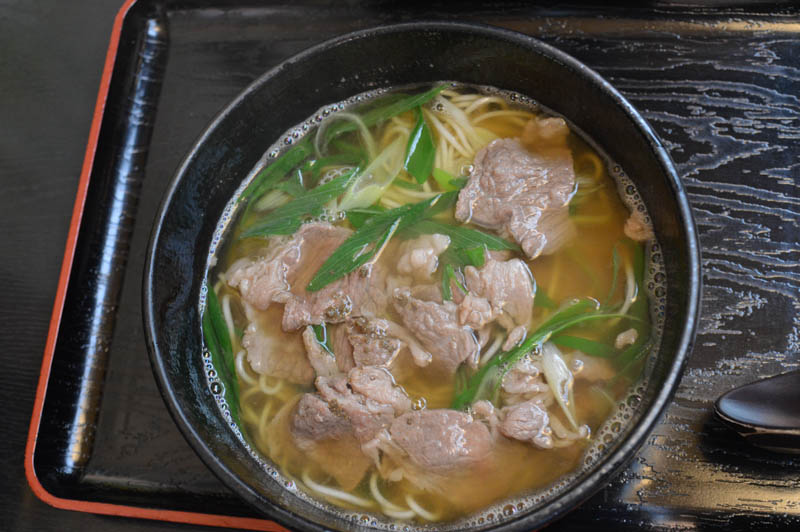
We walked off the main street into narrow lanes and discovered several eateries, gift shops as well as residential homes. Cyclist and motorcycles dashed past us in the dim streets lit by red lanterns and neon signage. We retired to a lovely noodle shop for dinner. It had been a long day for us. The scenery and setting of Arashiyama had certainly wet our appetite for this old capital. We returned to Kyōto by train.

Kyoto – Arashiyama and Sagano – 1

“Within no time, we were getting off the super fast Shinkansen and stepping into the ultra modern Kyoto Station…..There were so many people in and around it that it felt like the entire city revolved around the station. It is one of the strangest building I had ever seen, with glass jutting out of it at strange angles” – Navindd

From luxury in Tsumago, we headed to our backpacker accommodation with tatami floors and folded beds, near the train station. We settled in and after a short rest headed back to the station for some lunch – “sushi”, “sashimi” and “nigiri” at restaurant inside the futuristic Kyōto Station.

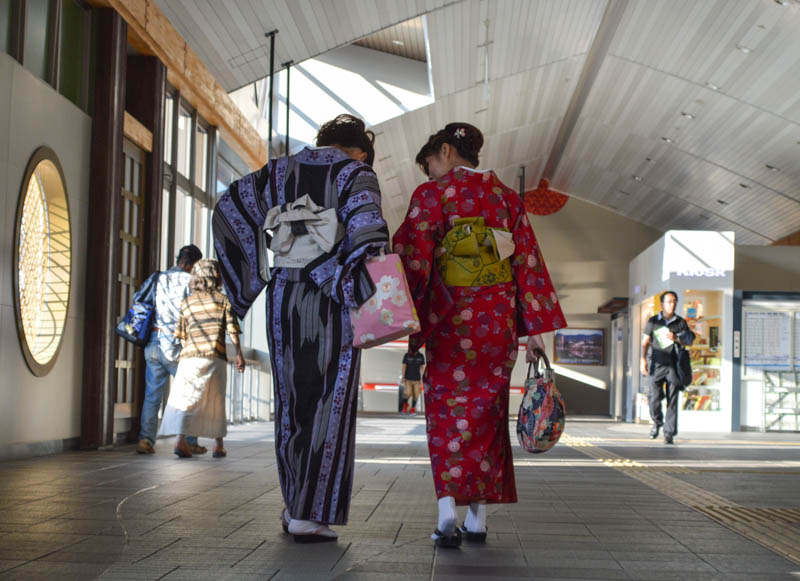
We caught the train from Kyōto Station to Arishiyama Saga station. There is something alluring seeing Japanese women dressed in their traditional kimono. Two young women in colourful kimonos complete with “zōri”, slippers and split-toe socks, “tabi” at the station was a delightful sight.

untitled-3

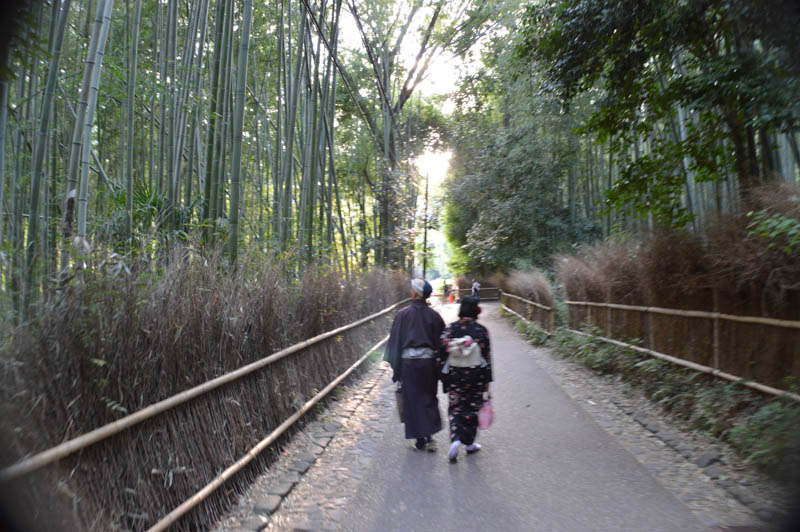
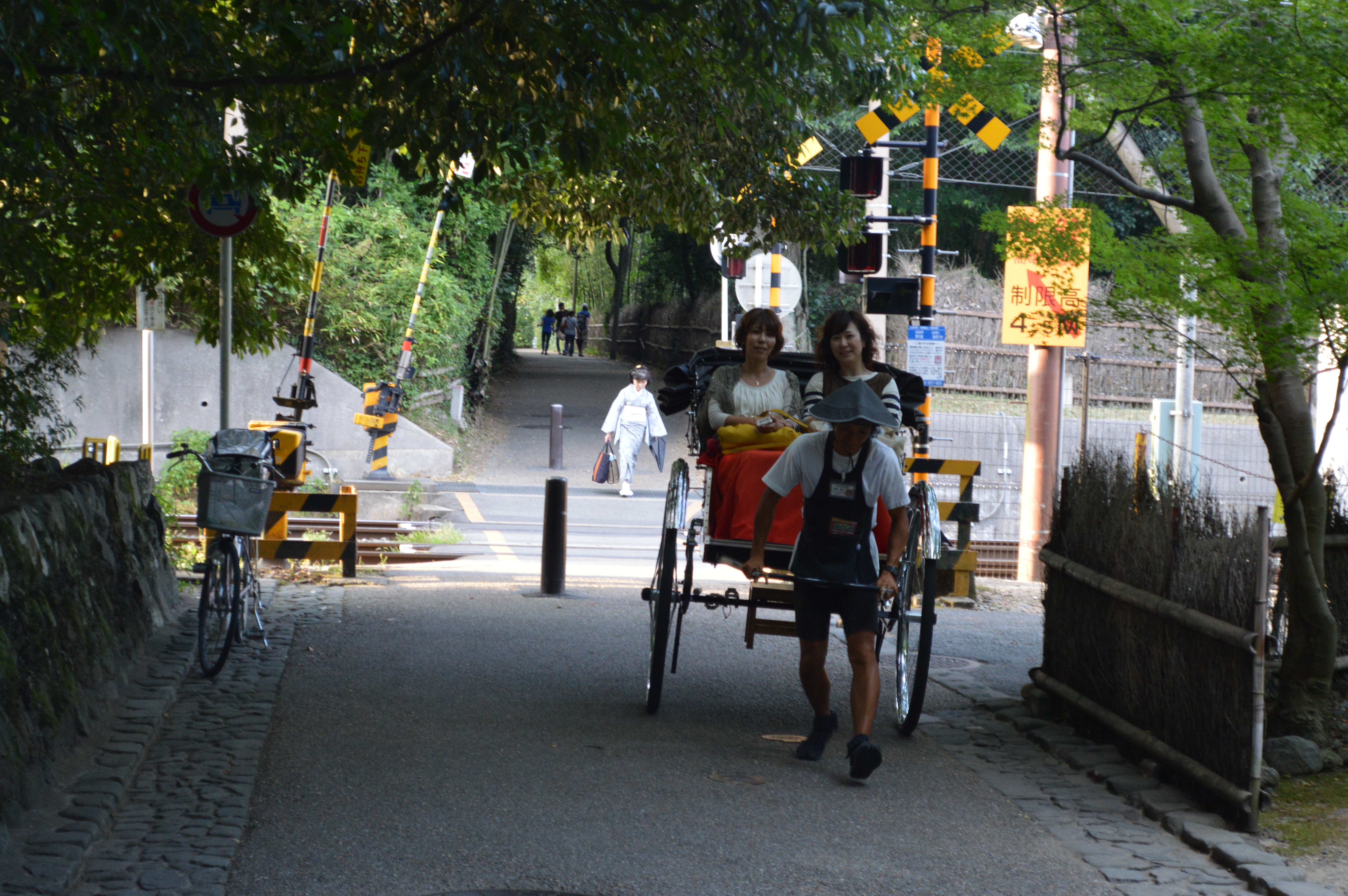
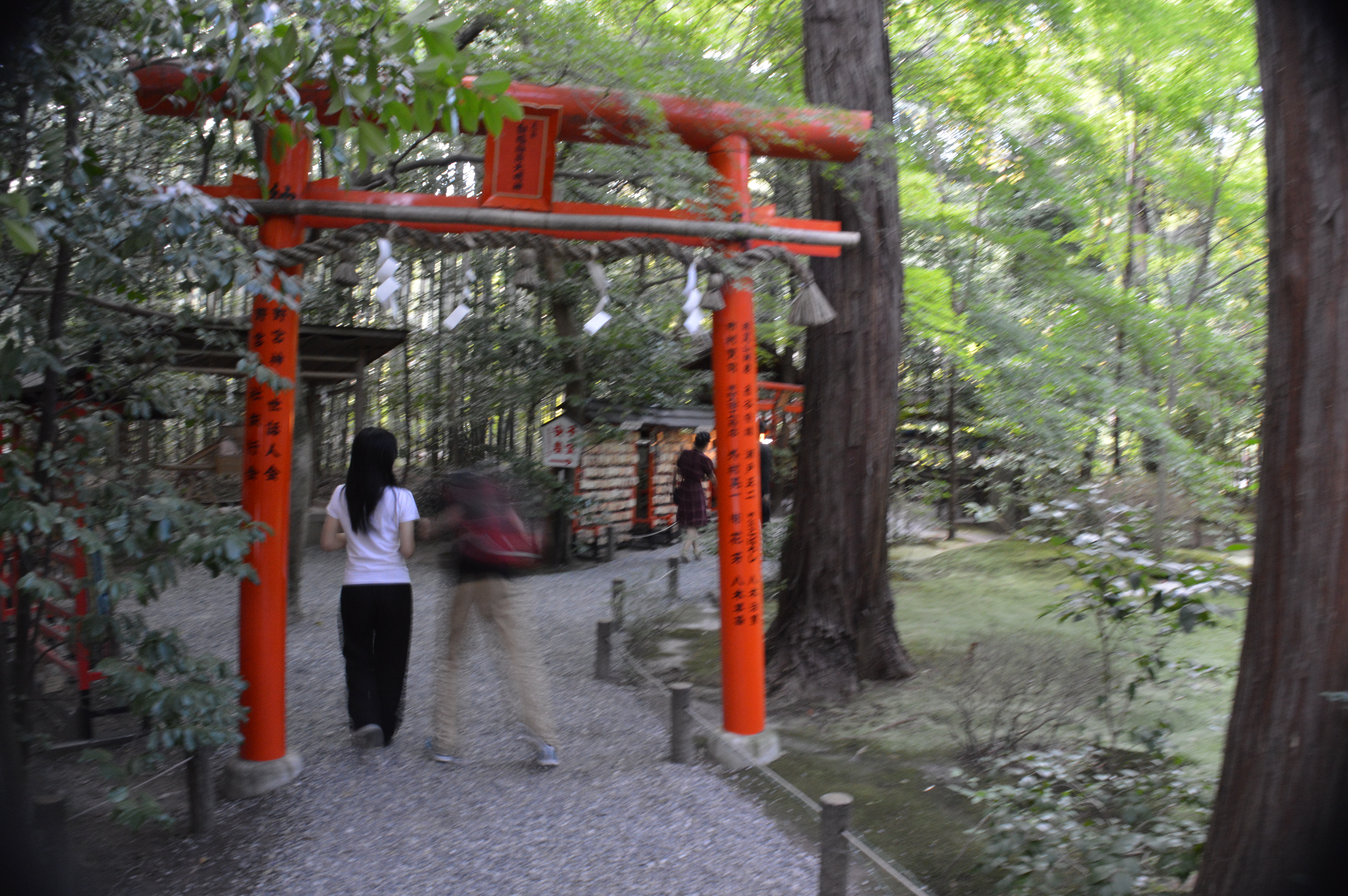
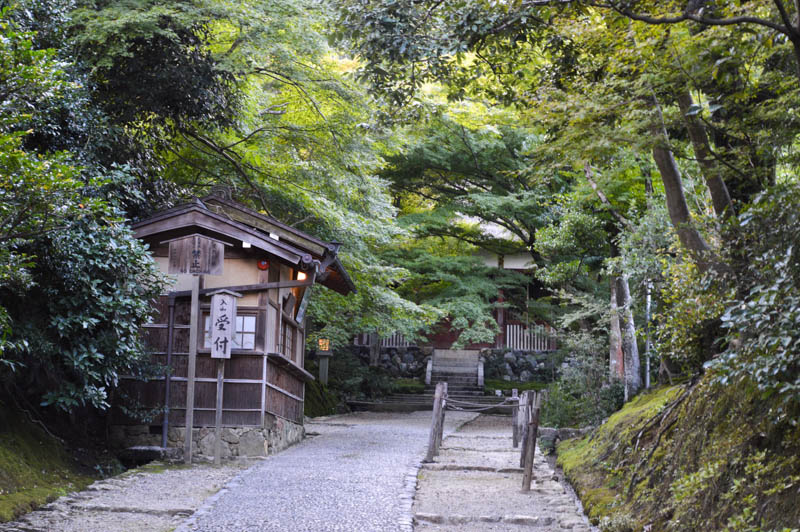
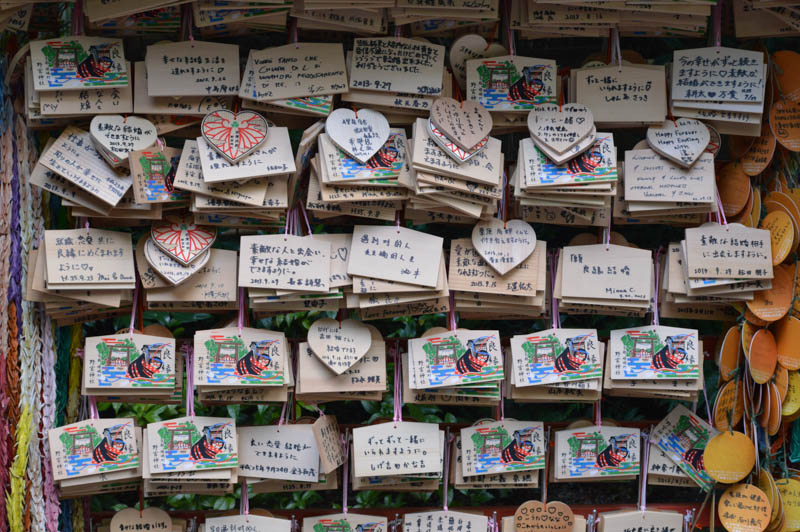
We planned to take the Sagano Scenic Railway to Torokko Kameoka Station. This area is especially beautiful during the fall. However, we were late. So, we headed towards the famous Bamboo Groves. A contrasting red “torii” led to Nonomiya Shrine, amidst the greenery. A few visitors worshiped here. Nearby, there was a wall of wooden totems with messages. Perhaps, words of wisdom, prayers, declaration of love, get well and words towards happiness – all shared this wall. On the narrow asphalt road, we crossed a railway line. A man pulled two visitors on a cart. A lovely lady in white kimono passed us. Through a sea of velvety bamboo, we reached the densely vegetated and landscaped Jojakko-ji Temple. A traditionally attired elder couple walked past clearly enjoying the atmosphere here. There is tranquility here, calmed by the fresh green leaves. Walking is the best way to savour these serene surroundings. There are several temples and places of interest here.

“The temple was set in the forest, where the sunlight barely penetrated the canopy” – Navindd

DSC_0035 DSC_0032 untitled-8 untitled-7

Dusk was imminent. Day turned cloudy as we approached the famed Bamboo Grove. The walk brought us back to the main road. Snack time again. We walked towards the bridge. On the street, the most amazing sight, two Geishas walked along the street. The atmosphere in Arashiyama is pleasant and has a village setting and feel. We walked past Tenryuji Temple that had just closed. The mountains rose above the Togetsukyo Bridge over Hozu River. On the water were a few boats taking tourists. This area is popular during the cherry blossom and fall colour seasons.

“In Japan, you could always expect the highest quality of food wherever you went, and that’s exactly what we got” – Navindd

untitled-19 untitled-18 untitled-20 DSC_0059

Osaka

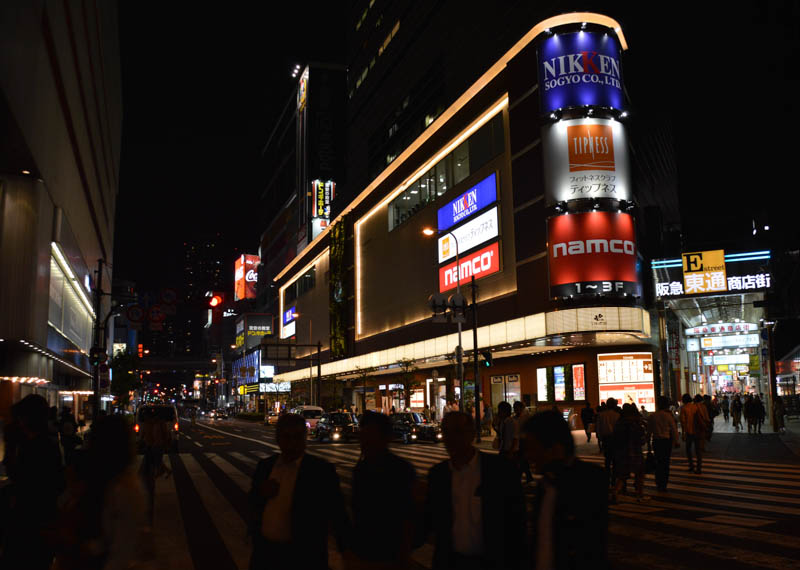
untitled-96We arrived from Kyōto to an enormous and modern Osaka Station in Kita district or locally known as Umeda in the early evening. We wanted to check out the shopping districts. Neon lights lit up the streets with an array of colours. Office workers in suits retired to nearby “izakaya” and bars. Young girls in short skirts darted in and out of shopping complexes. Osaka is known for its food. Apparently the local spend more on food than on anything else. The term “eat till you drop” can be applied about the food culture here.

untitled-92 untitled-90 untitled-94 untitled-93untitled-95

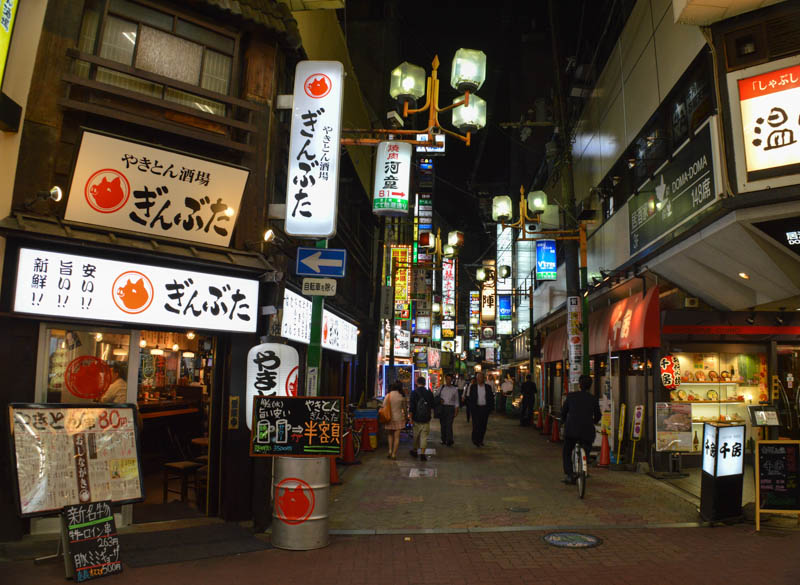
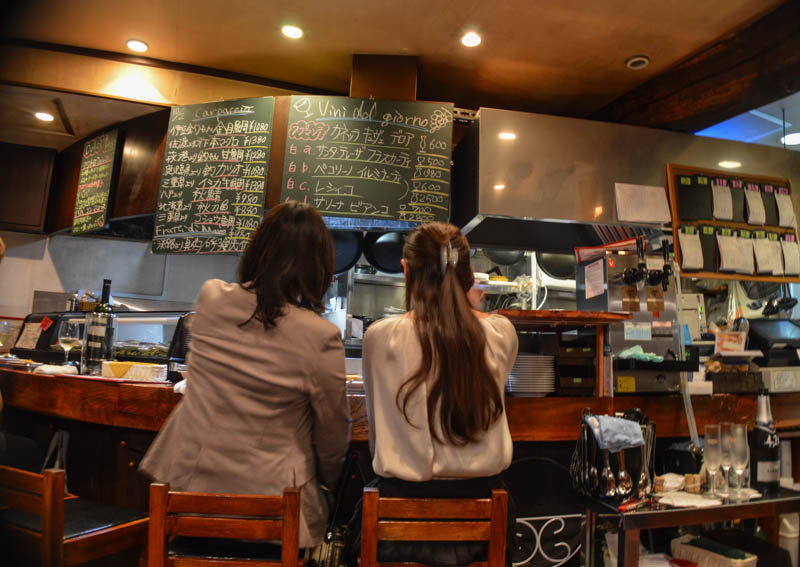
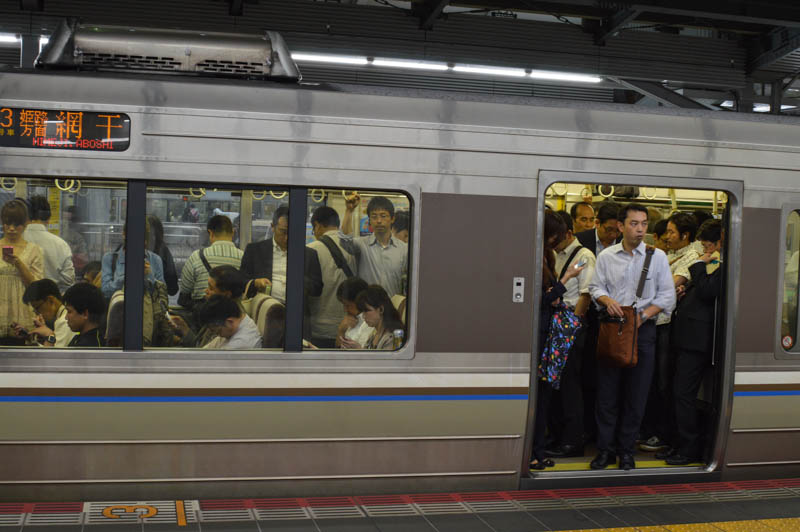
We ventured aimlessly outside the station and perhaps find something interesting. We found an alleyway with plenty of eateries. Red lanterns and bright signage advertised their fare. Most of these establishments had limited English menus. We found an Italian restaurant. We loved our Japanese food but gave it a miss today. However, I was apprehensive about “Japanese Italian”. It was a lively and cosy place. One of the Japanese staff gave us a run down on what they had sliding between Japanese and broken English and Italian. They specialised in seafood. Three young women seated beside our table suggested we tried the fish, which they were having. It was good. Next we ordered prawns and mussels. Crispy baguettes accompanied the dish. The sauce was delicate and tasty. A small candle was lit at the women’s table and the two girls happily sang a birthday song. Everyone including us joined in. The atmosphere was just great. Still wanting more, we ordered crab spaghetti. All the dished were simply delightful. “The food was so delicious that we had a second round! Although the meal was a little difficult to order and required a picture book to be brought out, it was all worth it as the food was absolutely delicious” – Navindd After that sumptuous meal, we headed back to the train station. Even at around 10pm, the commuter trains were full. People – held lazily to the hand straps above their heads; on mobile phones on silent mode; catching a nap swaying from one side to another; tired faces just wanting to head home and then there was us, belly full of delicious food and planning what was installed for the next day in Kyōto.

untitled-87