Kyoto – Kiyomezu-dera Temple2

untitled-116

Along a narrow and crowded corridor, as on one side, a major construction work was on-going, a long flight of steps descended downhill towards Otowa Falls, “Otowa-no-taki”, the namesake of Kiyomizu- dera. The water from the fall is segmented into three and drops into a pond below. A large crowd of visitors queued to get into the pavilion. With a ladle on a long stick, they tried to catch the falling water and drinking it afterwards. It is believed that this act grants wishes, good health, longitivity, success in education and love, etc. I did not wait around for the crowd to thin out. My future, it seems, is firmly on my own shoulders.

“Take the plunge at Kiyomizudera” is similar to “Go jump off a cliff “. This saying refers to the hanging platform – the veranda above the mountain where the temple is located. It doesn’t literally mean that one should jump off the platform, but instead, one should be true to their convictions “- a popular Japanese saying

“Zen is not just about religion – it is in fact about everything – breathing, walking, working, family, farming, etc. Everything or activity that we do can be Zen. Being mindful and doing things consciously. This is greatly reflected here in Japan – the gardens, pagodas and even in their everyday lives”

” Kachou Fuusetsu” literally means Flower, Bird, Wind, Moon – experience the beauties of nature and in doing so learn about yourself”.

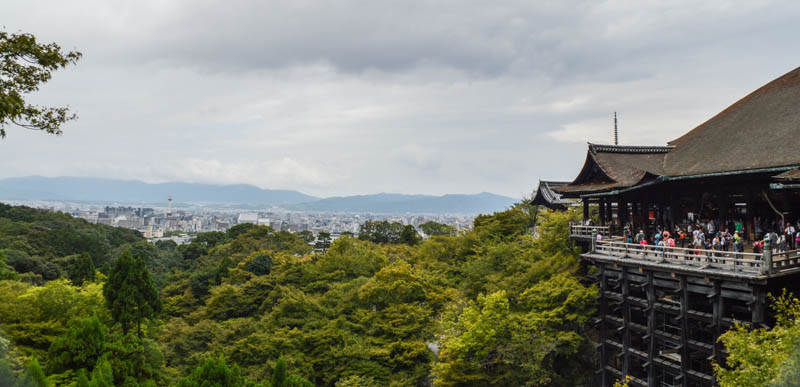
untitled-120We continued to walk higher up. The views of the “hanging stage” are clearly visible from here with its wood work underneath. From these Eastern Mountains, magnificent views of sprawling Kyōto is clearly visible. The nearby reddish Koyasu Pagoda was also under construction. We retraced our steps back towards the entrance of this massive temple complex via Todoroki-mon Gate and eventually through the West Gate ,”Seimon”. A steady stream of people continuously flowed through the entrance. We re- entered the bustling streets once again. Kiyomizu- dera is a very impressive temple complex indeed surrounded by greenery and wonderful views. However, here on the concrete paved streets, I was distracted by “mochi” and kimono clad women.

Kyoto – Kiyomizu-dera Temple

untitled-101 untitled-117

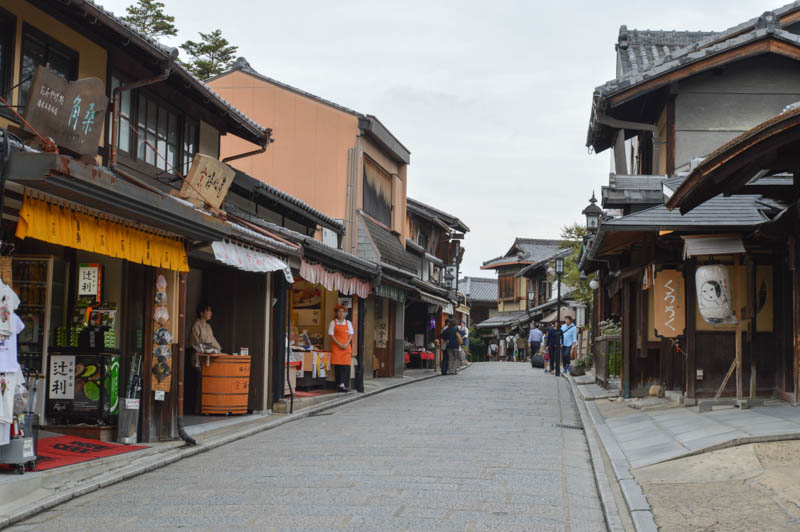
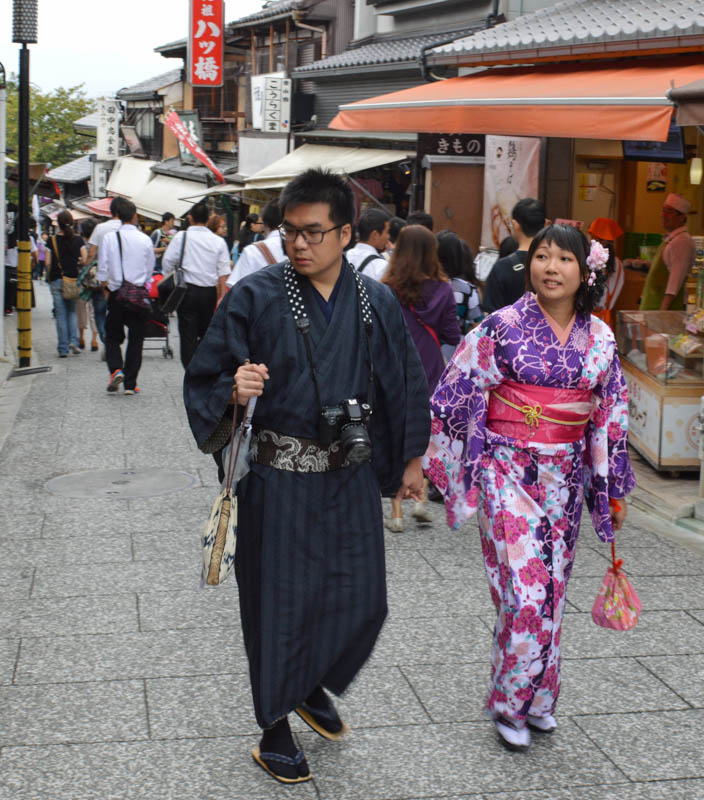
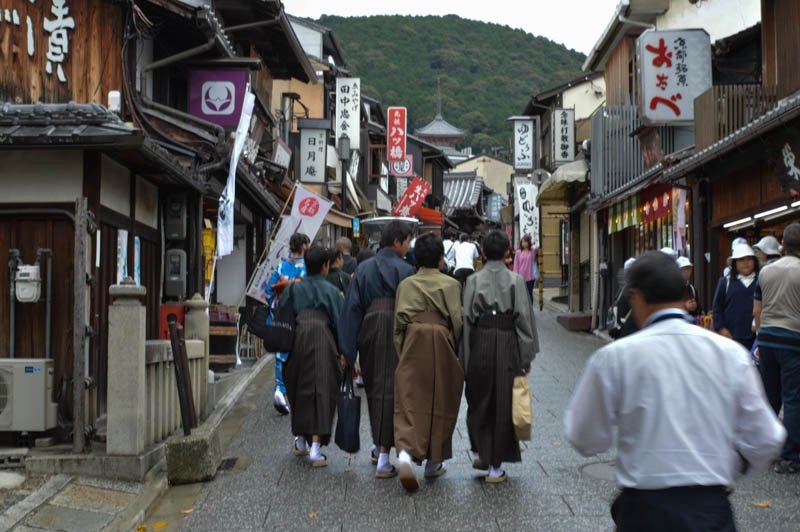
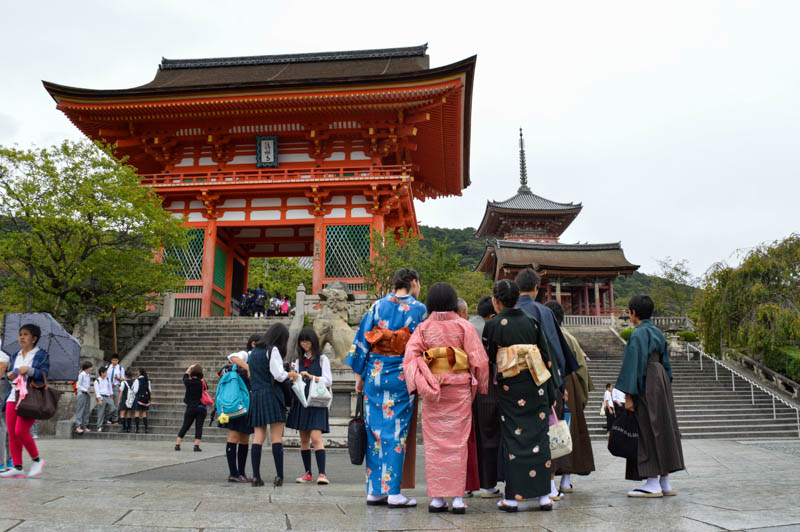
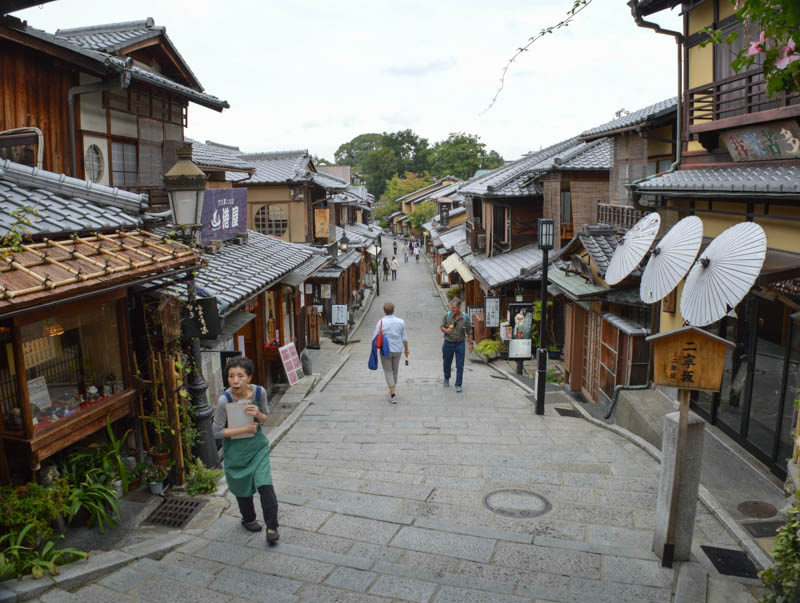
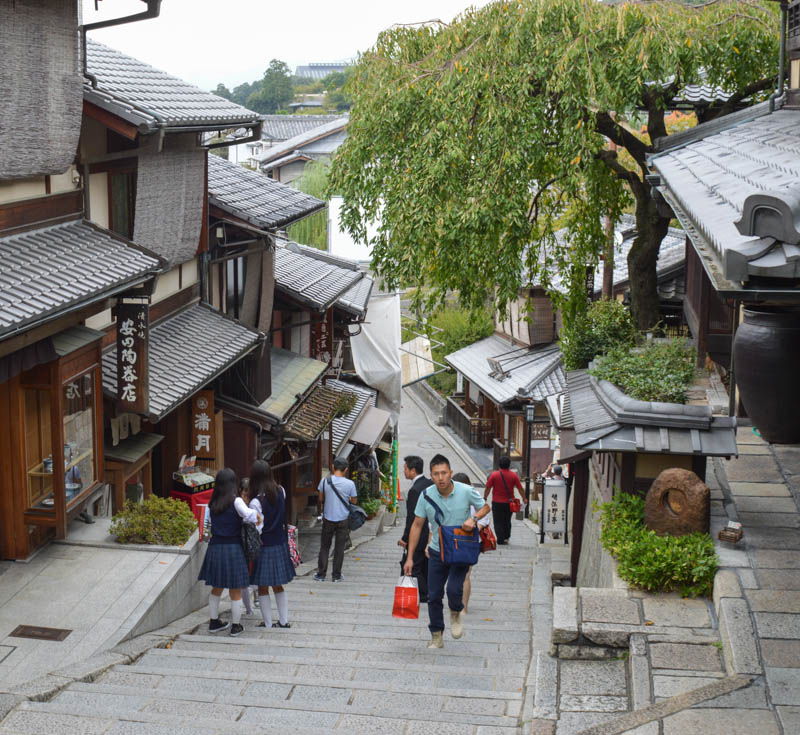
We arrived early at the historic Higashiyama district in Eastern Kyōto by bus and walked on a narrow uphill paved road toward Kiyomizu-dera, a Kita-Hosso- Shu sect temple. All the usual tourist trappings were lined up on this street, Chawan Zaka. It included souvenirs and pottery shops, quaint restaurants, snack food outlets, prayer incenses and ice cream shops. This morning, there were no children, with colourful backpacks and uniform hats, on school trips. However, the streets had a more ascetic and traditional feel – women in bright coloured kimono and men in the dark plain dresses. The cool cloudy weather added an appeal especially around the mountains. On the horizon, a towering pagoda leaped into the sky. The slow walk is a great introduction to this temple.

untitled-103

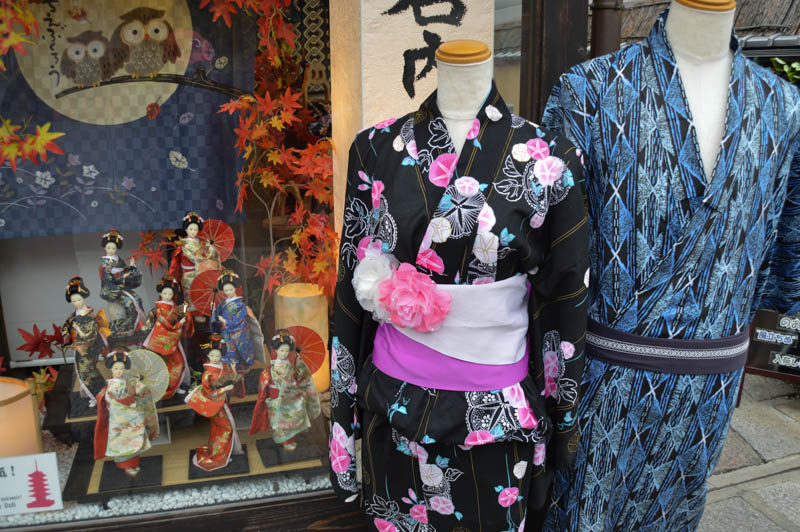
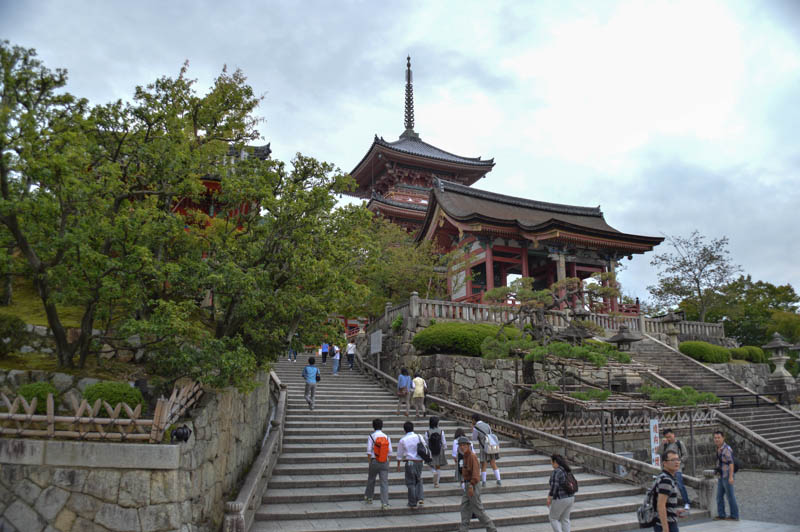
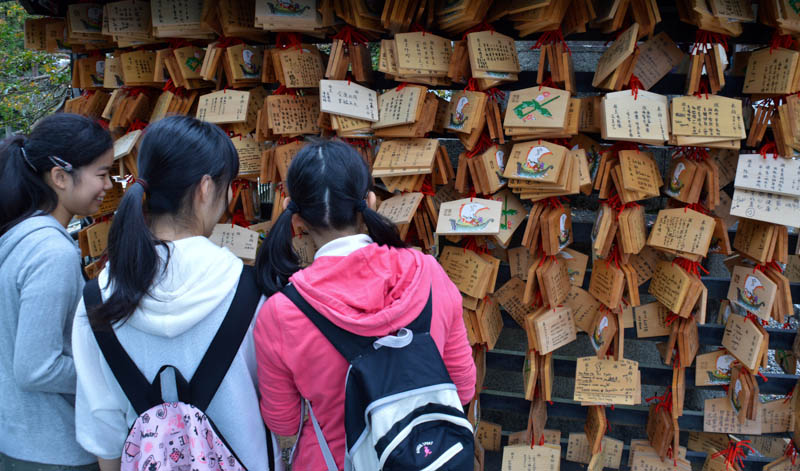
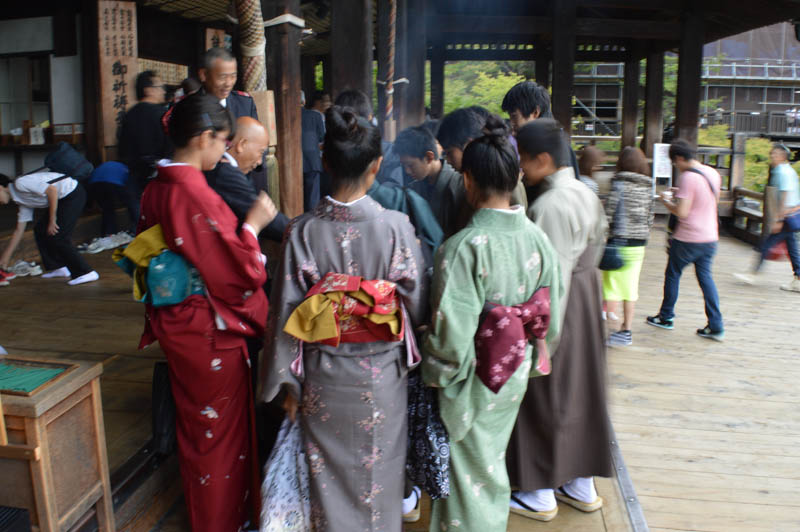
Kiyomizu-dera, “the temple of clear water”, half way up Ottowa Mountain, is a historic Kita-Hoso sect temple established by Enchin in 778. It was named after Otowa Waterfall, where spring water from the mountain has been falling since its foundation. A series of concrete steps led uphill towards the entrance, a vermillion Niōmon, “deva gate”. Two deva (god) guard the entrance. Beyond that, a three- storied pagoda, Sanjunoto, rose above the ground. Numerous buildings occupied this large temple complex. The beautiful and elegant kimono clad girls and women and the men with kimono top and flared skirt-like “hakama” added a wonderful array of colours and atmosphere in a rather cloudy day. School girls in navy blue skirts and knee high socks with light daypacks paused at the entrance. Another flight of steps through the Niōmon gate brought us deeper into the complex. Beside a sub- temple, “Ema”, wooden prayer plaques, hung on a wooden frames. Colourful pictures and letters gave some comforting words. Three girls read some “Ema” with delight.

untitled-107 untitled-108

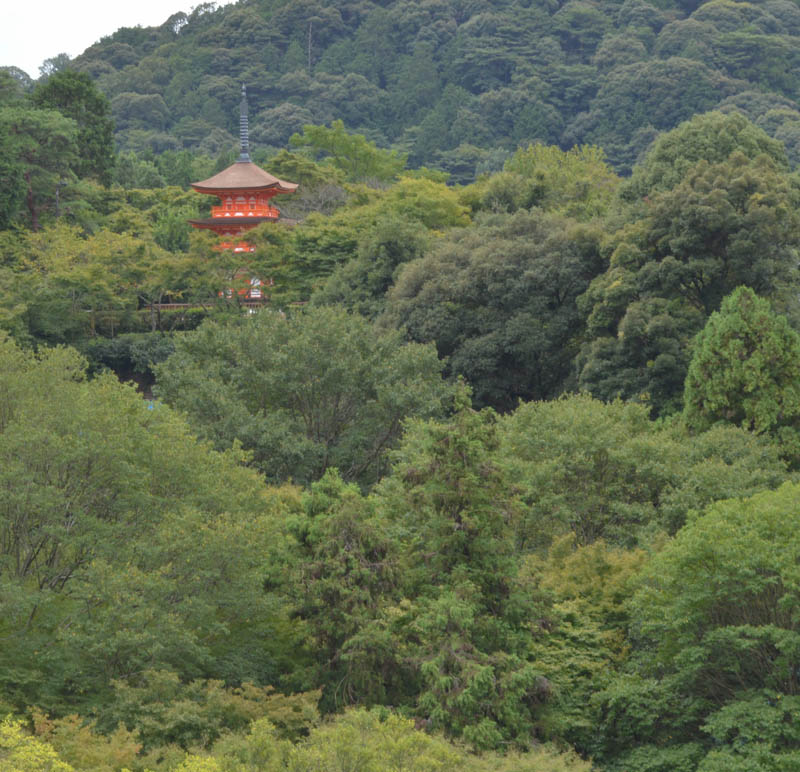
From here we entered the “Hondo”, Main Hall, a national treasure. It was amazing to see the imposing veranda or stage made of cypress, “hinoki” boards literally suspended above the dense green vegetation. 12m high “keyaki”, Japanese Zelkova pillars supported the structure without the use of a single nail! Wooden braces run through these gigantic support pillars. It is a very impressive construction indeed with distant views of Kyōto City and the surrounding mountains. In the south, the orange three storied Koyasu Pagoda emerged out of the forest floor. The smell of burning incense perforated through the thick still air. A few worshippers gathered round a large bowl and placed incense in prayer. Inside the hall is an Eleven- faced and one- thousand- armed Bodhisattva of Compassion.

untitled-112 untitled-110

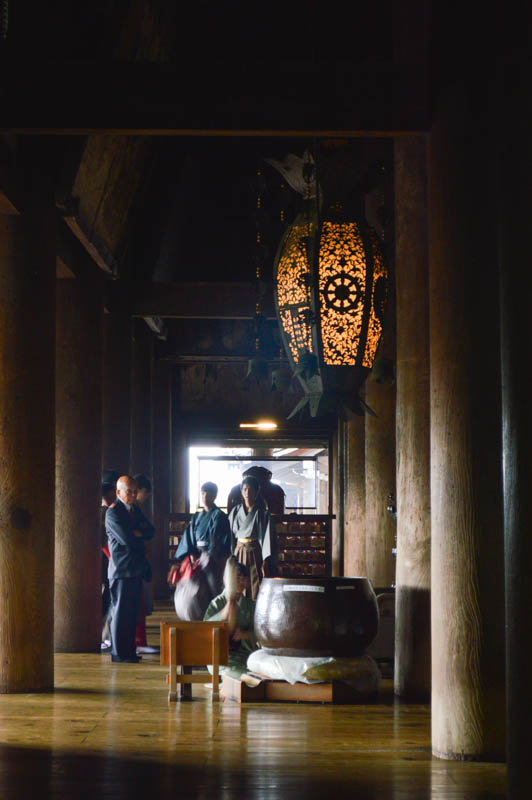
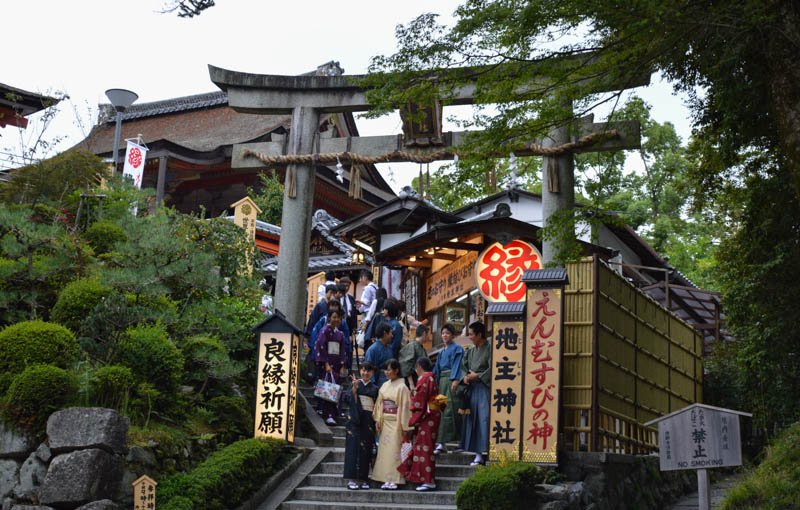
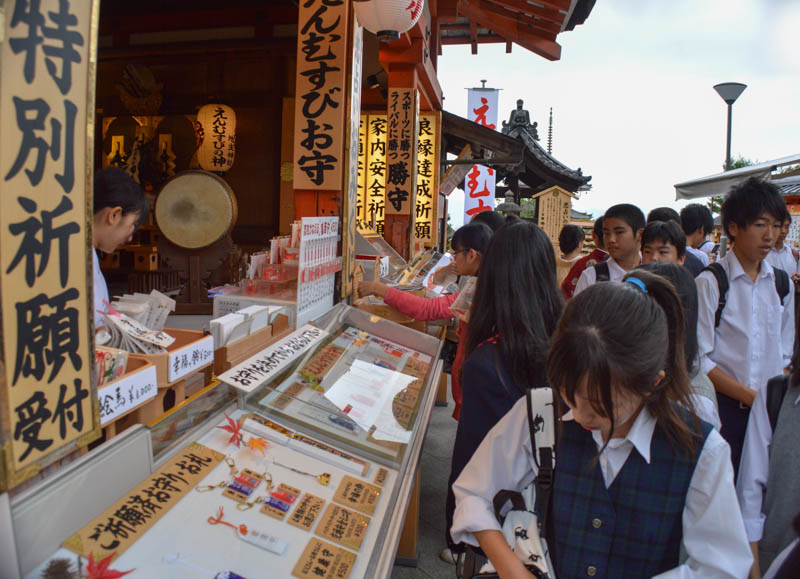
A lantern hung above the “Hondo” entrance provided a little illumination to the low lit hall. A steady procession of people flowed through the inner sanctuary with every step measured. Murmurs of prayers could sometimes be heard intermixed with shuffling of footwear on the wooden floor boards. Behind the hall is the Jinshu Shrine, dedicated to the deity of love and match-making, Okuninushi. Through a flight of steps under a grey stone torii, surrounded by greenery, we reached the shrine. It was crowded mainly with young girls. A souvenir shop was doing a brisk trade. Items included “ema”, wooden plaques written with inspirational words, “omikiji”, fortunes written on strips of paper, totems in colourful pouches – “for conception:1000 yen; for easy delivery, for against disaster, safety travel : 500yen”. Opposite, the shrine, individuals with eyes shut, paced themselves, some with encouragements and some with whispers, between two stones 18 meters apart. This is said to bring luck in finding love. It wasn’t a ritual but carried out with fun and good spirits. A thick straw rope, “shimenawa”, hung on the stones. A statue of the god and his messenger was sited at the entrance

untitled-113

In another corner was a Nade-Daikoku-San, written on a board with the words – “Fulfilment of various wishes. If you pat the bronze statue, your prayers will be answered”. The big bellied statue with a sack on his back is a bearer of good fortune. I rubbed his shinny belly too. There is never too much luck!

untitled-114

Japanese Food

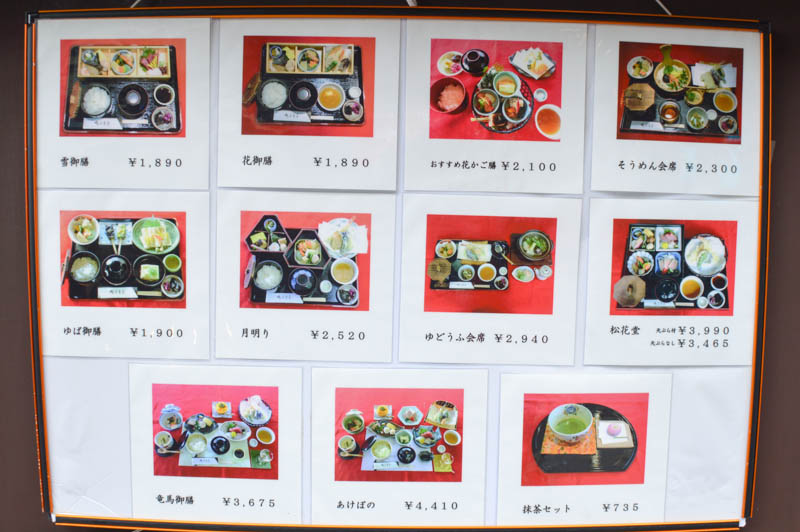
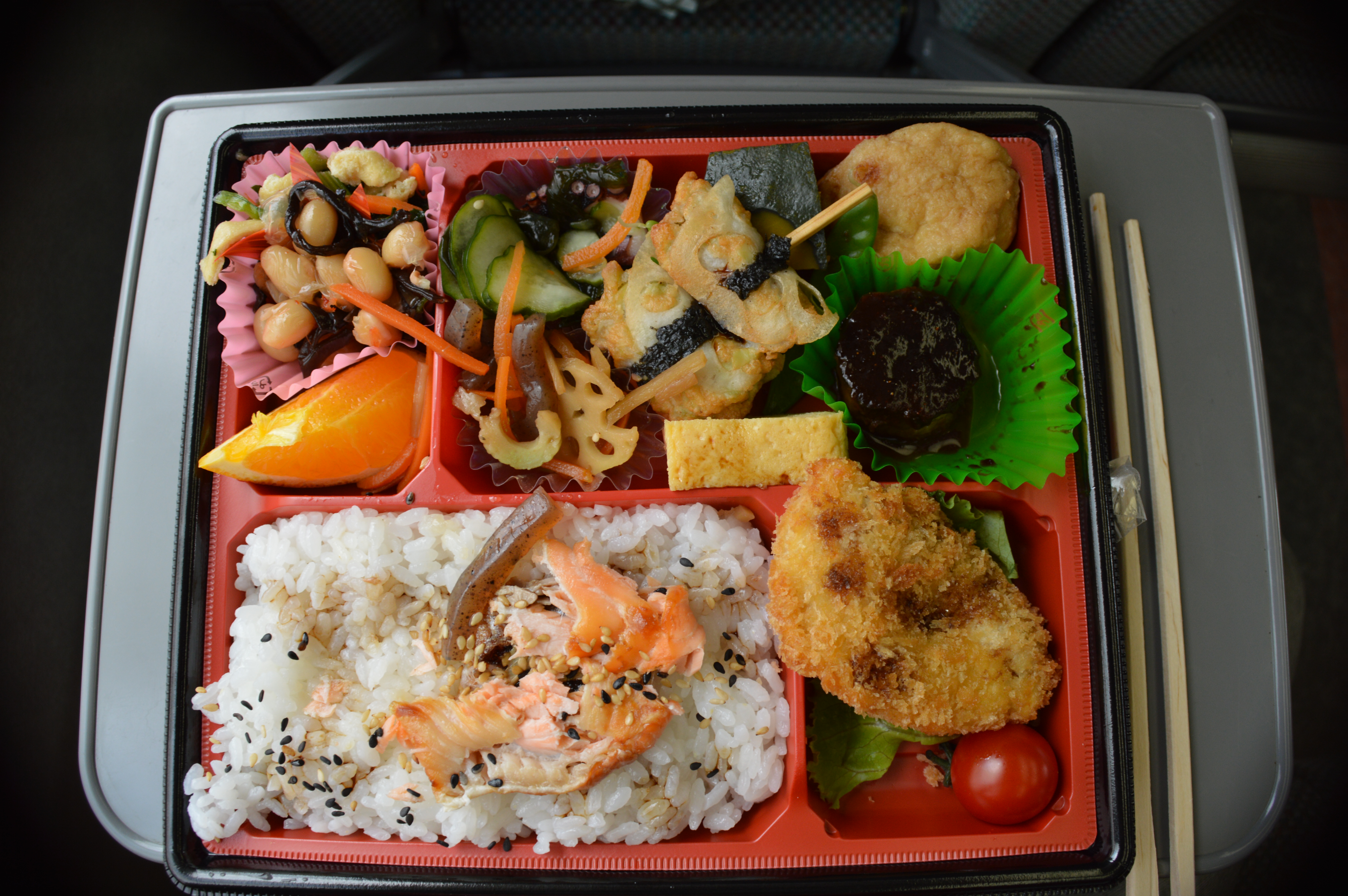
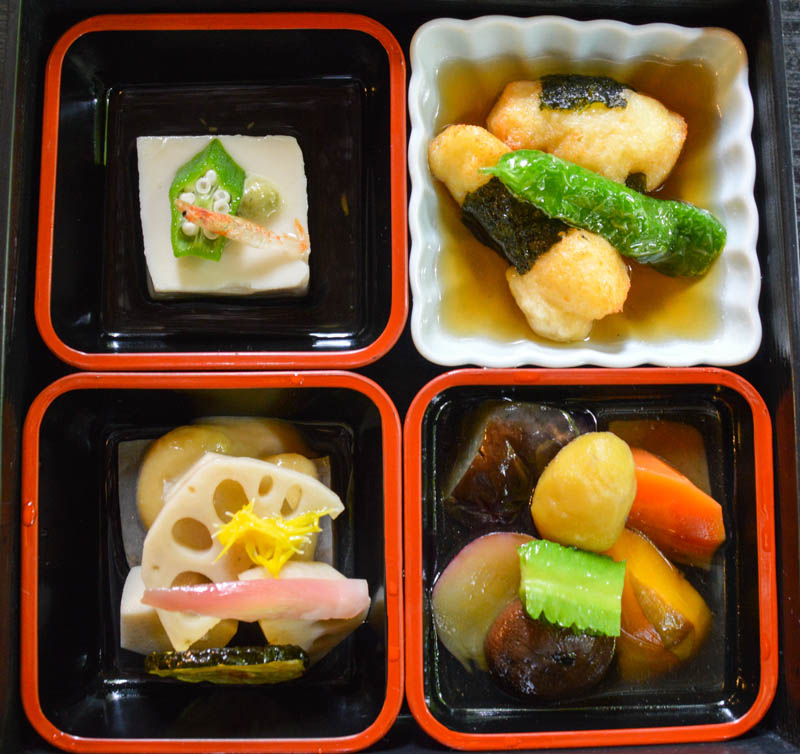
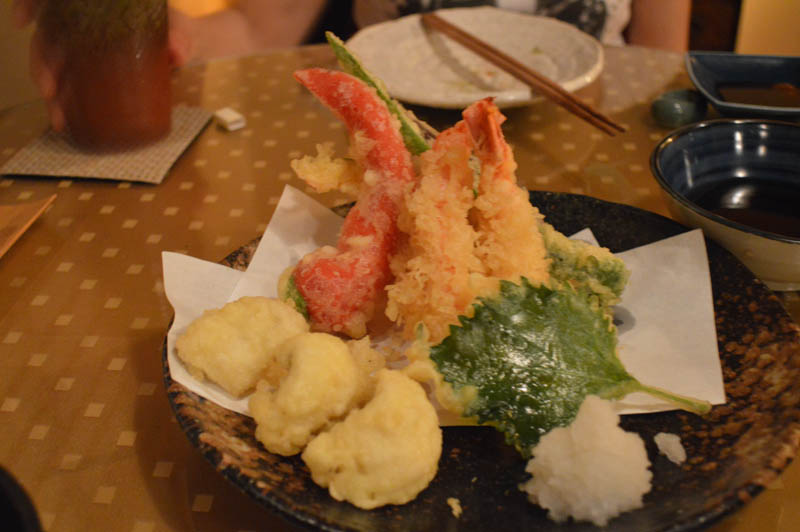
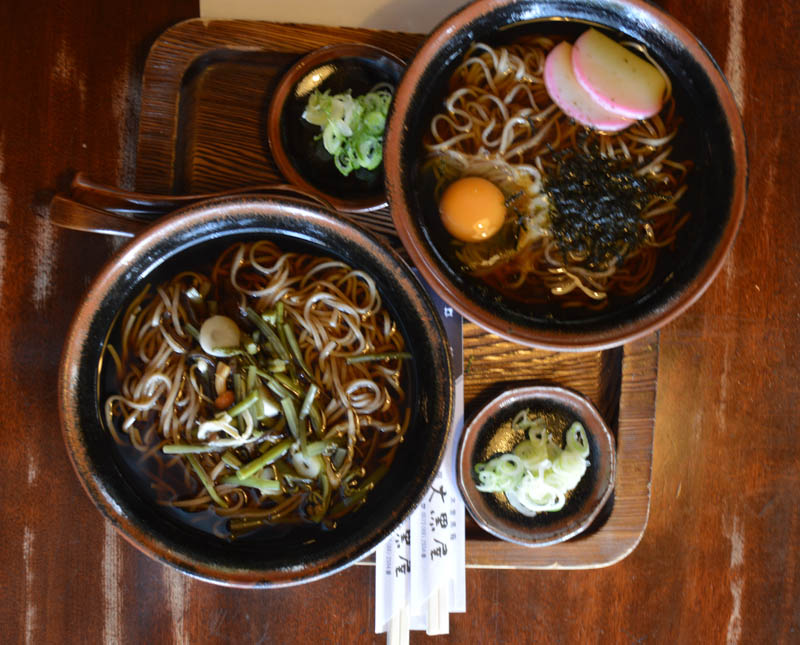
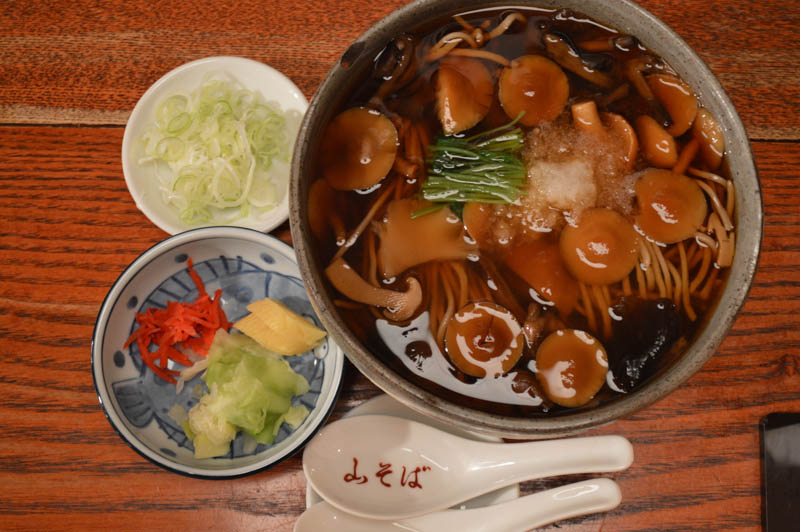
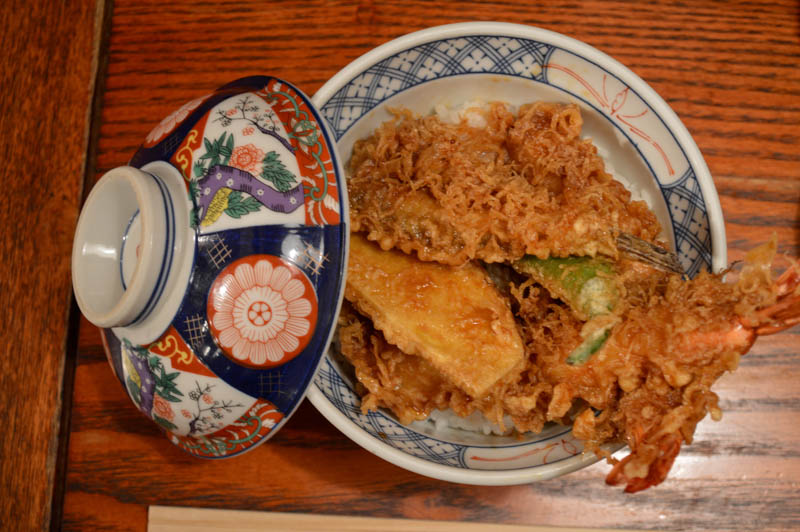
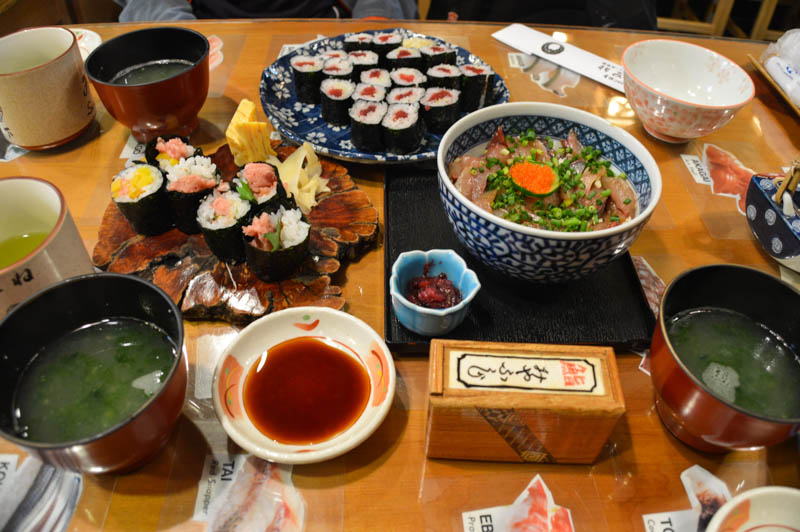
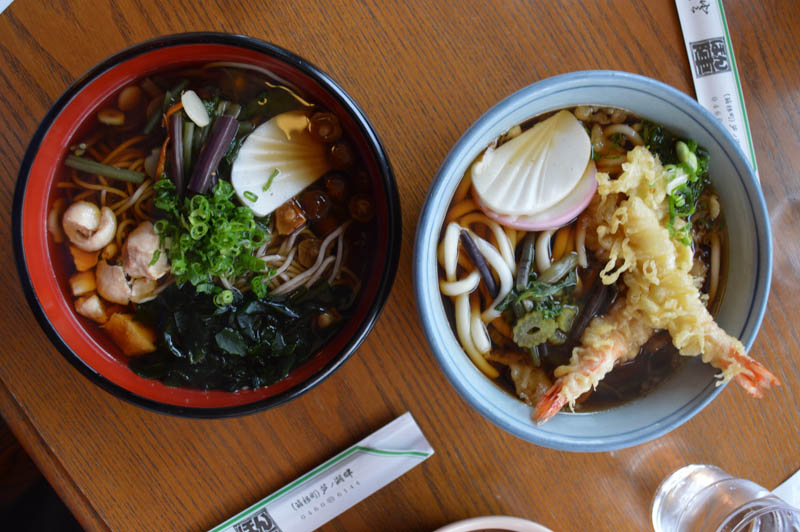
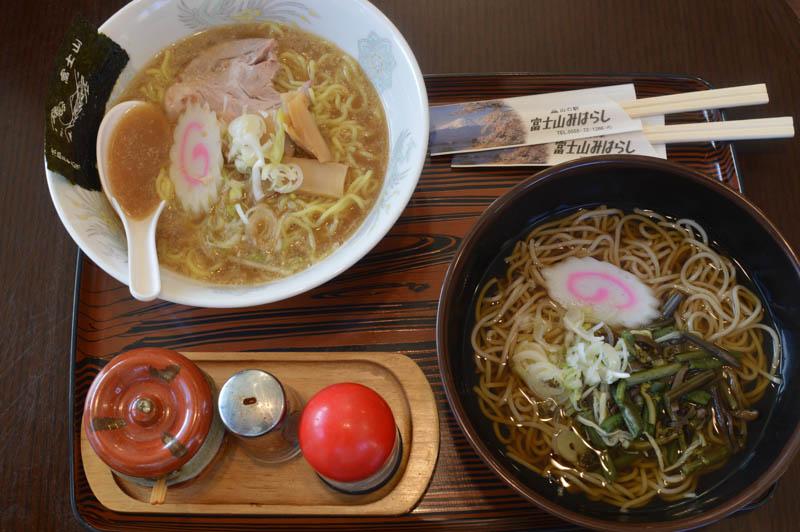
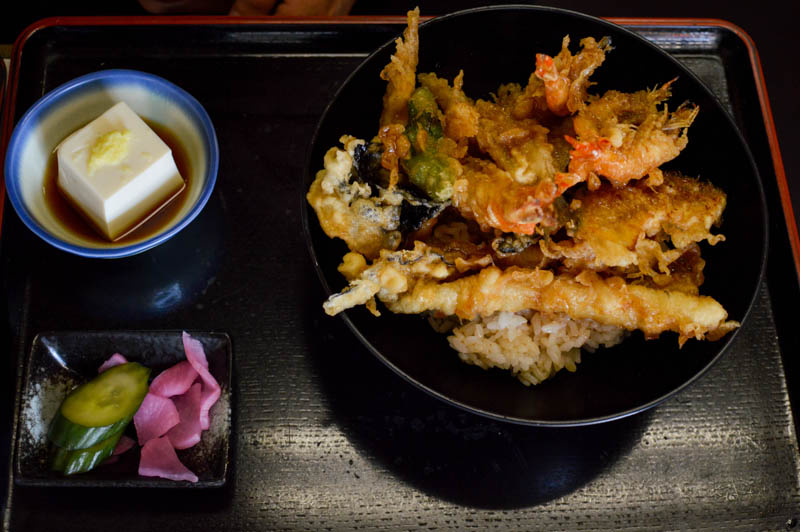
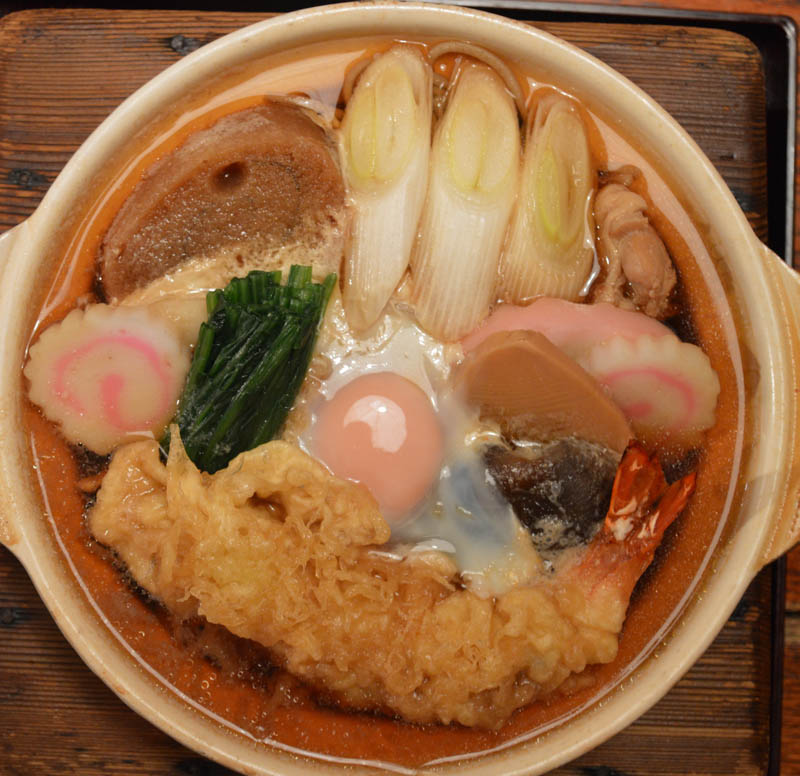
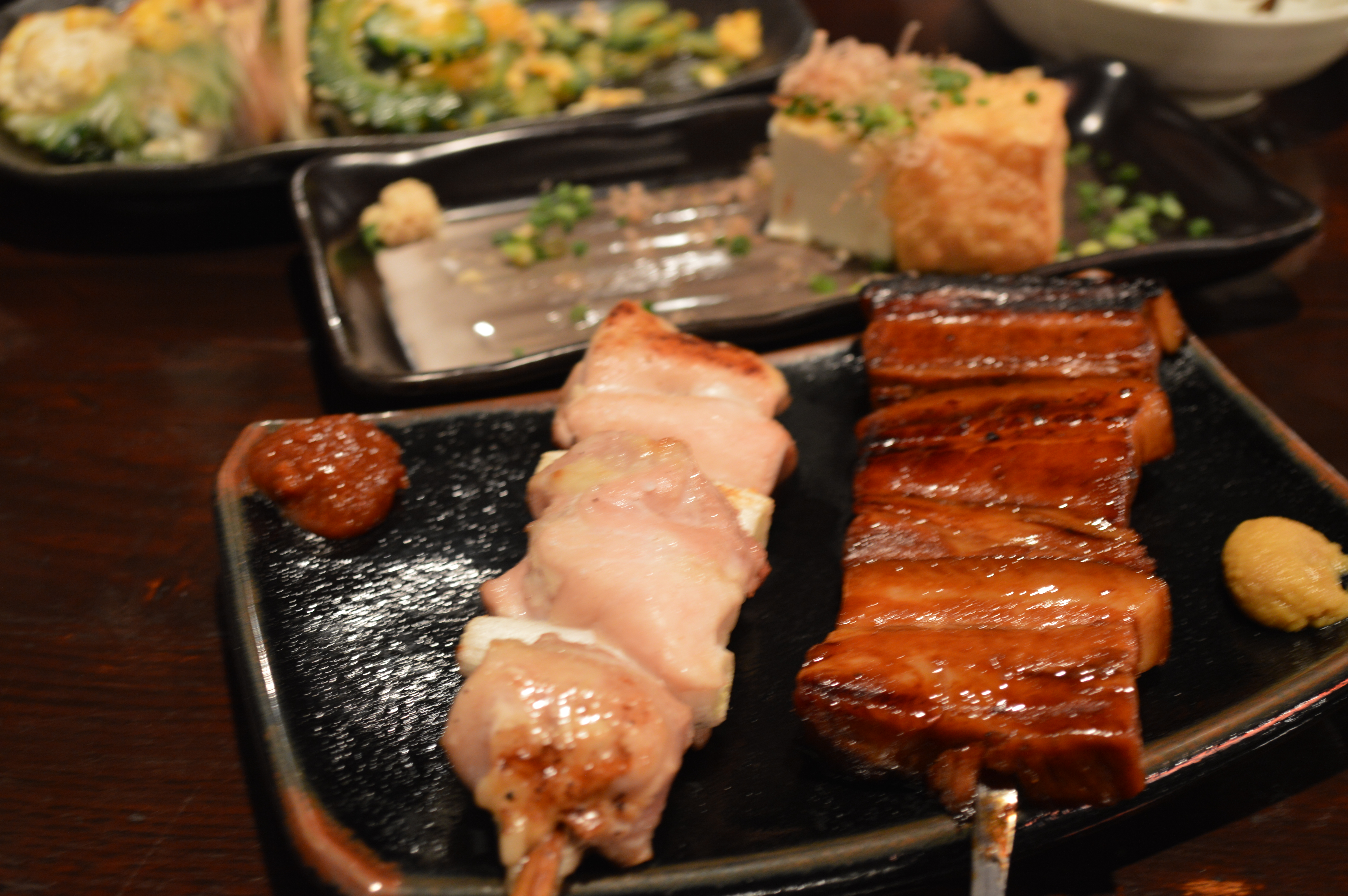
DSC_1061 DSC_0877 untitled-329 untitled-284 untitled-214 untitled-318 untitled-314 untitled-223 untitled-224 untitled-208 untitled-148 untitled-123 untitled-102 untitled-13untitled-226 DSC_0145 untitled-358 untitled-357 DSC_0140Japanese food – simply delicious. It tickled all the senses!
“dozo”

“irrashaimase”

“sumimasen,
okanjou o kudasai”

“oishii”

tempura
soba
ramen
udon
yakisoba
gyoza
wasabi
omuraisu
kareraisu

izakaya
tempura-ya
yokocho
yakitori
teppanyaki
sushi-ya
yatai
yakitori-ya
sukiyakishabu shabu
tonkatsu
sakana
gyuniku
toriniku
okonomiyaki
takoyaki
yakiniku
unagi
sashimi
sushi

agedashidofu
umeboshi
tsukemono
narasuke
miso dashi
khombu
nori
Kyoto – Philosopher’s Path

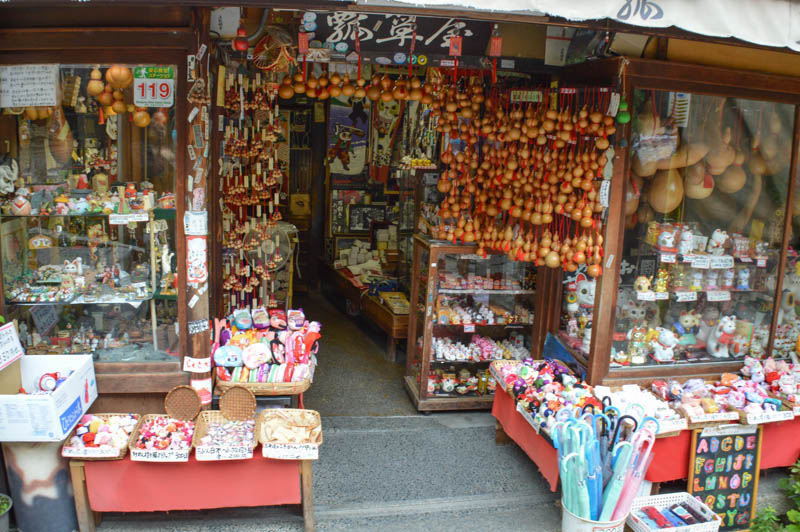
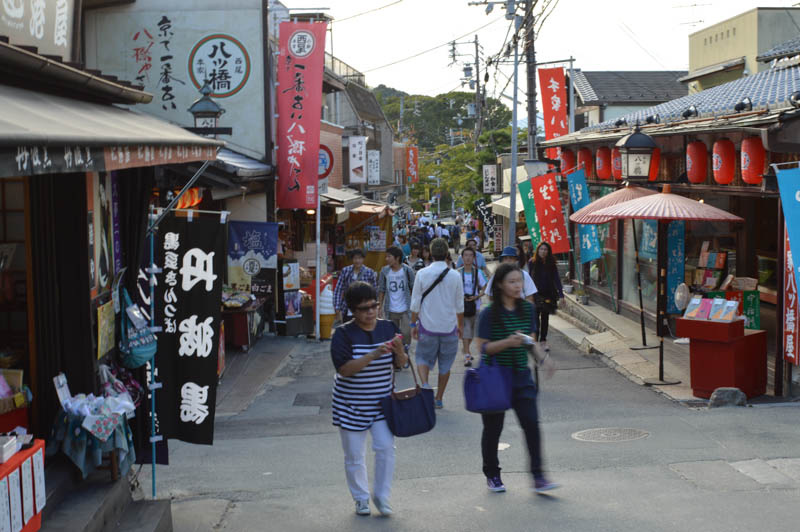
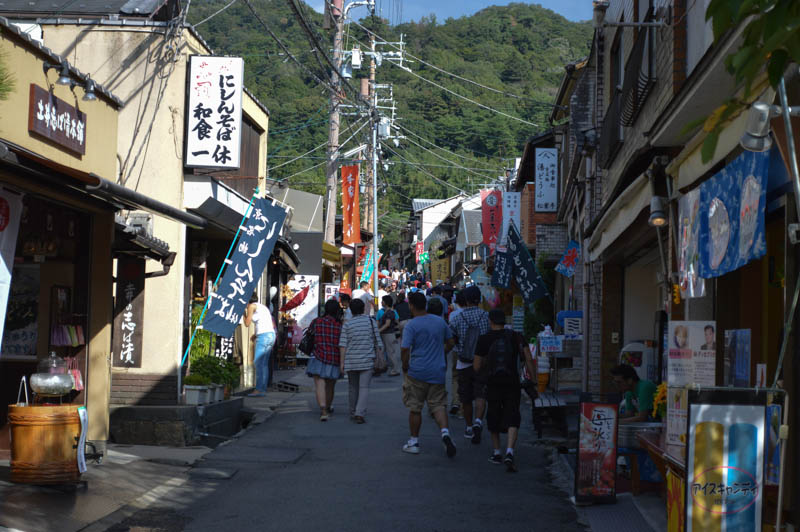
untitled-84The streets around Kiyomizu-dera are pleasantly stacked with shops to please the tourist and locals alike. Calls from vendors mixed with sweet aroma of hot food. Tightly arranged, these shops sold every imaginable nick- knacks and titbits to satisfy all – many flavours of ice cream on a cone, bread or crepe. Soy delights – hot and cold. Clothing, from traditional kimonos to western designs, knitting and weavings; flowing “noren”; pottery – cups, saucers and bowls to mugs and plates; embroidered textiles; a variety of wooden souvenirs – from chops sticks to dolls to kittens; and “mochi”, a wonderful Japanese pastry, in all its design, shape, filling and colour. Then we have the preserved foods, in small packages to tubs and barrels. Amongst these shops are hidden shrines and temples in narrow back streets and alleyways. Today, it was not crowded but the ambiance of old Kyōto was certainly felt here.

The Way is basically perfect. It doesn’t require perfecting. The Way has no form or sound.
It’s subtle and hard to perceive. It’s like when you drink water. You know how hot or cold it is. But you can’t tell others. Of that which only a tathagata knows, people and gods remain unaware. The awareness of mortals falls short. As long as they’re attached to appearances, they’re unaware that their mind is empty. And by mistakenly clinging to the appearance of things, they lose the Way.
– Bodhidharma (d. 533)

untitled-85 DSC_0198

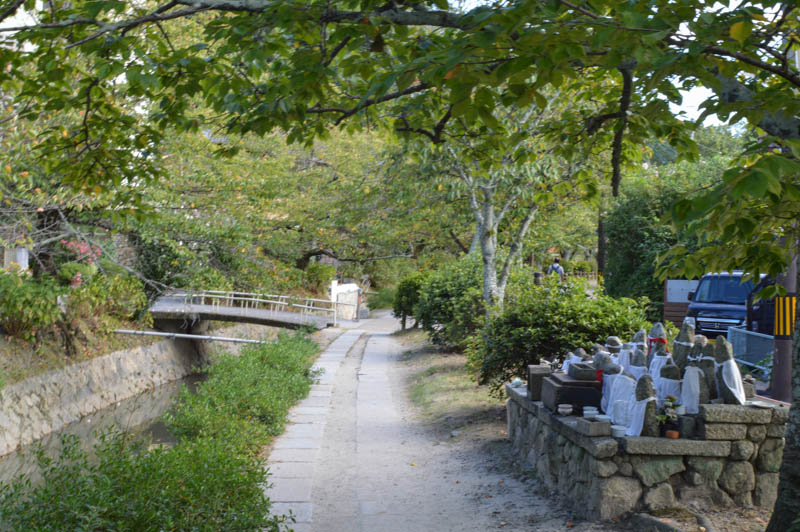
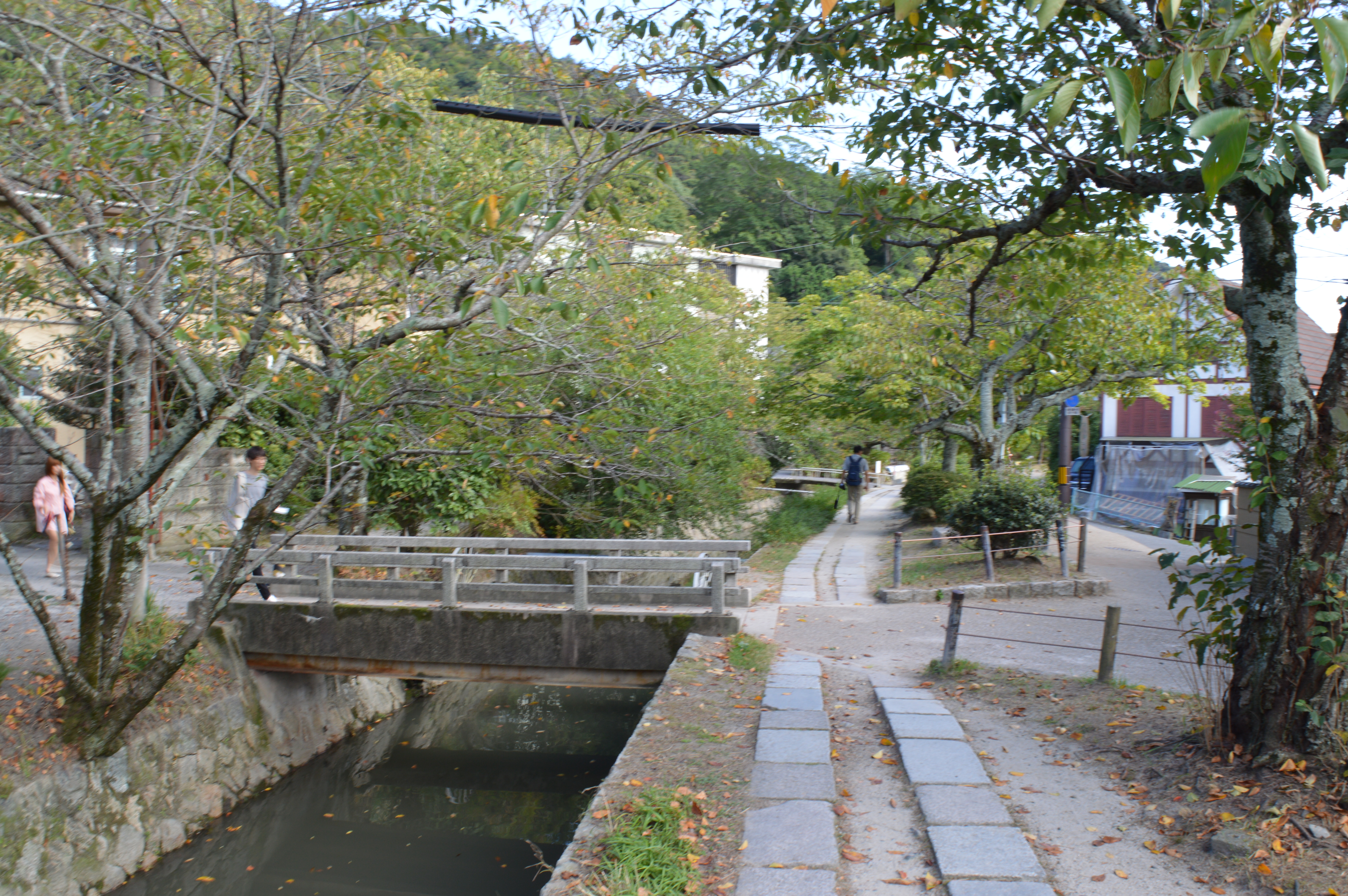
The Philosopher’s Path, “Tetsugaku- no- michi” is a stone path that runs along a canal built during the Meiji Period and lined, on either side of the canal, with numerous cherry trees. It is particularly crowded during the cherry blossom “hanami” season. Kitaro Nishida, a famous philosopher, used to stroll along this path to ponder his thoughts. Today, there was hardly anyone here and the canal looked just like any other waterway. However, the trees provided shade from the heat of the day. There are a few shrines dotted along the path. The sound of bird songs and a variety of flowering plants added some colour. Stone bridges connected both side. We had the path to ourselves today. The greenery was welcomed.

Kyoto – Ginkakuji Temple

untitled-72 untitled-71

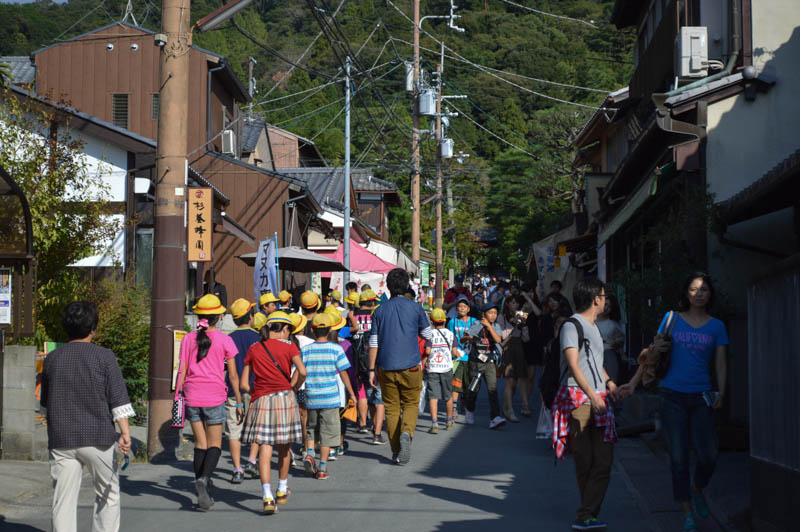
We hopped into a bus and continued our temple journey to the mountainous eastern Kyōto (Northern Higashiyama District). Walking away from busy Imadegawa Dori, we entered a narrow Ginkakuji- cho. This street was crowded with pedestrians, mainly kids on a school trip. The street was lined with restaurants, souvenir and retail shops. The road led uphill towards a lush mountain. The sounds of kids chatting away, with a cheerful attitude, curiosity and innocence, created a heart- warming atmosphere. Ice cream parlours and fruits drinks outlets had queues of people lining up. The sun, although hidden, radiated much heat and it was humid.

We entered a narrow passage, “Ginkakuji-gaki”, lined with tall trees, and entered through the So-mon Gate. The street had tidily trimmed hedges on both sides, and a neat bamboo fence. We then entered the Chu-mon Gate. It was crowded today. The views opened up with contrasting sand and gravel against lush mountainous greenery. A two storey dark exterior, “Kan’non- den”, commonly known as Ginkaku, the Silver Pavillion, is set amongst tall pines and landscaped lake and garden. This was built as a retirement villa for Ashikaga Yoshimasa, a shogun, in 1482 and later converted to a Zen temple in 1490. He modelled it after Kinkakuji (the Golden Pavilion) in Kyōto’s northern mountains. The pavilion was never covered in silver.

untitled-76

“The entrance to Ginkakuji was a long street, packed with people and shops everywhere. It felt like I was back in Magome!” – Navindd

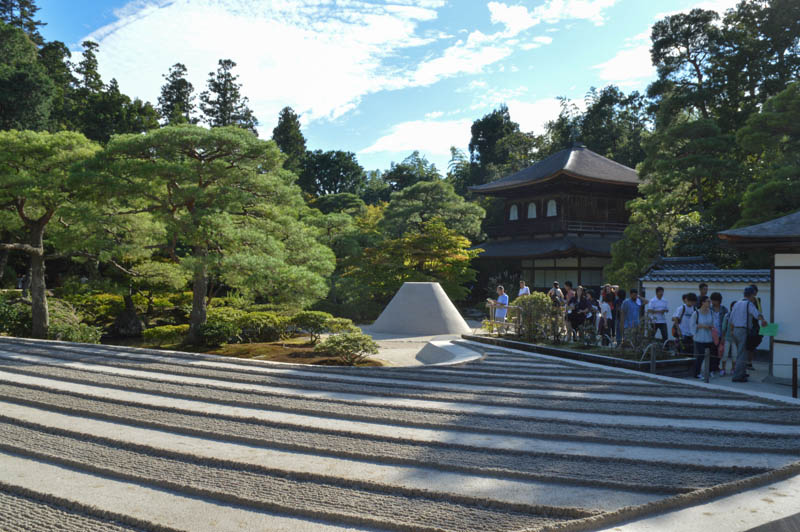
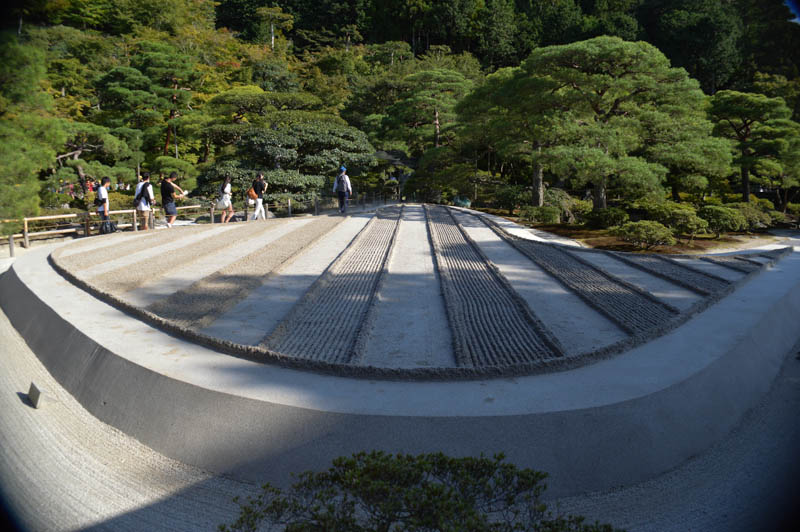
untitled-81Next, we came to an expansive dry sand garden with a rather large truncated cone, 2m high, made with fine white sand, “Kogetsudai”, Moon Viewing Platform. It stood out against the raised and raked coarse sand, “Ginshadan”. Kogetsudai is said to resemble Mount Fuji amongst others. On full moon nights, the moonlight is reflected onto the “Ginkaku”, Silver Pavilion. Magnificent greenery surrounded the “karesansui”, dry garden, and the beautifully architectured building flanking the “Sea of Silver Sand”, including the “Hondo”, Main Hall and “Tōgudō” which are national treasures. A wonderfully landscaped pond, “Kinkyochi”, the Brocade Mirror Pond, with large sculpture pine trees leaned towards the pond and hugged this dry sand garden and the adjacent buildings. This pond is punctuated with islands connected by stone bridges. Ginkaku-ji’s “chisen- kaiyushiki”, pond-stroll garden, was also modelled after the garden of Saiho- ji. A moss garden appeared under the shades next to the pond. A nearby small waterfall, “Sengetsu- sen”, Moon Washing Falls fed this pond. The water is continuously replenished.

untitled-74

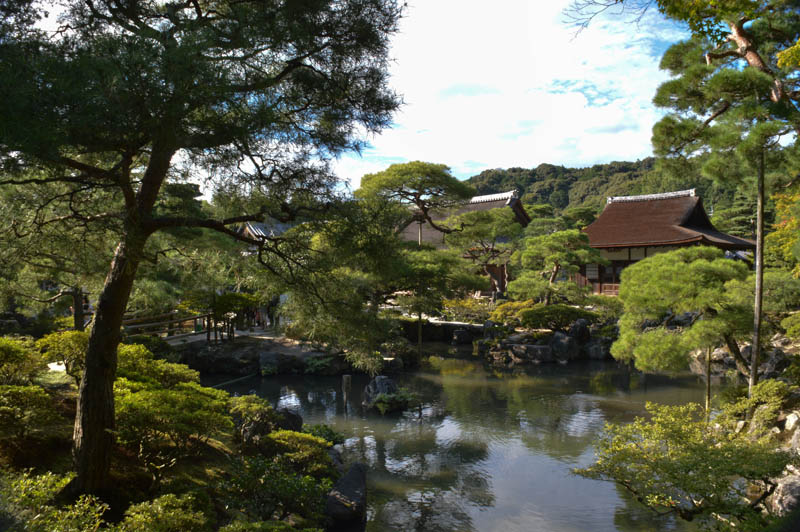
A meandering path crossed stone bridges, past moss covered gardens and flowing ponds, as it continued uphill. Looking back towards the majestic “Ginkaku”, Silver Pavilion, reflected on the “Kinkyo-chi” pond, I can easily imagine the tranquillity derived from these surroundings.

Islands and stone bridges had their own colourful names. Shadows of trees and buildings reflected off the clear water of the pond created a surreal and vivid appearance. With the ever changing light, although cloudy today, the dramatic views continuously changed. Perhaps reflections of our own lives are represented here!

“The temple was also famous for its 2m high sand cone, which sat perfectly on the side of one garden, with not a single mark on the sides……..the Silver Pavilion…trees surrounded it and it seemed to be floating on the pristine green pond….It was worthy of a front page of any travel book. Inside the pavilion though, there was nothing much. It was just an empty room” – Navindd

untitled-77 untitled-78 untitled-80

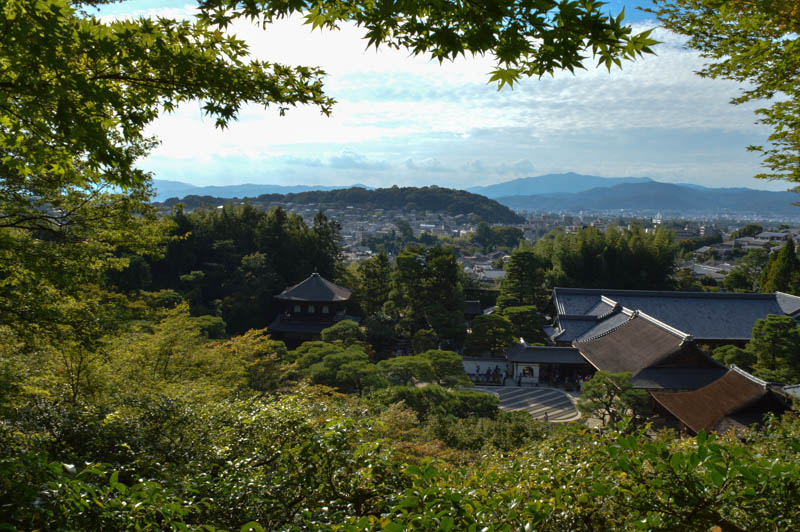
The path wound uphill surrounded by a mixed forest. Numerous maple trees were scattered around this forest. Moss covered vast areas of the shaded ground under the forest canopy. I could imagine the dramatic autumn colours of the expansive temple grounds. From the hill top, there was a lovely scenic view of the temple complex with a backdrop of Kyōto. The usage of minimum natural elements such as sand, stones, water and plants; strategically placed allowed us to see different perspectives as we strolled around this tranquil landscape. It is not hard to understand the immense pleasure that can be gained with simple things. Ginkaku- ji does just that!

Kyoto

untitled-65

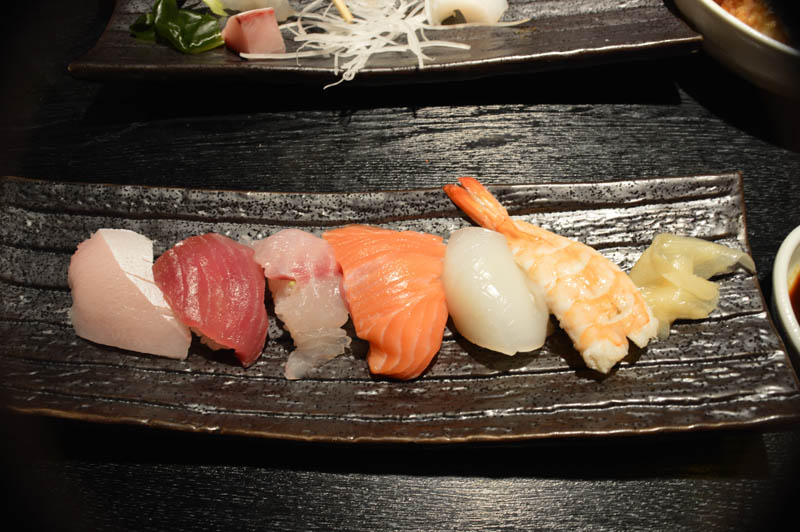
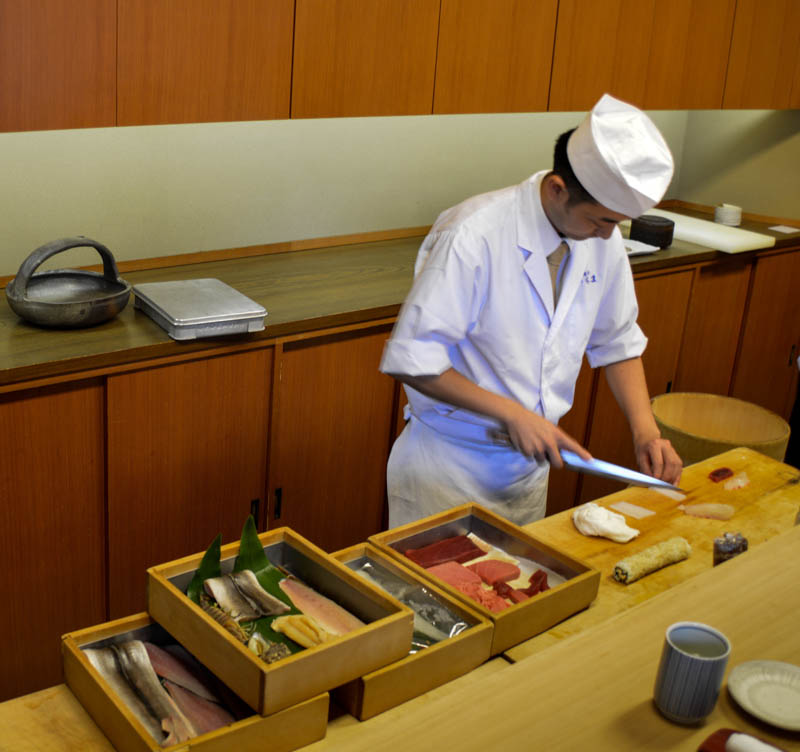
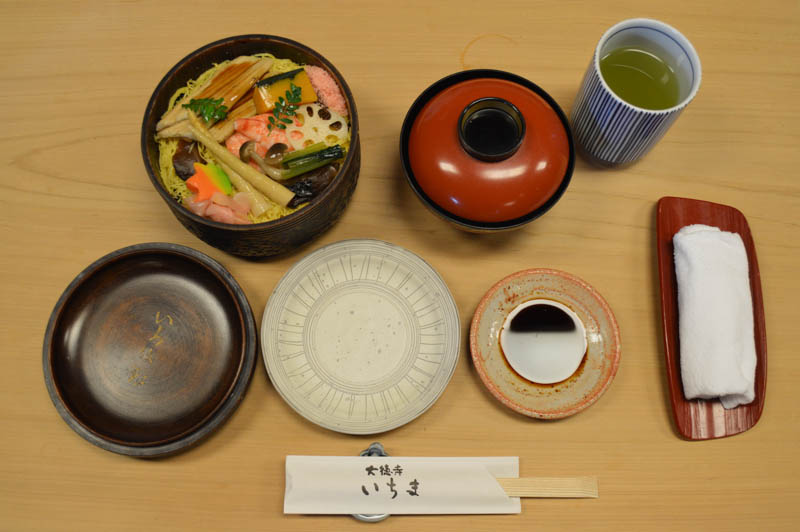
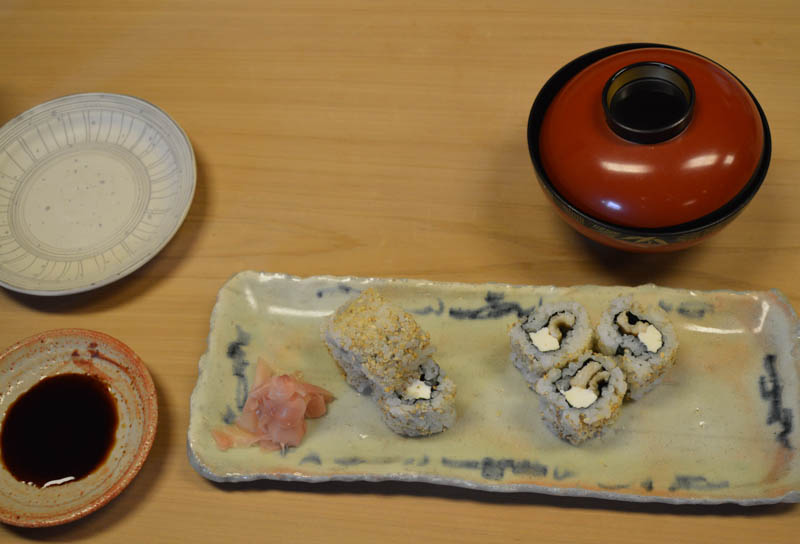
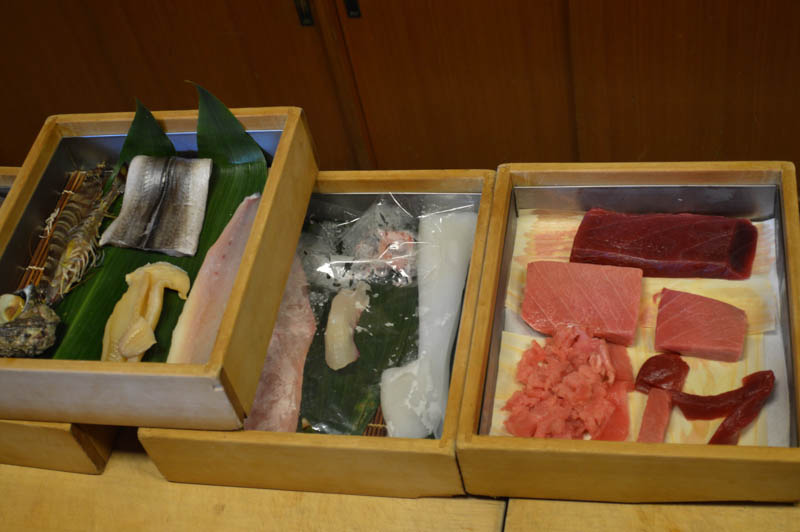
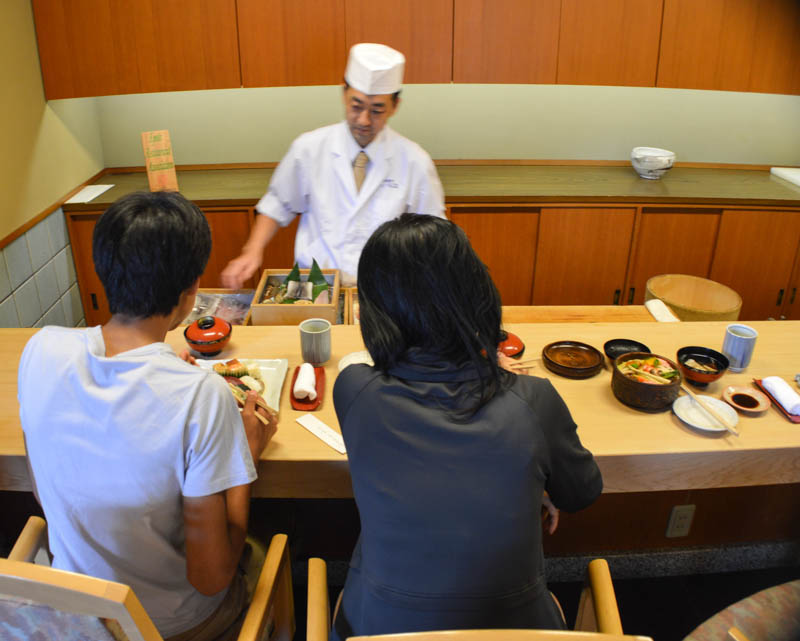
Near Daitokuji Complex, this cosy place offered, Navindd’s favourite, fantastic dishes of “sashimi” and “sushi”. There was no other customer. Three chefs were behind the counter with broad smiles. We scrutinised the menu under the watchful but friendly eye of the head chef. Containers of fresh seafood were laid on the table. The chef skilfully sliced, diced and prepared the meal. He did this meticulously and with respect for the ingredients. This transcended to the dishes served – a perfect lunch – “sashimi” – “maguro”, “toro”, “unagi”, vinigered rice, sushi, California rolls, miso, “ramen” and green tea. Today, we were privileged to have our ‘personal’ master chef. The food was wonderful.

untitled-69 untitled-68 untitled-67 untitled-66

untitled-70

I shared my blurred iconic images of geishas that I had taken in Arashiyama with the chef. He confirmed that we had indeed been in the presence of both a “geiko” and a “maiko”, an apprentice geisha. My appreciation for these prized images jumped ten-fold.

“ …….we later found out that the chef was going to Rio to cook for the Japanese team in the Olympics!” – Navindd

Nara – The final day in Japan

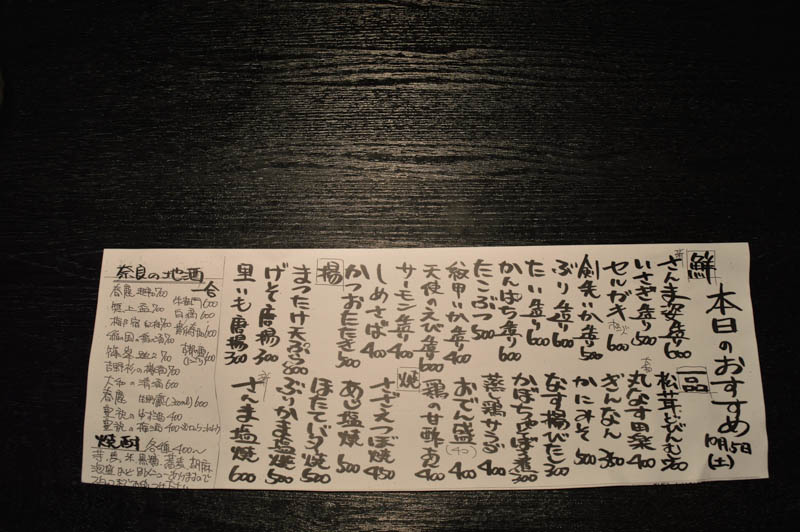
untitled-360Tonight we wandered along the popular Sanjo Dori. Tucked between financial institutions and official looking buildings are quaint little restaurants. We found one, an “izakaya”. This was our last night in Japan before we head off home. The friendly chefs spoke little English and the menu was in Japanese.

untitled-358 untitled-357 untitled-356 untitled-355 untitled-359

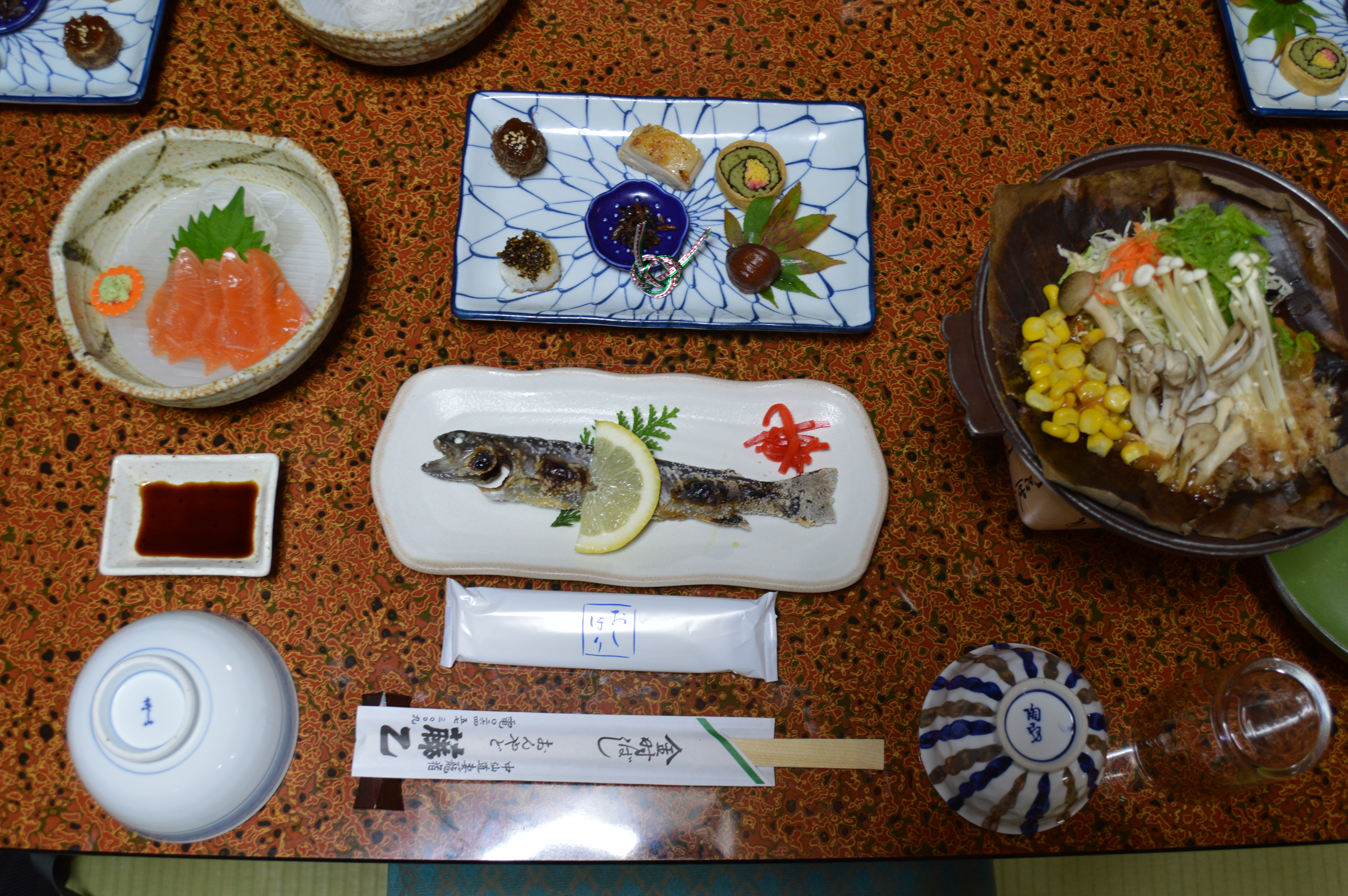
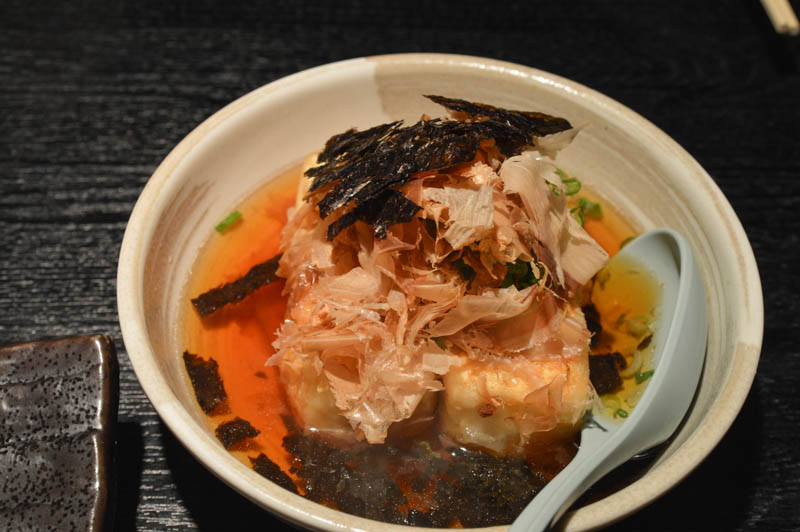
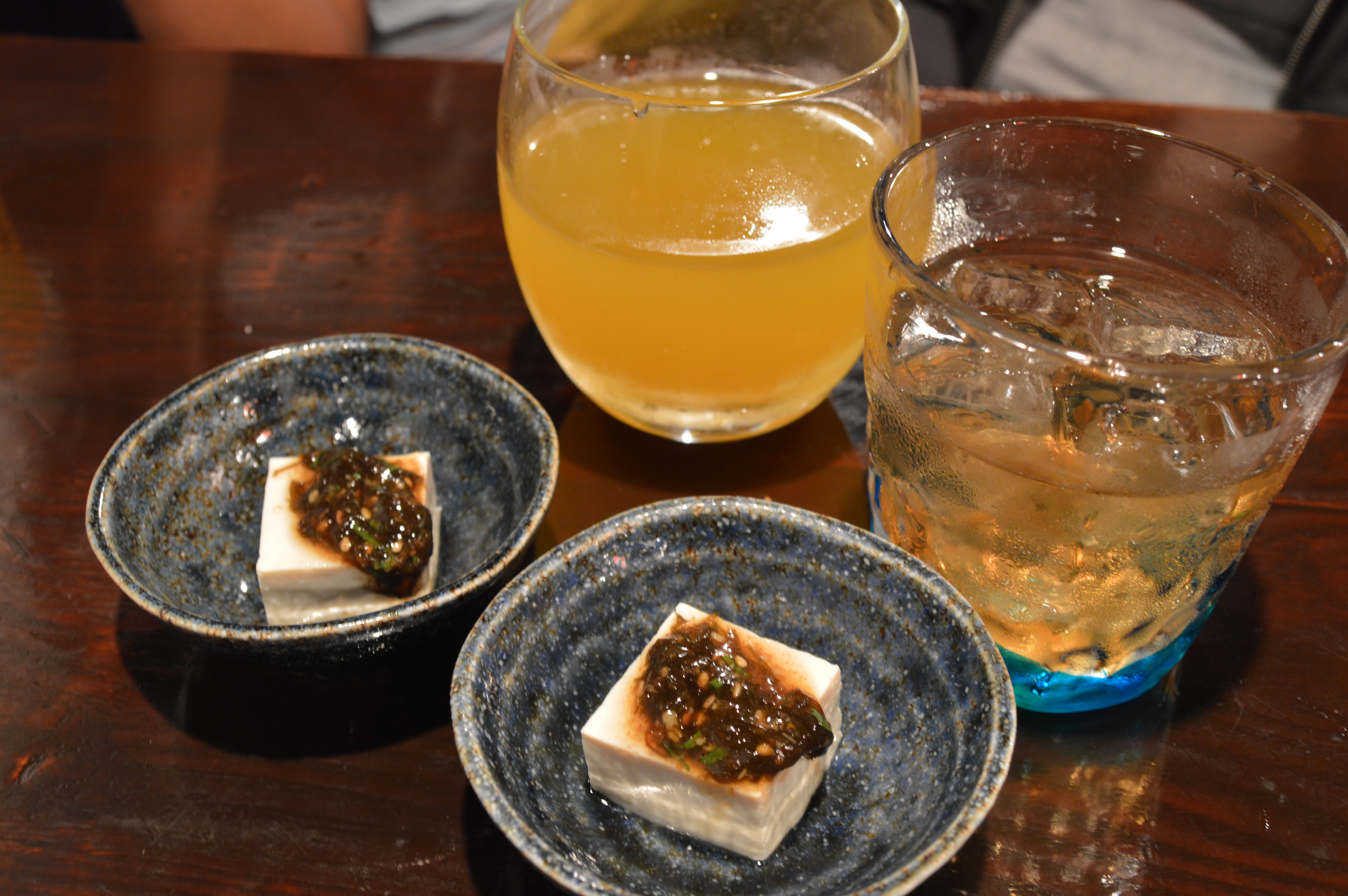
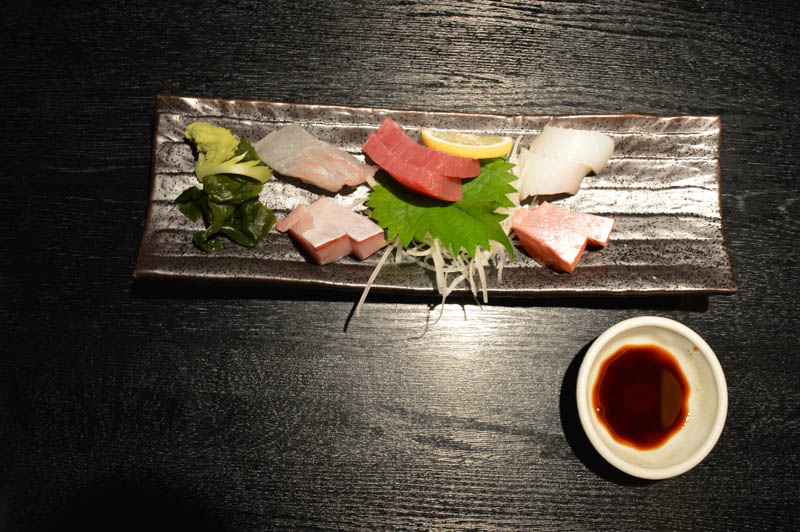
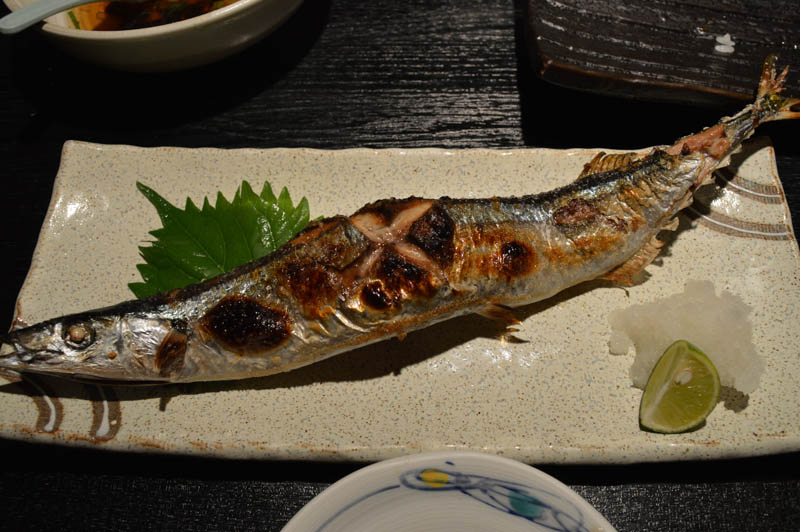
We were by now well acquainted with the proceedings and confidently ordered our dishes. Yes, more sashimi, grilled Sanma fish and a delicate broth with dumplings. The atmosphere here; like throughout our dining experiences in Japan, was warm, sometimes hilarious and definitely light. As always, appealing presentation, exquisite and delightful taste and flavours. These experiences had set a high mark of Japanese food elsewhere.

We returned to our lovely ryokan styled guesthouse. The smiling and inviting face of Kayoko greeted us and ushered us for some hot green tea. Her son joined us. He aspired to be involved in conservation. For now, we encouraged him to finish his school and perhaps consider New Zealand to further his studies and career.

Later, we packed up our luggage and quietly walked on the tatami floors and snugged into our soft futon beds. In the morning, Kayoko prepared an early breakfast before a taxi brought us to the Nara Station. From here, we caught a train that took us directly to Osaka’s Kansai International Airport.

This journey through mostly central Japan had been an eye- opener to the nature of the Japanese people, their customs, magnificent ancient and historic temples, their delicate culinary, efficient transportation system, did I mention the wonderful Japanese people, and many more.

The memories of Japan from my school history books were delivered through this memorable journey. Connecting was convenient with a existence and approachable remains of history – the temples, museums, culture and charming living museums pieces. The stories can be relived and therefore retold. My dreams were fulfilled. This journey is more significant as we had travelled and experienced Japan as a family. Now that’s priceless!

“jā mata ne, Nihon”

Kyoto – Daitokuji Monastery 4

Kōtō-in Temple

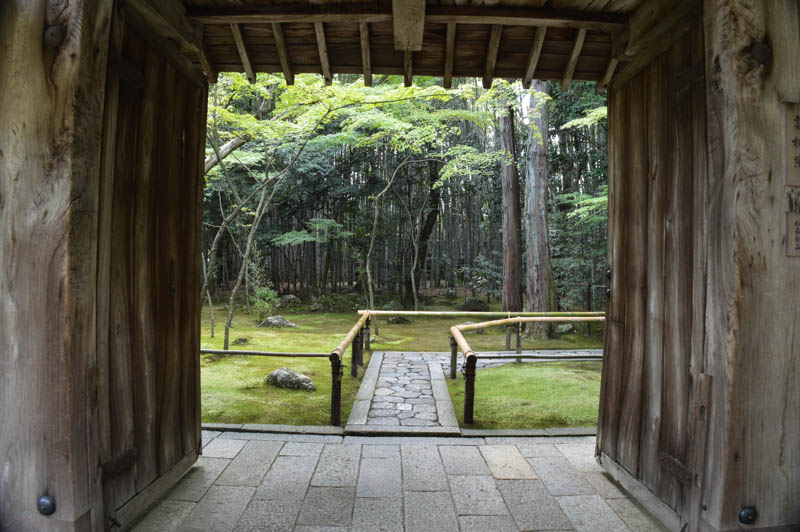
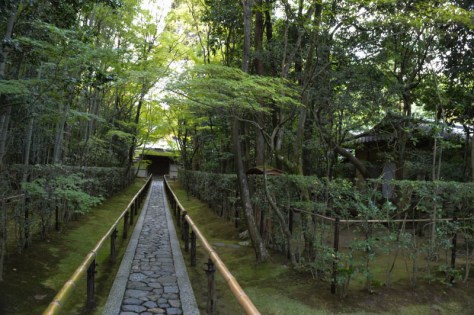
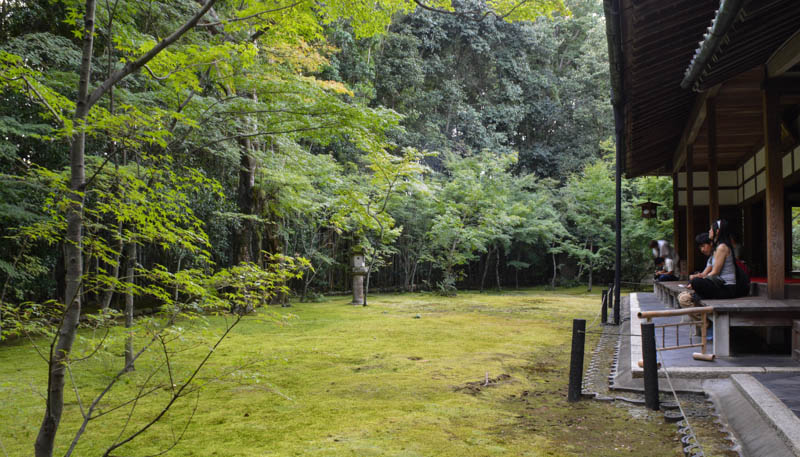
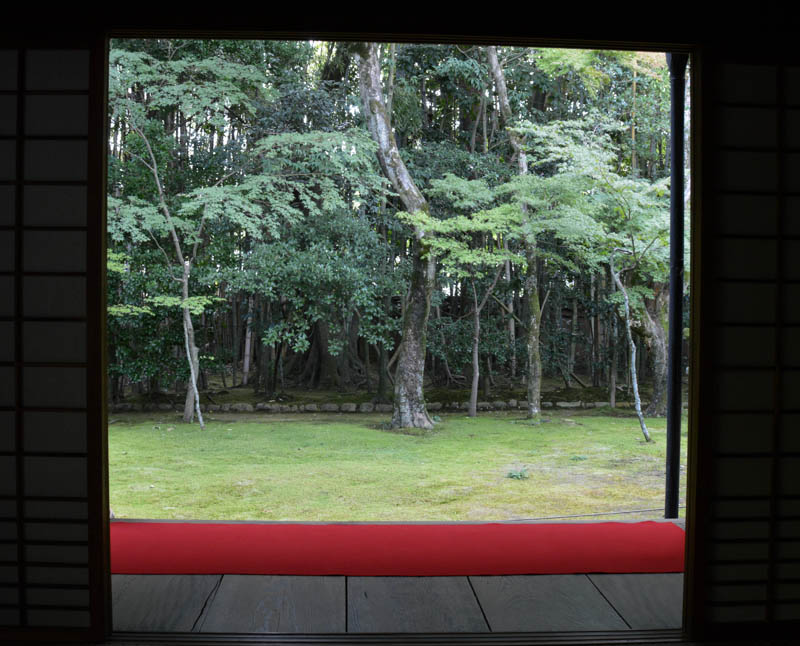
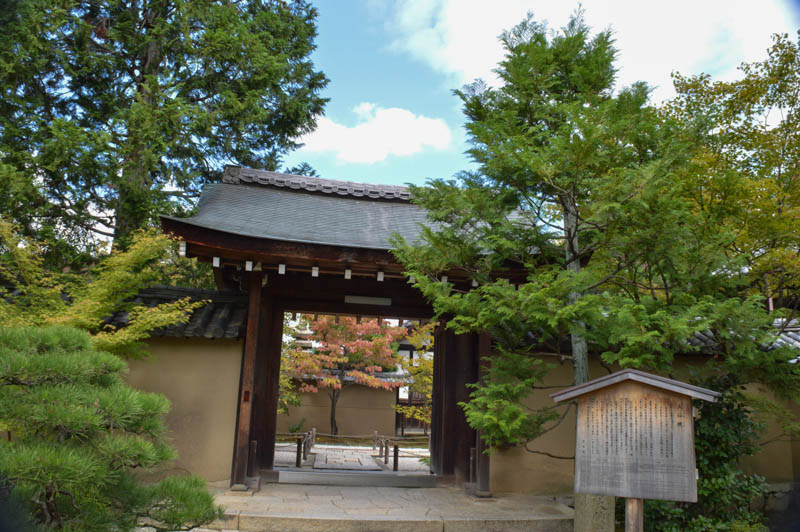
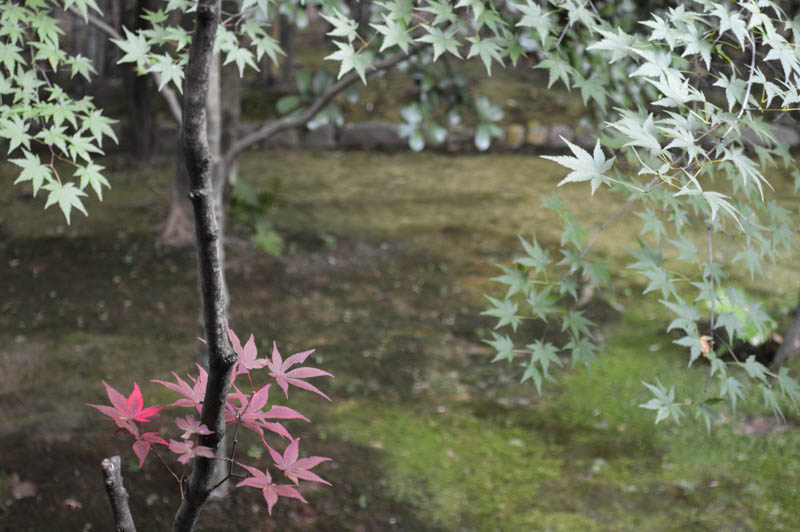
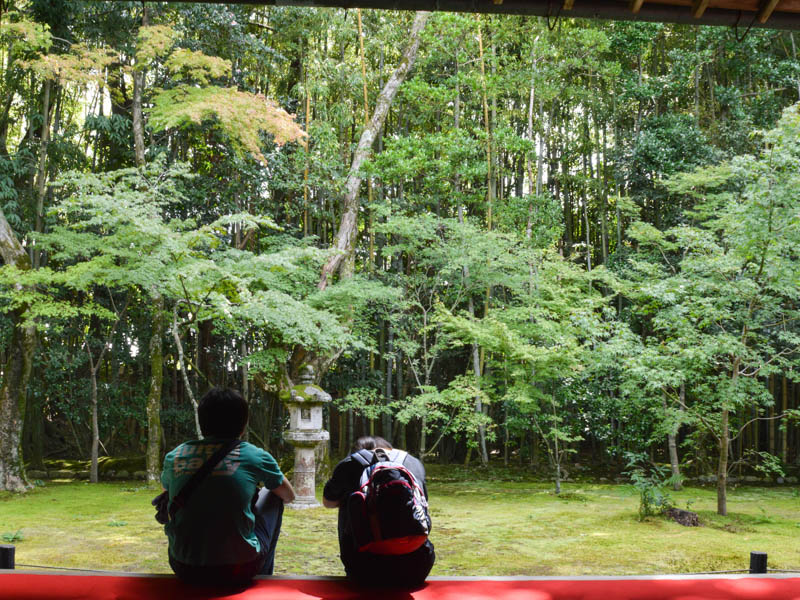
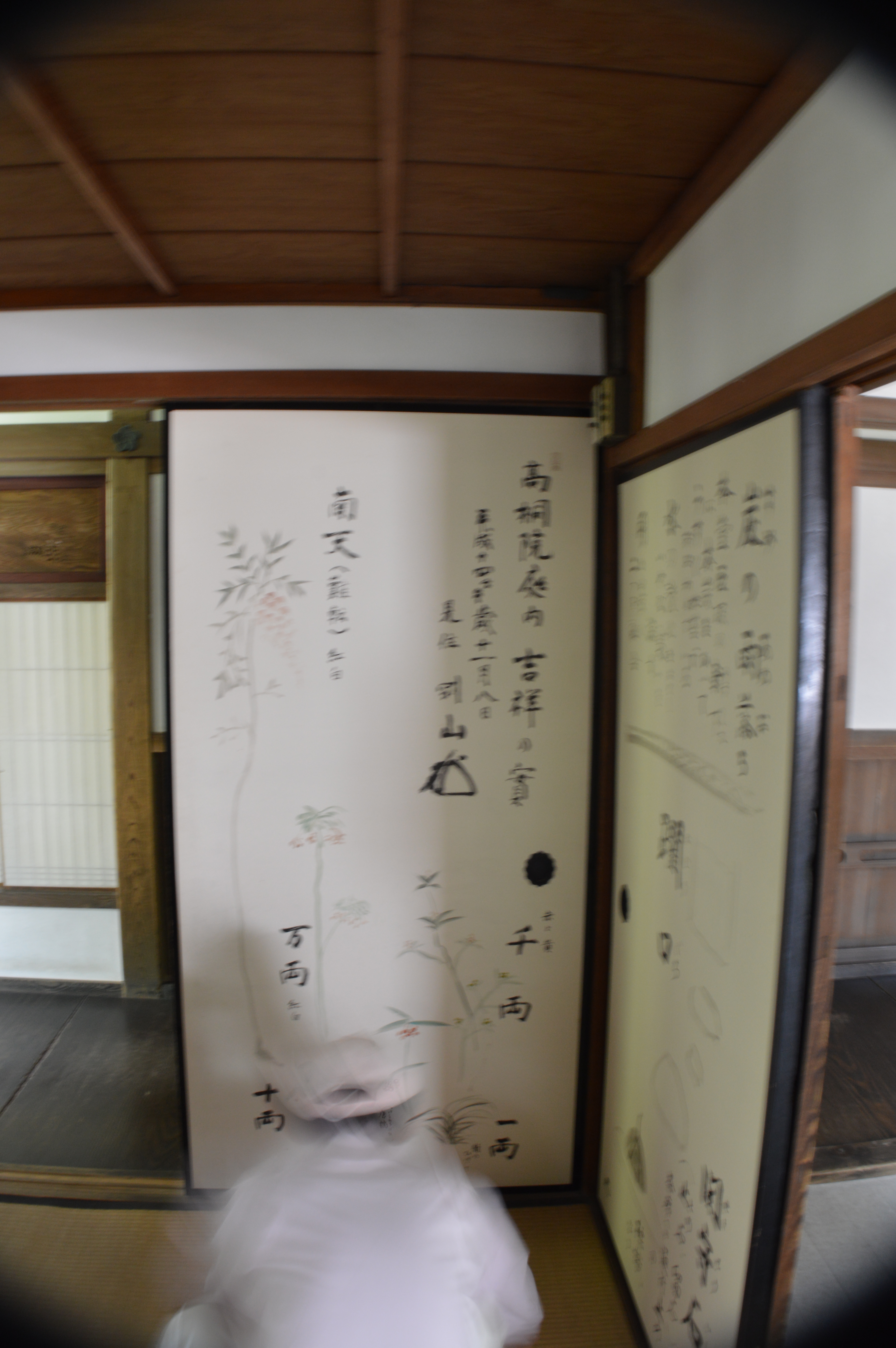
untitled-32It was built in 1601 by Hosokawa Tadaoki, a Samurai who was also a tea master. We entered Kōtō – in through a rustic wooden gate that framed young Japanese maple, “Momiji” trees, which are used extensively in the foreground and matured bamboo in the background. The ground is covered with a carpet of velvety moss. The path is on a long but segmented stone pathway. With each turn, the width, depth and dimensions gave a different perspective. All these are intentionally designed to create distance, space and symbolic to the trials and tribulations of life and the spiritual path. It requires the visitor to slow down and observe a specific ‘framed view’. Clay tiled roof were encrusted with moss as on the ground. The twisted path, “roji” led from the garden entrance to the “Hojo”, main hall. The main garden, at the “Hojo”, is sparsely planted with a few maple trees, a single stone lantern and in the background a living grey-green wall of bamboo. The level foreground is covered with a carpet of moss. Comparatively, this front garden design accentuated simplicity. The moss encrusted stone lantern created untitled-33a focal point. This garden had been my favourite so far. In one corner, a single maple tree had only a few bright pinkish leaves that were just starting to colour. I could only imagine the colours of these maples in late autumn. A couple sat on the red carpet reflecting their own lives. Within the “Hojo”, walls are painted with murals and calligraphy. An elderly man, seated on tatami floors, was absorbed with one particular painting.
untitled-36 untitled-46 DSC_0107

Seated on the veranda below a wooden hanging lamp, I found tranquility. I imagined living here surrounded by natural beauty and the lack of modernity. The visual effect of this Zen garden is addictive. For the moment, Kōtō- in Temple is a green garden. On one wall was the “tokonoma”, the main alcove with an “ikebana” arrangement on a raised platform. This is certainly a heart-warming place. Such is the magnetic appeal of these rustic wooden temples and their surrounding manicured gardens.

untitled-35

” Paintings without brushes,
sutras (Buddhist teachings) written without characters “
– ancient Zen Master describing
Zen Gardens

untitled-41untitled-43untitled-47untitled-44

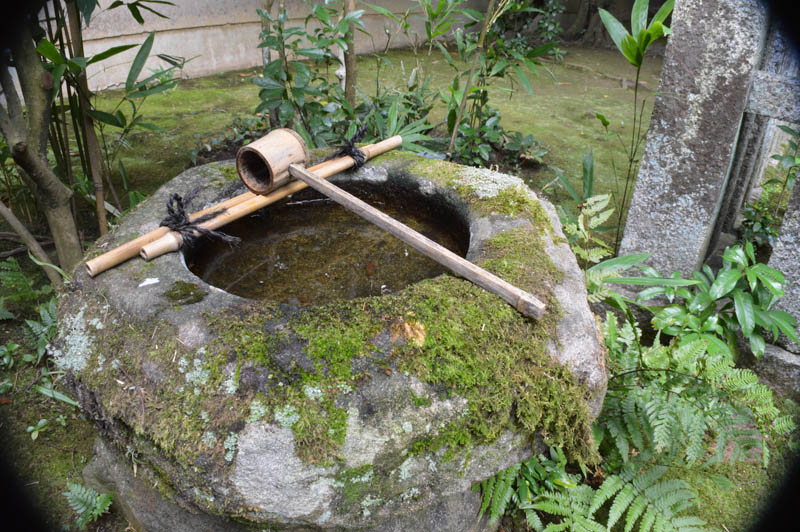
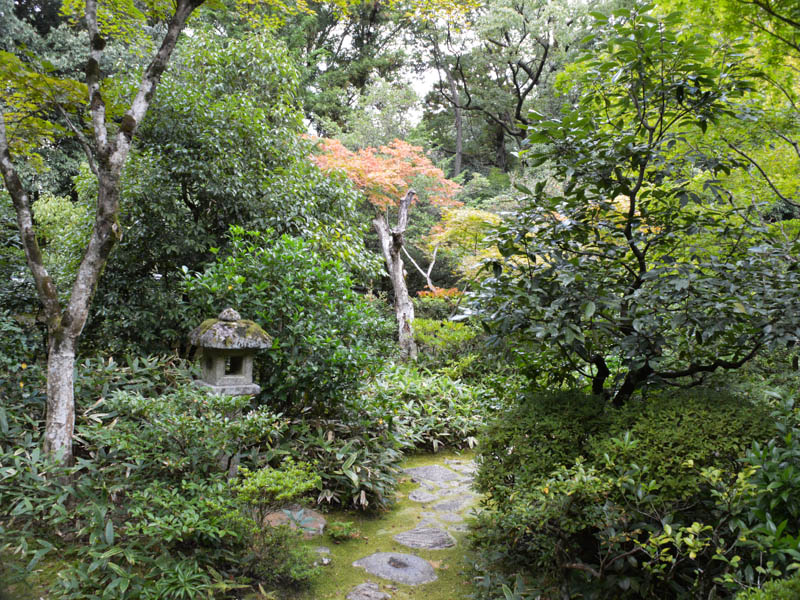
On the western front of the  “Hojo”, a few roughly places natural stones connected to the adjacent warm dark wood coloured tea rooms. This tea garden, in contrast with the “Hojo” courtyard garden, however, is densely planted with variegated grasses, shrubs, sculptured pines, more maples and structural cycads. I loved the subtle variations in the foliage colours and their textures, particularly in the partially filtered light today. Flowering plants are nowhere to be seen. In a secluded corner is a “tsukubai”, stone water trough teeming with moss and ferns. A bamboo ladle is placed on top. We strolled with no words spoken in this enchanted temple garden.

“Aside from house and family, it is nature that gives me the most pleasure, the changes of the season, the blossoms and leaves of autumn and spring, the shifting patterns of skies”  – Prince Genji, Heian Era

untitled-42

It is hard to explain how and why a Zen Garden affects an individual. One is overcome with a sense of calm and happiness. Slowly, details emerge with great clarity – the shapes and hues of plants and rocks, light and shadow heightened, sounds of chirping birds enhanced, creaking of bamboo, even the carpet of moss is appreciated. The idea is to move through (visually and physically), around it, embrace, pause and reflect. Those with little or no knowledge of Zen or Buddhism will also be touched. Interpretations may vary but there is a longing to prolong this moment. A simple answer – it just does!

untitled-34Beginning from the entrance and within the buildings, the garden seemed to be framed – through doorways, slatted sliding doors, and windows – in every direction. The indoor and outdoor flow is seamless, as if the garden is within.

Kyoto – Daitokuji Monastery 3

Daisen Temple

untitled-29 untitled-28The temple was founded in 1509 by Kogaku Soko. A single autumn coloured tree stood at the entrance. The temple has one of the best Zen gardens in Japan. Large rock had been arranged to represent mountains and rivers in a very confined space. It is torrent and passage- way narrow. Eventually, the river of sand opened out into “middle sea” where the sea is calm but with a few obstacles. As we continued the walk round the “Hojo”, the ‘river’ widened and emptied into the ‘Ocean’. Here, two cone-shaped hills of gravel, suggesting mountains hinder the final path and eventually lead to enlightenment. A lone Bodhi trees lay at the end of the ‘Ocean’. This design is a metaphor on the journey of life and the rocks – trials and tribulation in life. Like paintings, the scripture is depicted in abstract form in a myriad of rocks, stones and gravel. It is somber with no immediate awakenings but thought provoking. Paintings and rustic architecture further enhanced the wonder of Zen – Buddhism. A time here is a time well spent. Unfortunately, no photography was allowed inside.

Kyoto – Daitokuji Monastery 2

Ryōgen-in Temple

untitled-53DSC_0142Ryōgen-in, the head temple of the South School of Rinzai-shu Daitoku-ji sect was constructed by Priest “Tokei” in Muromachi Period in 1502. We walked through a heavy wooden Omote- mon, gate which is an original feature of this temple. A winding stone pavement past an “ishidoro”, stone lantern led us towards the “Hojo”, Meditation Hall. The first of the four “karesansui”, dry landscape garden, Koda-tei, is set in a narrow path. Sometimes referred as Aun no Sekitei or A- Un Stone Garden which means inhale and exhale; heaven and earth; positive and negative; yin and yang or male and female. This garden expresses the universal truth of inseparable pairs. The original gardens here were created by Saomi.

untitled-54

We entered a large uncluttered dry stone garden, the Isshidan, in front of the “Hojo”. Three main features are a moss covered mount, Kama- jima, Turtle Island; two stone features, Tsuru- jima, Crane Island and the two large upright stones , said to represent Horai-san, Mt Horai a mythical and scared mountain that will bring about awakening to the living. A sea of white gravel of varying shades encompassed all the features – a symbol of the universe. Sitting on the wooden steps of the “Hojo”, one cannot help but to reflect and contemplate on the mere sight of this simple raked gravel and strategically placed stone garden. A simple dressed priest sat quietly in a corner of the “Hojo”. Perhaps meditating or merely observing. Painting of dragons and other images added a little colour to the interior walls.

untitled-57

The next garden is the oldest garden in Daitoku-ji, Ryogin-tei garden. The moss covered garden represent the ocean or universe. The tallest stone, Shumisen-seki at the back represented the centre of the universe and a round stone in front of it is called Yohai-seki. These are representation from a Buddhist perspective. For some, it is time to reflect, for some it is time for relaxation and for some it is just being here. The simple things in life! In another corner is an inner rock garden, Totekiko, said to be the smallest “karesansui” in Japan! It is said the stronger the power of the stone (truth) thrown into water, the higher the ripples on the surface. We left with a deeper appreciation of the simple things.

untitled-58

“Ryogen-in also featured the smallest garden in Japan, but still maintained simplicity, elegance and most importantly a story to tell” – Navindd

untitled-62

Earthbound Travel Stories