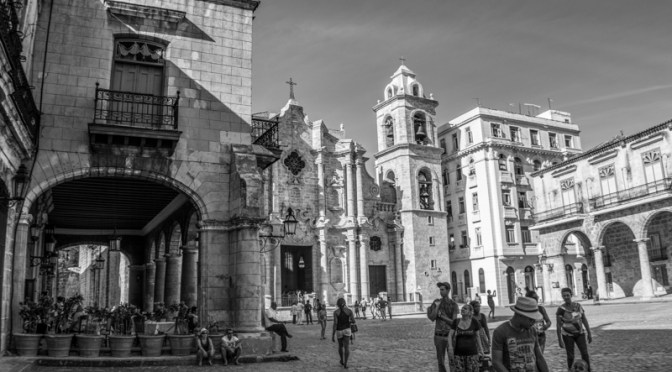
It was nearing midday when I arrived at Jose Marti Int. Airport in Havana, Cuba. Immigration formalities were smooth apart from being scrutinized for a few minutes by a police officer. At Immigration I handed my passport and my “tarjeta tourista” or tourist card. I understood that all tourist needed one before arrival. I diligently managed to get one from Copa Airlines at Santiago (at a cost of US$20). I was relieved. To my surprise, the tourist card was returned. “No nesasito“. Well at least not for Malaysian passports. There were no visible signs of police presence nor heavy inspections of luggage. It was a normal entry.
Next was to obtain some local currency. I brought Euros (as there was a 10% commission on US dollars.) The local tourist currency is Cuban Convertible Peso (CUC) at nearly 1: 1 rate (today was 1: 1.18). I was greeted by Julian (my “casa particular” owner) not with the iconic beat-up American cars but a small sky blue Fiat. The drive from the airport was with some kind of unknown or unexplained expectation. I travel with no expectation to all countries as this enables me to accept whatever is thrown at me. A new experience. However, Cuba had been in my mind for a very long time. I hold Cuba both in empathy, triumph, the romance of the revolution and the heartache of big brother bullying.
I had travelled to a few countries but not quite excited as travelling to Cuba. A country that had been “moth-balled and placed on a shelve”, and cordoned off for 50 odd years. There were questions but the response were unreliable. I had waited a long time to arrive here. It wasn’t the iconic cigars nor the promise of idyllic beaches but of the wonderful mix of African-Indian-Caribbean-Spanish cultures, music and perhaps to understand a little of the lives of the people. More importantly, to see and experience the “cocoon of post revolution Cuba” – Castro’s Cuba. Post 1959, Cuba is best describes as a socialist with the state controlling most of the economy, production and employment. The best way to find out is to personally explore and experience this idyllic Caribbean, multi-ethnic, customs, people of diverse origins.
The 25CUC (perhaps a tourist price) drive was challenged with a few pot holes in a very tropical setting. Coconut trees are a giveaway. I felt like I was home (Malaysia). There were very few road vehicles. The drive through Central Havana was eye-opening. I was greeted by tall grey blocks of Soviet-era buildings. Concrete blocks in a dilapidated state. Perhaps one or several coats of paint might change the uncharacteristic building blocks.
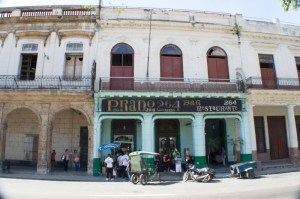
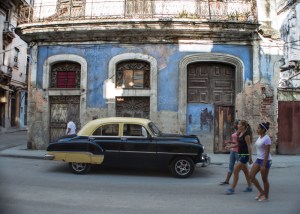
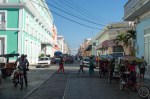
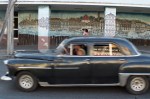
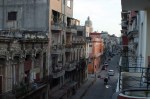
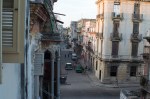
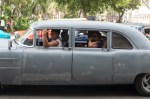
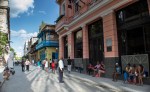
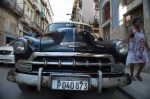
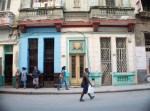
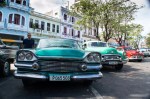
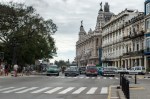
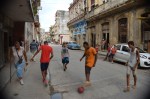
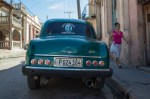
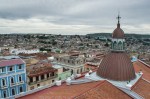
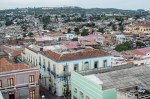
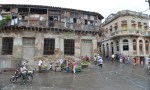
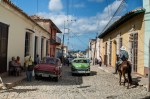
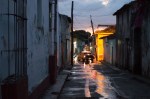
As we approached the narrow streets of Centro Habana, a kaleidoscope of architecture – neo-gothic, art deco and neo-classical. Villas, mansions, low apartment blocks with balconies, mostly in pastel colours all crumbling, faded and at various state of dilapidation were on display. On the road, classic American cars brought over in the 50’s mingled with Soviet- Balkan era and Japanese cars. Many, possibly functioning on borrowed times.
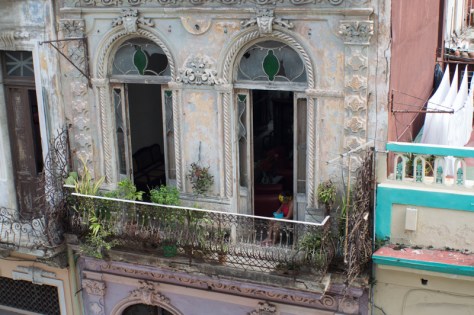
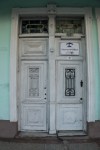
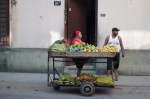
There are basically two options of accommodations, legally, – Hotels and Casa Particulars. To get a near authentic and cheaper option, I choose a Casa Particular. They cost around US$20 – US$25 and meals are optional and cost extra. My Casa Particular, in Centro Habana, has all the modern amenities plus running hot water, internet and look well-off. These accommodations are approved by the State, privately owned and managed with a blue symbol, “arrendador divisa“, visible on the front. Perhaps slightly costly for backpackers, but it provided a homely experience and with plenty of local information. With increased relaxation of State control and expansion of private business, numerous Casa Particulars have sprung up throughout Habana and other tourist destinations. My Casa (an associate of my booked Casa) was on the third floor (with an internal working lift) in a two bedroom low-rise apartment block. My room had a fabulous views of Centro Habana and Habana Vieja (Old) Habana. Casa owner Miguel was a quiet elderly man and spoke only Spanish. A small vegetable market with corrugated iron roof on the street corner was doing little business. The assorted produce were all fresh.
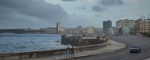
My Casa in Centro Habana, on Calle Consulado, was one block off the wide and leafy boulevard, Paseo del Prado. Alternatively referred as Paseo del Marti which stretched from the coastal coastal Malecón and Castillo de San Salvador de la Punta to Calle Neptuno, off the Parque Central. I was eager to explore.
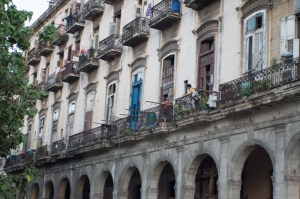
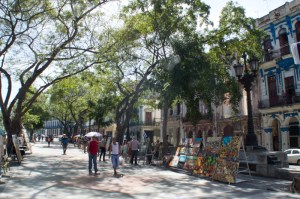
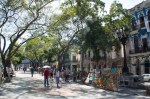
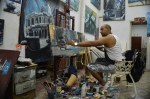
On the Prado, under the canopy of trees, paintings and drawings by local artist depicted daily Cuban life in oil, paint and pencil, were displayed of wooden stands. Little kids, probably between 8 – 10 years old, were mentored by adults in the instilling interest and knowledge in art as they begin to put their impressions of Habana on paper. On the road, classic American cars mingled with Japanese cars. The people I met on the streets were friendly. Buses and cars alike puffed out diesel filled choking black fumes.
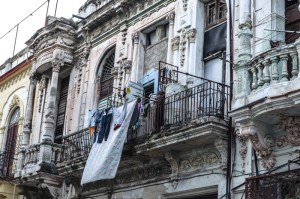
Rows of low-rise apartment blocks stretched on both sides of this wide and green road. The exterior of these blocks revealed ornate designs, wonderful and colonial architectures. People stood of balconies having conversations and clothing hung to dry fluttered slightly in the hot breeze. I was excited with my journey through Cuba, enchanted or not, I shall soon find out.

































 Intrepid Nomad - Travel Tales and Stories