Tag Archives: Kyoto

Kyoto – Kiyomizu-dera Temple

untitled-101 untitled-117

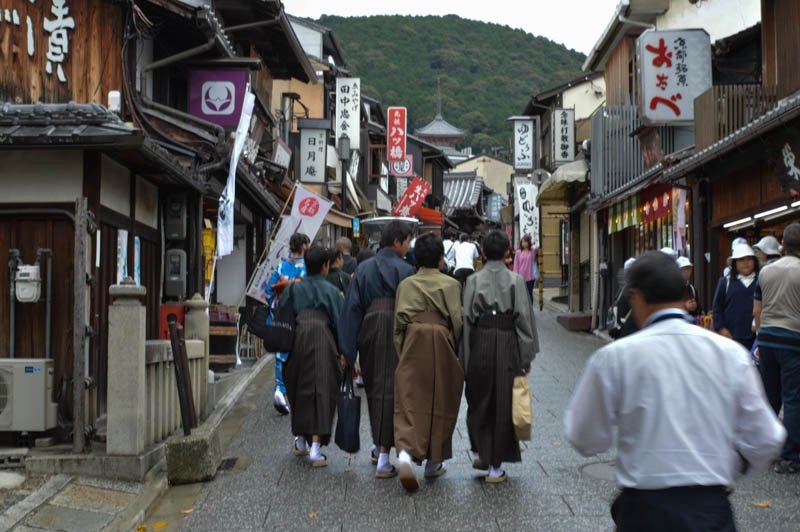
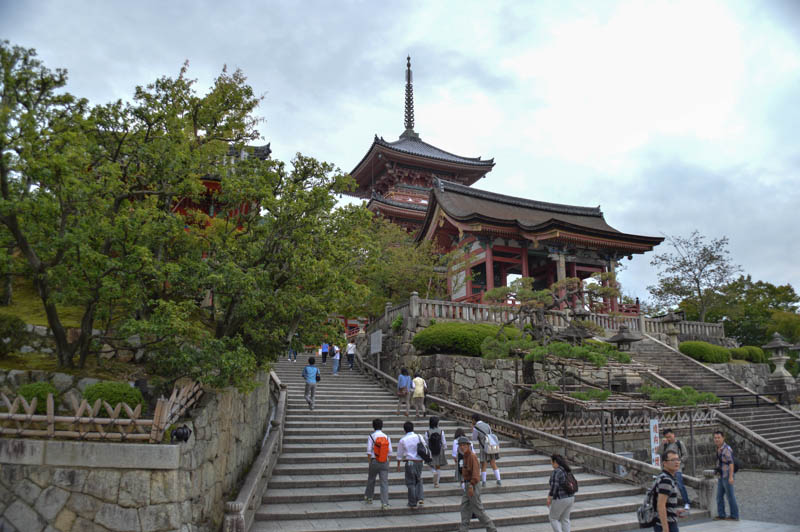
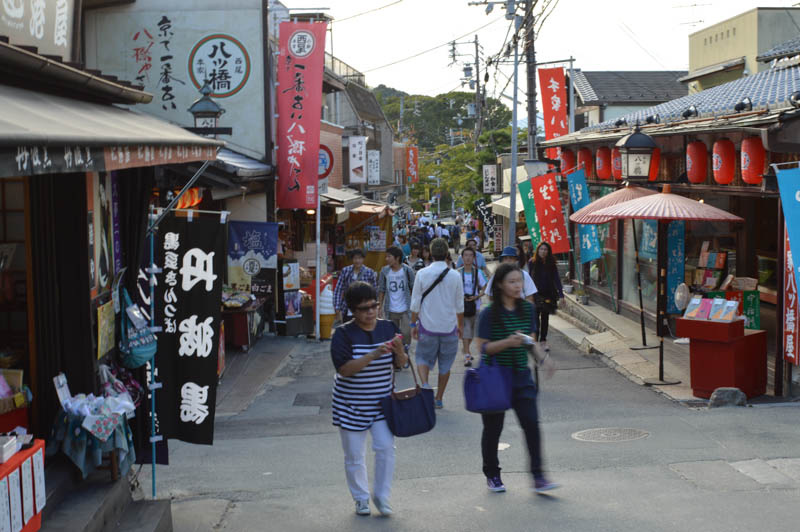
We arrived early at the historic Higashiyama district in Eastern Kyōto by bus and walked on a narrow uphill paved road toward Kiyomizu-dera, a Kita-Hosso- Shu sect temple. All the usual tourist trappings were lined up on this street, Chawan Zaka. It included souvenirs and pottery shops, quaint restaurants, snack food outlets, prayer incenses and ice cream shops. This morning, there were no children, with colourful backpacks and uniform hats, on school trips. However, the streets had a more ascetic and traditional feel – women in bright coloured kimono and men in the dark plain dresses. The cool cloudy weather added an appeal especially around the mountains. On the horizon, a towering pagoda leaped into the sky. The slow walk is a great introduction to this temple.
untitled-103

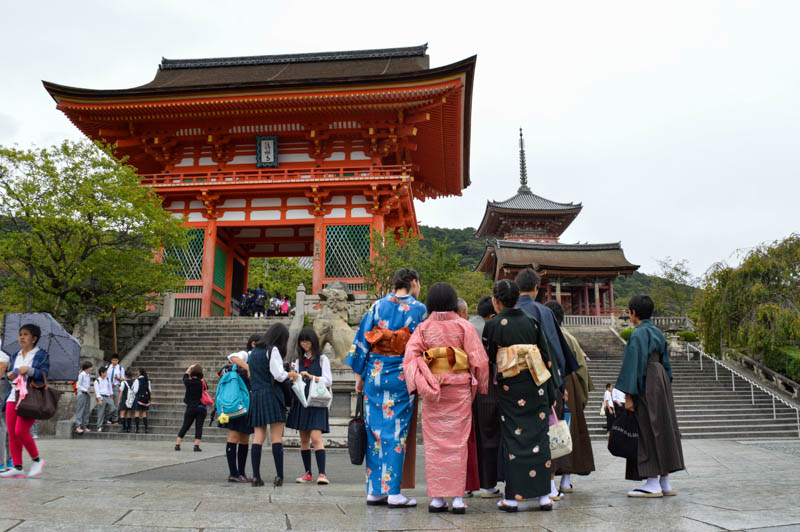
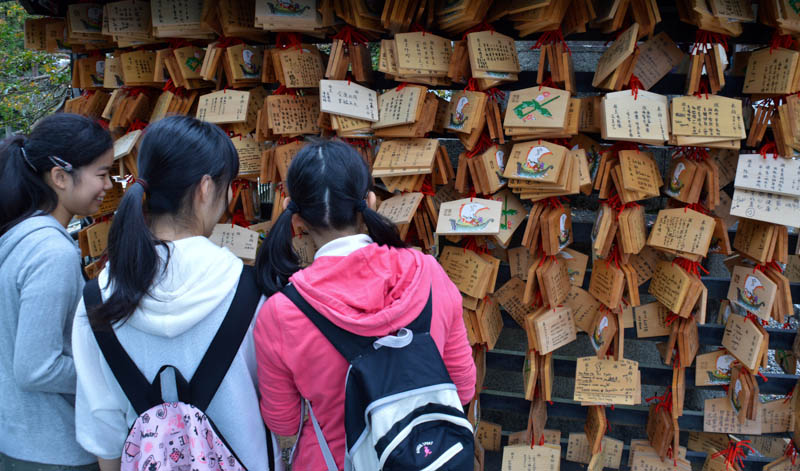
Kiyomizu-dera, “the temple of clear water”, half way up Ottowa Mountain, is a historic Kita-Hoso sect temple established by Enchin in 778. It was named after Otowa Waterfall, where spring water from the mountain has been falling since its foundation. A series of concrete steps led uphill towards the entrance, a vermillion Niōmon, “deva gate”. Two deva (god) guard the entrance. Beyond that, a three- storied pagoda, Sanjunoto, rose above the ground. Numerous buildings occupied this large temple complex. The beautiful and elegant kimono clad girls and women and the men with kimono top and flared skirt-like “hakama” added a wonderful array of colours and atmosphere in a rather cloudy day. School girls in navy blue skirts and knee high socks with light daypacks paused at the entrance. Another flight of steps through the Niōmon gate brought us deeper into the complex. Beside a sub- temple, “Ema”, wooden prayer plaques, hung on a wooden frames. Colourful pictures and letters gave some comforting words. Three girls read some “Ema” with delight.
untitled-107 untitled-108

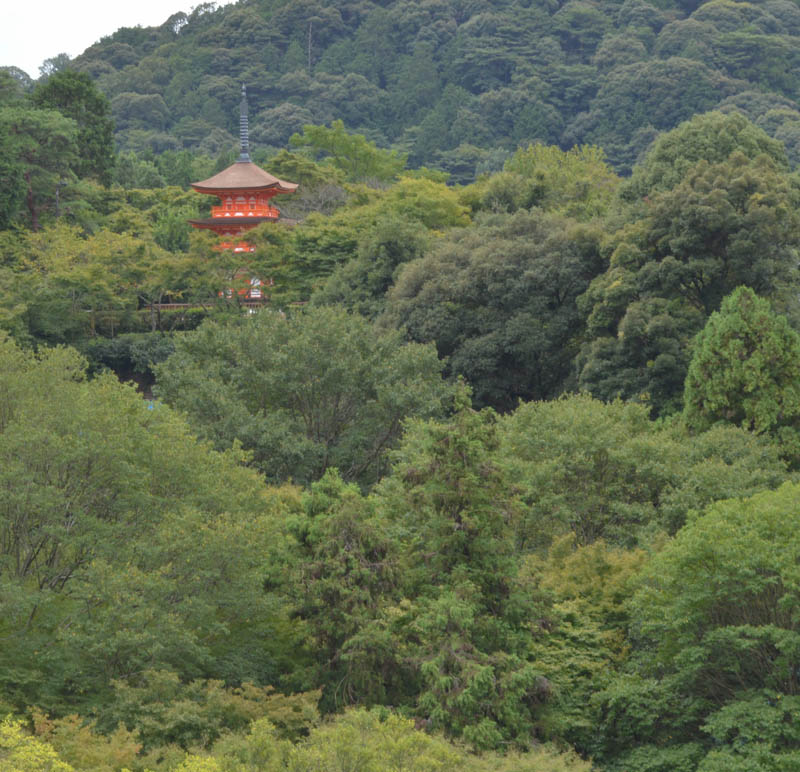
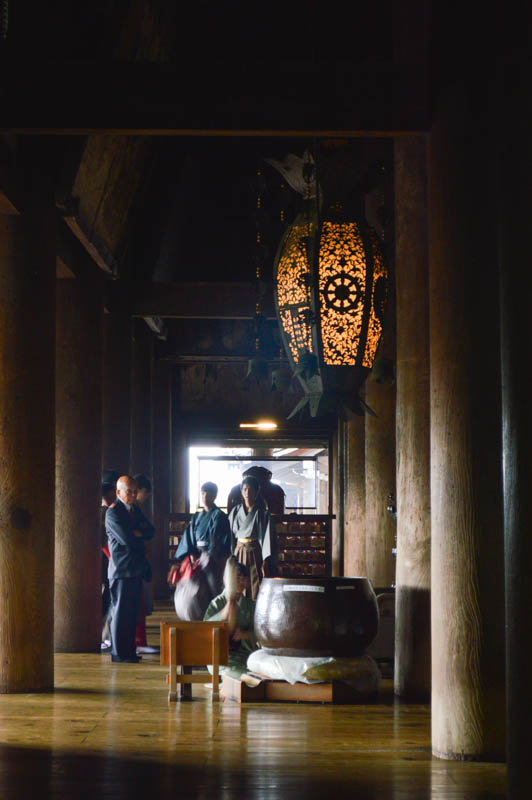
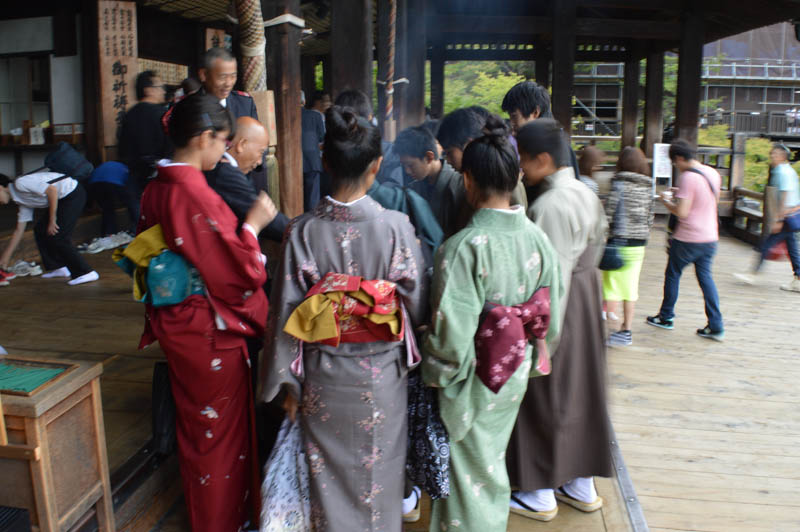
From here we entered the “Hondo”, Main Hall, a national treasure. It was amazing to see the imposing veranda or stage made of cypress, “hinoki” boards literally suspended above the dense green vegetation. 12m high “keyaki”, Japanese Zelkova pillars supported the structure without the use of a single nail! Wooden braces run through these gigantic support pillars. It is a very impressive construction indeed with distant views of Kyōto City and the surrounding mountains. In the south, the orange three storied Koyasu Pagoda emerged out of the forest floor. The smell of burning incense perforated through the thick still air. A few worshippers gathered round a large bowl and placed incense in prayer. Inside the hall is an Eleven- faced and one- thousand- armed Bodhisattva of Compassion.
untitled-112 untitled-110

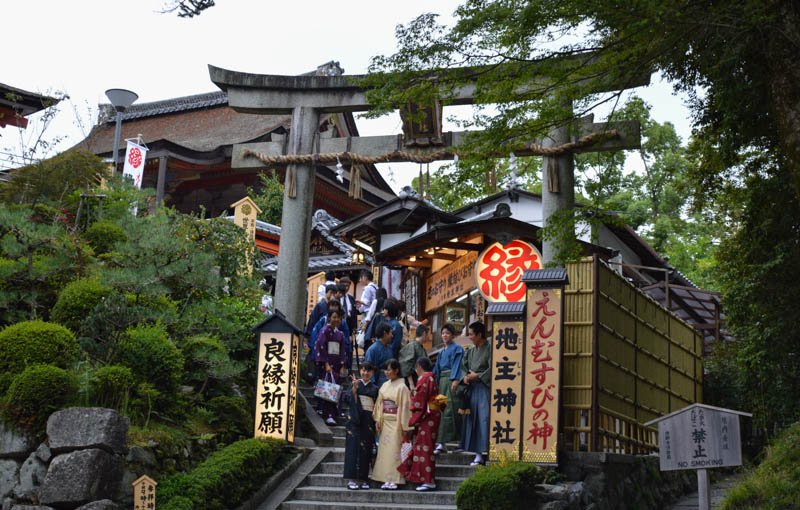
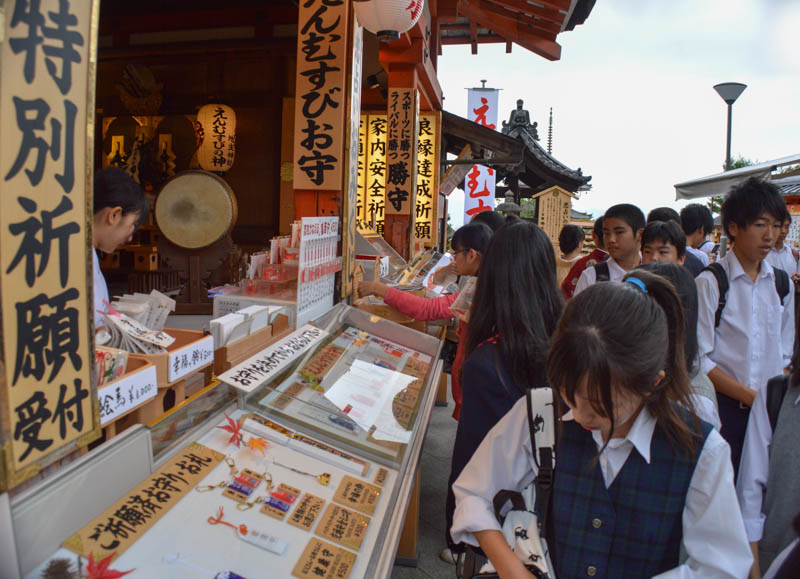
A lantern hung above the “Hondo” entrance provided a little illumination to the low lit hall. A steady procession of people flowed through the inner sanctuary with every step measured. Murmurs of prayers could sometimes be heard intermixed with shuffling of footwear on the wooden floor boards. Behind the hall is the Jinshu Shrine, dedicated to the deity of love and match-making, Okuninushi. Through a flight of steps under a grey stone torii, surrounded by greenery, we reached the shrine. It was crowded mainly with young girls. A souvenir shop was doing a brisk trade. Items included “ema”, wooden plaques written with inspirational words, “omikiji”, fortunes written on strips of paper, totems in colourful pouches – “for conception:1000 yen; for easy delivery, for against disaster, safety travel : 500yen”. Opposite, the shrine, individuals with eyes shut, paced themselves, some with encouragements and some with whispers, between two stones 18 meters apart. This is said to bring luck in finding love. It wasn’t a ritual but carried out with fun and good spirits. A thick straw rope, “shimenawa”, hung on the stones. A statue of the god and his messenger was sited at the entrance
untitled-113

In another corner was a Nade-Daikoku-San, written on a board with the words – “Fulfilment of various wishes. If you pat the bronze statue, your prayers will be answered”. The big bellied statue with a sack on his back is a bearer of good fortune. I rubbed his shinny belly too. There is never too much luck!
untitled-114

Kyoto – Philosopher’s Path

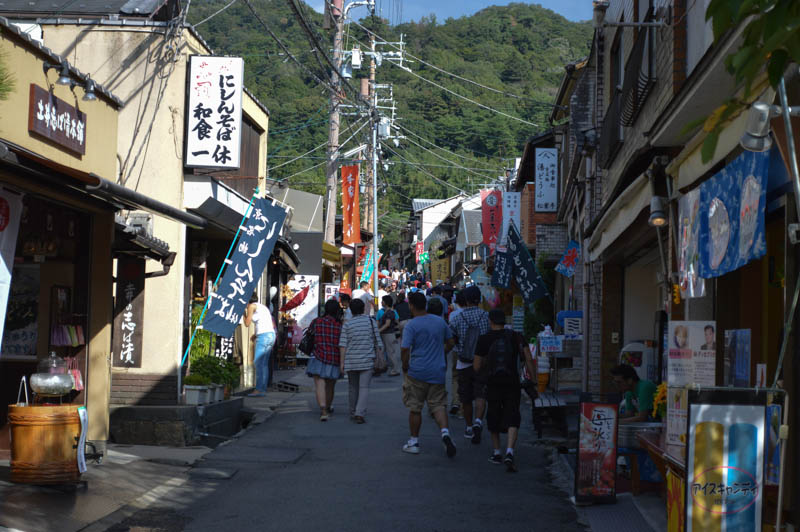
untitled-84The streets around Kiyomizu-dera are pleasantly stacked with shops to please the tourist and locals alike. Calls from vendors mixed with sweet aroma of hot food. Tightly arranged, these shops sold every imaginable nick- knacks and titbits to satisfy all – many flavours of ice cream on a cone, bread or crepe. Soy delights – hot and cold. Clothing, from traditional kimonos to western designs, knitting and weavings; flowing “noren”; pottery – cups, saucers and bowls to mugs and plates; embroidered textiles; a variety of wooden souvenirs – from chops sticks to dolls to kittens; and “mochi”, a wonderful Japanese pastry, in all its design, shape, filling and colour. Then we have the preserved foods, in small packages to tubs and barrels. Amongst these shops are hidden shrines and temples in narrow back streets and alleyways. Today, it was not crowded but the ambiance of old Kyōto was certainly felt here.

The Way is basically perfect. It doesn’t require perfecting. The Way has no form or sound.
It’s subtle and hard to perceive. It’s like when you drink water. You know how hot or cold it is. But you can’t tell others. Of that which only a tathagata knows, people and gods remain unaware. The awareness of mortals falls short. As long as they’re attached to appearances, they’re unaware that their mind is empty. And by mistakenly clinging to the appearance of things, they lose the Way.
– Bodhidharma (d. 533)

untitled-85 DSC_0198

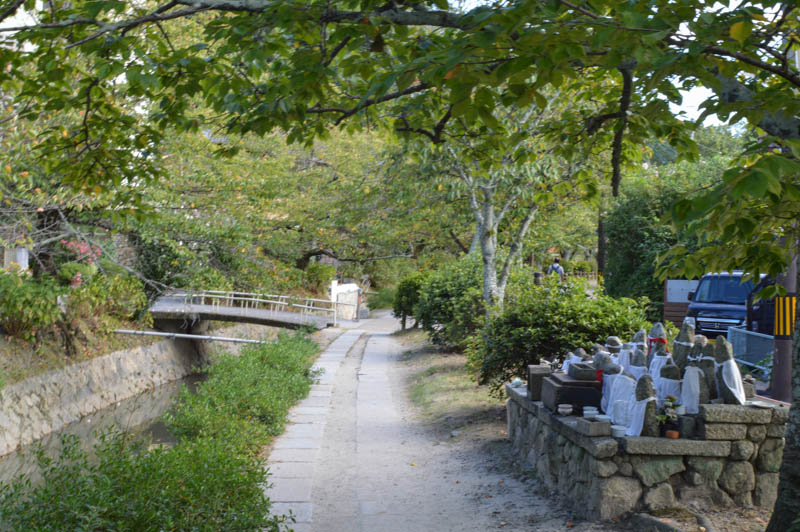
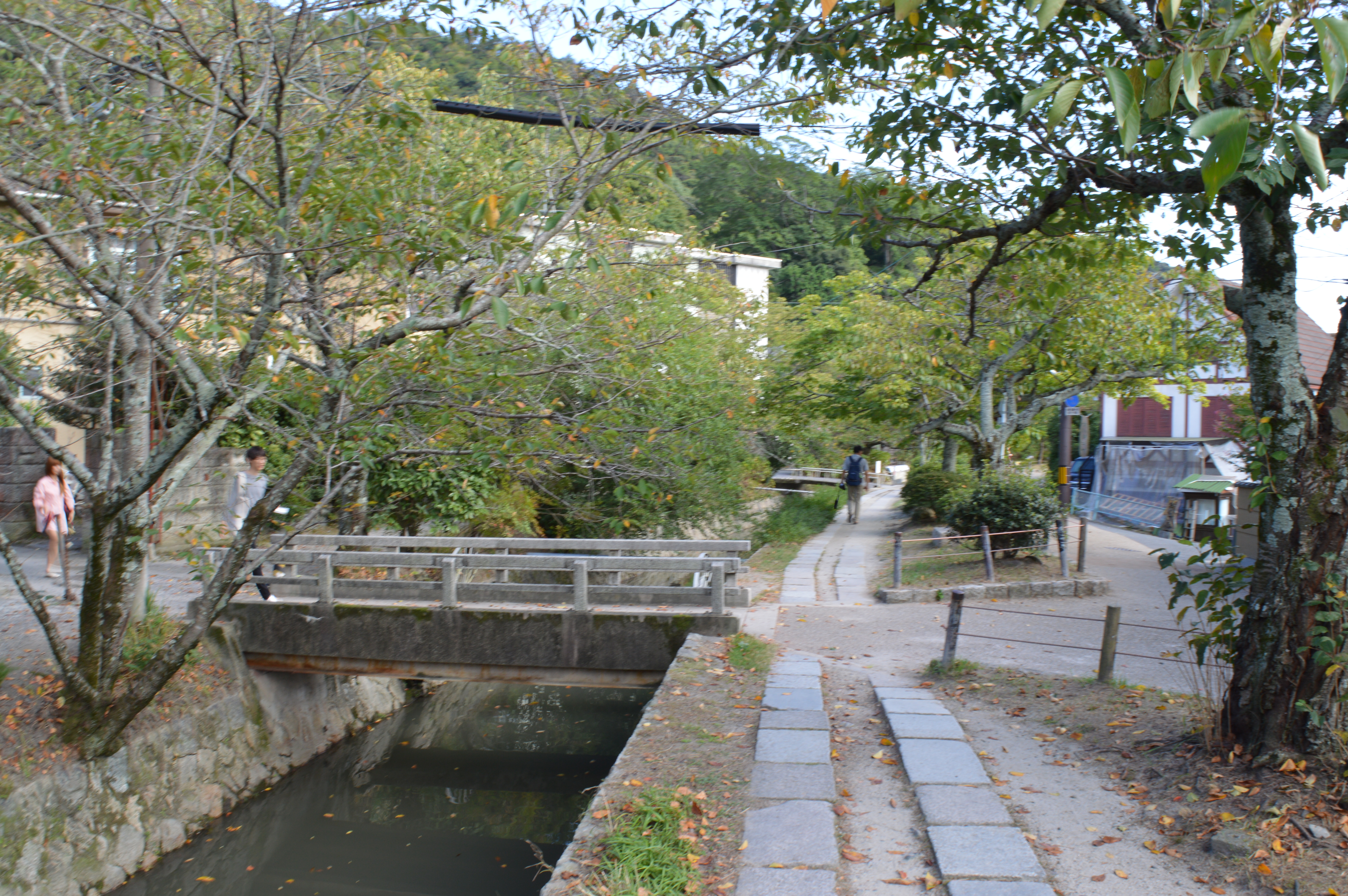
The Philosopher’s Path, “Tetsugaku- no- michi” is a stone path that runs along a canal built during the Meiji Period and lined, on either side of the canal, with numerous cherry trees. It is particularly crowded during the cherry blossom “hanami” season. Kitaro Nishida, a famous philosopher, used to stroll along this path to ponder his thoughts. Today, there was hardly anyone here and the canal looked just like any other waterway. However, the trees provided shade from the heat of the day. There are a few shrines dotted along the path. The sound of bird songs and a variety of flowering plants added some colour. Stone bridges connected both side. We had the path to ourselves today. The greenery was welcomed.

Kyoto – Ginkakuji Temple

untitled-72 untitled-71

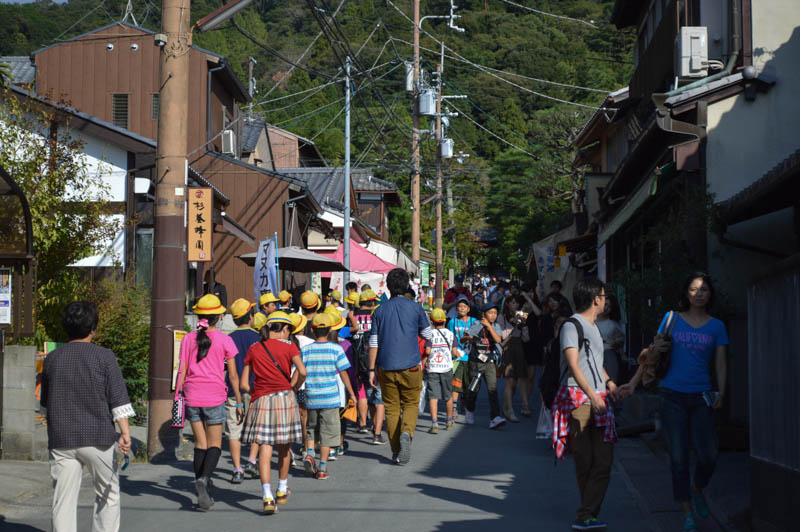
We hopped into a bus and continued our temple journey to the mountainous eastern Kyōto (Northern Higashiyama District). Walking away from busy Imadegawa Dori, we entered a narrow Ginkakuji- cho. This street was crowded with pedestrians, mainly kids on a school trip. The street was lined with restaurants, souvenir and retail shops. The road led uphill towards a lush mountain. The sounds of kids chatting away, with a cheerful attitude, curiosity and innocence, created a heart- warming atmosphere. Ice cream parlours and fruits drinks outlets had queues of people lining up. The sun, although hidden, radiated much heat and it was humid.

We entered a narrow passage, “Ginkakuji-gaki”, lined with tall trees, and entered through the So-mon Gate. The street had tidily trimmed hedges on both sides, and a neat bamboo fence. We then entered the Chu-mon Gate. It was crowded today. The views opened up with contrasting sand and gravel against lush mountainous greenery. A two storey dark exterior, “Kan’non- den”, commonly known as Ginkaku, the Silver Pavillion, is set amongst tall pines and landscaped lake and garden. This was built as a retirement villa for Ashikaga Yoshimasa, a shogun, in 1482 and later converted to a Zen temple in 1490. He modelled it after Kinkakuji (the Golden Pavilion) in Kyōto’s northern mountains. The pavilion was never covered in silver.

untitled-76

“The entrance to Ginkakuji was a long street, packed with people and shops everywhere. It felt like I was back in Magome!” – Navindd

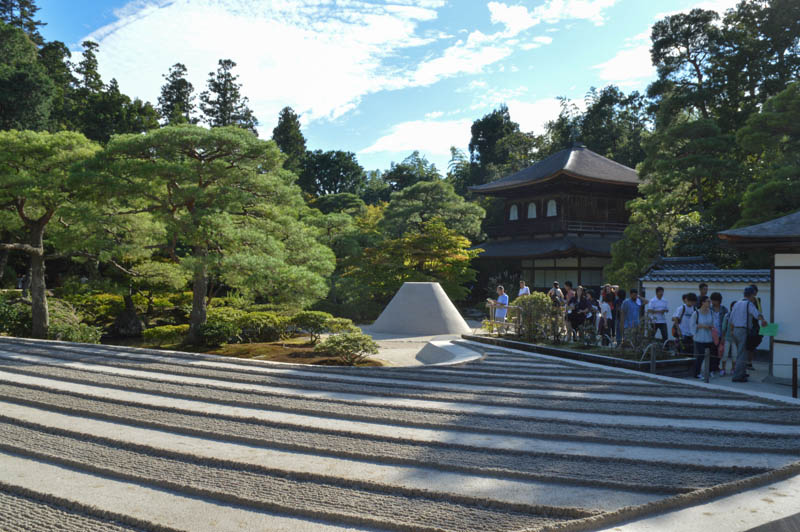
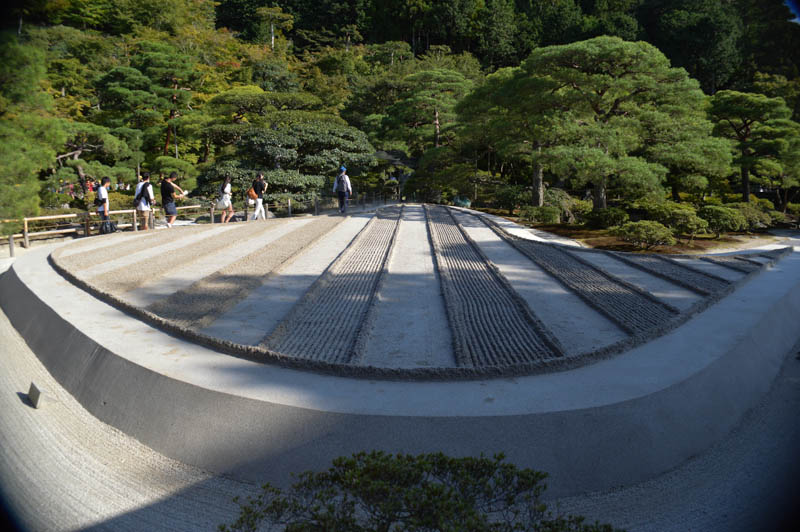
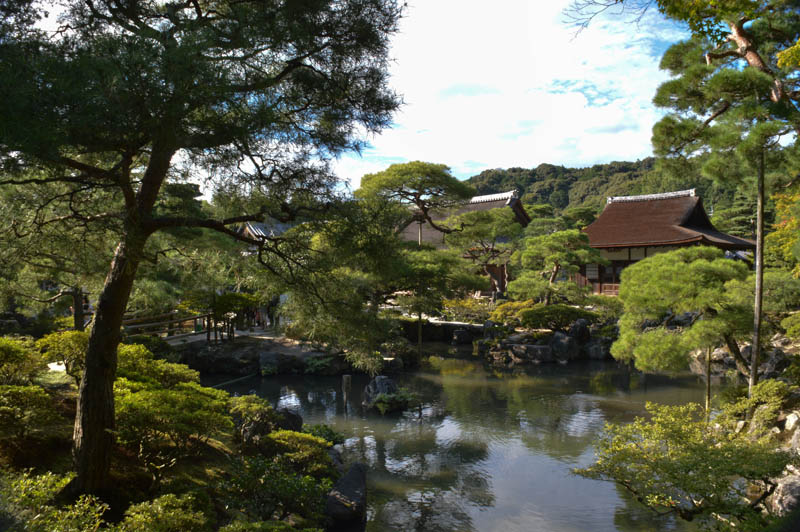
untitled-81Next, we came to an expansive dry sand garden with a rather large truncated cone, 2m high, made with fine white sand, “Kogetsudai”, Moon Viewing Platform. It stood out against the raised and raked coarse sand, “Ginshadan”. Kogetsudai is said to resemble Mount Fuji amongst others. On full moon nights, the moonlight is reflected onto the “Ginkaku”, Silver Pavilion. Magnificent greenery surrounded the “karesansui”, dry garden, and the beautifully architectured building flanking the “Sea of Silver Sand”, including the “Hondo”, Main Hall and “Tōgudō” which are national treasures. A wonderfully landscaped pond, “Kinkyochi”, the Brocade Mirror Pond, with large sculpture pine trees leaned towards the pond and hugged this dry sand garden and the adjacent buildings. This pond is punctuated with islands connected by stone bridges. Ginkaku-ji’s “chisen- kaiyushiki”, pond-stroll garden, was also modelled after the garden of Saiho- ji. A moss garden appeared under the shades next to the pond. A nearby small waterfall, “Sengetsu- sen”, Moon Washing Falls fed this pond. The water is continuously replenished.

untitled-74

A meandering path crossed stone bridges, past moss covered gardens and flowing ponds, as it continued uphill. Looking back towards the majestic “Ginkaku”, Silver Pavilion, reflected on the “Kinkyo-chi” pond, I can easily imagine the tranquillity derived from these surroundings.

Islands and stone bridges had their own colourful names. Shadows of trees and buildings reflected off the clear water of the pond created a surreal and vivid appearance. With the ever changing light, although cloudy today, the dramatic views continuously changed. Perhaps reflections of our own lives are represented here!

“The temple was also famous for its 2m high sand cone, which sat perfectly on the side of one garden, with not a single mark on the sides……..the Silver Pavilion…trees surrounded it and it seemed to be floating on the pristine green pond….It was worthy of a front page of any travel book. Inside the pavilion though, there was nothing much. It was just an empty room” – Navindd

untitled-77 untitled-78 untitled-80

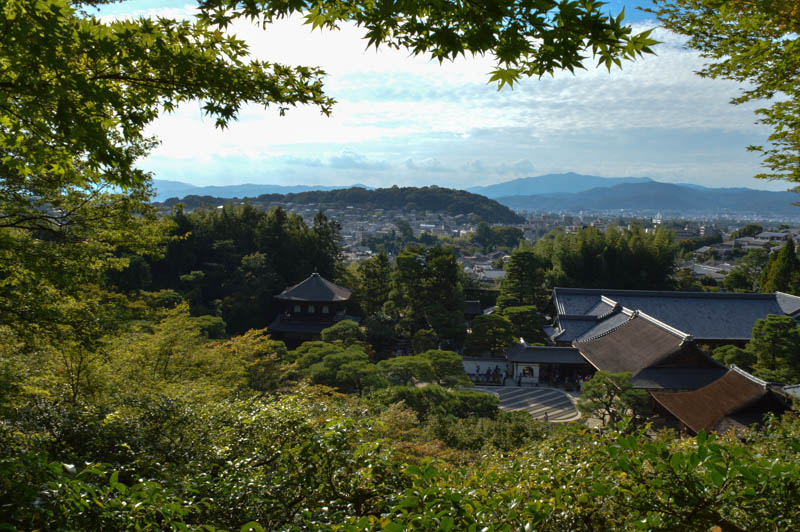
The path wound uphill surrounded by a mixed forest. Numerous maple trees were scattered around this forest. Moss covered vast areas of the shaded ground under the forest canopy. I could imagine the dramatic autumn colours of the expansive temple grounds. From the hill top, there was a lovely scenic view of the temple complex with a backdrop of Kyōto. The usage of minimum natural elements such as sand, stones, water and plants; strategically placed allowed us to see different perspectives as we strolled around this tranquil landscape. It is not hard to understand the immense pleasure that can be gained with simple things. Ginkaku- ji does just that!

Kyoto

untitled-65

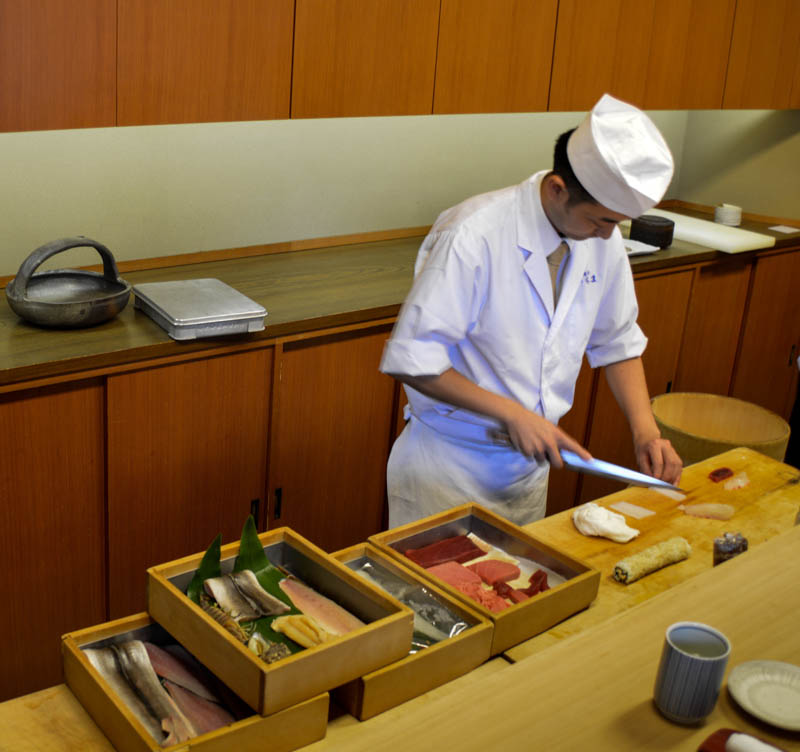
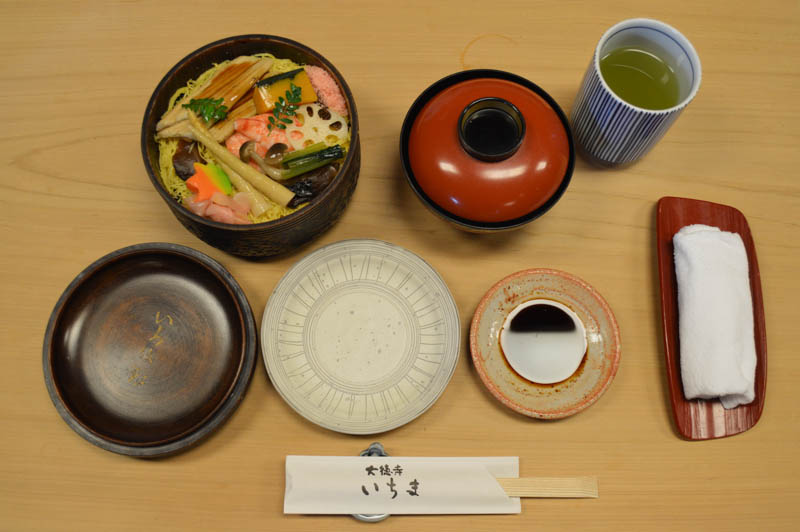
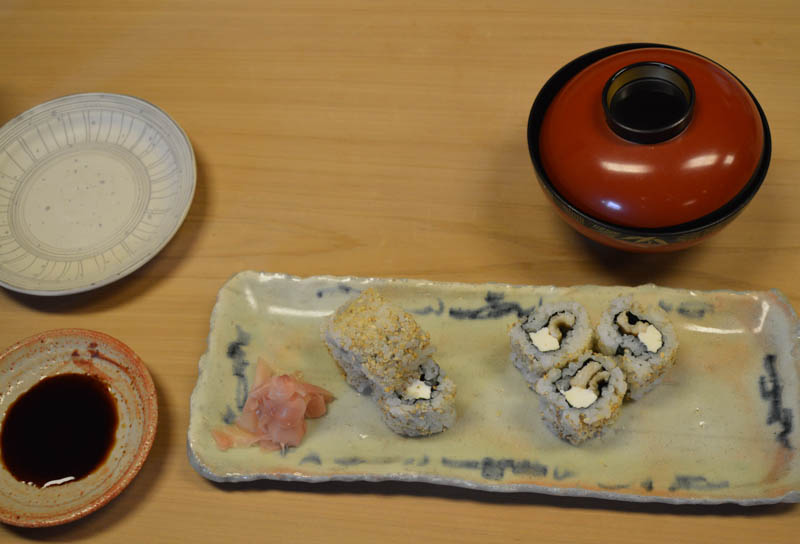
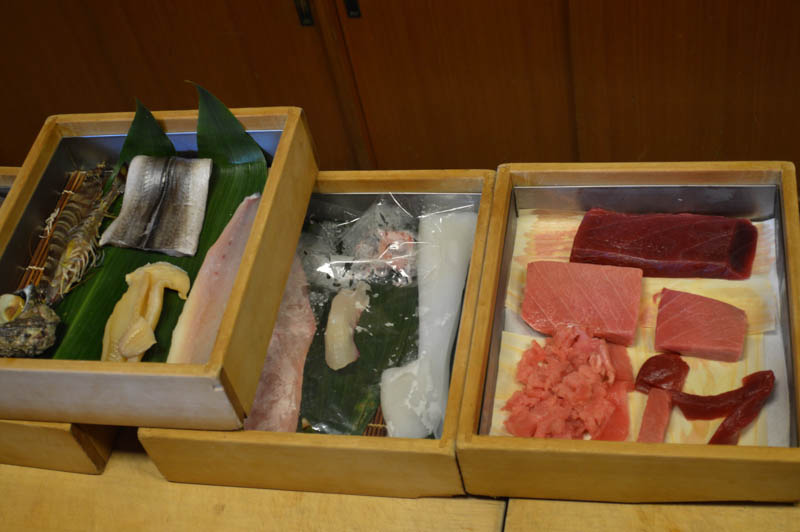
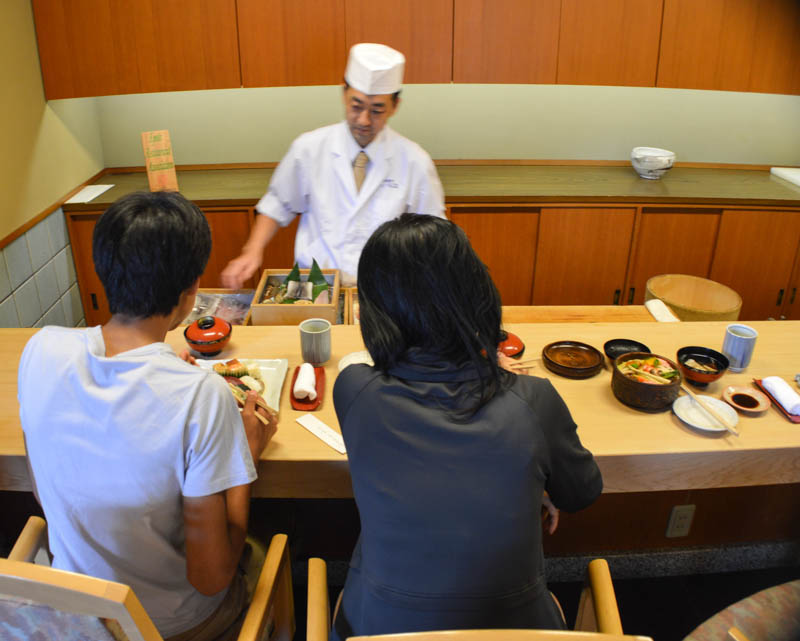
Near Daitokuji Complex, this cosy place offered, Navindd’s favourite, fantastic dishes of “sashimi” and “sushi”. There was no other customer. Three chefs were behind the counter with broad smiles. We scrutinised the menu under the watchful but friendly eye of the head chef. Containers of fresh seafood were laid on the table. The chef skilfully sliced, diced and prepared the meal. He did this meticulously and with respect for the ingredients. This transcended to the dishes served – a perfect lunch – “sashimi” – “maguro”, “toro”, “unagi”, vinigered rice, sushi, California rolls, miso, “ramen” and green tea. Today, we were privileged to have our ‘personal’ master chef. The food was wonderful.

untitled-69 untitled-68 untitled-67 untitled-66

untitled-70

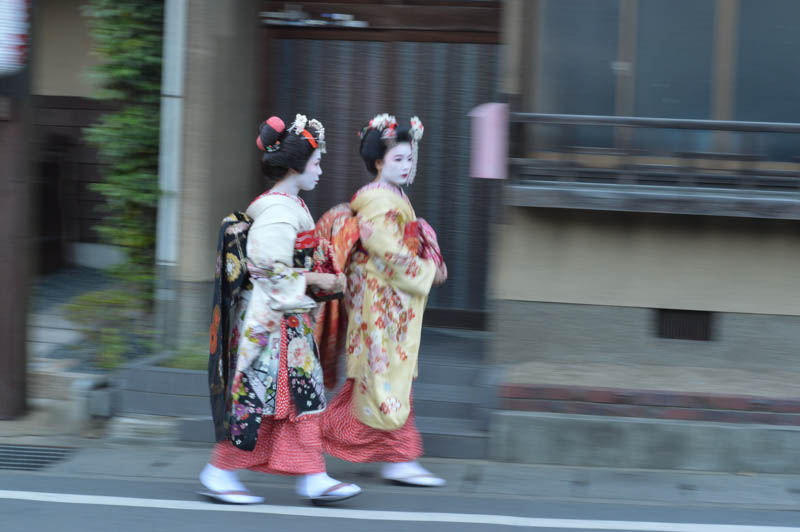
I shared my blurred iconic images of geishas that I had taken in Arashiyama with the chef. He confirmed that we had indeed been in the presence of both a “geiko” and a “maiko”, an apprentice geisha. My appreciation for these prized images jumped ten-fold.

“ …….we later found out that the chef was going to Rio to cook for the Japanese team in the Olympics!” – Navindd

Kyoto – Geisha

One of the most enigmatic and alluring symbols of Japan, besides Mt Fuji and cheery blossoms, are the Geishas. These are women whom had gone through rigorous apprentice training in the fine arts of dance, music and as a hostess. These arts are centuries old and some with notorious connotations or inferences. Let’s get this right. Geishas are not prostitutes. In early history, now outlawed, “pleasure quarters” were established by the regime which included sex. These were never part of the ‘hanamachi” world. Incidentally, the first geisha were men dressed as women.

untitled-15

Geishas are immaculately dressed and made up from head to toe. The most striking features are their white painted faces, flowing intricately designed silk kimono and their dainty footwear. Their hair-dos, accessories and just their mere presence, fills up the area. Not only the foreigners, even the local Japanese, both men and women, seemed infatuated by them.

Geishas are single women, living, learning and working in a strictly matriarchal society under the guidance and care of the house mother, the “okāsan”. The lodging for the geisha and maiko is the “okiya” where they will spend their life. Many women run and manage the tea houses, “ochaya”, where the geisha perform. The area where they live and perform is referred as “hanamachi – flower towns”.

In Kyōto, the most number of geisha in the country, numbering less than 2000, are found. They are called “geiko” and the apprentice is “maiko”. The most popular ‘hanamachi” districts are Gion, Pontochō and Miyagawa- chō.

Seeing a geisha or a maiko is a privilege in my opinion akin to climbing Fujisan. They do leave a lasting impression after they are long gone. Well at least it did for me.

“The geisha system was founded, actually, to promote the independence and economic self-sufficiency of women. And that was its stated purpose, and it actually accomplished that quite admirably in Japanese society, where there were very few routes for women to achieve that sort of independence”.– Mineko Iwasaki, Geisha, A Life

“Geishas are not submissive and subservient, but in fact they are some of the most financially and emotionally successful and strongest women in Japan, and traditionally have been so.”
— Mineko Iwasaki, Geisha, A Life

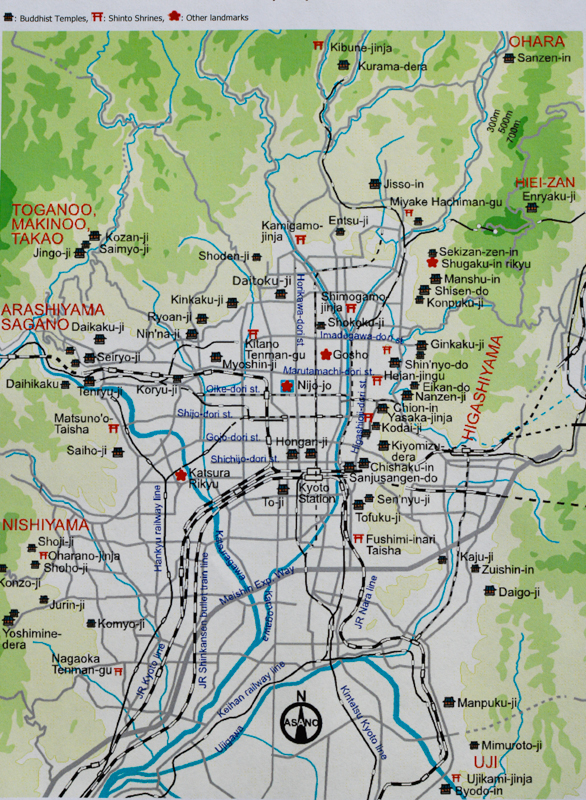
Map of Kyoto

DSC_0087