
Information
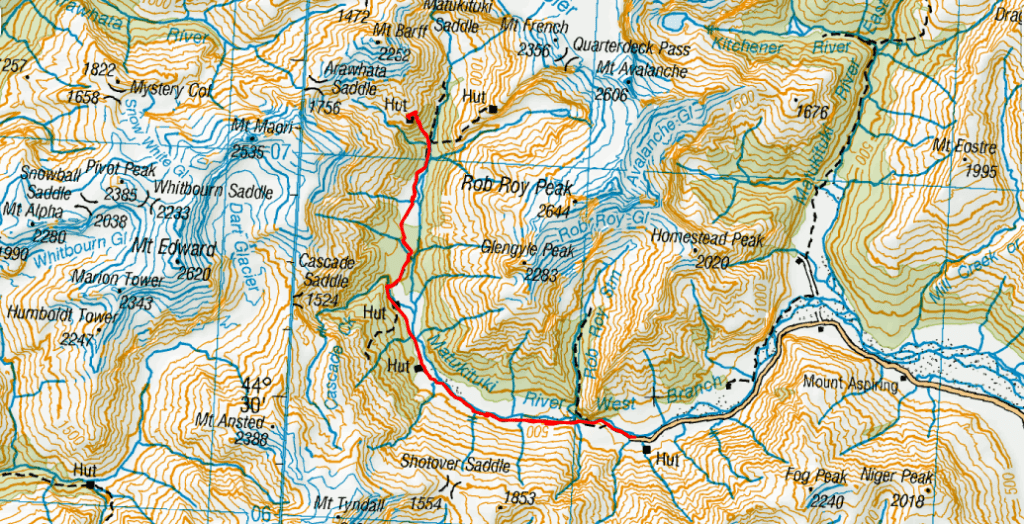
Liverpool Hut Track is located 52 km from Wanaka, of which the last 30km is on gravel road, in the West Matukituki Valley, Mt Aispiring National Park. It takes between 1 to 1.5 hours with several rocky streams to ford. A high clearance vehicle is preferred. Booking is required for the 12 bunk hut and purchased online at DoC. This track is rated as advanced and for experienced hikers. The last 1.5km is very steep. Avalanches, wet weather and mist are potential hazards.
This track is open all year round. During the winter months, this track is doable for the well equipped and experienced. The last 1.5km is challenging even in summer. Let alone is winter! Furthermore, days are also shorter. Bookings are not required in the off season (May – November) but Hut passes are required. Can be obtained at DoC office in Wanaka. As usual, report to DoC before embarking on the track. Carrying a beacon is recommended, if hiking alone.
Day 1
After leaving Mt Cook National Park, partially (discontinued as crampons and ice axe were required due to snow and ice) completing Mueller Track, we arrived at Wanaka. We had originally planned to stay a night at Aspiring Hut but was closed for renovation. With a couple of days rest, we left Wanaka at 7am and arrived road’s end at Raspberry Car Park at 0800. There were already a few cars here. Some seemed like they camped here. Travelling in a group of varying age, fitness and tramping experience is always a challenge. I find myself in that situation again. I planned to go solo. Therefore, responsible for myself.
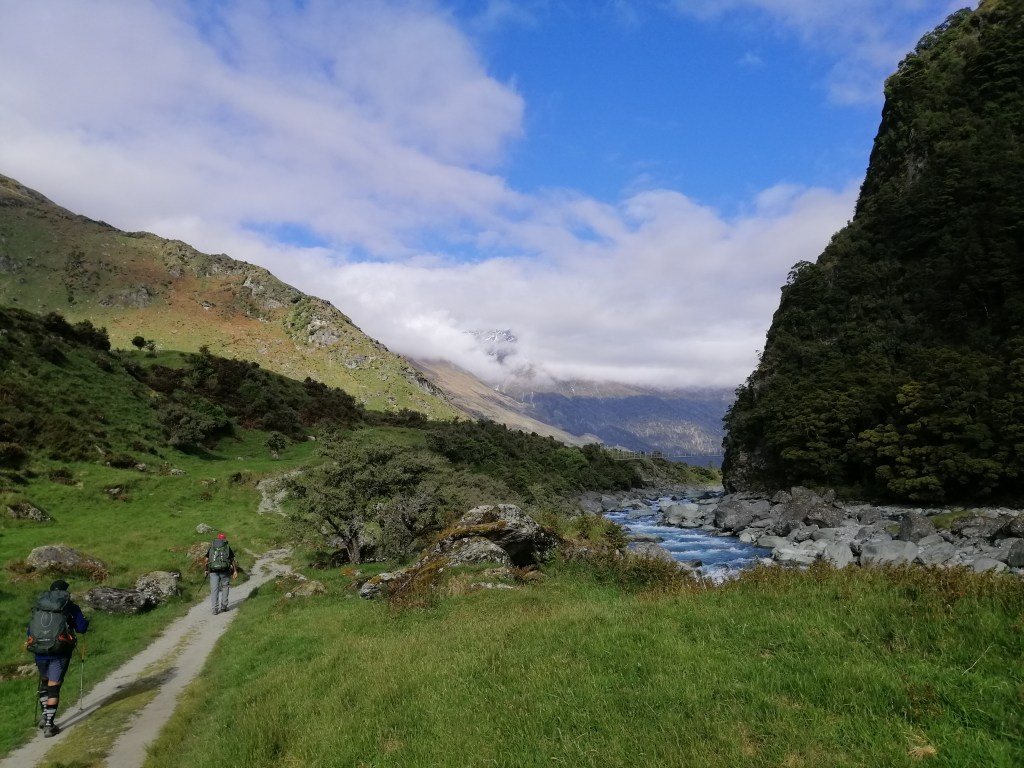
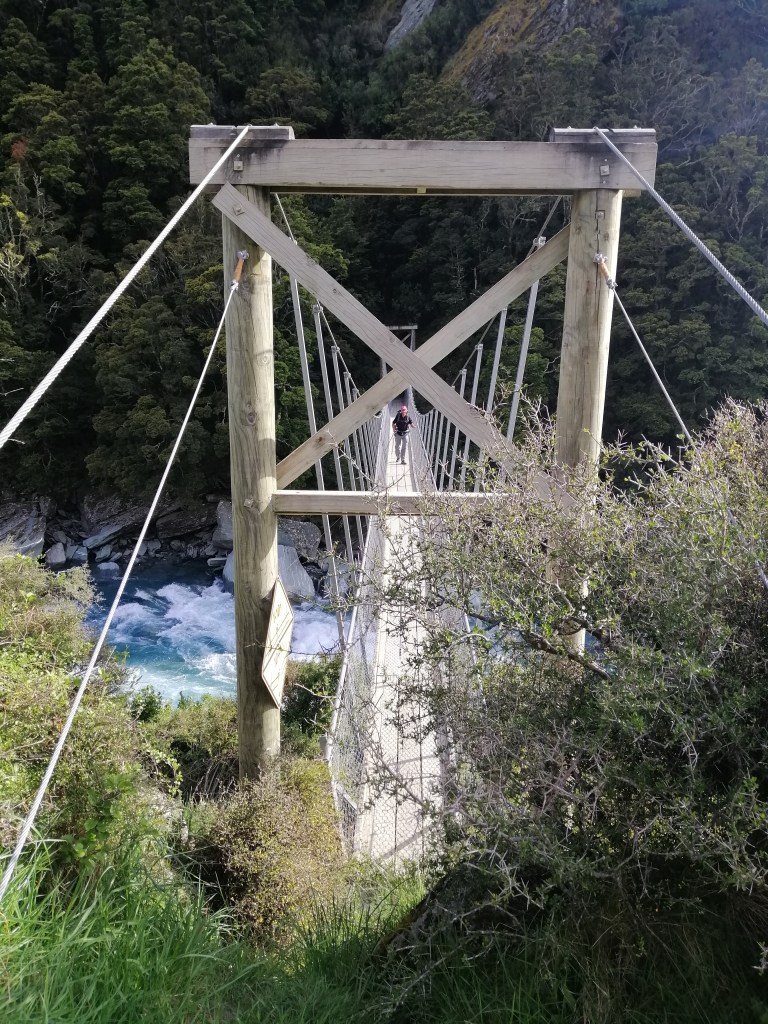
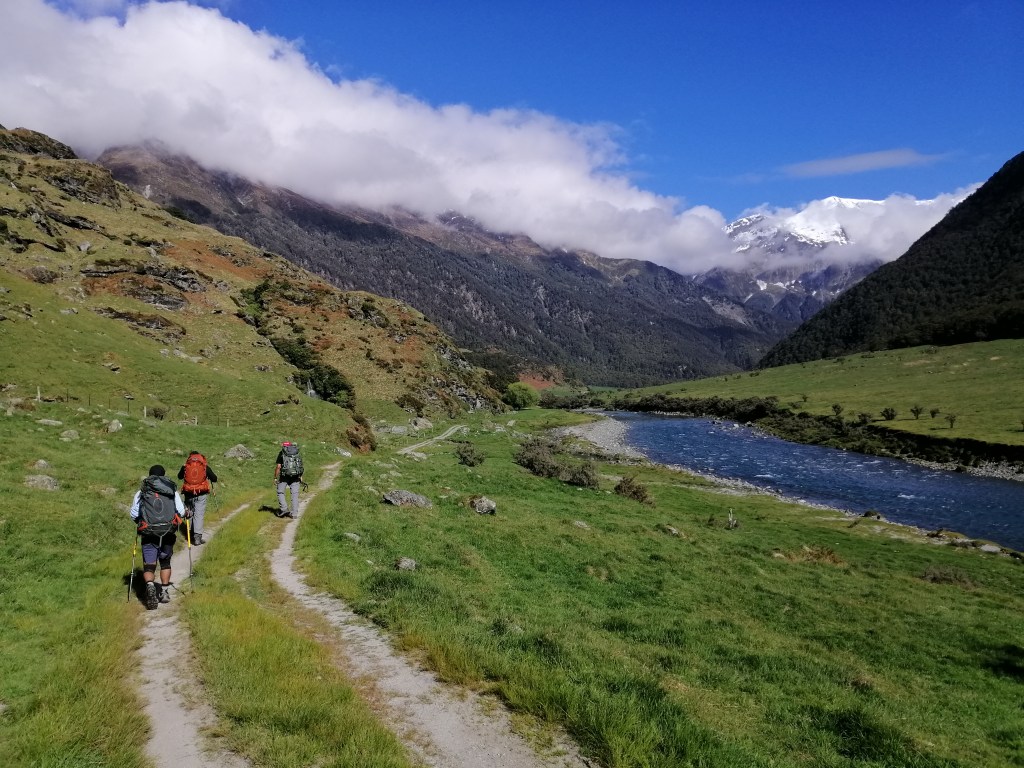
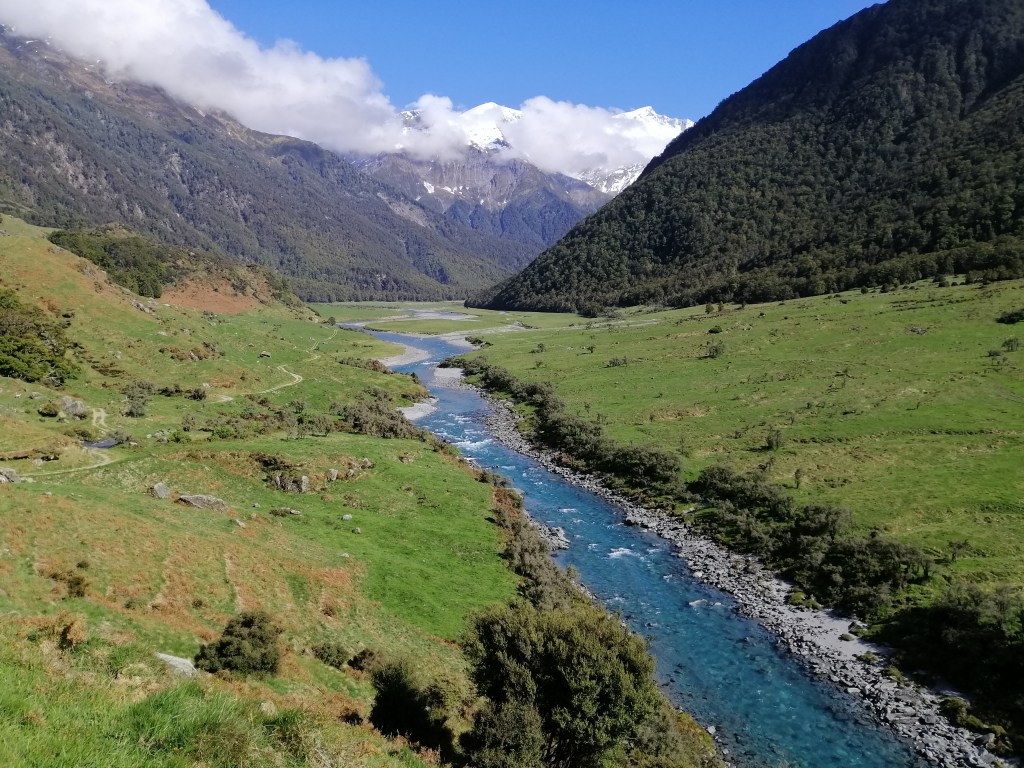
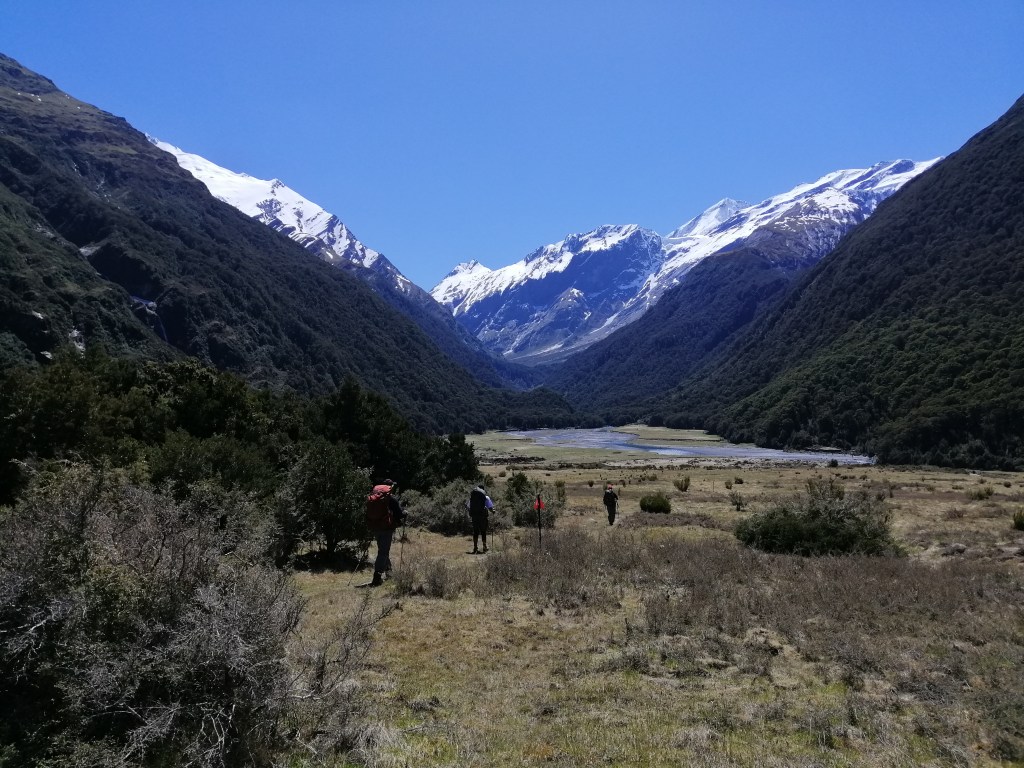
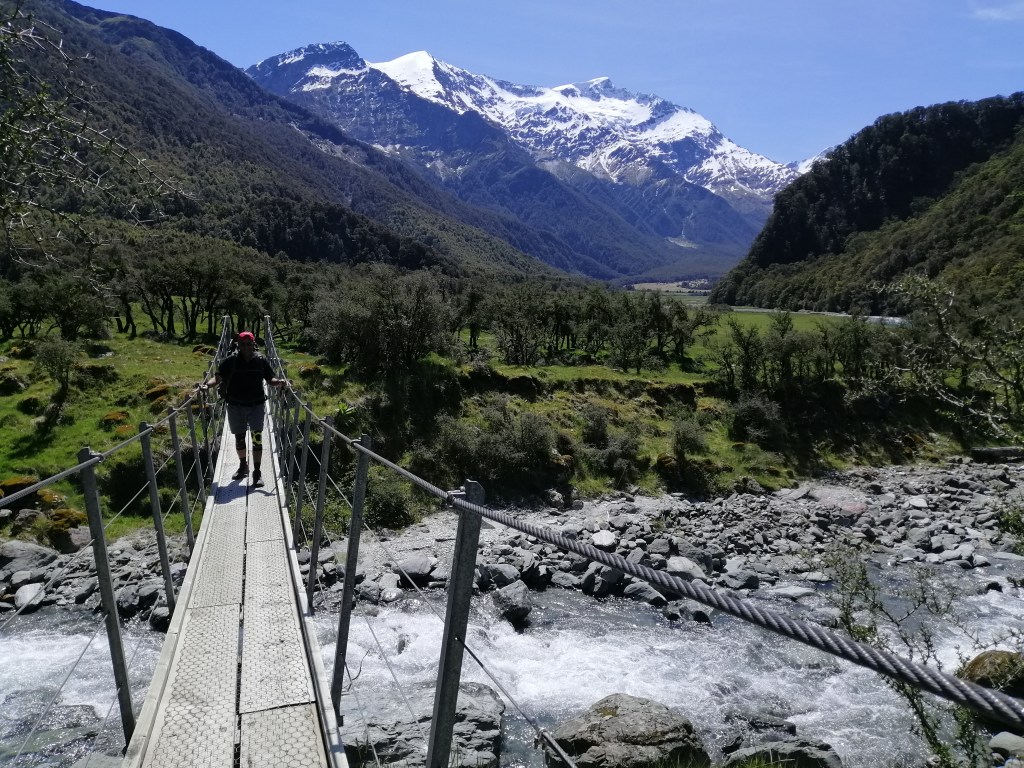
After slapping on sunblock and sandfly repellent, we started the track at 0830 along the fast flowing bluish braided Matukituki River West through Matukituki Valley, with craggy mountains on either side. The track is basically a walking acess through high country farmland – Mt Aispiring Station. It was lambing season with sheep and lambs everywhere. Within 30 minutes, we reached a suspension bridge over Mutukituki River. This 2hr easy track lead towards wonderful hanging Rob Roy Glacier. I hiked here in March this year. Liverpool Hut is 16km (5-7hrs) away.
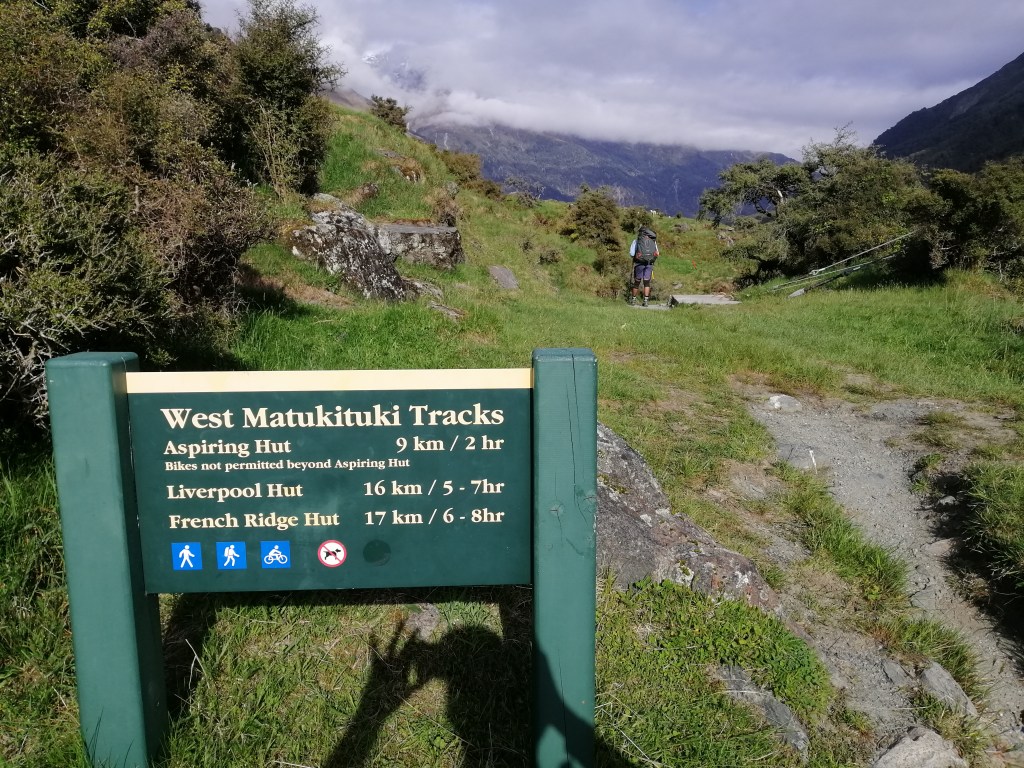
The views across the glacial carved valley, snow peaked mountains and hanging glaciers were stunning. Low morning mist partially obscured the mountains. Mt Aispiring loomed at the end of the valley. It seemed distant. Somewhere amongst these mountains is Liverpool Hut. This track is also the access to French Ridge Hut and Upper Matukituki Valley.

Reached Aispiring Hut at 1130. It was closed with renovation in full swing. Planned to open in mid-January 2023. Looks like a lodge than a hut. Lunch on the deck of the wardens residence. It was a relief to get out of the scorching sun. From here, there is acess track to Cascade Saddle and Dart Hut. These tracks are classed as advanced due to steep terrain and prone to avalanches.
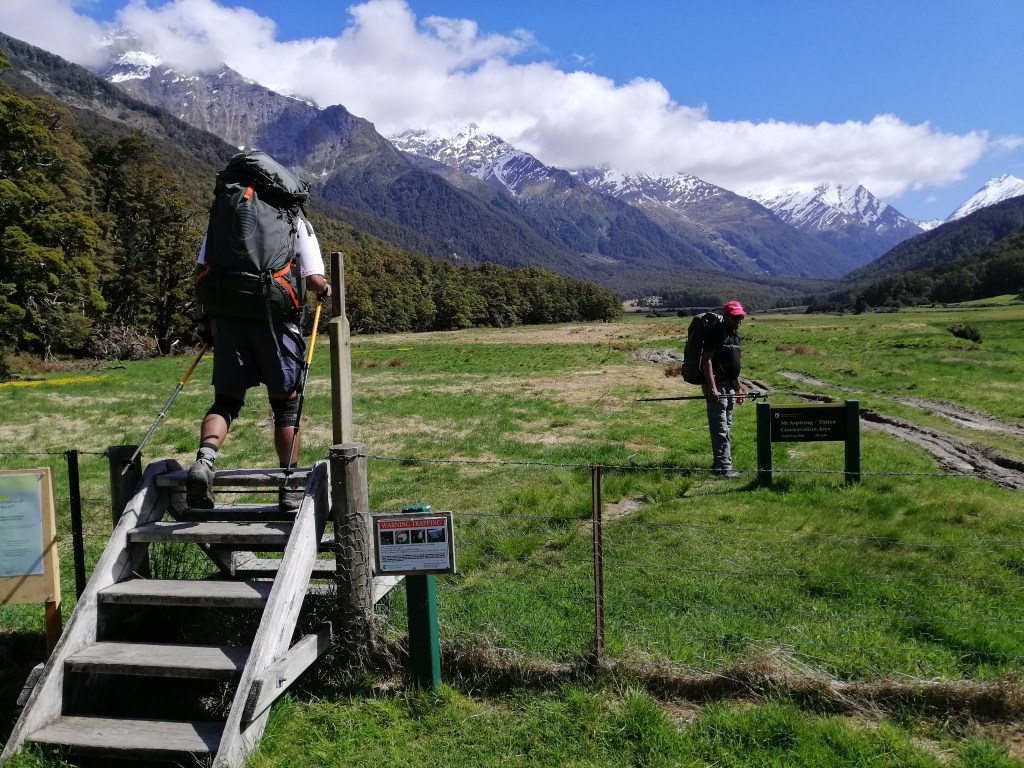


Just after Aispiring Hut, we met the warden for Liverpool and French Ridge huts. She estimated we should reach the hut by 4pm. In my mind, probably 5pm. Starting early benefited us with a long day. The relatively flat track has a gradual acent.
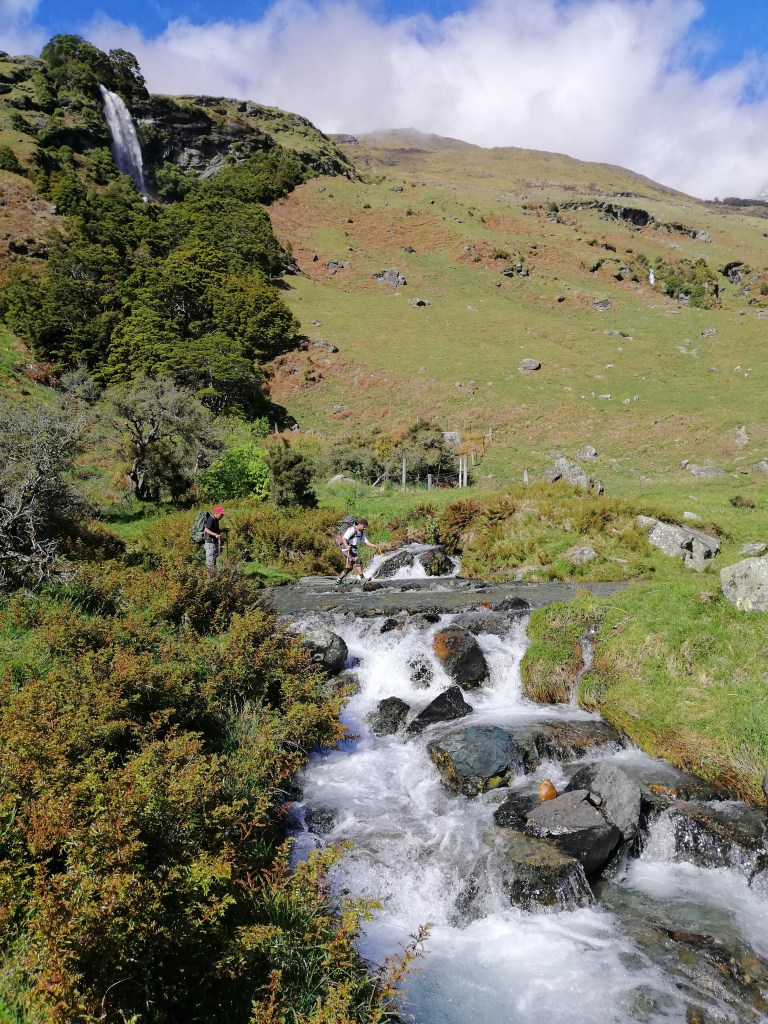
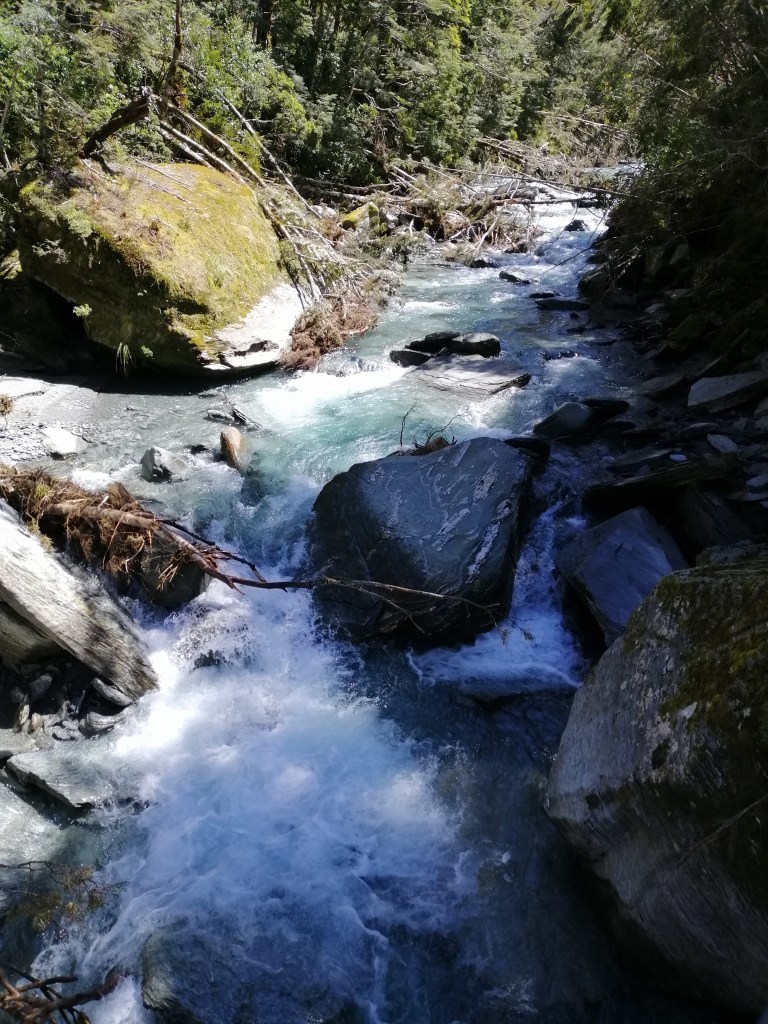
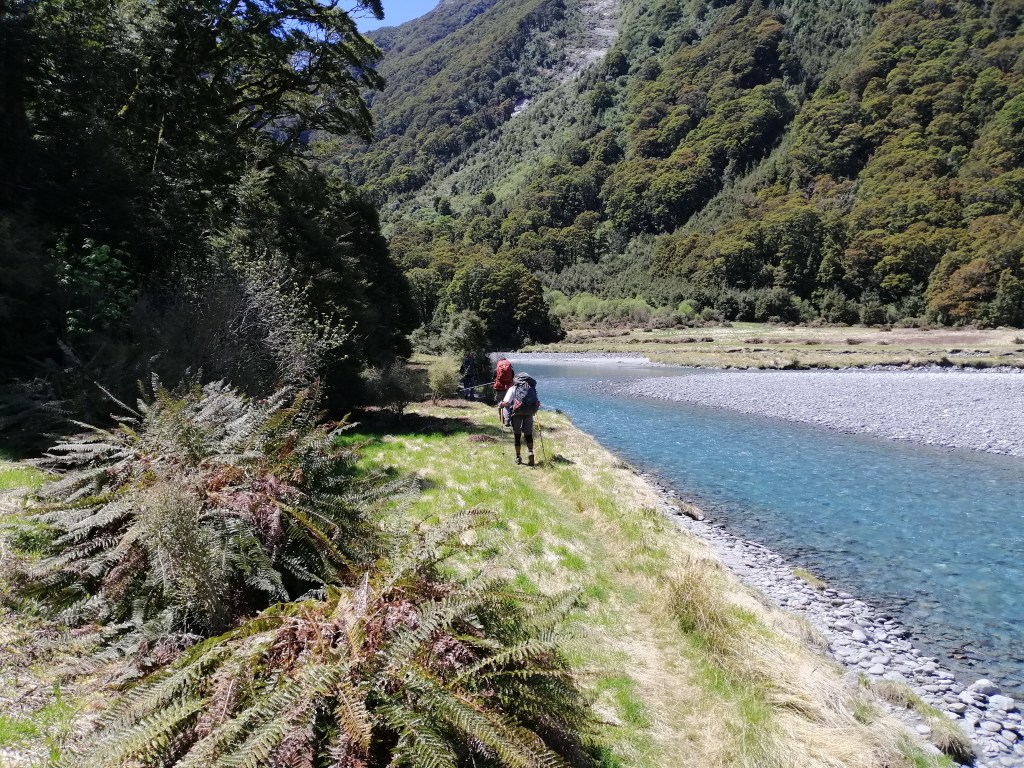
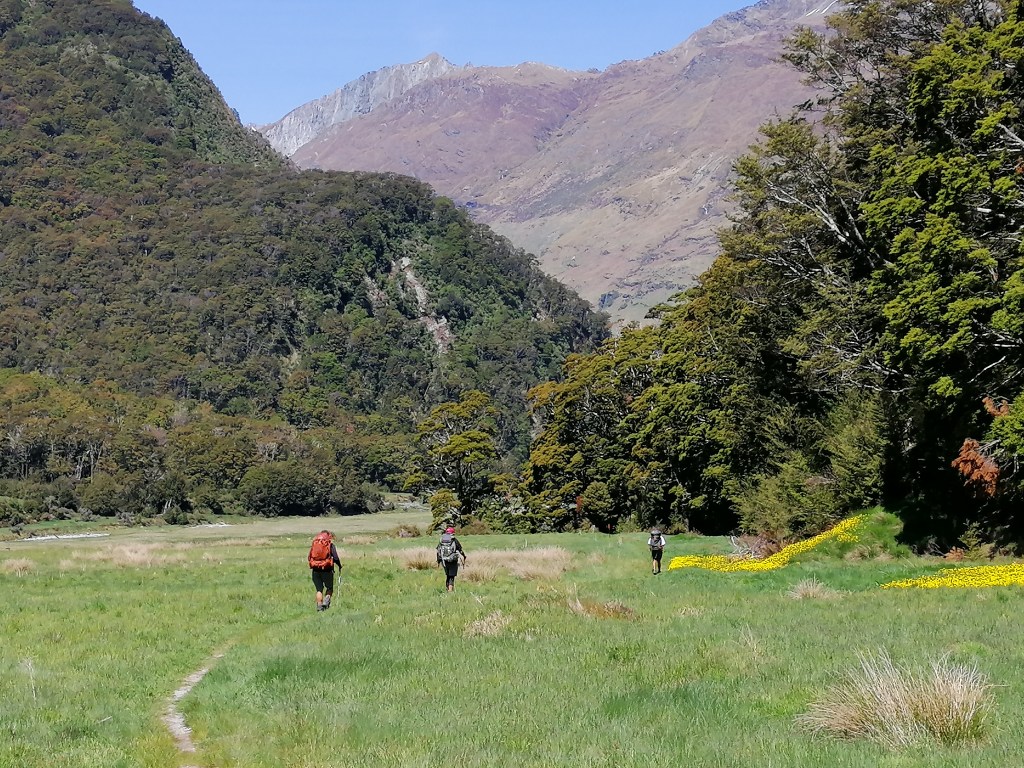
Within 10 minutes of leaving Aispiring Hut, we entered a humid beech forest. Shortly, the track entered the forest and crossed Cascade Creek via a suspension bridge. Then into the open valley and yet into another forested section and into Shovel Flats around 1230. Back into the sunny shrinking valley. The forested mountains closed in. Reached Pearl Flats at 1300. The gradual elevation gain from the car park to Pearl Flats is 400m. It was a long walk (15km) along the glacial meltwaters of Matukituki River West crossing several streams that criss-crossed the track. Waterfalls of various intensity are constant along the steep mountain sides. All draining into Matukituki River. The sky was blue, no wind and the sun was scorching. The sound of the moving water was constant.



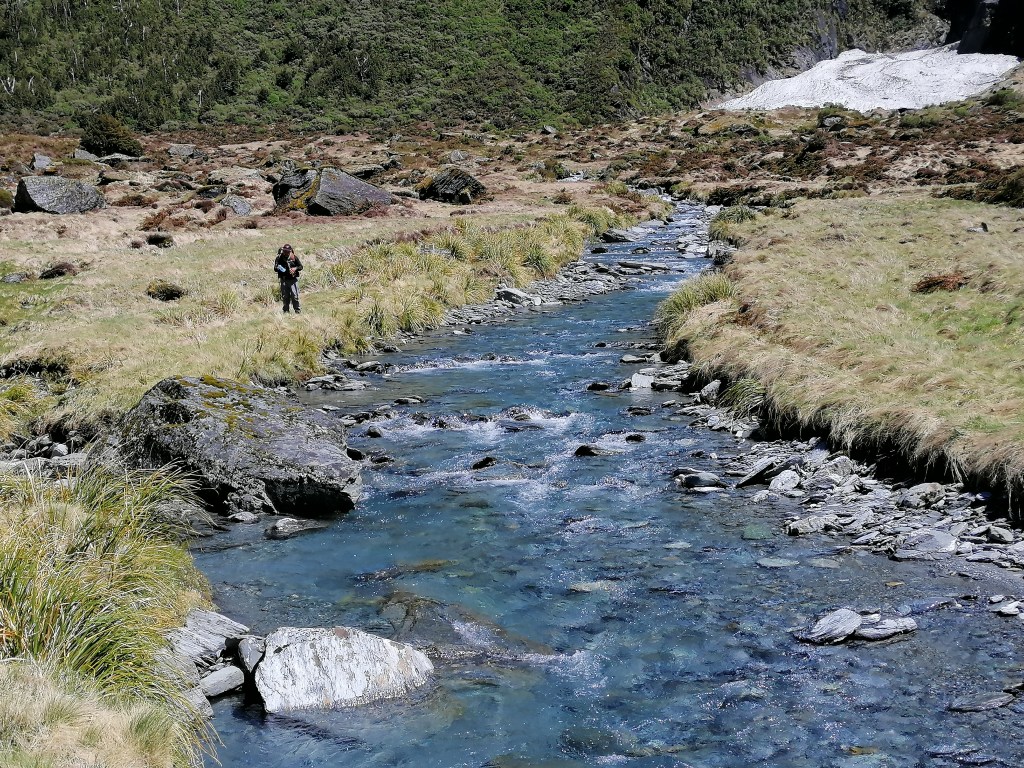
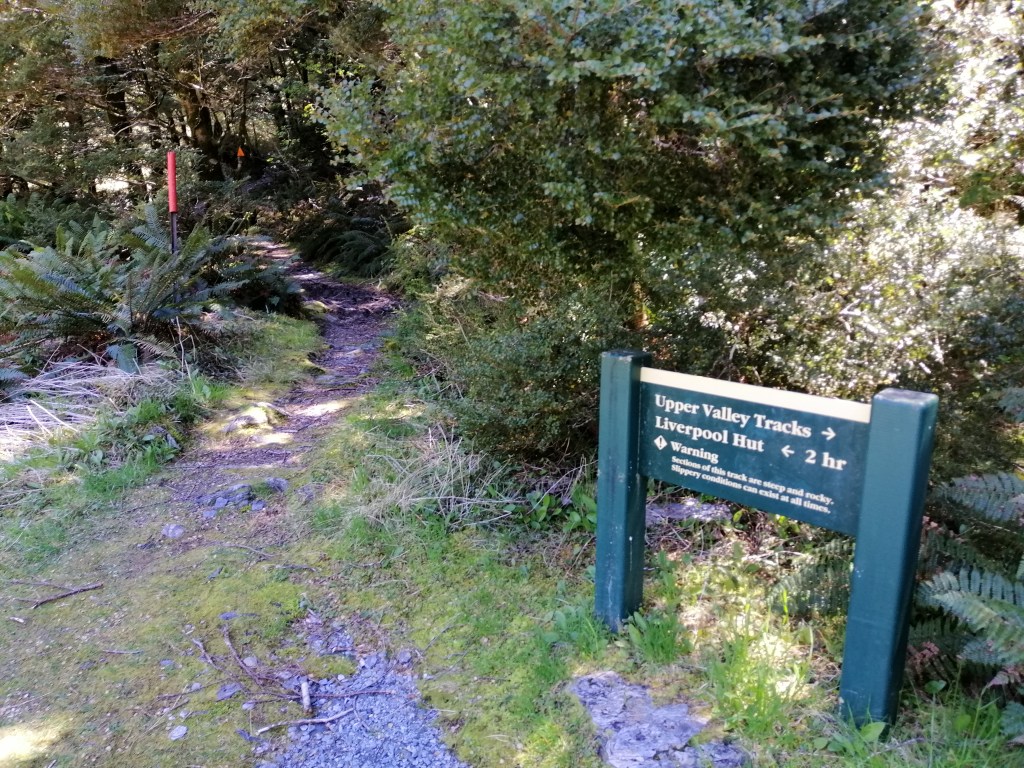
A DoC signage pointed to three directions – French Ridge Hut, Upper Matukituki Valley and Liverpool Hut. We crossed Liverpool Stream over a bridge and refilled our water bottles. For safety, we stayed close as well as hired a beacon from Doc.


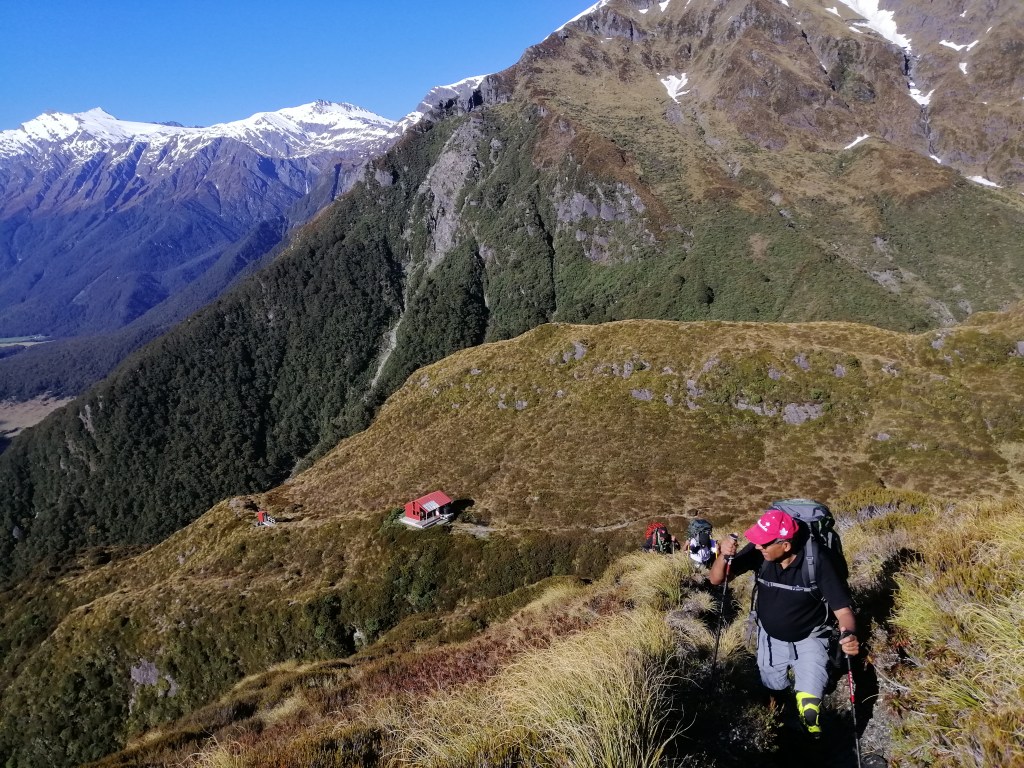
Left at 1330 and after a steep climb aided by beech tree roots and rocks, we heaved up towards Liverpool Hut(1065m). The hike is transformed into a climb. Its always going up a steep incline up to 700m. Looking through the forest and into the Matukituki Valley below, we quickly realised how high we’ve climbed in a short time. There are several nervous moments to negotiate. Just focused on the climb than looking down the steep drop-offs. Eventually, we emerged out of the tree line. The views of the glacial carved Mutukituki Valley with the bluish river snaking out of the valley was stuning. Several glacial covered mountains emerged. This is an exposed area with rocks and tussock grasses. Through the native shrubs and flax plants, I spotted the precariously placed red roofed toilet. It was a great relief. Soon the red roofed hut itself came into view. In the background, Mt Liverpool (2482m) . Across the glaciated valley – Mt Aispiring (3083m) .

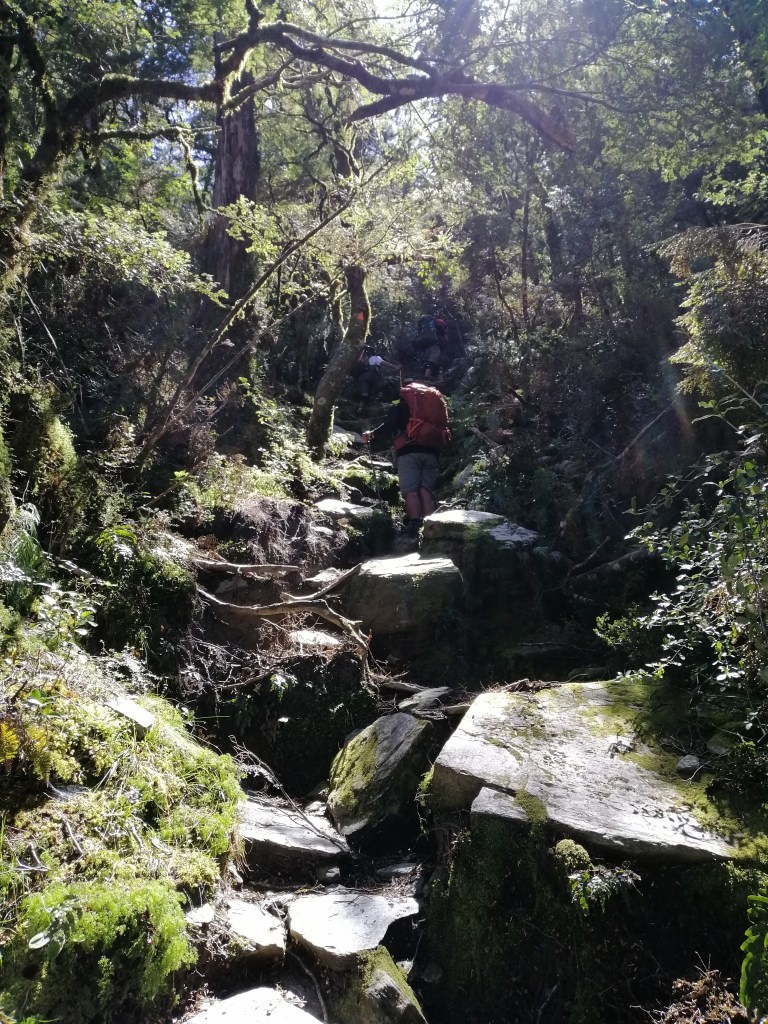


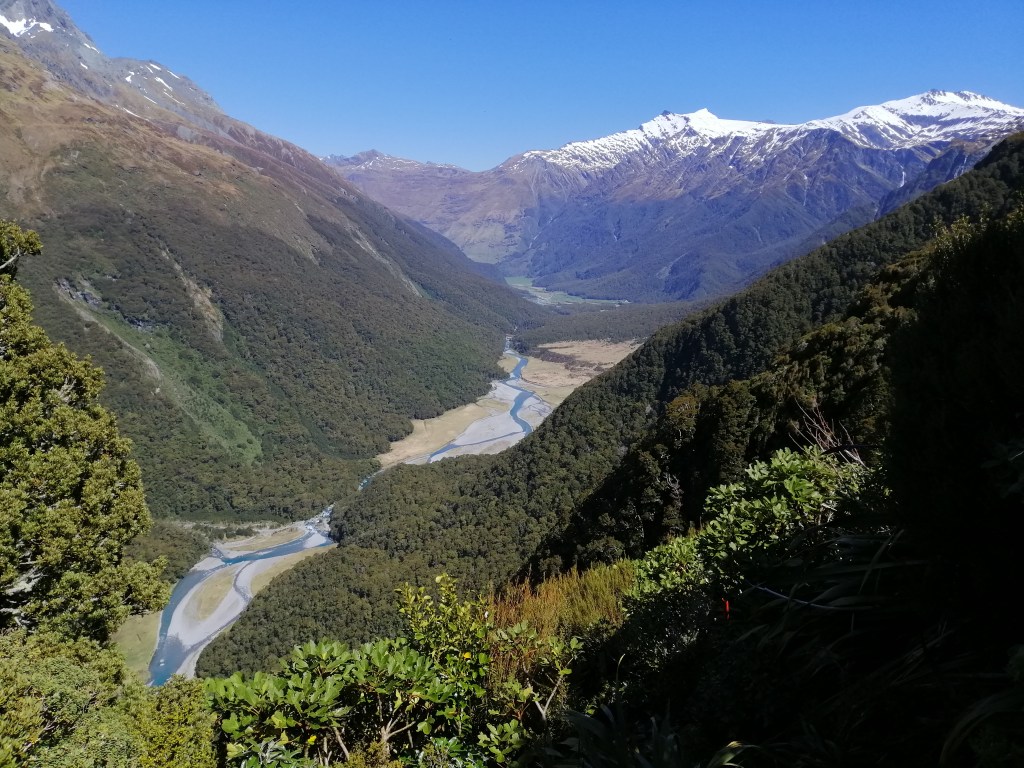

Another precarious steep walk across a series of flat shingle with steep drop offs. I was advised by DoC, to take it slow here as the width in only a metre wide. It can be slippery when wet. Slowly, clinging onto tussock grasses and small steps, we reached the top. You might be tempted to cut across to the hut. Don’t! Follow the markers which took us higher. At 4pm we reached the highest point 1110m before descending towards the hut at the base of Mt Braff (2252m). Blue sky, scorching day and hardly any wind. In the south, Matukituki Valley winds out of the mountains. Elsewhere, we were surrounded by formidable mountains and glistening hanging glaciers. What an awsome sight. We crossed a small stream before reaching the hut. There was only 4 of us here today. Perhaps, more might arrive later. It had taken us just over 2 hours to climb this 1.5 km steep and sometimes treacherous climb. The consolation is most of the hard climb is under the beech forest canopy.
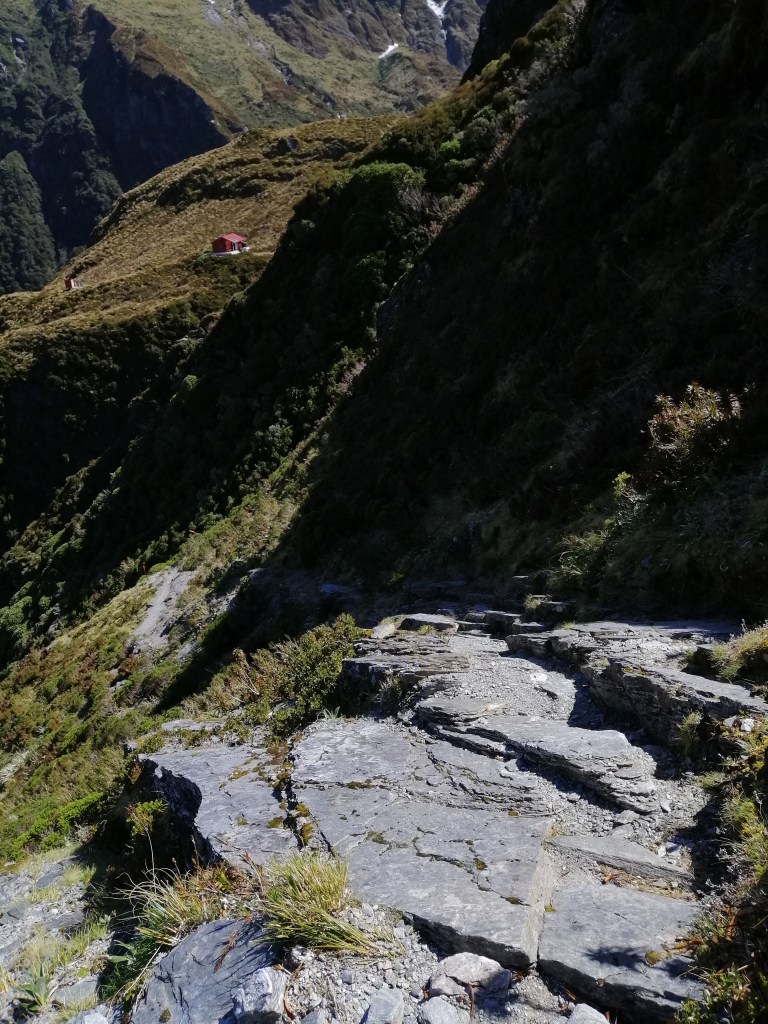
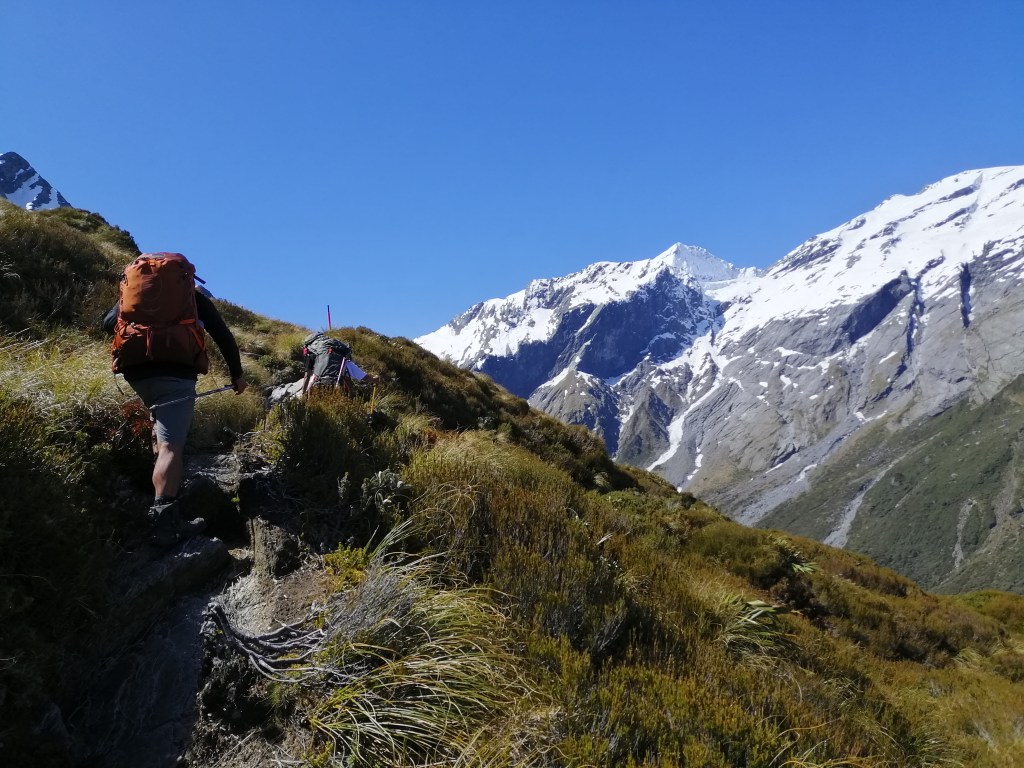

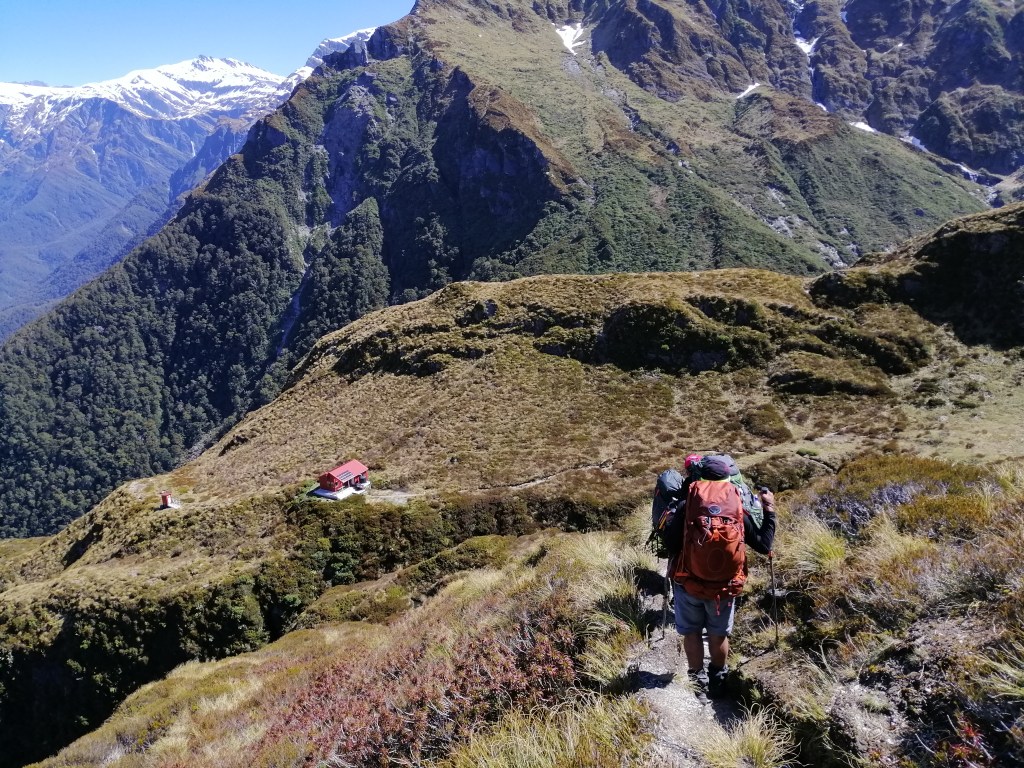
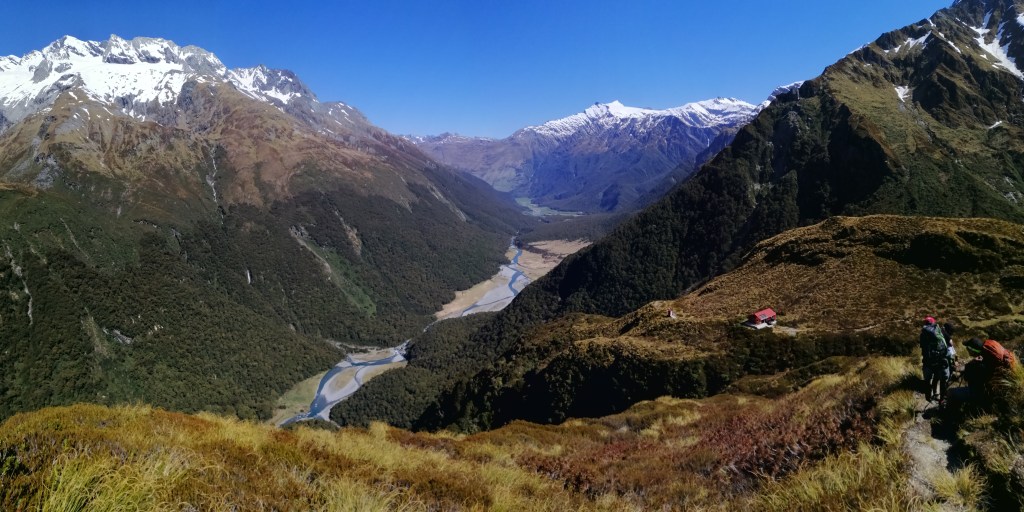


I collasped onto the deck and was transfixed on the stuning views – glistening glaciated mountains, hardy golden tussock grasses and alpine vegetation, and thin blue lines of Mutukituki River meandering out of the valley. We have walked about 16km. Boots off, sand fly spray on and just reminisced our arduous climb for the last 2 hours. At the forefront was, how are going to do this on our return the following day. I would lying if I said I wasn’t concerned. Anyway, we’ll deal with tomorrow.
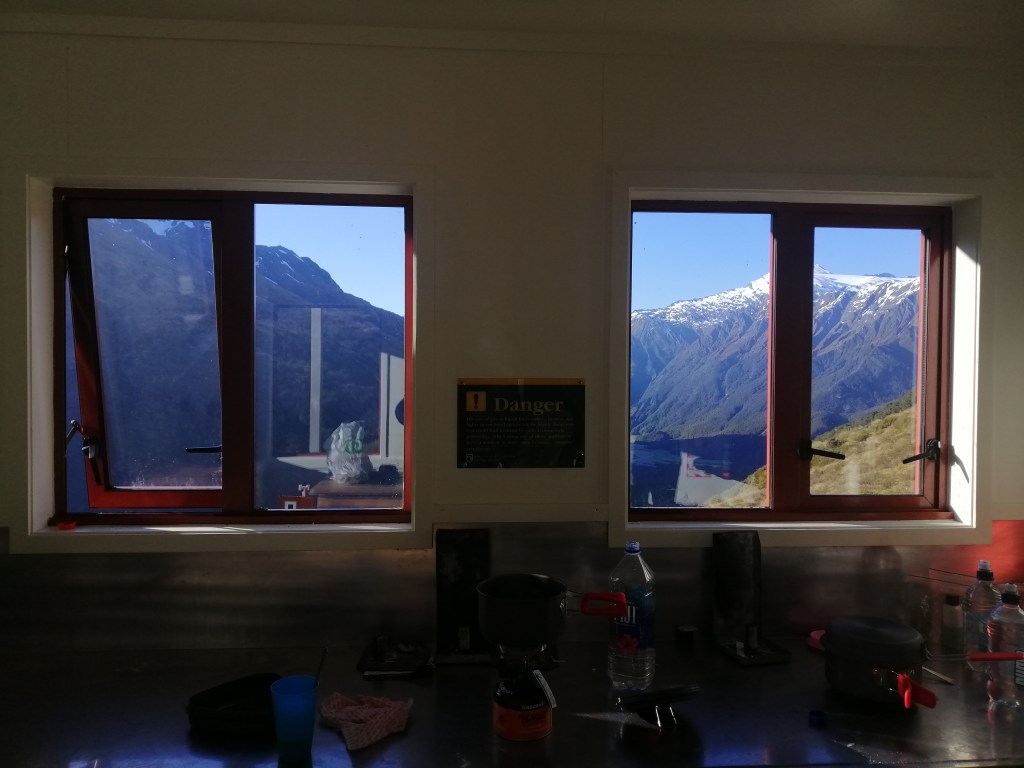
Across the valley, lay Mts Aispiring and French. The sun’s reflection from the glass window of French Ridge Hut (1480m) blinded me. Having just reached here, my thought drifted – French Ridge Hut might be next. My hiking mates dared not even to contemplate.
In March, I climbed to Brewester Hut and to Lake Crusible in the Gilispie Circiut. They were tough climb but nowhere near ‘dangerous’. To date, the most nerve wrecking (not to dispair – only in three short sections) hike I’ve done in NZ. The worst life threatening must be the final verticle rock climb on the Butterfly Valley to Faralya hike in Turkey. It rained just 5 minutes after we climbed over the edge. My wife and I wouldn’t be able to acend or descend on the slippery smooth rocks. Furthermore, no one knows of our whereabouts! I still get goosebumps thinking about it today.
The hut warden did inform us that there is no water as the pipe is broken. So we headed down to the little stream we crossed earlier. After a hot cup of soup and snacks, I was ready to explore this mountain top. The blazing sun began to drop behind Mt Liverpool. A little path lead up through the bush onto a clearing. Now, this came with expensive views. There was not even a breeze. The only sound heard was falling water. Suddenly, a loud bang, an avalanche somewhere on Mt Aispiring. It was out of view. Avalanches are common here. It was worth the walk many times over. All I could do is sit and be awed by the beauty and solitude of the mountains. I knew it was time to head back to the hut as the mountain shadows crept in. There were several little used path on the hill top. Perhaps, one of these might lead towards a distant summit of Mt Aispiring. Distinct Kea (alpine parrots) calls resonated across the valley.
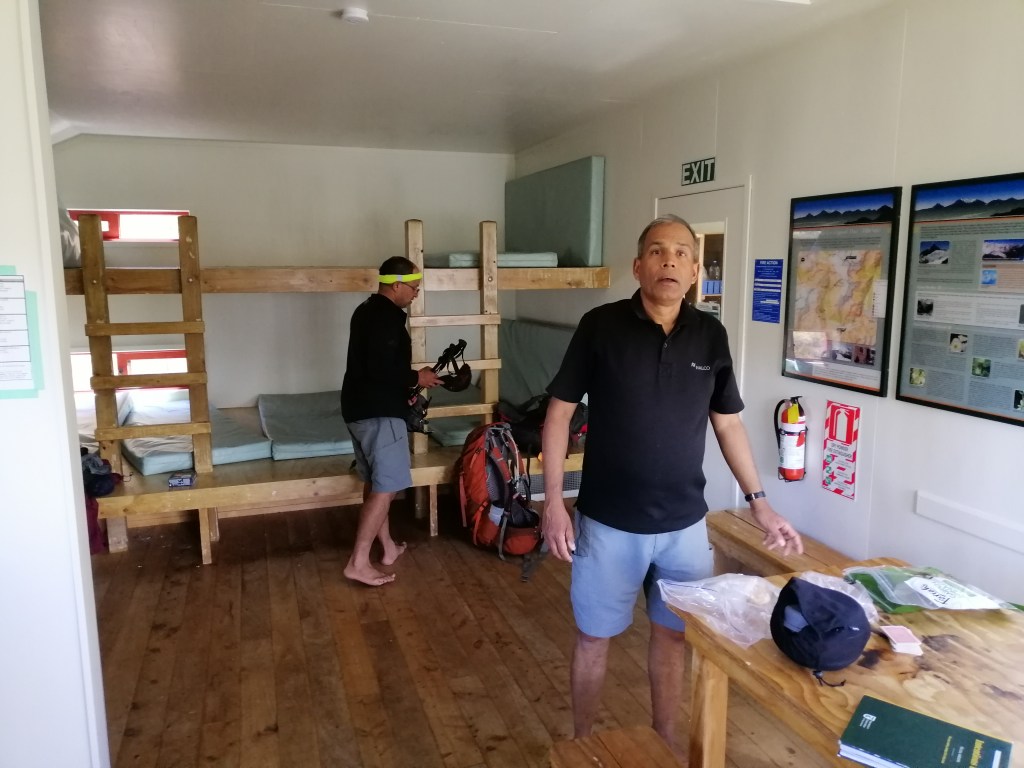
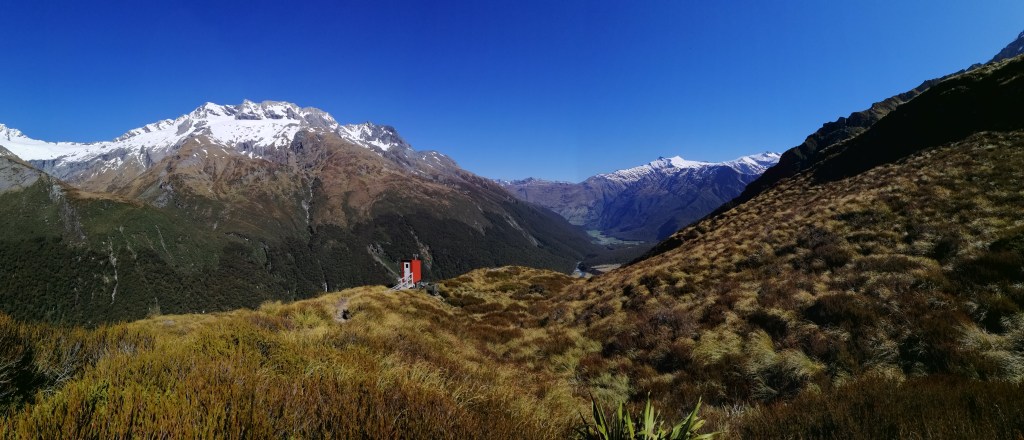
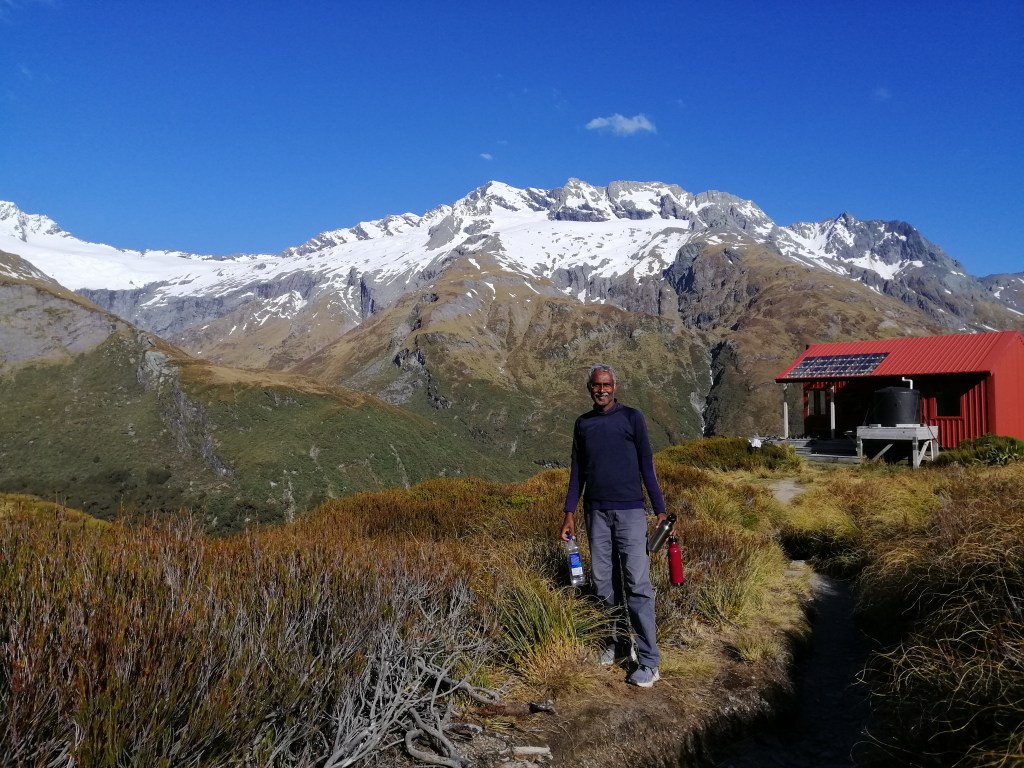
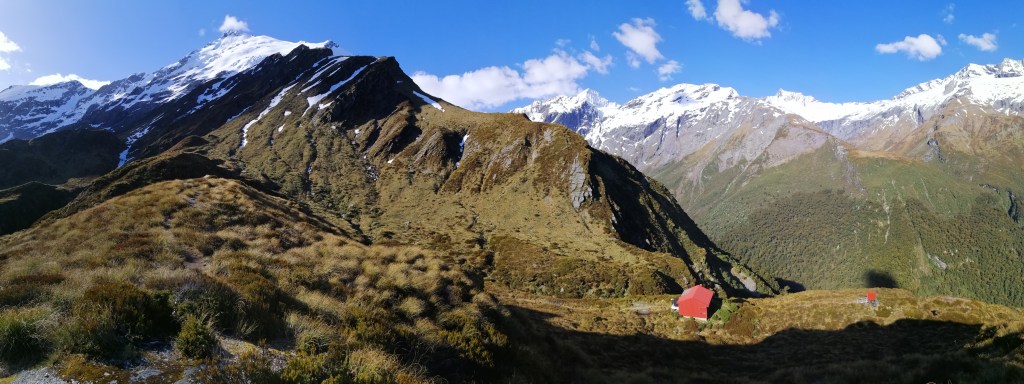

We now realised that there were only 4 of us today. This 10- bed Liverpool Hut is cozy – sleeping, cooking and dining are all in one space. We all quickly settled into our routine – cooking, dining and preparing for the night. Unexpectedly, it was a warm night. Having dinner on the deck with twilight creeping in and the sky lit up by numerous stars was quite etheral. The sun set sometime ago but the light lingered on until 2130. A kea came calling. I immediately surveyed any items left outside the hut. These Keas are very inquisitive and might just carry anything away. Nothing to do but bewilded by the stars, galaxies and man-made satellites. Later that night, my mates watched 29 starlink setellites pass.

Day 2
It turned out to be a very warm night. Perhaps the insulation in the hut was great. I usually don’t get good sleep in huts and this, although only four of us, was no different. A kea caused a raucous on the roof, probably around 5am. That woke me up. Another glorious sunny day was emerging. The peaks of Mt Braff and Aispiring reflected strongly in the bright morning sun. The air was still but pleasantly chilly. After breakfast and the usual tidy up, we left the hut around 9am. As the organiser of the hike, I took the lead and the ‘difficult’ sections of the stone slabs was first. It seemed easier going down. Sometimes on our bums. Eventually, we descended the same way as we arrived here – hanging on dearly to the tree roots and rocks. Our decent was slower. I was focused in every step and root to hold. In many places, it was easier turning around and climbing down.

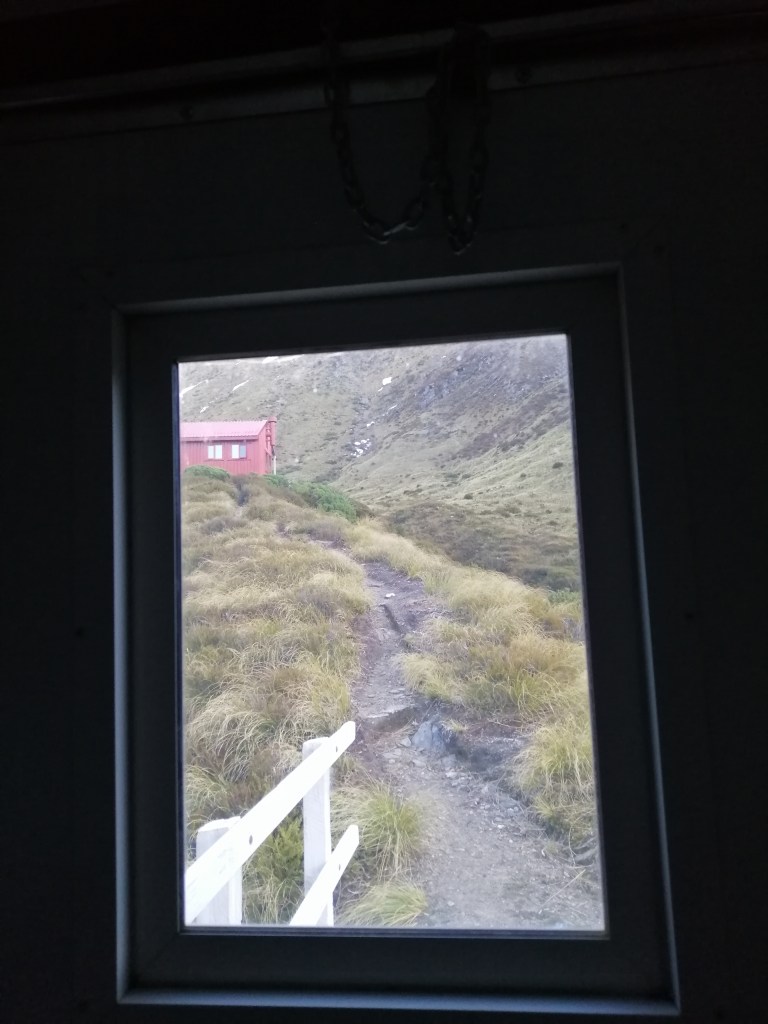


Without realising, I could hear waterfall crashing over boulders. Through the trees, I could make out the grassy flat valley below. We decided to have some lunch under the tree canopy and away from the dreaded sandflies in the valley. We met two men planning to get to Mt Aspiring summit by day’s end. They waited patiently for us to pass as it is generally a one-way track. I admired their humbleness. The weather is expected to turn into rain the following day. Hence, their reason to attempt today. I would not be coming up here if rain was expected. Could be quite a treacherous hike. Finally, at 1230 we reached the suspension bridge over Liverpool Stream on the valley floor. It was easier than I had anticipated. Even, the two other ‘dangerous’ sections were a non-event. It was a relief nevertheless. Now, perhaps, dared to consider French Ridge Hut next!

Now, it was a long hard slog back to Raspberry Creek Carpark under a scorching sun. Fortunately it was a gradual decline. We immediately refilled our water bottles in the streams. The waterfall along the way looked inviting. However, we carried on down the familiar valley. Now, turning back, I was able to spot Liverpool Hut. The many streams we forded yesterday seem to have higher volumes of water. We arrived at Aispiring Hut at 2pm. After a short rest, we continued out of the valley. A cool breeze helped a little. It was a relief to spot the suspension bridge leading towards Rob Roy Glacier. We finally reached the car park at 4pm. I was quite dehydrated.


Summary
Liverpool Hut Track is a fantastic 2 days track but certainly not suggested for inexperienced hikers. The images don’t really show the difficulty, especially the steepness of the climb. Fitness is valuable as with familiarity with avalanche and river crossings. I would highly recommend this track to those seeking isolation, a challenging 1.5km climb in a stunning location surrounded by hanging glaciers.
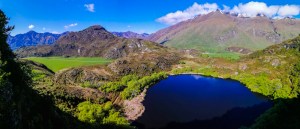
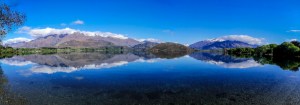 The scenic ride continued into Matukituki Valley. The road is hemmed between mountains, pastoral land with views of Lake Wanaka. The starting point of Rocky Mountain Hike is at Diamond Lake Conservation Area. (Refer to DoC for more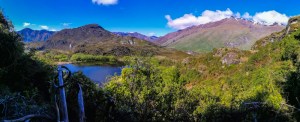
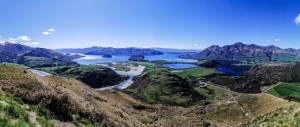
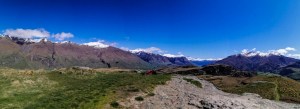
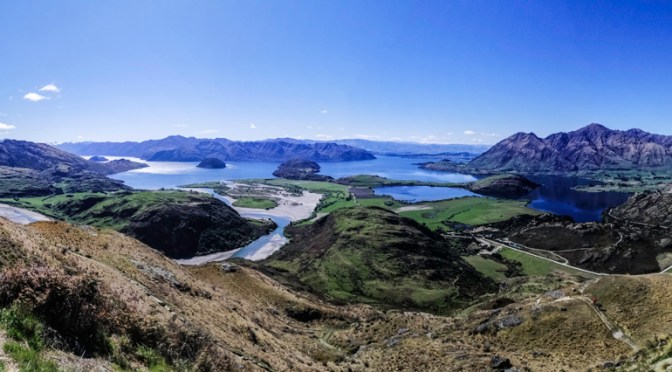
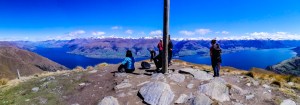
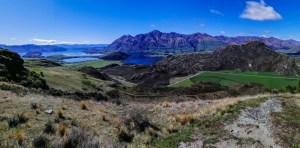 The summit of Rocky Mountain is flat with a collection of rocks. On the east, great views of stunning Lake Wanaka, islands dotted around in the lakes, tail end of Matukituki River which drained into the lake and the mountains beyond. The climb is worth just for the expansive and spectacular views.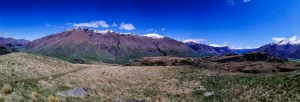
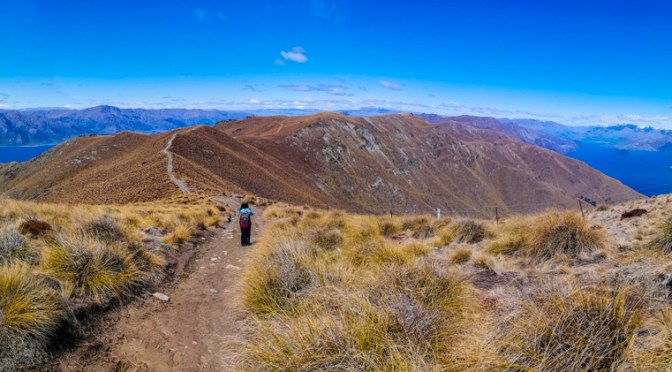
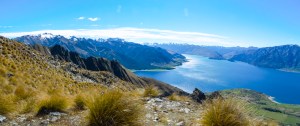
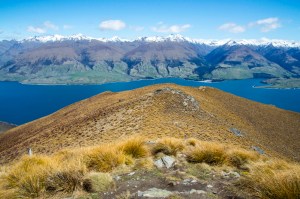
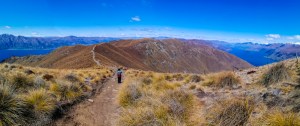
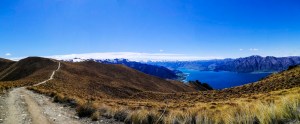 Isthmus Peak Track (16km) is in the Matatiaho Conservation Area. The track is closed from 20 November till 20 December. No booking is required for this day hike. We started the hike at 0930. The initial part of the track is climbing over a rocky terrain and passing foraging sheep and cattle. The views off Lake Hawea were stunning against the blue sky. The hike continue uphill through grassland. After 1.5 hours, the track is narrow with loose gravel cut along the slope of the mountain. The track zig zags up hugging the slope and in places with precipitous drops. Tussock grasses dominate this open landscape. It is exposed and can be very hot like today. Water (refilling) is not available and therefore it is essential to bring your own. This is an alpine area and strong wind and cold conditions can occur at any time. Some area are prone to avalanches when the mountains are covered in snow.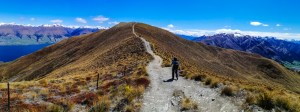
 Intrepid Nomad - Travel Tales and Stories