We arrived at the Temple of Heaven complex by train which is conveniently located near the East Gate. The air seemed more polluted than yesterday as the gray sky descended onto the land. A two dimensional image – A great wall of gray! The crowds were mainly Chinese tour groups, with tour leaders waving flags and leading the way. This park is about 270 hectares. I like to say it was a breath of fresh air out of the crowded city, but no. Pollution is not only hazardous to health but depressing too. The cold weather did not help either.
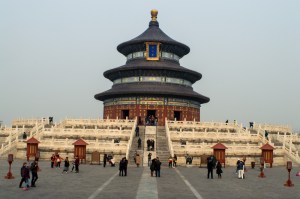
The Temple of Heaven complex was constructed from 1406 to 1420 during the reign of Emperor Yongle. The layout of the architecture and location of structures were in line with both Feng Shui and Orient cosmology. It was once part of the walled Imperial City.
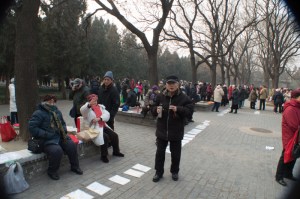
The Seven Star Rocks (seven rock placed on the ground are symbolic of the seven peaks of the Taishan Mountain). Elderly man and women gathered here under tall leafless trees. Initially, I thought they were dancing or having a chat. I soon noticed sheets of paper on the ground. Some with pictures of young man and women with specifications like height, age, academic qualifications, occupation and so on. This is a non-digital match-making site. Some people were unhappy with my intrusion but soon ignored as the realized that I was just a foreigner passing through. This is serious business judging from the intense but quiet discussions and scrutiny of the documents. With China modernizing rapidly and young people chasing their dreams of better lives, there is little time to ponder about romance and marriage. A girl over 28 years old is considered ‘old’. This is further divided between educated and non-educated; rural and urban young people. There are actually eight rocks, the last one added by Emperor Qinlong.
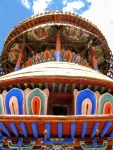
Hazy view of the Hall of Prayer for Good Harvest appeared at the end of a long corridor with many doors. The locals gathered here for a chat, play chess and card games. It was quite social and people seemed relaxed and enjoying the moment. Through a gate, we entered the Hall of Prayer for Good Harvest complex. Even though it was hazy, the elevated circular Hall was impressive with vivid colors. Two buildings on either side balanced the complex. Three circular tiers made from marble complete with balustrades and railings is the base for the 32m circular and colorful Hall. In the middle of the stairway is a wonderful marble engraving of clouds, dragons and phoenixes. It was very regal. The majestic Hall is made entirely from wood with no beams, crossbeams or nails. The upper surface is decorated with blue glazed tiles, inter-painted with red and yellow. The top of the structure is crowned with a gilded ball. I squeezed past the crowded entrance to get a glimpse of the interior. It was very impressive indeed. Massive pillars painted red and decorated with dragons, phoenix and paintings supported three layers of richly decorated web-like ceilings.
This Hall of Prayer for Good Harvest is significant as the “Sons of Heaven’, the Chinese Emperors came to worship the Heavens’ for a good harvest at winter solstice. Sacrifices are also made here to please the heavens. The structures and arrangements are precise – The circular hall on a square base symbolizing heaven and earth respectively. This is perhaps the Chinese axis-mundi, center of earth!
Further north is the Echo Wall. An interesting structure with three buildings. A circular wall built around this complex echo’s every word to the opposite side of the wall. It helps when it is less crowded. It really works. Excitement as well as amazement showed on the faces of those whom participated.
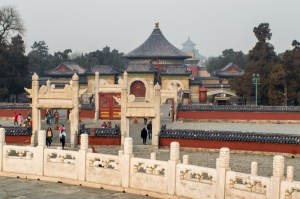
At the southern end of the temple complex is the Circular Altar built on three tiers – representing Earth, the mortal world and heaven. Each platform is decorated with marble dragon carved guard rails. At the center is a flat rounded stone, Heart of Heaven. I stood on this stone and uttered these words – let there be peace in the world. I was astonished that the sound reflected off the guard rails created an enhanced resonance. Amazing!
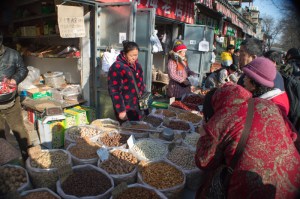
Pines and cypress occupied large parts of the garden. In one building, elderly ladies, dressed in colorful costumes, danced to some lovely music. We finally exited through the West Gate. Just outside the exit are hutongs. On one streets, a busy market was in full swing selling an assortment of food items including dried fruits and nuts, and pastries. A must visit site in Beijing.










































































 Intrepid Nomad - Travel Tales and Stories