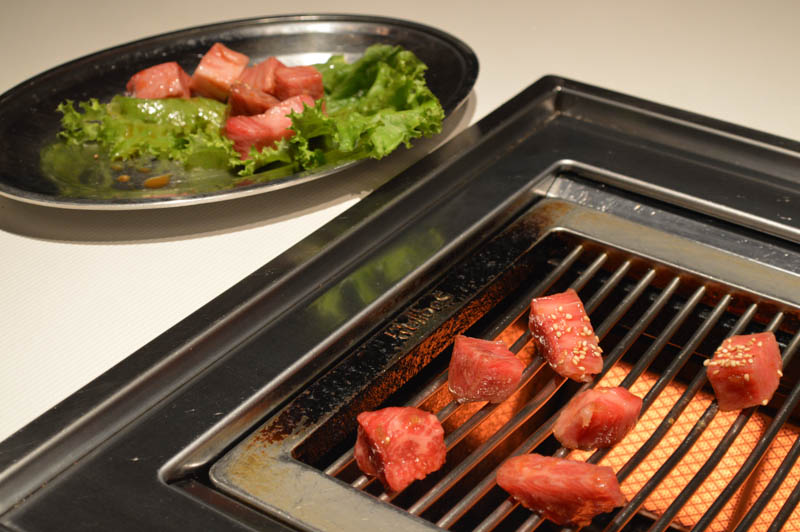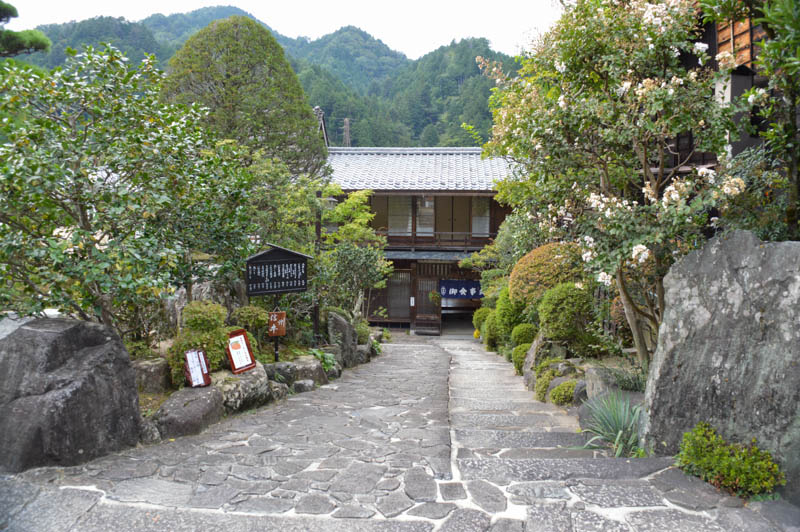
Tsumago, Old Nakasendo Highway, Kiso Valley – 2

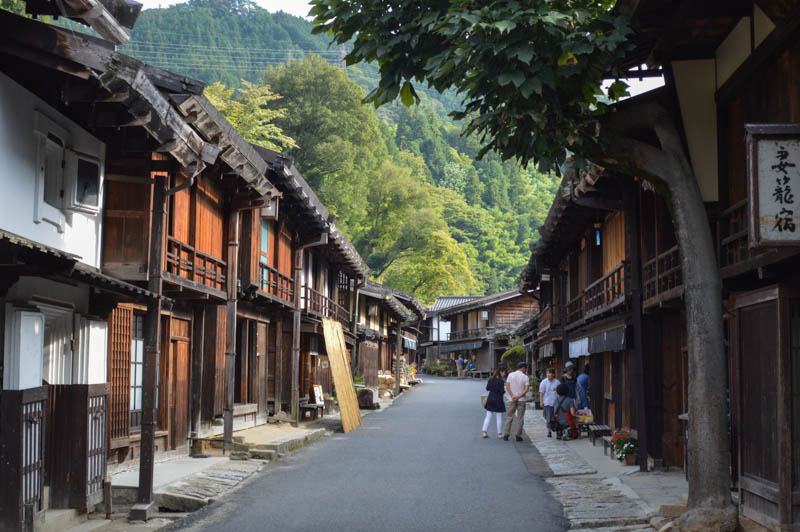
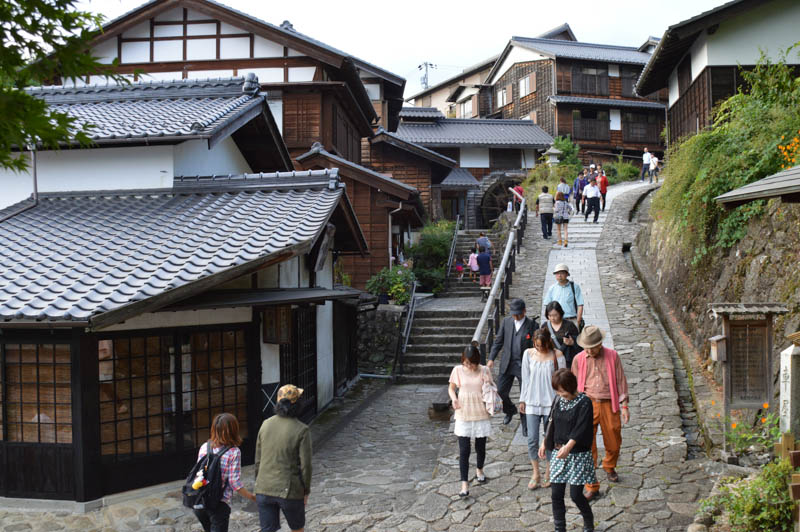
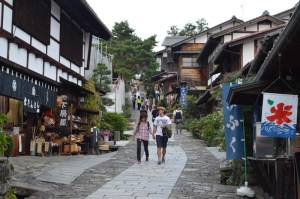
untitled-358 untitled-357 untitled-352untitled-351On the northern end of the lovely hamlet village, in Terashita area, two wonderfully restored rows of wooden houses led towards the dense bamboo and forested mountain. All the dwellings were restored to the old construction styles of the period. It is wonderfully serene. We stopped a shop and contemplated at a “mochi” display. We were advised that dinner at our ryokan was big. A man walked door to door with a flat box filled with bread. Large bamboo mats were sometimes laid out in the sun to dry. When a breeze came in, soothing sounds from wind chimes hung above the doors enhanced the ambiance of this charming place.

untitled-355I am glad that we ventured to this part of Japan. Kiso Valley, surrounded by lush forested mountains and beautifully preserved post towns of Tsumago and Magome, is certainly a slip back in time. I could easily imagine the days of the immaculate shogun and sword wielding samurais trudged to the Honjins and Waki- honjins through these very streets. Although it is geared for tourism, it provided an opportunity for people, tourist and locals alike, to ruminate historic moments in this living museums.

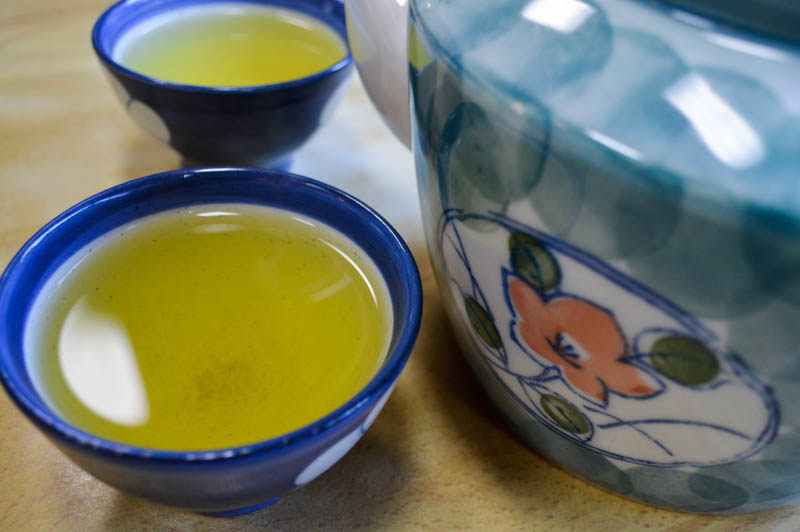
We retired to our ryokan for a deserved rest and to reflect our walk and these wonderfully preserved towns of Old Japan over cups of hot green tea.

Tsumago, Old Nakasendo Highway, Kiso Valley – 1

We passed a concrete bridge over a slow flowing river. As we entered Tsumago, in Nagano Prefecture, we were greeted with wide asphalt roads with a few vehicles on it. No vehicles were allowed during the daytime. There were hardly any “tourists”. Perhaps it was a Monday. We made our way into town and eventually located the Tourist Office. We collected our bags and I handed over the bell that I had obtained at Magome. Now where is our accommodation?

untitled-346

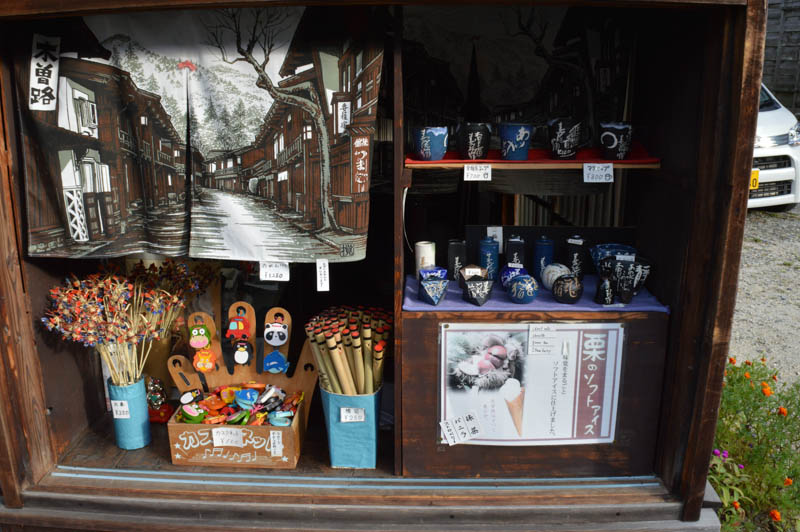
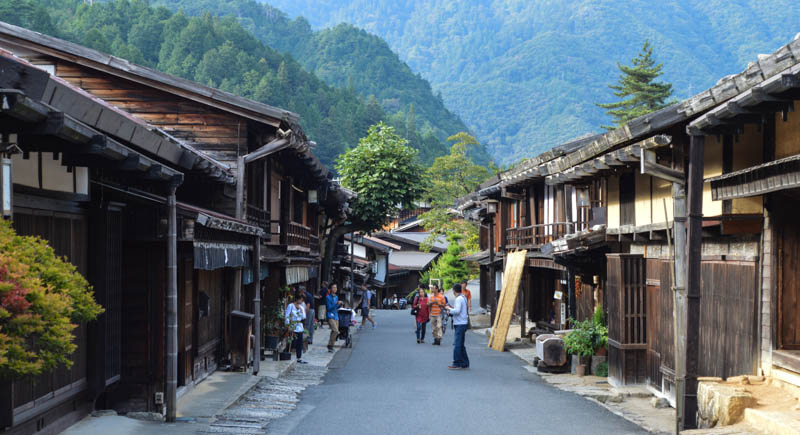
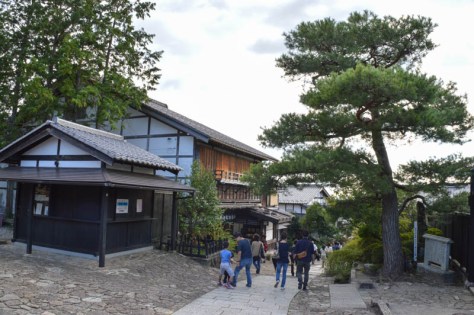
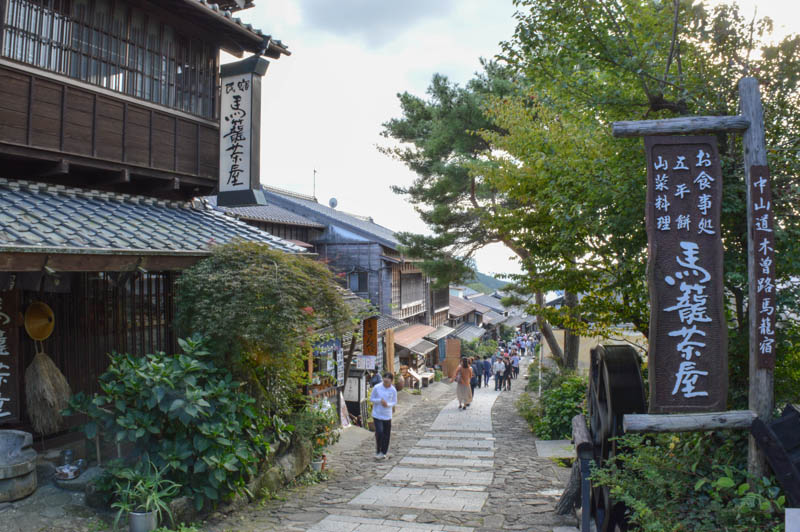
untitled-345 untitled-361In Tsumago, we decided to stay at Fujioto, a ryokan or a typical Japanese inn, the most upmarket of all our accommodations in Japan. We planned to try out the various types of lodging on offer – hostels, “minshuku”, hotels and a “ryokan”. The locals are always helpful and directed us to the right place. Tsumago, in comparison to Magome, had a more authentic village atmosphere and experience. The main street, led us towards two rows of rustic dark wood double storey houses with sliding doors, wooden rain gutters and narrow balconies on the second floor. Indigo and white “noren”, cloth hung at the entrance of shops advertised their wares. Potted plants and a big sculptured broadleaf tree highlighted the deep dark brown of the wood. Further beyond, a dense mountain rose above the village.

Our ryokan was set in a lovely manicured garden with a koi pond several meters off the road. A stone pathway led us down to the entrance. We were greeted by the rather excited staff. This is our only planned ryokan experience. This conscious decision was the cost!

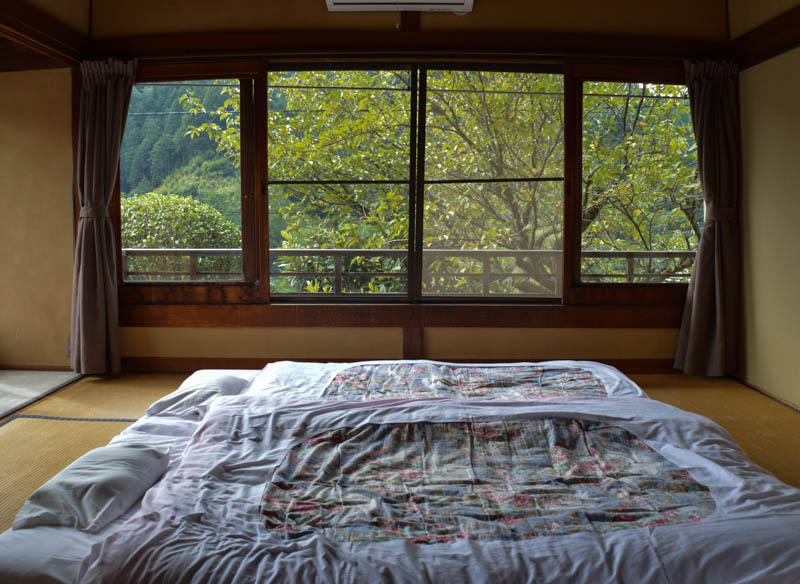
In our spacious room with a great view of the garden and mountains, we relaxed and sipped green tea. Later, we walked up the street and enjoyed the slow walk past inns, restaurants and gift shops. Through a back street alley, we emerged in a bright golden rice field. We soon discovered that something was lurking underneath. People smiled as we passed on the street. On a hill, we visited a temple. The vistas of the village below were attractive. Smells of hot buns wafted through the humid afternoon air. An elderly man was baking bread buns in a traditional fireplace with an assortment of filling, mostly sweet. It was light and tasty. There is certainly a homely feel to this place.

People, The Japanese

untitled-145  Nihonjin, as the Japanese people are called. My first introduction of Japanese is through the media with movies like Ultraman and additive TV cartoons characters. Then, in school, ploughed through history and geography books. As I grew up, the horror stories of WW11, more books and through interaction during my travels. With this basic understanding, I was not ready for the real thing in Japan. A worker stayed in the same employment till retiring and his son continues in the same company – obliging and subservient to employer and country. That was my early thoughts. At first glance, they looked homogeneous.

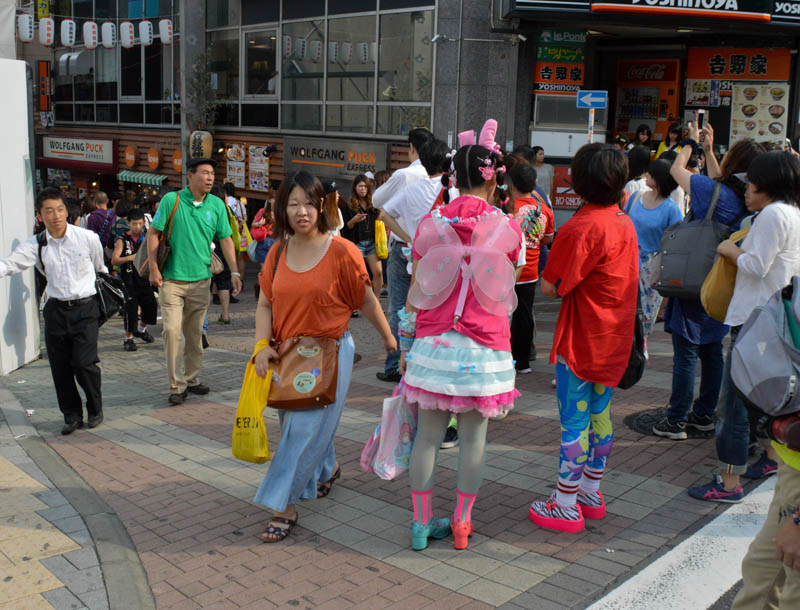
untitled-70My first meaningful interaction was at our Tokyo hotel. Modesty prevailed, followed by: accommodating, respectful, hardworking and easy to smile. Perhaps those in the travel or tourist industry might be obliged, you might think, but in fact, I found these attributes widespread throughout the society. They were always helpful and courteous; on the streets, train stations and even at eateries. Mind you, most Japanese speak very little English. One of the highlights, daunting perhaps, is to “communicate” in restaurants, with no English menu or speaker! Words, pictures and hand pointing at other people’s dishes, help breakdown the barrier and enhanced the experience with the locals. Not forgetting the million dollar “blank, question mark faces”. When the food arrived, we gave a thumbs up, their faces lit up, priceless. Although the cities are crowded as in major train stations, the noise level is surprising low. In trains, people with cell phones spoke discretely and mostly with ear plugs. Being considerate is a culture. Cleanliness, both in appearance and environment, is untitled-40profound here in Japan. The conservative Japan is intertwined with ultra- modern, in places like Harajuku – where young girls in particular, imitate their popular anime or manga characters. Bright, bold, and colourful, yet someway conservative in demeanour – mellow. People are mistakenly looked as shy, but basically, they hold back due to lack of ability to communicate in English. “Broken language” by “gaijin”, foreigner is blissful. It makes people acknowledge each other and their presences felt. It does bring out at least a smile.
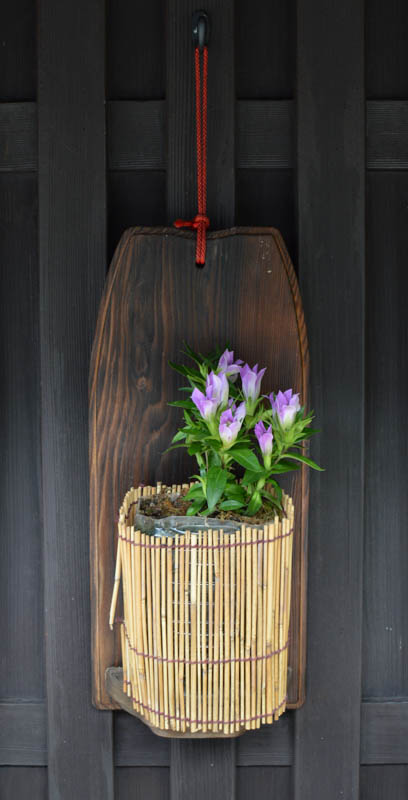
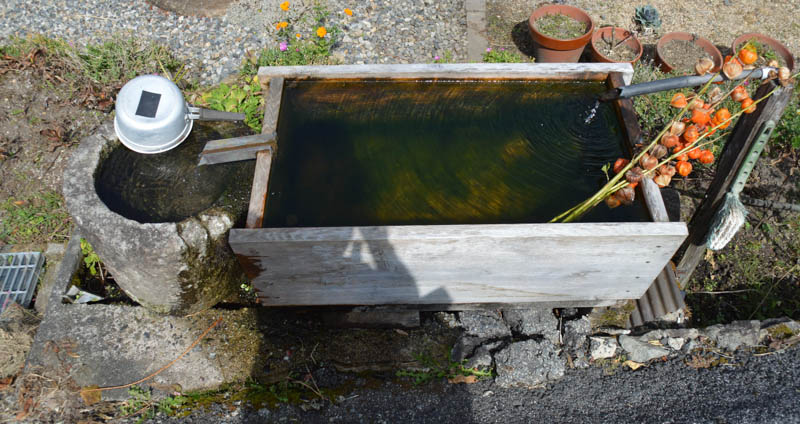
In a Kyōto public bus, as we disembarked, everyone seemed to have the right amount of change, except yours truly. I gave the driver a rather large bill to cover our cost. He took it, returned the change, put the amount owed into the box and bid us “arigatou gozaimasu”, thank you. All the passengers behind us, waited patiently, with no negative emotions. The bus driver, in fact, greeted to every disembarking passengers. I think it is beyond work ethics but embedded culturally. This was the norm in all the people we met – in trains, train stations, restaurants, streets, “onsen”, temples, hotels, etc. People queue everywhere – to alight into a bus or train, restaurants, entrance at sigh-seeing places, etc. Conforming is norm. At train stations, people don’t go on board the train, even when the doors are open and no exiting passengers, until announced. Emotions seemed “reserved” but when given is genuine. There will be exceptions to the norm, like everything and everywhere else. Then, there is the endless bowing, nearly everywhere. At our hotel in Tokyo, we had just returned from dinner. One staff rushed to press the lift button. We went in and turned around and noticed that she and her colleague behind the counter were bowed. We reciprocated for a moment. They were still bowing. As the door closed, we bowed again, not knowing the norm. Both these girls kept bowing until the lift door shut completely! The remarkable Japanese people had been one of the major highlight of our journey.

Old Nakasendo Highway trek, Kiso Valley – 2

untitled-316 untitled-319 untitled-320It is hard to get lost on this trail as wooden markers are embedded into the ground intermittently along the trail. It indicated direction and distance. We walked through a picturesque village set in a valley with a few homes but seemed devoid of people. No sound of chatting or music. Only birds’ chirping and rustling of leaves. Perhaps they are out working in the nearby fields. Corn and other tubers on bamboo trays were left to dry in the sun. Wooden horse cart wheels lay leaned against rustic brick walls. Near a water trough, a few stem of an orange inflorescences was left to dry in the sun. I had seen these several times along this trek – sometimes hung on windows. This place seemed distant to the neon lit cites not too far away. A single female Japanese trekker walked past us with a lovely smile. We basically walked alone on this trek today. Signs of life, a fruit orchard emerged. The trek continued and sometimes along little streams. This made the walk pleasant although humid. It was great and a relief not lugging our luggage on our backs. Kudos to the luggage transfer service.

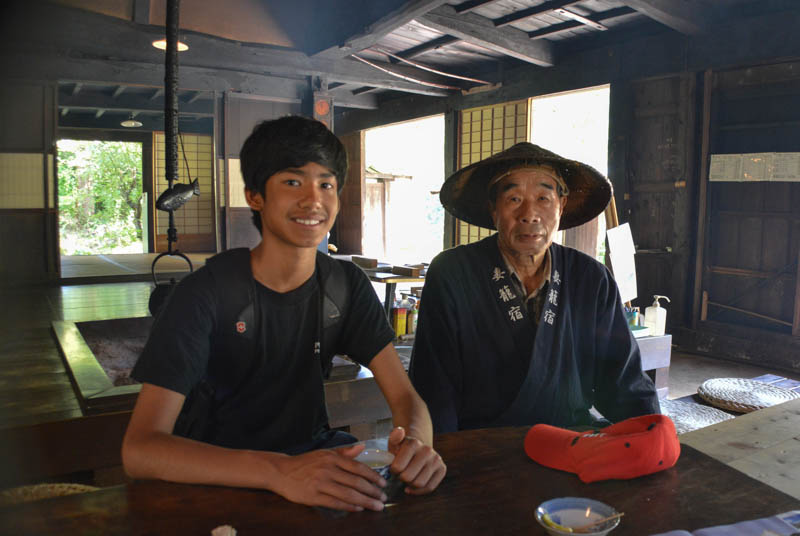
“Hi my name is Suzuki. I drive a Suzuki car”, said this small elderly but affirmable man dressed in a Jinbei and straw hat.

“He was very kind and friendly……..Then, he wished us luck and we once again plunged into the forest”  – Navindd

untitled-323 DSC_0973 untitled-321

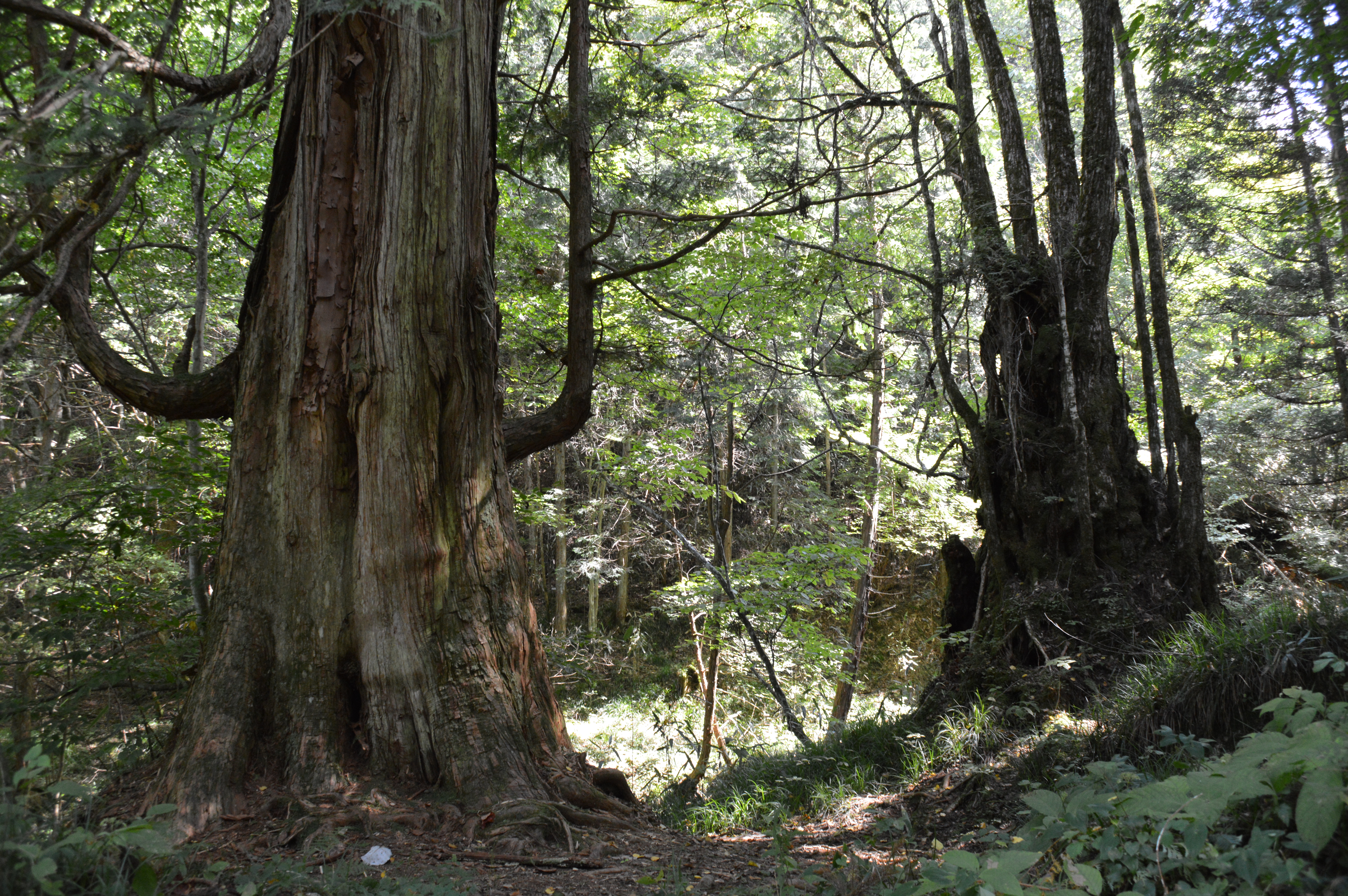
Just below the pass, we were greeted by Mr Suzuki, whom was the care taker of an old inn. He invited us for some tea, fresh fruits and sweets. The wooden house was spacious and had an old fire place, “iorii” with a rusted pot hung above it. Typically it had a fish symbol on it. We bid farewell and descended further into a densely forested area. Thoughts of bears had vanished. Some of the trees seemed old with impressive buttress roots spreading out.

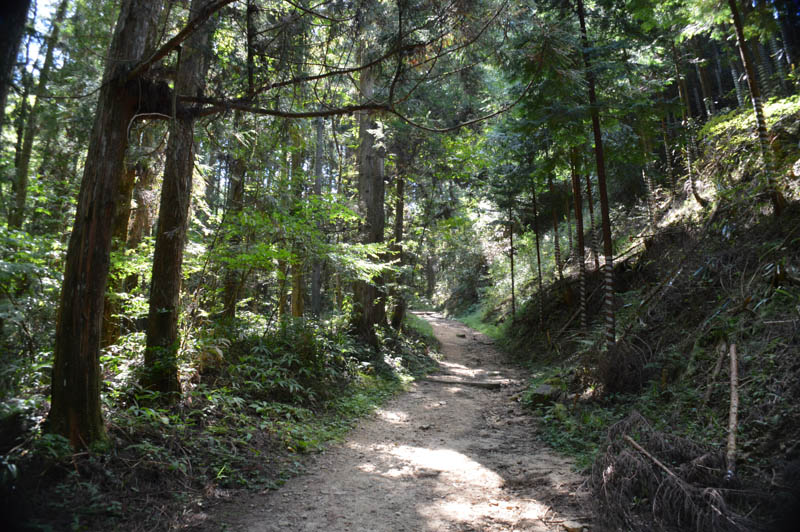
The flora became more diverse with broadleaf plants. A roar drowned the sounds of rustling leaves. The path led to two waterfalls, O-dake and Me-dake. The coolness of the forest here was like an elixir. Ferns covered parts of the ground. Shafts of light filtered through the forest canopy heightened the natural beauty of the forest. Eventually, after about four hours of trekking, the forest cleared and we entered Tsumago, another prosperous and preserved post town. It was a nostalgic walk, at places the original path, on a piece of Japan’s historic highways of a bygone era.

“Sitting at the base of a huge waterfall felt refreshing and very cooling……the cool water droplets dabbling our faces made us feel fresh……” – Navindd

untitled-329

Old Nakasendo Highway trek, Kiso Valley – 1

untitled-318 untitled-317

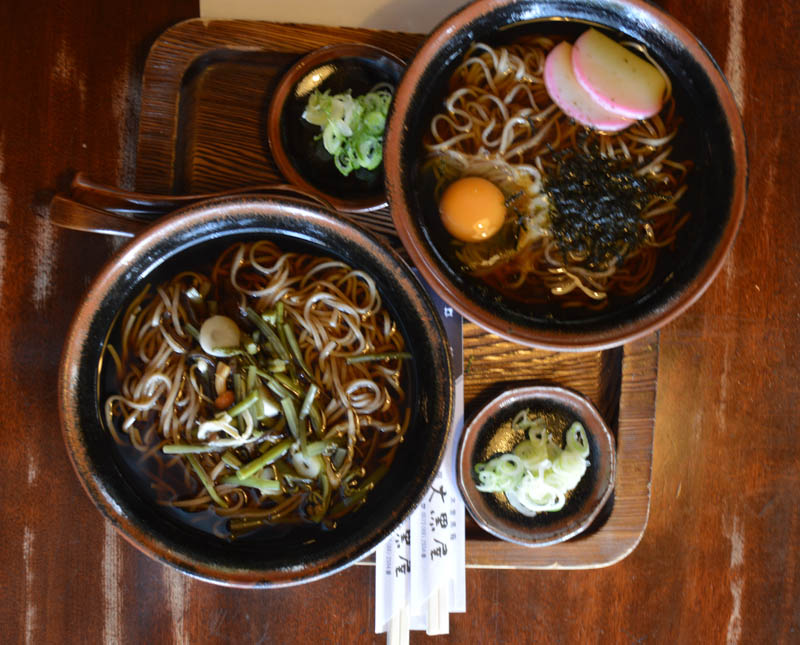
The first thing we did this morning was to haul our luggage up on the steep path to the Tourist Office. They, for a small fee, would transfer our luggage to Tsumago as we embarked on our 8km walk on the old Nakasendo Highway. That done, we headed to a small noodle shop for breakfast. The smells of miso and soba noodles were enough to get us excited. To complement the noodles, I tried the sweet potato porridge with red beans.

untitled-289

After that sugar fix, I was ready for the hike. During the Shogunate period, all were required to walk on the designated paths to control movements. Other that walking by foot, horses and palanquins or sedan carts were used. We climbed to the top of the town and began our 8km walk. Eventually we entered a densely forested area. We passed young trees on the mountain slope wrapped in silver tape. I wondered why? During the early days, felling of trees meant severe punishment. A dirt path wound round the mountain slope. The walk itself was not demanding. At certain stretches of the walk, the stone pathway gave way to asphalt roads only to be re – connected. Therefore, it was still very pleasant to walk.

DSC_0972untitled-322

Cedar and Japanese Cypress, like sentinels, stood tall and the dense canopy restricted light from penetrating to the ground. One of the unique signage here was about the bears. “Ring bell hard against bears”. Shiny brass bells had been installed intermittently along the way to scare bears that might be wandering nearby. A shopkeeper in Magome did mention an incident not too long ago. No bears were sighted. Nevertheless we rang the bell hard! In Magome, I had obtained a small bell from the Tourist Office, tied onto my daypack, for the same reason.

A shopkeeper mentioned that there was an incursion in town not too long ago. Finally, we reached the top of Magome- tōge [pass] at an elevation of 800m. From here, the trail was downhill.

“I wondered how on earth people could take this entire pathway from Kyoto all the way to Edo (Tokyo) just on a horse. It would take weeks!” – Navindd

“The forest was dense but the pathway carved through it easily”  – Navindd

Magome, Old Nakasendo Highway – 2

untitled-299 untitled-297 untitled-296 untitled-288 untitled-287

We were earlier advised by our host that dinner is big. We limited our snacking habits. As dusk approached, visitor numbers’ thinned. It also became cooler. It was much more pleasant to walk. However, the shopkeepers were also closing down their shops to head home. I thought it was still early. This is typical. Dinner arrangements are best made with the inn for the night. We were already discussing what was in store at our place. Tour bus queued on the main trunk roads as visitors were ushered in. As the sun set over bamboo grooves, the surroundings became quiet. Then nearby mountains were now hazy. Sounds of gushing water and rustling leaves merged with bird songs and clacking of shopkeepers shutting the doors resonated in this old town. Roadside lanterns were lit. The sight was ambient.

“Ice cream in Japan was very standard….same price, same flavour…soft serve cones” – Navindd

untitled-314

After a long warm shower, we headed to our restaurant across the inn. Dinner was already in progress and the wonderful aroma of herbs and sauces filled the still cool air. There was a hive of activity. The table was filling up with all sorts of mouth- watering delicacies. Salted local trout, an array of pickles, assorted vegetable tempuras, sweet bubbling soup with local mushrooms, soft tofu, miso and sweet “gohei-mochi”. It was indeed a big dinner. Earlier, our host suggested that we only took two orders instead of three. Even this, we barely managed to finish. It was, however, a delicious meal. Horse meat is also on the menu if desired.

In the quiet of the night, we strolled on the street. A nostalgic feeling of was inevitable. The thought that, once, horses trotted heavily on the stone paved roads; samurais’ with ornate apparels striding along these same roads; and locals trying to attract travellers to buy their wares, flooded through. I felt privileged to have walked the same places samurais and feudal lords had done so centuries ago. Magome is indeed a wonderfully restored living museum piece. We retired early in our comfortable room in preparation for the long walk the next day.

“After the dinner, we were well and truly stuffed, even though we shared two meals between the three of us. At night, Magome was a ghost town with not a soul in sight….” – Navindd

Magome, Old Nakasendo Highway

untitled-298  untitled-290untitled-302

From Takayama , we headed back to Nagoya and caught an onward train to Nakatsugawa. Train journeys here in Japan is a delight. Food parcels from the train stations, ample leg room and hardly any noise from people. The sound of the iron wheels rolling over the rusty track is very soothing. From Nakatsugawa, we caught a local bus to a sleepy town of Magome. We now entered Kiso Valley, located in Nagano Prefecture and runs along the Central Alps. This is one of the few preserved towns, of the 69 so called ‘post-towns’, along the historic Nakasendo Highway. Before this highway was established, a shorter route was called Kisoji. Later, this network extended and was one of the five links between Edo (political capital) and then imperial capital Kyōto and was called Nakasendo [means – path through mountains] during the Shogunate period. They were mainly used by Samurais, merchants and feudal officials. The bus passed through golden rice fields weaving its way through the lush green mountains.

untitled-304untitled-286

When we arrived in the late afternoon, the small town was not sleepy at all. In contrast, it was packed with people and came with all the attributes of a tourist town. Past the pedestrian’s only cobblestone pathway, the beauty of this preserved township emerged. Rustic wooden houses set on stone foundations lined on either side of a steep winding road, lattice doors and windows and surrounded by great mountains views. The entrance to this old post town is marked by a big water wheel. On a steep uphill walk, shops displayed all kind of gift items, aromatic food, local wooden handicrafts and more. It was refreshing to hear sound of gushing water beneath the paved street as water flowed through the channels. Green foliage and flowering plants accentuated the road side appeal together with sculptured pines.

Our stay tonight was in a “Chaya”, teahouse or inn. Our host greeted us and led us to our abode. Futon bedding on tatami- mat floors had already been laid out. An elderly woman in kimono gingerly walked around the corridor tidying up the place. There were great views of the mountains including Mt Ena and had an ambient old world charm atmosphere. The owners had a restaurant across the street.

A large water wheel spun rapidly turned by the gushing water. It certainly looks like a by- gone era village though touristy.

“The highway was very old, forged out of cobblestone, used by Samurai on horses” – Navindd

untitled-295 untitled-291

We strolled on the streets with hundreds of people. Telephone and electrical wire were conspicuously missing. At food stalls, there always seem to be a queue. Ice cream stalls included. We wandered to the outskirt of town along rice fields and vegetable gardens. A lone farmer was tending to them meticulously. From a temple, we could see the blue green mountain ranges and the new town- ships surrounded by golden rice fields. The most famous son from Magome is Shimazaki Tōson, a highly regarded figure in Japanese literature. There are a few museums here. At one shed, near the tourist office, I found an old samurai hat and overalls. One of the highlights of travelling within Japan is the sample local delicacies. The dishes may be the same, but each locality had their own flavour. We sampled some grilled rice cakes, “gohei”, steaming sweet buns, pickled beans and nuts.

“The whole of the Kisoji lies in the mountains.” – Toson

Takayama – Miya-gawa morning market

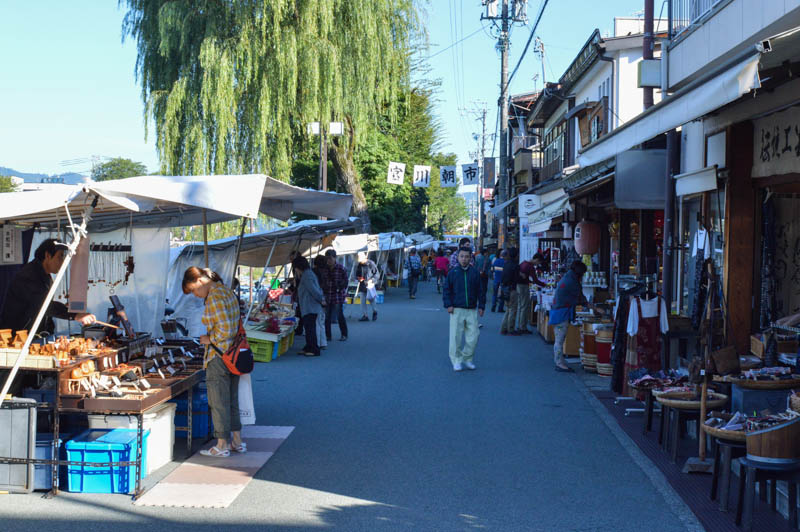
untitled-260 We only managed to stay in Takayama for one night. There are two morning markets, “asaichi” in Takayama. We managed to arrive early at Miya- gawa morning market set beside the Miya-gawa River under cheery trees next to the red Kappabashi Bridge. Although small, it was atmospheric.

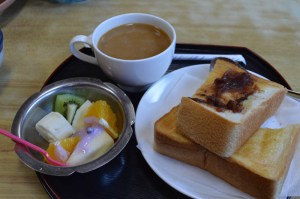
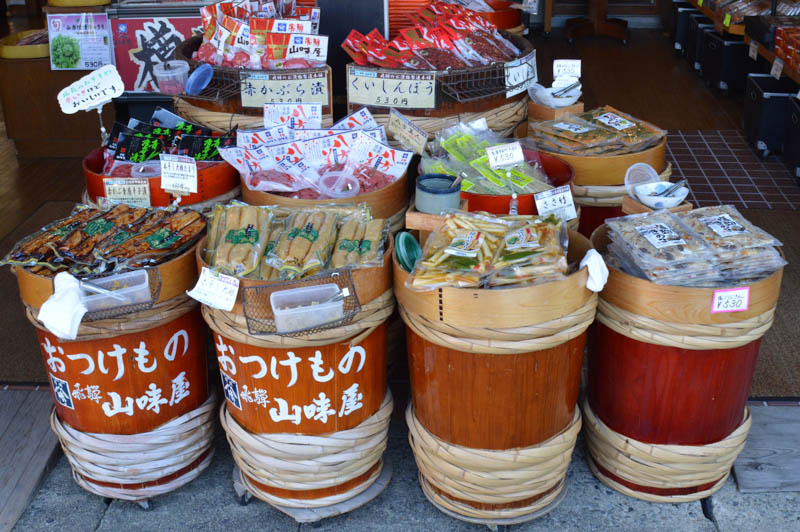
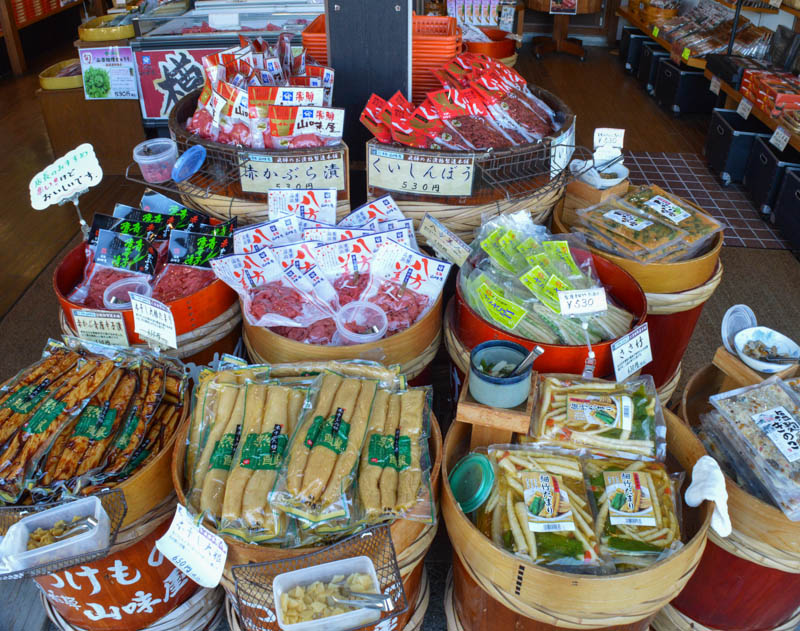
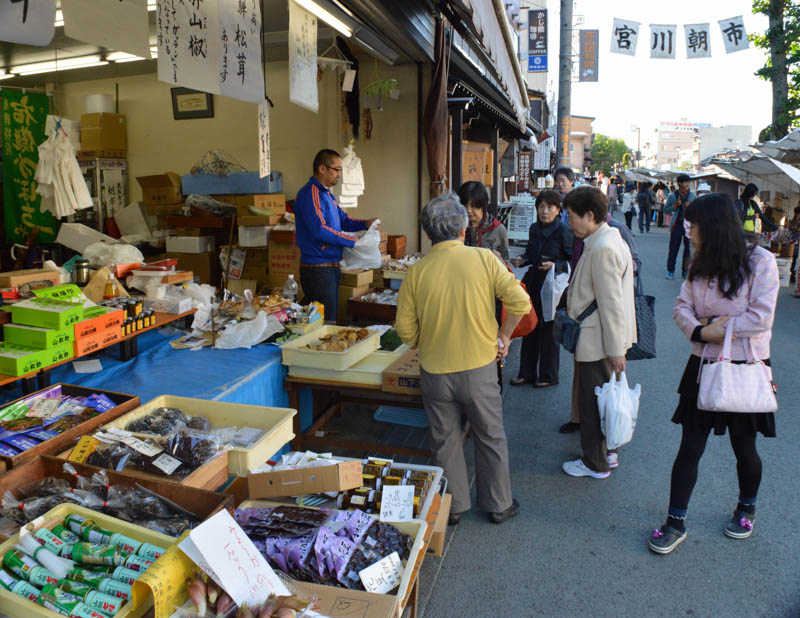
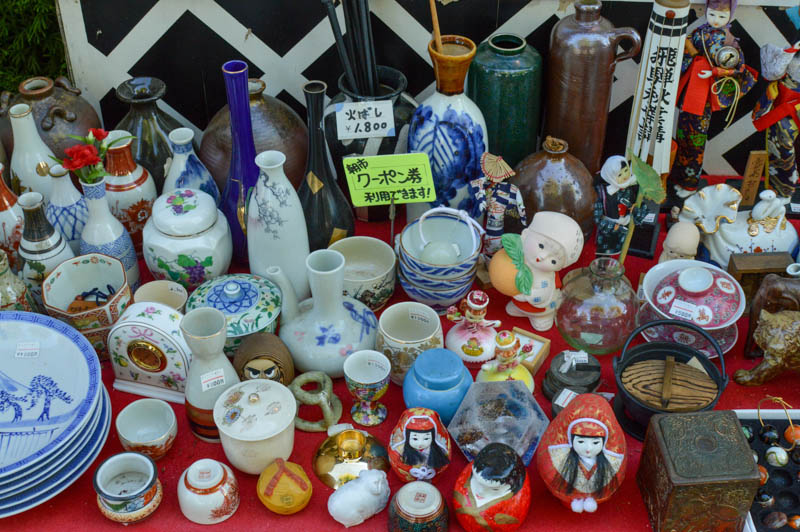
untitled-255The order of the day was to get some breakfast. Somewhere in the middle, I spotted a poster advertising toast bread with coffee and a fruit salad with yogurt. A change from rice and noodles we have had every day. I just enquired to one of the two ladies in the restaurant and waited to find out more before ordering. We waited for quite a while before the lady re- appeared. She vanished again. Soon we found three plates of the breakfast set were laid on the table. Well, she assumed, being foreigners, that’s what we wanted. We just eat without complaint. Then we strolled on the single street in the cool morning air. The sun was already up and the sky blue. This market is basically an artisan market where local producers sold their wares directly to consumers. Some of the produce included fresh vegetables and fruits, handmade crunchy and nutty sweets, a colourful array of cut foliage and flowers, and a variety of handicrafts. My favourite was the assortment of mouth- watering vegetable pickles – made from cucumber, daikon, eggplant, cabbage, carrots and many more.
“A wonderful smell wafted through the air and it turned out to be someone selling Japanese marshmallows. We decided to try them and they tasted very nice and sweet” – Navindd

untitled-264 untitled-268 untitled-261

I loved the small bowls of pickles that accompanied many of our meals. The sweet, sour, vinegary, tangy and salty tastes created a wonderful explosion of flavours and intensity. As we walked around, samples are handed out – try before you buy. It’s a real pick- me up this early in the morning.

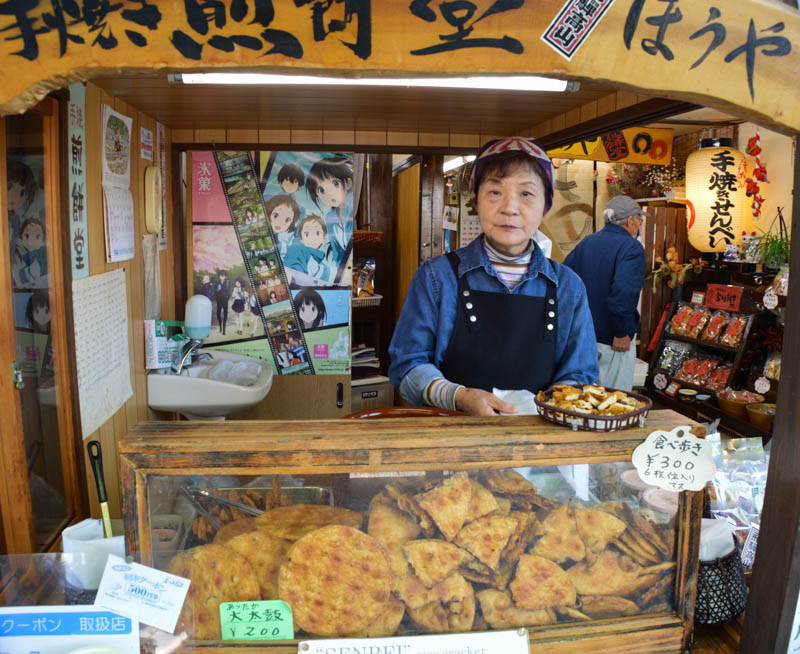
Several stalls offered cooked food. A lovely lady busily prepared the Japanese biscuits – “sanbei”, a cracker toasted with “teriyaki sauce”. A little salty and blend for me. We found these every wherein Japan. We bought some very sweet and crunchy biscuit – like a peanut brittle. The sugar content was enough to get us through the day. The day was turning out to be hot and sunny with blue skies.

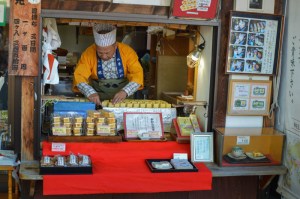
untitled-263There was a small commotion outside a stall. The operator, a small but congenial man had charisma and charm judging by the number of people waiting to buy his steaming yellow puffs. It looked like tofu but tasted like marshmallow. On the stall wall, these words were written –“Owara Tamaten – I pass when it beats an egg white and enter and cut the honey which came to the boil of sugar and agar to a pip after cooling it and soak it in the liquid which added sweet sake to and egg yolk, and it is the Japanese sweet that it is unusual which baked 6”.
untitled-258 untitled-267 untitled-266untitled-269

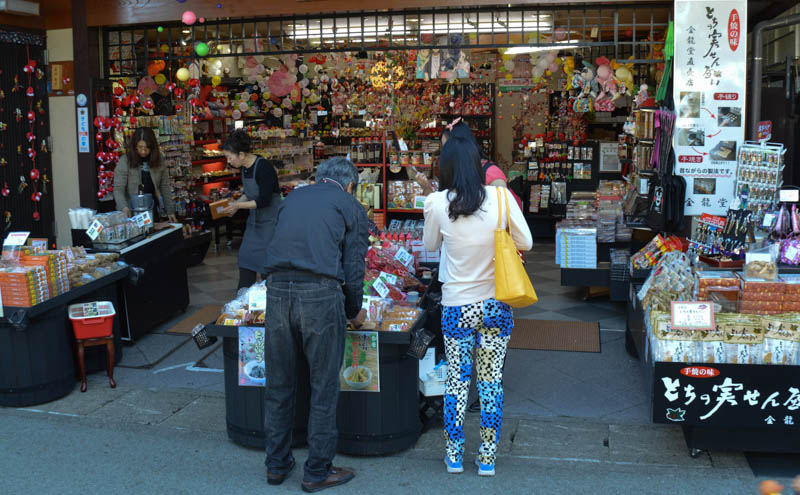
An elderly man, like most local people here, did not speak English. He was a tailor. Typical Japanese clothing of all sizes hung above him as he sat on a low stool on one corner of this small stall. Undisturbed, he continued to sew one of the dresses. We eventually got his attention and purchased a toddler ”Jinbei”, a loose fitting outfit used typically in summer by males. Although the market is small, the atmosphere this morning was relaxed. Browsing from one shop to another was interesting. We tried some custard at a stall. It was delicious. Below, in the clear Miya-gawa River, fishes swam freely as a bird kept a keen eye on the surroundings. Takayama is a perfect place to unwind and soak in some old world charm. It was time for us to head back to the train station for our onward journey to Kiso Valley in Gifu Prefecture.

Takayama – “Shitamachi”

untitled-243 untitled-242 untitled-241 untitled-248 untitled-245 untitled-239

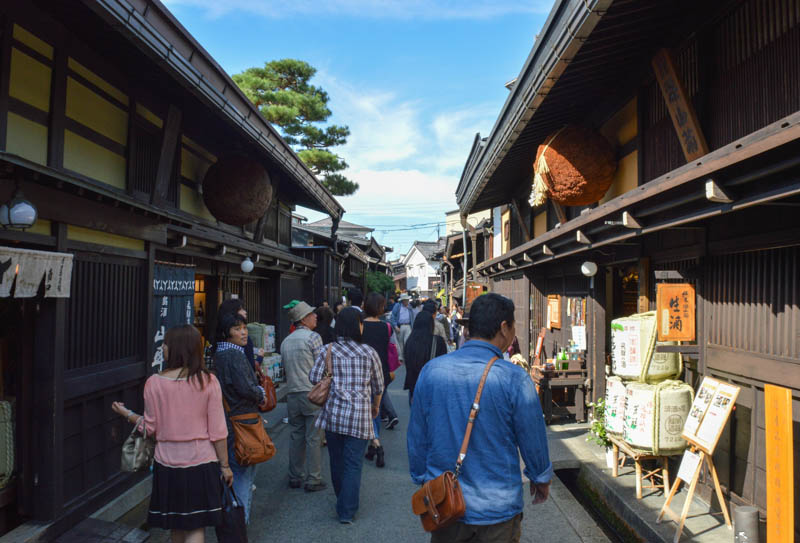
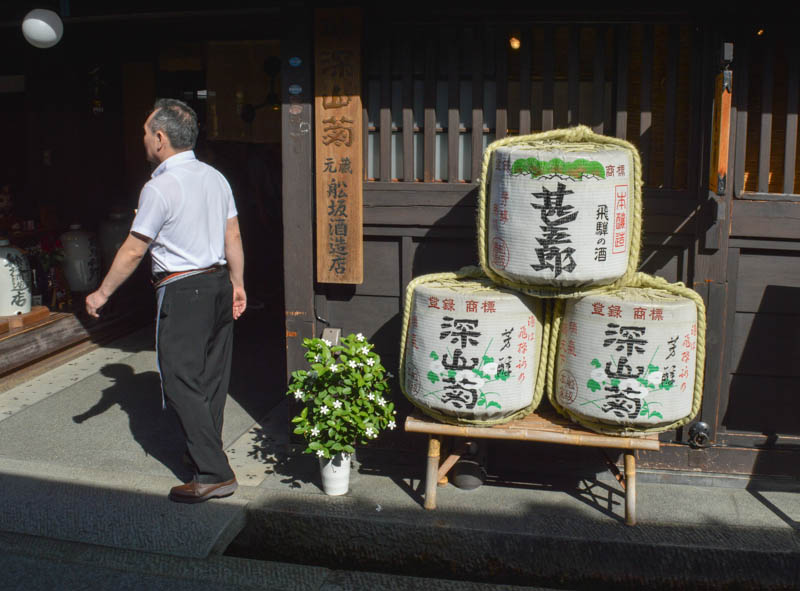
Takayama’s preserved old town, “shitamachi” dates back from the Edo Period [1600 – 1860]. Here, in its crowning days, many wealthy merchants lived here. Some of these homes are now opened to public. The most popular streets are in the south – Sannomachi, Ninomachi, Ichinomachi and Sanmachi. Takayama is also renowned for its high quality sake. Several breweries can be found around this old town. They are easily identified with barrels outside their premises and with a huge cedar ball hung above the door. The smell is also a good give-away. At one, I sampled a few. Traditionally, each serving comes in a small wooden box. Now, glasses are used. I loved the sweet plum sake.

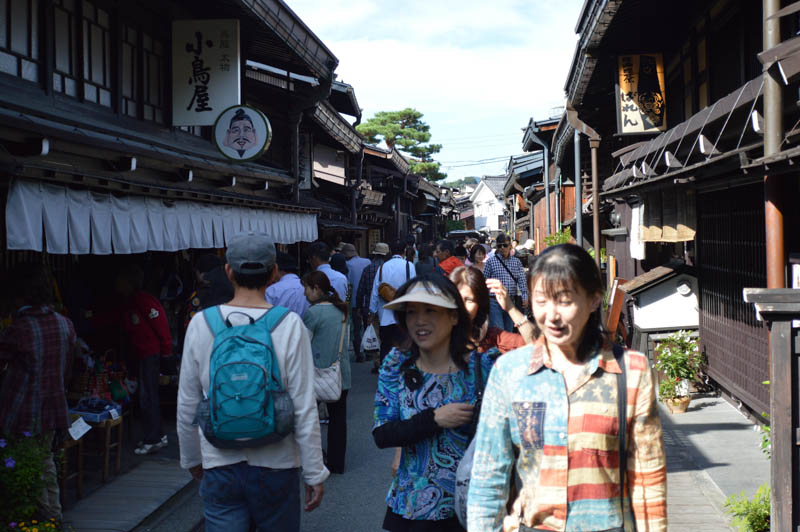
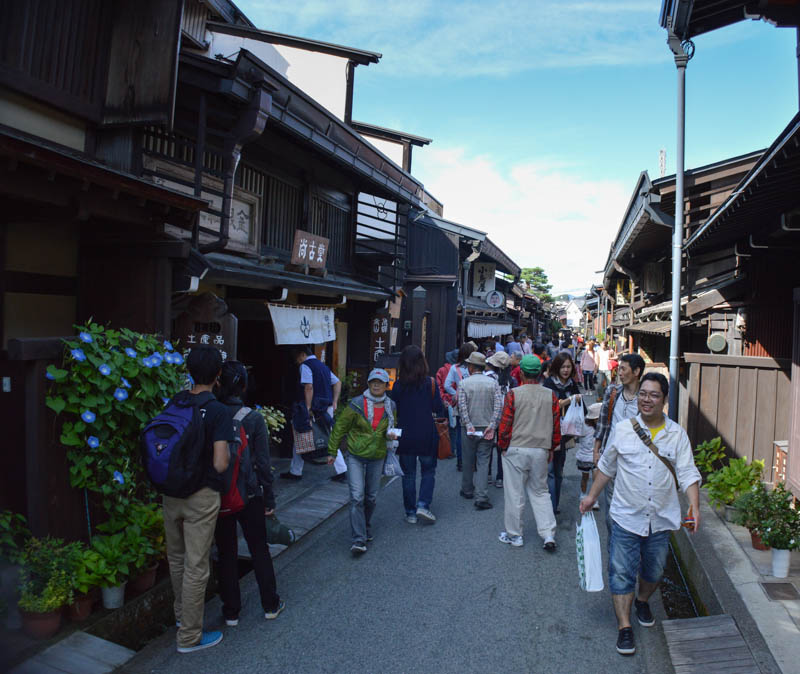
Throngs of people walked in these streets looking through museums, cafes, heritage homes, art and craft shops, and sake breweries amongst others. It is lovely to see ‘old’ Japan as most images of Japan are urbanised areas like neon lit Tokyo and Osaka. During the Edo Period, Takayama was the centre of high quality timber production. This preserved old town is fully made from timber. It has appeal and good feeling as we walked down the streets. Although crowded, it was easy to navigate through. Running water gushed through stone canals that ran parallel to the street and along the houses. Potted plants and climbing purple wisteria flowers add further appeal to this charming place.

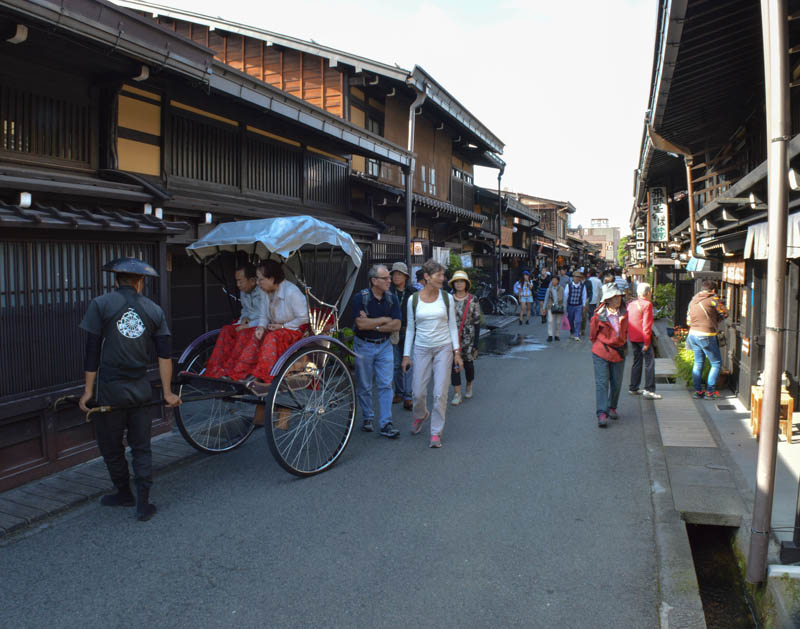
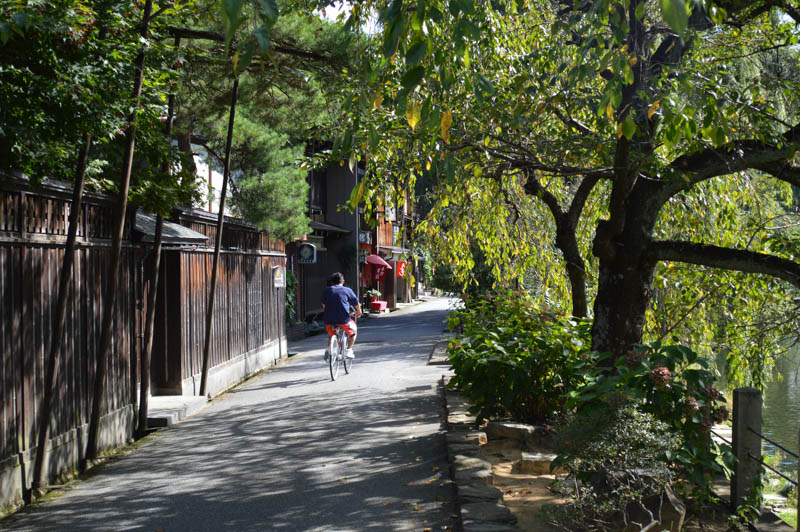
Although touristy, there are places where we could chill out, get some respite from the crowds like today. One such street is off the red Nakabashi Bridge. This street is planted with lovely cherry and willow trees that overlooked the slow flowing Miyagawa River. Small eateries and local handicraft shops are tucked away in this narrow leafy street. There were hardly any tourists here. Wandering these back streets is best done by walking which allowed an intimate experience with the old town. However, another mode of transport popular here is by using a rickshaw. Men and women dressed in black and wide hats hand pulled rickshaws through the historic streets. However, we did not try them.

untitled-246 untitled-244 untitled-252 untitled-249

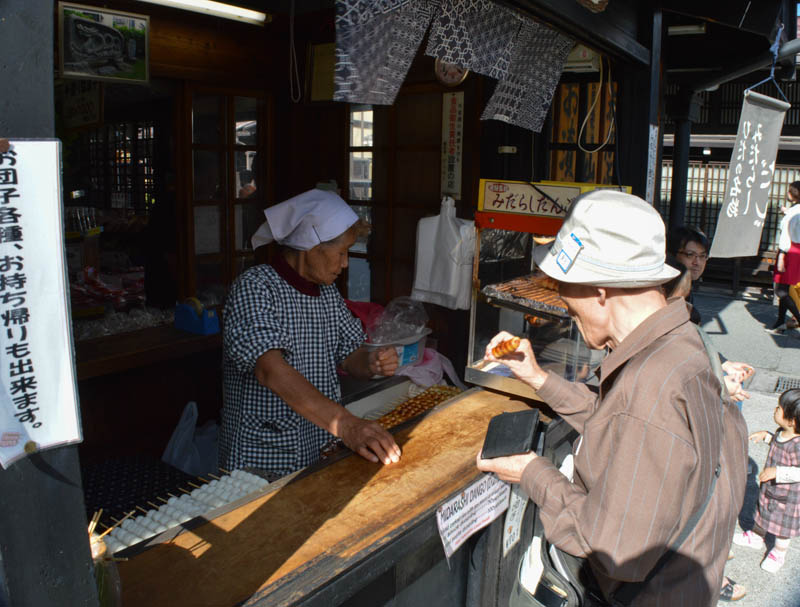
Our stomach was rumbling. On a corner of a busy street, an elderly unassuming woman sold “mitarashii mochi dago”, rice ball on a stick spread with soy sauce. It just fills your stomach. One of the rewards of walking is trying out various foods along the way. There is always something to discover. Ramen was the order for lunch. I passed. The heat escalated and temperatures increased. It was time to retire for the afternoon. Not for me though. Sweet “mochi” waits.

“we were all tired after a huge day……slept soundly on our futon beds on the tatami floors” – Navindd

After a long day’s walk in this hot and humid weather, it was nice to just to sit in a modern art – deco restaurant for dinner. There are many along the main roads. Nearly all specialized in Hida Beef (wagyu) dishes – the signature dish of Takayama. We sipped “macha” tea to drown these lovely dishes. Takayama is certainly not vegetarian friendly although available.

untitled-257 untitled-256 untitled-254

Takayama

DSC_0762untitled-238

It was past midday when we arrived at Takayama. Along the train journey, we passed mainly rural villages and wheat farms. We criss-crossed several slow flowing rivers. Takayama is located in the mountainous Hida Region in Gifu Prefecture. Here, we stayed at a traditional Japanese guesthouse, “Minshuku” where “tatami” mat floors, sliding doors and creaky wooden houses are the norm. It was a very hot day. The town looked quiet and the atmosphere relaxed. For lunch, we stopped at a restaurant where the local speciality is Hida beef. Marbled slices of beef grilled with some teriyaki sauce. Apparently, these animals are fed apples and beer? To get vegetarian meals was tricky. Hot pot, “nabemono” and grilled dishes are popular. I felt like we were in a sauna inside these restaurants. Takayama is known for its preserved old town, sake breweries, festival and its proximity to the Japan Alps.
untitled-250The Miyagawa River intersects the town and the old town lies on the east. Several bridges connect the banks of the river. The most popular is the red Nakabashi Bridge. It is a compact town and walking is the best way to enjoy this slow pace town. This includes the temples, shrines, museums, restaurants, the old neighbourhoods and the preserved old town. However, the weather was hot and humid which made walking demanding. Kids played in the shallow river. Cherry trees lined the banks of the river.

untitled-234The Hida-Kokubunji Temple, the oldest temple in Takayama, was initially built around 760AD. It started with seven tier wooden pagoda but reconstructed during the Edo Period to the current three storeys. The pagoda is visible from our “Minshuku”. Just past the steps at the main hall is gong struck with a long cloth adorned with totems. The interior is intricately carved. However, there were no English explanations. At the open courtyard, a handsome and lush lime green Gingko tree, over 30m tall and estimated to be over 1000 years old, provided shade in this hot day. Buttress roots swirled around its base in a protected area.

Today, the Takayama Jinya is a museum. During the Edo Period, it was the administrative centre for the Hida Region under the Tokugawa Shogunate. It is a large wooden complex with wide “tatami” floor halls, sliding doors and residential places. The inner courtyard has lovely manicured garden and stone walkways. I envied these designs – with pleasing views from inside the hallways. A large annex building acted as a rice storehouse. All made from the priced wood this region was once famous for. Delicately pruned pine trees add an old world appeal.
untitled-235 untitled-236 untitled-237 DSC_0781
This complex is located at the edge of the old town, “sanmachi”. Two lovely women dressed in bright traditional kimono added colour to the brown and white exterior.

Earthbound Travel Stories