Cienfuegos2

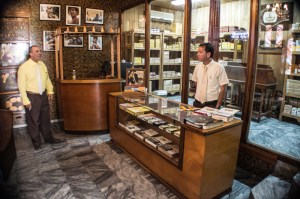
I headed back toward the Parque Marti. At Casa del Tobacco, I asked which is the best cigar? He response was enlightening – the one you like is the best cigar. Some like it strong, mild or light. Cohiba is priced at US$25 each! He invited me to try some but I declined as I don’t smoke. I was probably put off by my late grandfathers affordable local cigars back in Malaysia. Not quite the same experience I presume. I bought some mild Partagas cigars for 4.5CUC each as souvenirs. All came with individual metal screw top containers. That fitted safely in by backpack. Cuban cigars are offered all over the country by local street peddlers. You may get the good stuff but purchase at your own risk as most a known to be off grades.

Cienfuegas (7)

For lunch, I headed towards the port and a great seafood lunch. Not a good idea I thought with my tummy bug. I gave it a go anyway. The port however was quite empty with a few fishing boats at the wharf. Thought I might get some medication for my disturbing tummy. I headed to La Union Hotel which does have a smallish dispensary. However, she suggested that I headed to the international clinic for a thorough check-up.

Cienfuegas (8)

In the evening I took a slow stroll along Cienfuegos’s Malecon. Three kids were engrossed and serious about their fishing. In a bucket, they had caught a few small fishes. I asked if these were too mall. It would be good for “fritos’, fried, one replied with glee. I met a local family heading out for celebratory (graduation) dinner. The girl was dressed like an Indian. I commented on her dress to which she replied that she is married to a Pakistani and that she is a Muslim. There is a small population here in Cuba. The sun was just setting on the bay.  A few fishing boats departed the harbour.

Cienfuegas (11)

My body was tired and uneasy with my tummy. My experience in Cienfuegos was sort of ‘limited’. Dinner was on the Prado, a lovely place called Memperas. It was one of best meals so far in Cuba. I even decided on desert, Flan, a light cake with lots of sugary syrup. Despite my current physical condition, I could not resist. Returned to my casa early and my body situation was not good at all. No sleep either. Bugger!

havana (85)

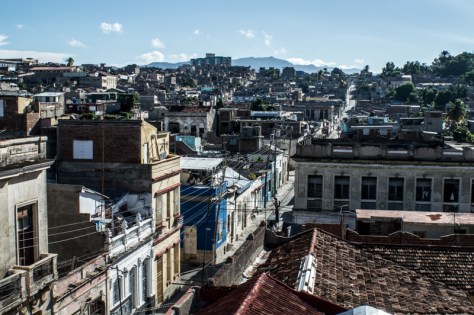
The following day, feeling dehydrated and lethargic decided to get some help at an international clinic. The heat in Cienfuegos is intense compared to Havana and Trinidad. It compounded the problem. My journey in Cienfuegos was impacted by my well-being. Besides the heat, this city would certainly make a great visit. Headed back to the casa and crashed onto the bed until my departure to Trinidad at 2.45pm. Another bici taxi ride to the bus station.


Cienfuegos1

I headed for Cienfuegos from Trinidad. Many actually suggested that I gave this town a miss. I though I’ll see for myself. Caught the Viazul bus at 7.45am. I had booked my accommodation through Nilda. A bicitaxi man picked me up and dropped at the Casa Regla. The room was small and an even smaller bathroom. No windows but the door had some slits on them. All these for 25CUC! I would not suggest this place to anyone unless they dropped the price.

Cienfuegas (2)

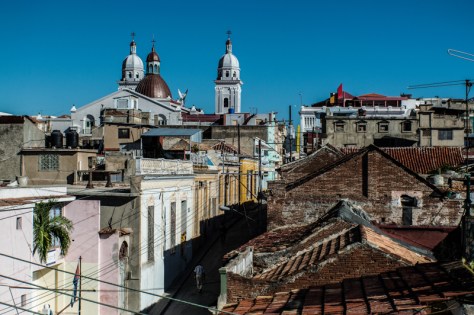
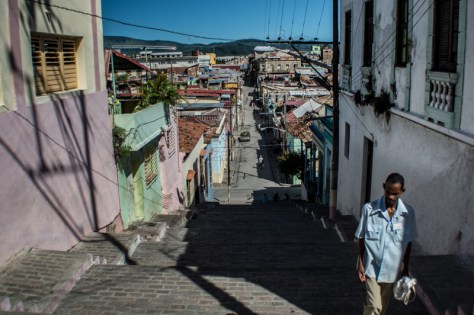
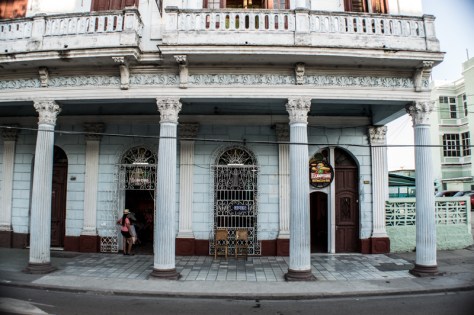
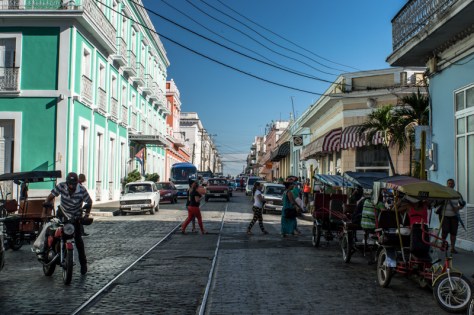
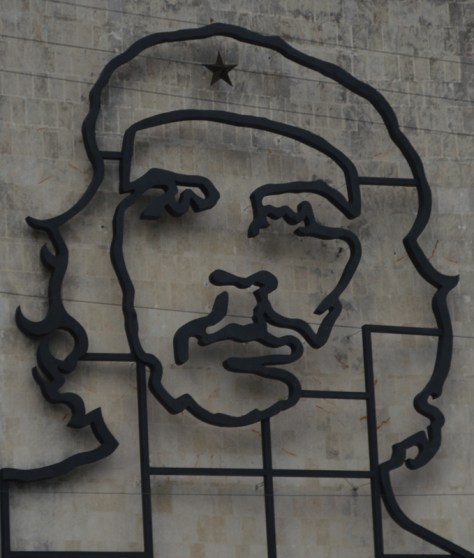
I was out onto the streets with a rather uncertain tummy. Yet, the exploration goes on. I walked across the wide Paseo El Prado. Soon I met with two famous Cuba’s personalities – a bronze statue of local boy Benny More, a musician and vocalist, on Prado. Looking from above is an oversized poster of Che Guevara, a revolutionary leader.  They made an odd couple. People gathered on this street to chat and rest. It was exposed to the sun as shade was limited. Close to the La Union Hotel, I had breakfast. Bicitaxi peddlers waited looking for their next fare on the street with an unused rail track in the middle. I ventured further into a pedestrian only boulevard. I slowly dragged my weakened body across this street packed with people and ended at the Parque Jose Marti. Heavy smell of fumes from buses and lorries hung heavily in the hot late morning air. It was a hot day with only a few people wandering this park. However, on its peripheral, restaurants and retails shop were doing brisk business. I visited the Palacio de Gobierno. All the explanation were in Spanish and only a few artefacts and exhibits were on display. Across the plaza, the grand neo-classical Catedral de la Purisima. The architecture, classical faded colonial grandeur, here is quite different from other places I had visited. They are grand and definitely make a statement. A great place to people-watch. Strangely, I noticed several Che portraits but not Castro. It was extraordinarily hot and humid in Cienfuegos. To escape the heat, I entered a shoe shop. It was temporary bliss – air condition.

Cienfuegas (6)

I took a tour of Montero Cigar Factory close to the train station. . A local bicitaxi guy took me there. Unfortunately, all the explanation was in Spanish. In this factory, dried tobacco leaves are purchased, processed and distributed as handmade cigars. Only a handful of staff were on the floor today. Most were women and interestingly, only less than twenty percent smoked. Most work around eight hours a day. The graded leaves, slightly transparent and moist, are handed over to individual staff member. The initial process is to remove the midrib and stack the halves. These leaves are then moved to the ‘rolling’ room. About ten leaves are rolled tightly and placed onto a mold which is pressed for about twenty minutes. At this stage they do resemble a cigar but ‘rough’. The final part of the processing is to use high quality leaves as the casing and smaller cut pieces onto the ends. Plant resin from Canada is used to glue the leaves. The process is complete – a handmade Cuban cigar.  It looks simple enough but the skills required is in the experience. In this factory, all kinds of brands are made based on leaf quality – Cohiba, Montecristo, Romeo y Julieta, Partagas, a more. Each worker is not confined to making one ‘type’ of make. It depends on the quality of leaves given (plus the experience required for the expensive ones). An adjacent room is dedicated to making various grades for the domestic market. All the cigars are then checked for quality and eventually packed into boxes. All the finished products are sold to one company – Habanero, a state owned entity. As we passed a locked room, the guide mentioned that this is where the most expensive leaves are kept. All the products are distributed through two companies, both subsidiaries of the Habanero Company.

Cienfuegas (5)

Trinidad4

I returned from Cienfuegos, I was handed over by Nilda to Esther. My room was a three bed room. Today, I was alone, just a well, running to the loo frequently.  I had not been well, a tummy bug, for a couple of days. I suspect it was the ‘dirty ice blocks’ in my mojito. It was horrendous. I had travelled to several places over the years but I must admit, this was my first experience. Not good at all. However, being ‘stuck’ in Trinidad with some on my new found amigos, was not bad at all. I barely managed to get out. Fortunately, Esther and her daughter took good care of me and provide all the meals. Their version of ‘cure meal’ – white rice with plantain only. Eventually with medication and ‘local treatment’, I was good to continue my journey. Sadly, it also meant I missed out the beaches or perhaps extra days in Havana. There was a remote chance that I might make it to Vinales, the tobacco growing region. Well, such is a journey.

Trinidad (32)

I booked my tickets at Viazul Bus Company for my onward journey to Santiago de Cuba. I was still hesitant as my tummy had not fully recovered. The medication was doing its job and hopefully on my next long bus ride, expected to fifteen hours.

Trinidad (35)

On my last day in Trinidad, I was heading to a classy hotel, Iberostar. Today is the finals of the Rugby World Cup 2015. New Zealand were in the finals meeting our arch rivals Australia. I was hopeful the game would be televised live. I hurried there. However, on my way, I met Sarita, who was excited to see me. She quickly grabbed my hands and brought me to her house. I was hesitant to visit her due to my limitations of communicating in Spanish. Furthermore, the rugby game. She showed off the handmade pottery and other wares that she traded at her home cum shop. The interior of her home was simple. The uncovered bed where all three slept. Furnishing was minimal. In the kitchen were a small rice cooker, a stove, a small refrigerator and a percolator which she brewed some coffee. There was running water and electricity. She had a lovely smile. When ask about her life, she was saddened and did not hide her emotions. A few tears flowed. Her husband had left her, or rather she kicked him out because he was always drunk and no work. Her two young sons were at school and she had to find ways to meet the financial requirements. She offered some flan, a local cheesecake. We talked for about 45 minutes. I left her home slightly dejected at her state of affairs. However, I took some solace from her cheery outlook. This seem to be a strength amongst Cubans. Despite all the hardships brought about by the regime and at a personal family level, they strived on and make do with whatever they had with a can do attitude. Ingenuity, determination and self-reliant. I admired these attributes deeply. I may be late for the game, but I am glad that I had this conversation with Sarita.

I rushed to the upmarket Iberostar Hotel and was disappointed to find there was no live transmission of the game. Just to give another go later, I opted to us their internet facilities. It was meant for their customers only but I managed to get the service. As in Habana, internet availability is limited to big hotels and a few other providers. In a park, just outside the hotel, the locals gathered to get connected. Although many have cell phones, most only have wifi as it is costly to buy data. Well, the game was not televised. In the end, I am pleased to have bumped into Sarita.

For reasons unknown to me, the banks were closed today. Perhaps, these staff had gone on a “siesta”. I needed to change money to pay for my accommodation. I don’t want to upset Esther. I asked around but to no avail. A well-built man approached me on the street. He offered to change money. He had a tough look with dark gold frame sun glasses, gold chains on his neck which reflected brightly against his black skin and numerous rings on almost all his fingers.  In front of the CADECA office, I got what I needed and he actually offered me more than the banks rate, and without the ten percent commission. He pulled out bundles of US dollars in one hand and a cell phone in the other.  I would not mess with this guy but for me, an end to a need. He was cool. A dusk, a tropical rain poured. The cobbled stone streets were flooded with fast running water. It was great as the temperature dropped.

Along any street, little business were conducted from small opening on the walls and windows of ordinary homes. I did not venture outside the colonial cobbled stone streets. Small business like these support the local communities with the daily provisions, Cuban style.

Trinidad (41)

I returned to my casa early as Esther and her daughter had prepared some dinner. Yes, the local cure of rice and plantain. I was feeling all right but not a hundred percent. Nevertheless, I was concerned about my impending overnight journey of 15 hours to Santiago De Cuba the next day.

Trinidad (39)

Trinidad3

Trinidad (20)

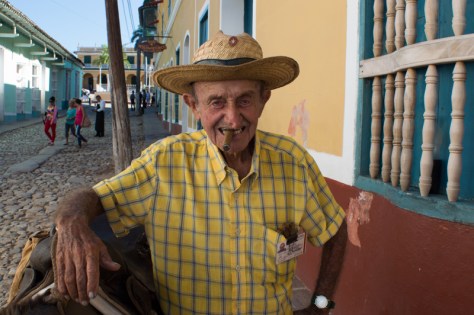
I met this elderly gentleman with his donkey on the street. He spoke little but I figured that for a small fee, he will give you a guided ride on his donkey around the old town. He had his official licence card attached to his pocket. With a lighted cigar in his mouth and a few more stashed in his shirt pocket, he was quite a character. I liked him because he did not have the tenacity of some of the street touts but instead a humble ‘welcome’. I have a soft spot for old people. What must his life be about? He is certainly older than the revolution, perhaps have participated in it. Perhaps a sugar plantation worker? I slipped a few CUCs into his hands before I left. Although no conversations materialised, I liked him.

Trinidad (21)

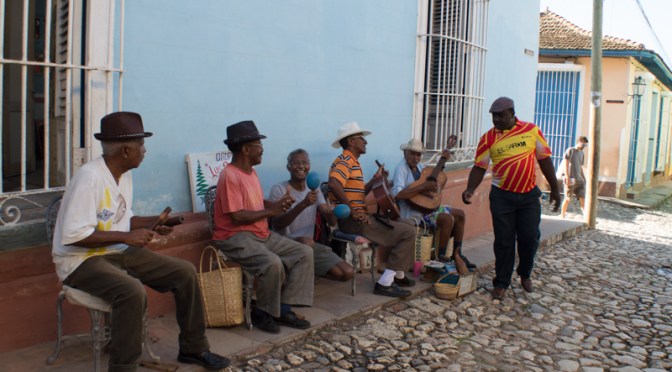
Towards lunch time, Cubano and Latin music filled some parts of the old town eateries. The atmosphere was great. Most of the ‘fancy’ restaurants were filled with ‘antique’ furniture and fittings. ‘Antique’ as this is the normal furniture in Cuba’s time-wrapped setting. It fits perfectly with the surroundings and everyday living. After a tasty and filling lunch at one of the restaurant’s dotted around the plaza, I followed the sound of music to Casa de la Musica. Someone waved to me and yelled Malaysia, Amigo! It was Moises. He was in action not with his shinny trumpet but a double bass guitar. With my Cuba Libre, rum and coke in hand, it was a great way to digest my lunch, listening to soothing music. The lyrics took a surprising turn as a song was dedicated to me. Slightly embarrassed and partly a feeling of being ‘local’. Moises and a few guys joined me on their break.

Trinidad (25)

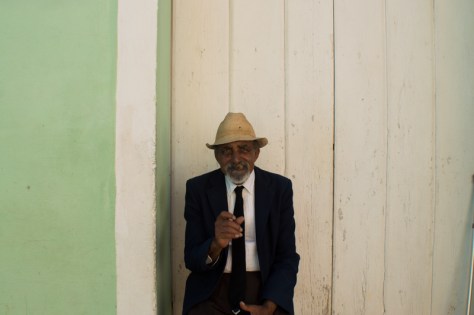
Near Plaza Mayor, I met Senor Jose Luis sunning himself on a chair with a cigar in his hand. The only man in town with a suit and tie. It fitted him persona perfectly.  I noticed a cane on his side. He had a mellowed aura appearance. I had a short chat with him before continuing my walk. I felt a sense of ‘loss of a friend’ when I left. Senor Jose had this effect on me. I was saddened that I could not communicate to find out about his stories behind those intriguing jaded eyes. I would see Senor Jose a few more times before leaving Trinidad. Always, at the same spot.

Trinidad (26)

I decided to walk away from the town centre towards the fringes of the old town. I met a man selling fresh coconuts near Convento de la Asis plaza. A few coconuts were piled up on a wooden wheel barrow.  I quenched my thirst with a cold drink of coconut water. Unlike some people, I scrapped out the white flesh meat. Delicious in the hot and humid weather.

Trinidad (33)

Trinidad (30)

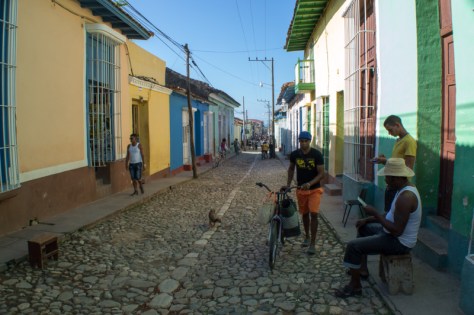
On this stretch of the street, there were accommodations but no restaurants. The bright pastel colours of the houses reflected strongly from the tilting sun. A man offered horse ride up to the mountains. I was slightly under the weather and opted out. Would have been great to wander around the old plantations. Horses and horse carts were kept in this part of the old town. The stench is unmistakable. There were no tourist here. The views however, extended towards the refreshing green mountains. Kids returned from school as families relaxed and chatted on the shaded side walk.

Trinidad (34)

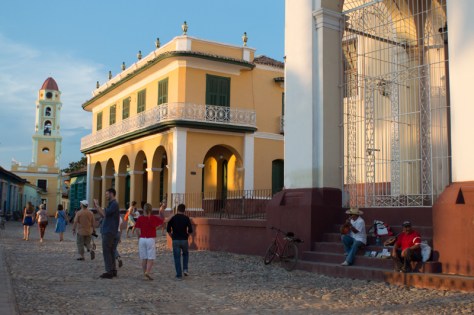
In the golden hour, I wandered around Plaza Mayor. An elderly man strutted some songs on his guitar. The colours on the buildings with its pastel colours glowed in the setting sun. A few people had already gathered on the steps of Casa de Musica and musicians were already warming-up. I wondered if there were any younger musicians around. All the musicians I had seen or spoken to seem aged. For now, I savoured the mellow pace of life here.

Trinidad (31)

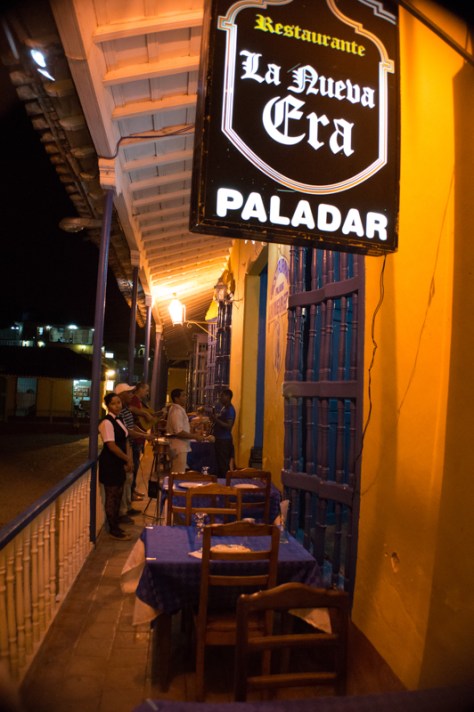
For dinner, I headed to one of the local “paladar”. Yes, live music in the restaurant as well in few other establishments. I heard my name called from the street. It was Enrique. This time he was playing the trumpet in a restaurant across the street. It was a good feeling, a simple gesture of acknowledgment from a friend. I admired the likes of Moises and Enrique for their hard work and multi-talent with various instruments. To make a living, they had to be come ‘mercenaries’ of music. Actually independent musicians. It would have been nice to have had some company tonight, I thought. Well, that’s part of independent travel I guess. Later, I returned to Casa de la Musica and had my customary drink, “cuba libre”, rum with coke and lime. The crowd swelled after 10pm as the soul searching tourists’ become bitten by the soothing music of the balmy Cuban night. Perhaps, the drinks contributed towards this effect as well.

Trinidad2

From my balcony, I surveyed the street below as the morning sun shined brightly onto the roof terracotta roof tiles. Pedestrians, cyclist and horse driven carts moved slowly on this street. The clouds on the nearby mountains had dissipated. It promised to be a hot day. My tummy was not happy, some kind of bug perhaps.

Trinidad (7)

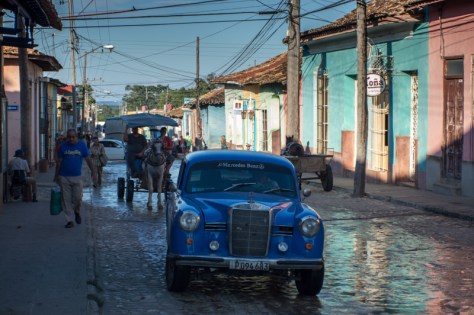
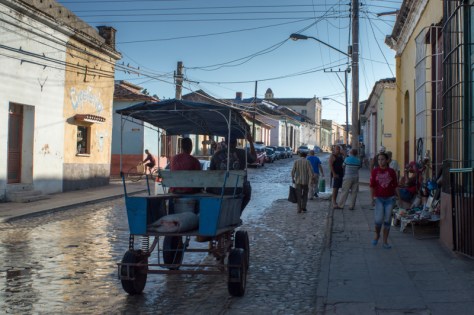
After a nice and refreshing breakfast, I headed back to Plaza Mayor to contemplate my options today. A distinctive clip-clop sound of horse hoof on cobbled stones was uplifting and gave a rural feeling. I noticed a pig carcass on the back of the cart. Although, Trinidad is a tourist town, the locals have maintained their normal way of live here. Classic American cars also plied the same streets alongside the horses. The central part of this old town is pedestrians only streets.

Trinidad (8)

Trinidad (9)

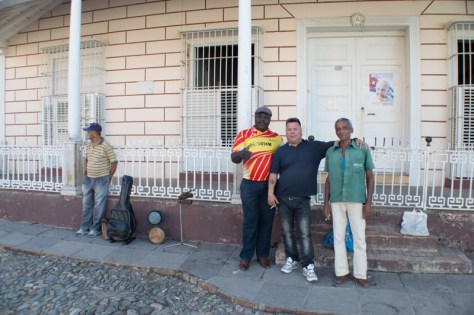
At Plaza mayor, I met a group of musicians. I was not sure if they were returning home after the night’s events or just starting up. It was quite early. The usual pleasantries, my origins and where I lived and so on. Moises was very curios indeed as he was eager to learn. We talked about economics, agriculture developments, wealth, cost of living and income. I pulled out my notebook to show a roughly scratched world map, consequence from previous conversations, to locate New Zealand and Malaysia. Moises was quick to point out the locations. On the map, New Zealand and Cuba were on opposite ends of the page. “It is very far?” Not really, and I folded the ends to meet, like a globe, they got the picture. We had a good laugh and a little more understanding. I loved the look of learning innocence on their faces. Personally, I loved the interaction and physical touch like between old acquaintances. In my limited Spanish, we managed to understand Malaysian, New Zealand and Cuban issues.

Trinidad (10)


Trinidad (14)

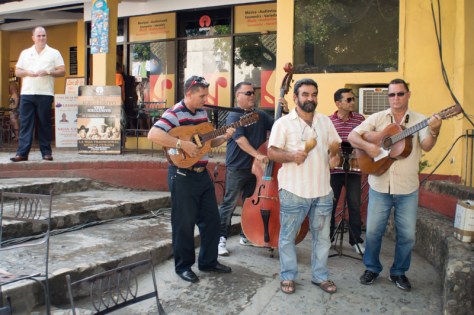
Where did you learn how to speak Spanish”? I pulled out my Lonely Planet book. Immediately, Snr Golban, the oldest member here, identified himself on the cover photo! I refuted gently with a laugh as the face is hidden behind the double bass. The other guys insisted on proofing this. Snr Golban was a shy man. They held Golban’s hand and as he clinched his guitar, the distinctive crease on his hand was identical to that on the picture. Enrique, the ‘joker’ and most friendly guy quickly flipped through the book. They recognised another picture, a musical group on a street. “That’s Los Pinos”, he exclaimed excitedly. Enrique and Moises led to me meet them. I followed. On one of the streets along a block of houses and restaurants, the members of the Los Pinos played catchy salsa and son music. Soon, I had a dedicated band playing just for me. Moises, pulled out his trumpet, later joined in. Enrique couldn’t help himself and took the maracas. It was fantastic. The mood great, a sense of camaraderie and for the first time in Cuba, a sense of belonging. Enrique acknowledged me as an “amigo”, friend.

Trinidad (16)

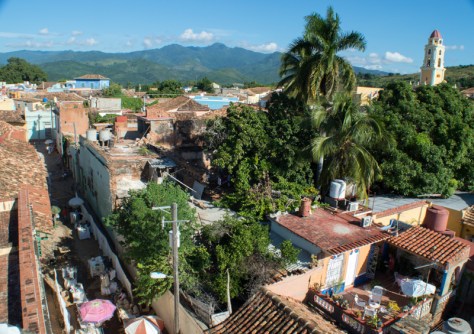
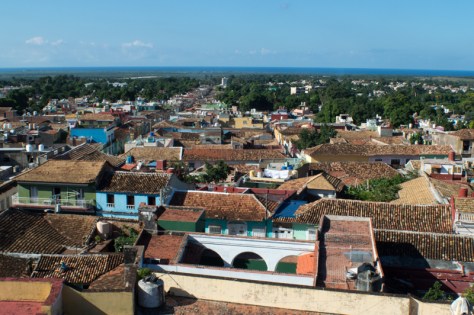
After my delightful time with the Los Pinos and my new amigos, I headed off to the Museo Historica. From the roof top, this must be one of the best views of old Trinidad and its surroundings. It was truly a magical view. The bell tower of Convento de San Francisco de Asis rose above the wonderful rustic terracotta roofs tiles and narrow cobbled stone streets. In the background, the green Escambray Mountains. To the south, a thin blue line of the Caribbean. Just below, a small local market was just beginning its day. A small morning market was just starting up. Typical Cubano dresses and an assortment of curios were on display. I could alos peep into neighbours homes from here.

Trinidad (17)

Trinidad is truly a living museum. Although, it is a main tourist place, life seemed to be normal. I did not find it touristy. This made the experience more personal and exciting. Back on the picturesque streets, the locals smiled easily. Conversations is limited as language becomes an obstacle for both sides. Nevertheless, I was not holding back. Gentle whispers offered ‘priced’ Cuban cigars and horse riding opportunities into the mountains and to the former sugar plantations. In fact, Trinidad was built from the proceeds of sugar cane and tobacco cultivation in the surrounding regions. Resulting from these cultivations, West African slaves were brought in to work in the plantations. Their cultures and beliefs inherently followed them and hence, established a wonderful Afro-Cuban heritage.

Trinidad (18)

Trinidad1

Today I took a private taxi with Bruno and the other passenger, lovely Sarita, to Trinidad in Central Cuba. The highway is dated but still good. A few cultivated areas under paddy. Past Cienfuegos, huge tracts of land, some till the horizon, were cultivated with sugar cane crop only. The main roads become local roads where horse driven carts and tractors on the road were common affair. Hitch hikers stand on roadsides with raised hands clutching some cash. In these parts, public transport is slow and limited and the locals depended on getting lifts from road users. I noticed a highway police vehicle, a white Fiat, stationed on one section of the main road. We stopped for fuel along the way, at someone’s house. At a petrol pump, the price was 1.5CUC/Litre. The journey brought us to the Caribbean coast all the way to Trinidad. Sarita invited me to her house for a visit as she handed her address to me. I was a maybe as Sarita only spoke Spanish. I had no confidence with my ability to communicate. Perhaps? She went off.

It was bright and sunny when I arrived in Trinidad in early evening. I checked into my pre-booked Casa (Nilda) on 518 Calle Frank Pais | Entre Piro Guinart y Fidel Claro. It was a great room with a balcony on two storey terrace building. From here, there were great views of the blue-green mountains and the tiled roofs of the colonial houses. The rooms were airy and unlike in Habana, not cramped between blocks of apartment buildings.

Trinidad (3)

The whole old town is paved with cobbled stones. Unlike the close proximity of houses in Habana, most people rested indoors. The houses are spacious. However, the furnishing, like in Habana, bulky wooden furniture with wicker or rattan base is frequently used. I loved these furniture. Iron grilled windows protected any unwelcomed intruders. It also help keep some pet dogs at arm’s length from the street. As I walked through the streets past many pastel coloured houses, there is a sense of slow pace. There is no hurry to get to anywhere. I continued walking with curiosity, intrigue and new experiences. I was like a child again filled with glee and discovering new things. Trinidad is rich with great photographic opportunities. Churches, plazas, music, historical buildings and wonderful architecture and friendly locals are condensed into this one charming old town. This colonial town has it all.

Trinidad (5)

Trinidad colonial town is a UNESCO heritage colonial town oozing with character, charm and old world nostalgia. It is magnificently located between the refreshingly green Escambray Mountains, Sierra del Escambray, in the north and the inviting Caribbean coast in the south. I could not wait to explore this wonderful town. The night was lit by the full moon. I ended at a small plaza with a church bell tower. A few people relaxed here with couples having private conversations. From here, I headed straight towards Plaza Mayor, the old towns’ centrepiece. It was simple. A small garden park flanked with tall swaying palm trees and sitting areas. At the plaza’s edge, a simple concrete church, the Iglesia Parroquial de la Satissima. A series of cascading stone steps led towards Casa de la Musica. Another of pastel hued row of houses snaked up the hill.

Trinidad (4)

This evening I decided to have dinner with Senora Nilda, my host at the Casa. After a lovely dinner, I headed back, in the cool of the evening, to Plaza Mayor. Music filled the air. There were a few establishments with live musicians performing the distinct Cubano sounds – salsa and son music. Mostly tourist gathered on the stone steps at Casa de la Musica. They were not going thirsty as supply of drinks was provided by boys from various bars nearby.

Trinidad (6)

I wandered off away from the plaza. It was quieter with only a few people on the streets. I tried a mojito. This was not a bar but an art shop away from the main drag. Portraits of Che hung on the walls. I returned and settled on the steps of the church for the day. The full moon brightened this atmospheric old town. Looked like all the tourist in town were here. It is a great place to wind down relax and listen to melodious Cubano music.


Havana11

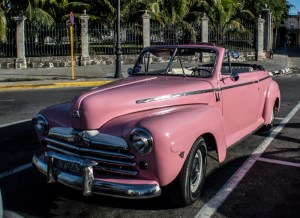
Later in the afternoon, at Panorama Hotel in Miramar, near the beach with wind swept coconut palms, I met two guys with a parked pink classic American car. He had a breakdown and awaiting for a mechanic. I asked if this happened often. He had just rented this car to earn some money and hoped this incident did not happen often. The conversation changed to my cost of travel and living expenses in Malaysia and New Zealand. One of them is an engineer. He earned about 35 CUC a month. His electricity bill and living expenses far exceeds his earnings. He had to find ways to earn and pay off the difference. Daily lives hardships are visible everywhere. Like everyone else, they make do with whatever they have or can get. The one thing he is rich with is confidence, laughter and hospitality. A common attribute of most people I had met.

havana (80)

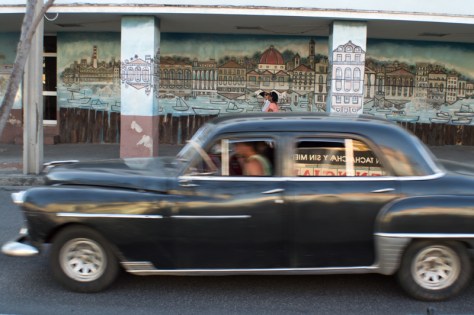
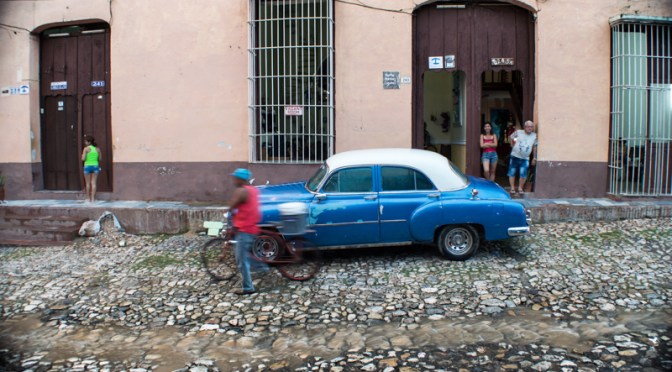
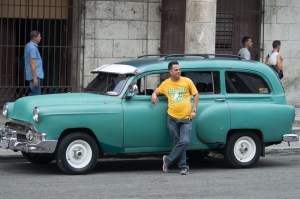
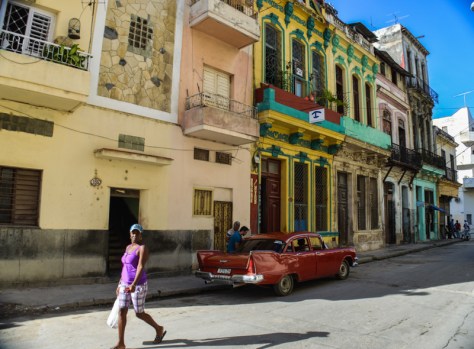
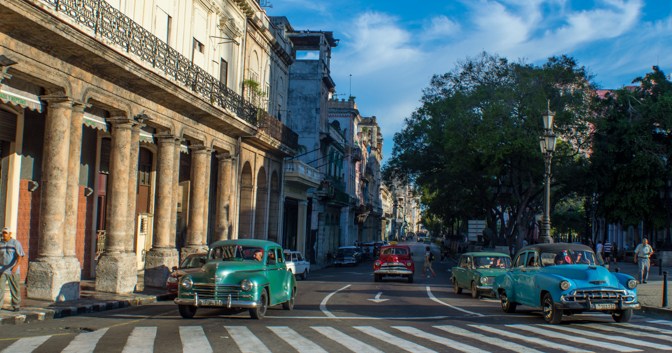
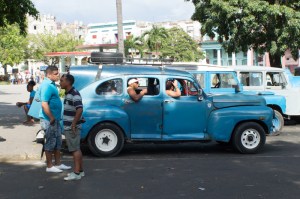
One iconic image of Cuba must be the classic American cars of the fifties. They come in all shapes, size and make. This includes Chevrolet, Pontiac, Buick, Plymouth, Dodge and Bel Air. Especially in Havana, there are everywhere. Most of the shared taxis on the road are these cars. These cars were imported in the hey days of the American controlled economy. After the revolution and the American trade embargo, the repairs and maintenance of these cars deteriorated as spare parts became unavailable and unaffordable.

havana (30)

So how have the Cubans’ managed to keep it going. Look closely what is under the hood. Exterior is the most original part although some sort of decapitation and reattachment had tactfully taken place. Under the hood, parts from mainly Japanese cars had been cannibalized. These began as desperation and eventually bloomed into Cuban ingenuity. Make do with whatever they had. It is still a great sight, like being in the movies. Only thing is it is real life to the locals. Unfortunately, these cars are the cause of the black chocking fumes that plaque the streets of Havana. If you have any thoughts of getting one as the trade embargo eases, think again. Remember, these cars are still running due to Cuban ingenuity. They are not “wholly” genuine. Buying one is the easy part. Getting it to be near ‘original’ state is another matter with huge cost outlay! In my view, these cars belonged here, only in Cuba.

havana (102)

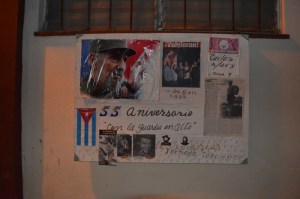
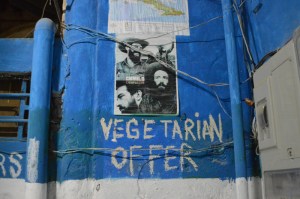
I strolled around looking into buildings. Posters of past leaders especially Cienfuegos, Che Guvera and Castro are pasted all over on walls and within buildings. Some of them are propaganda messages. The famous saying – Socialism or Death! These are just examples of who is in charge and what they want the people to hear and see daily. However, life goes on.

havana (107)

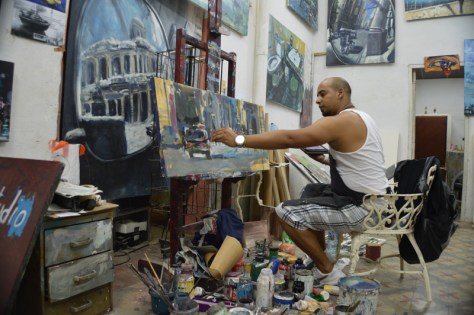
My final evening in Cuba, I walked around Old Havana’s colonial quarter. Near the Cathedral, on Calle Emperado, I met artist Sanlly Viera. His paintings mainly captured Habana’s daily lives and street scenes. With the potential of well-heeled American tourist, he may be in an advantageous position to improve his business hence income. The people involved in the tourist will certainly benefit directly from the potential influx of tourist. What about those on the fringes, like the butcher, the farmer, the street sweepers I see daily on the Malecón? There will be some income to the State from the tourism industry, it will certainly be insufficient to expand its coffers to pay for the urgent need of fixing the crumbling housing, and basic amenities. Let alone expanding the property markets. Releasing business to operate privately will certainly bring the income through taxes, but will take time to build up. What about employment, as most of the working population is under the State’s payroll. How is their income going to improve? Only time will tell. However, the anticipation of positive change has the man on the streets ‘excited’. A promise of betterment from the current culturally rich and economically poor lives.

havana (103)

In the early evening, I again wandered around Centro Habana just to sink in the last sights of what I believe is a unique environment – a mixture of a past colonial architecture, hardship caused by politics and aspirations,  a nation held to ransom and the admiration of the people’s ingenuity and self-reliance. The romance of Hemingway’s Havana is certainly alive today. There will be changes but how is this going to affect each Cuban. Living on low wages, mostly employed by the State with an average income of US$30 per month. The cost of living will rise, how is the average Cuban going to cope with this? If foreigners are allowed to buy properties, how can the locals compete, financially? These were some of the questions in my mind as I strolled down the narrow but atmospheric streets.

havana (112)

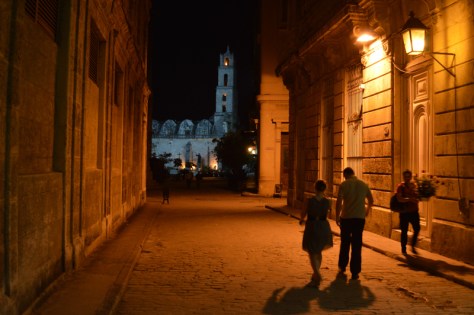
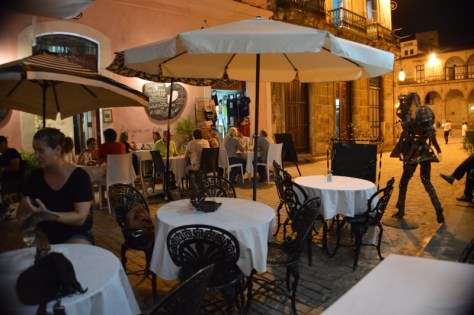
At Plaza Cathedral, a few restaurants are scattered opposite the Colonial Art Museum. I met Senora Habana as she was heading home. We greeted like old acquaintances. The dinner was great. I strolled through the old renovated streets towards Plaza Francisco and eventually ended at Francesca. One last coffee accompanied by typical live Cuban music from the nearby hotel. The full moon shone brightly on Capitolio and the magnificent theatre. A guy walked in, shook my hand and offered a “la chica”. It was like talking about sports or travel. Just a normal coffee table conversation. This cafe had been a great place to savour Habana’s street scene and to have a break. I just wanted to continue wandering the streets but it was getting very late. I retired to my casa.

havana (106) havana (105)

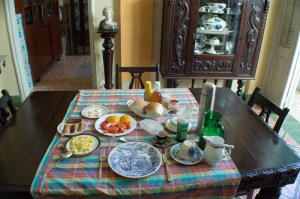
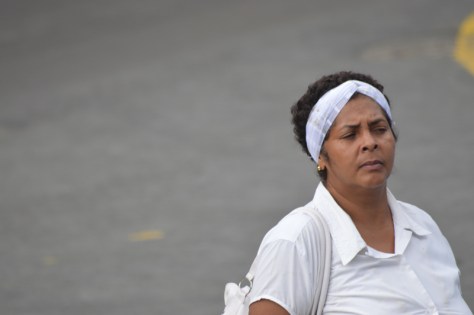
My final day in Cuba. One day shorter than I had planned due to last minute changes by the airline to my outbound flight. In my casa, a lovely young girl (couldn’t remember her name) was helped maintain the place. After a big spread breakfast, I had an hour before Yani, my taxi driver, is due. Her reminder, sharp 10am, rang loudly in my head! When I opened the door, an elderly woman sat at the doorway. She had a calm look and gave a gentle smile. She epitomized the Cuban people – calm, inner happiness and simple. Next to my casa, on the same block is a vegetable and butchery store. The prices of items were listed both in Convertible Peso (CUC) and Moneda Nasional (CUP). An assortment of beans, the main local diet – rice and beans; fresh vegetables like long beans, onions bulbs, yams; and fresh fruits like pineapples, papayas and bananas. Next door, all parts of “cerdo”, pork meat, was chopped up and displayed on the shelves. The place was clean. At the end of my street, I took in one last sight of the pastel building blocks; stripped wall exposing the orange bricks underneath; the roar of a modified old car; the chatter and laughter of the residents on this street; the sound of some construction work nearby; the fluttering of cloths hung on the balconies and a fading call of a street vendor.


havana (118) havana (117) havana (116) havana (115)

Cuba is a living museum. I considered myself lucky to have been here with eminent change on the near horizon. To have witnessed, touched and experienced a little of Castro’s Cuba.

Havana10

After about fifteen hours on a Viazul express bus, I arrived Habana after exploring eastern Cuba as far as Santiago de Cuba. The bus ride was comfortable. I caught a taxi driven by Yani, one of the five women taxi drivers in Habana. She is lovely but tough. A no non-sense street-smart kind of person. Perhaps the occupation dictated her behaviour. She was skilful in negotiating the narrow and busy streets. She lived with her two-year old grandson, daughter and her sister. She is separated. So is her daughter. Drinking and some other reason which I could not understand had caused the family break-up. Mind you, all conversations were in Spanish. Nearly all the women I spoke were separated and alcoholism, especially amongst the males, is a major issue. It is breaking down families. She was delighted to talk about her grandson. However, with a sigh, she is saddened that her daughter, only twenty years old with a son, is single. I asked her if her income is sufficient. She said……all well. I liked her. I made arrangements for her to pick me up the next day for a ride to the airport. She stressed several time, be ready sharp at 10am.

After settling into yet another casa was organised by ‘my casa’ operator. He called it “Associates Casa”. This, like the earlier one, did not have the official blue symbol on the door. I did not care. Thereafter, I headed straight to Pastelaria Francesca. I settled down with a hot cup of Cuban coffee and some sweet pastries. Middle-aged single male Europeans chatted intimately with young Cuban women. Sex trade is prevalent but low key. I am not judging but some girls were just too young! I enjoyed the views on the streets and savoured my last day in Cuba.

Manfred, an elderly Australian man joined me. He lived on his own and had lived here for over ten years. In his own words, “I am a true Socialist. I truly believe in the Revolution and support everything Fidel had done. He had fought against the mighty US and its corrupt practices of suppressing Cuba and its Revolution. Castro had given its people a mandate and they had chosen to go with his ideas”. This was from 1959 onward. With the US blockade, the people had suffered in many ways. “But Castro asked his people, do you want to give up or fight back. The people choose to stand up”. In 2015, those sanctions were still in place with talks of thawing this blockade is just beginning. “Electricity is subsidized. There is no poverty or hunger in Cuba”.
I accepted this, from my own experience. “There is no hardship”. This thought was in contradiction to the people I engaged with – Angelo, the bici-taxi driver in Habana; Adrian, an engineer at a shipyard; Antonio, a casa operator in Santiago and the average man on the street. How about people like Diana and Sarasi, a single mothers with kids  –  feeding, clothing and schooling.

Manfred is certain that there is little unemployment. There were hundreds, particularly youth, standing around parks, boulevards with nothing to do. He reckons there are the guys whom don’t want to work. He added, that some people worked a couple of days and hung around on their days off. What about the low stocking levels and high prices in retail shops I had visited? He argued that there is plentiful and the prices are subsidized. Cooking oil cost 8CUC? He deferred. Only 2 CUC. What about people wanting to form an opposition party? This is not allowed for a simple reason. Manfred argued that these parties will be financed by the US to plot against Castro. He continued, “Cuba is teaching the world how to manage a country where everybody is happy”. Really? This is subjective as to whom you speak to. Generally, people are happy. Perhaps that they are all in a similar boat and this happiness comes from within. I don’t think it is a “gift” from the State. Helping each other and had created a strong sense of community. This attribute is born out of necessity. Yes, there is little corruption and yes, there is low crime rates. Everyone told me that it is safe to walk a night. I am sure there are small pockets where no one talks about. This is expected in any city and towns. One final question Mr Manfred, why are there numerous spy cameras around towns? Manfred’s response is “to keep the tourist safe and to keep crime rates down.” Is it not obvious that these gadgets are fixed to monitor the general population? “Definitely not”, he said with conviction.

We turned our conversation towards the Chinese and Indians economies. Manfred continued, “don’t trust CNN, Fox News and BBC. They tell lies. There are programs that claims China had reduced poverty; elevated poor population by numerous percentages; committed and moving away from burning fossil fuels; giving people wealth. The Chinese people are happy. This information came from one of the news programs here.” On one hand you mentioned that the media is misinforming. However, the local media program is telling the truth!

“It is. It is made in Venezuela, I think”. “Who is Cuba’s best buddy, Chavez? Although no longer around, there is still strong support”. I said that China’s economy is a false economy. The growth is propped up by the central government to show the world that it is growing. There are numerous buildings that are empty. I had seen whole townships completely devoid of people. The locals know it. I continued, in China, the central government can direct people to move, like it or not! Remember, the Chinese people are happy. Slogans like this are advertised at every train stations and prosperous towns. When Chinese people are interviewed, the say everything is good for them now. Turn off the camera, away from the prying eyes, you reckon the story is the same? Fear from punitive actions by the State, represented by plain clothed cops, ensure this party line is towed by everyone. As you speak highly of the Chinese, from a trusted media, what about the same in Cuba? I did not wait for an answer.

I left the cafe with mixed thoughts about Manfred. Is he for real or is his desire to support Socialist deeply rooted that he can’t see reality. However, he is not in the same boat as the ordinary Cubans. Cuba is thought provoking and the reasoning is challenged by your own thoughts and perspective. There are no answers, just questions with perhaps no answers. You can only see so much, hear so much, feel so much which leads you to formulate your own limited thoughts. The good, the bad and the ugly is all there to witness today. It has been a contradiction since the 60’s.

havana (94)


havana9

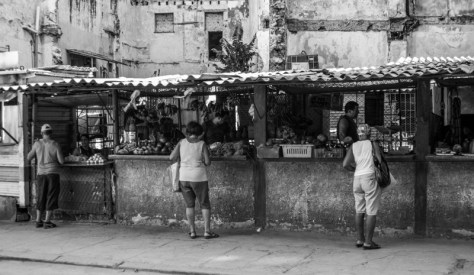
A neighbourhood fresh produce and butcher shop close to my Casa in Centro Habana. Prices were quoted in Moneda Nasional (CUP). This shop occupied an empty lot of an apartment block which is completely missing. Around this block, half empty buildings as parts of the structure had collapsed. In some buildings, bricks were exposed and only the facade of upper floors remained. The Cubans are resourceful and make the best of any situation.

havana (12)

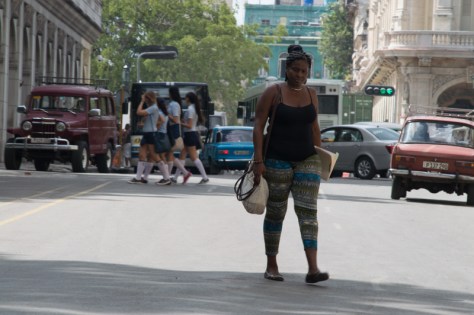
 The Cubans, especially the women, are a great ambassadors of self-confidence. Perhaps born out of necessity.  The only dress code seem to be no “nakedness”. Shot pants, sleeveless singlets and tight body hugging Lycra seem to be the norm. The dresses can be transparent, tight, short, and outlandish by our standards. Not by Cuban standards. Women do dress feminine. Generally, the women are beautiful with fantastic complexion. Women’s appearance is about practicability rather than necessity. Self-esteem is high especially amongst women. How they are perceived is irrelevant. There is no “tummy-tuck”. Everything is “hung out” for all to see.
havana (92) havana (109) havana (50) havana (101)


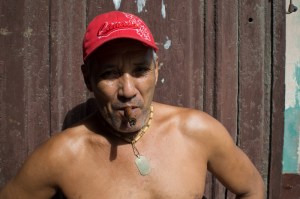
Today I ventured towards Barrio Chinos, just behind the Capitolio on Calle Industria. Along the way, I met a hard working typical-looking Cuban man in a workshop. With his shirt off, baseball cap and a cigar, he made a great picture. He obliged. A major road work was in progress on this small scale industrial street. I passed a run-down train workshop or resting place. Strangely I just walk pass without paying further attention. I love train rides. A grand entrance marked this neighbourhood. It is a collection of outlets and was busy with people shopping and retailing. Strangely, I could not recall observing any Chinese. They once occupied this “barrio” in numbers in business and restaurants. With the onset of the revolution, a grim reminder of communist China, they packed up and left. There are a few remaining though.

havana (73)

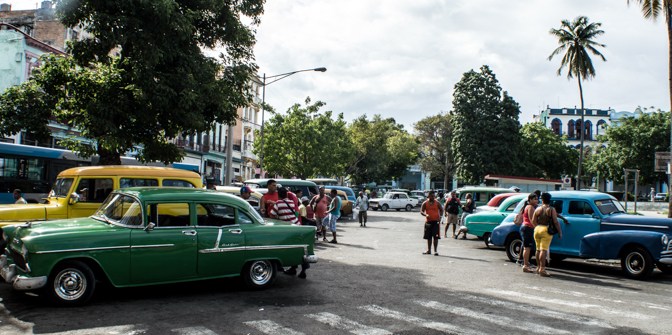
A small park was packed with classic American cars of all shapes and size used as collective, shared taxis. Black fumes choked the area as the cars departed with their passengers. Further up, at Parque el Curita, a row of classic car all primed up and glossy just waiting for tourists’. There were hardly any around here today. This is a working class area of Centro Habana.

havana (76) havana (75)

Cuban housing is in crisis to say the least. After the revolution, many homes were abandoned as some locals departed overseas mainly to US. With Castro’s policy of giving everyone a home, people were moved into these vacant apartments and buildings. Most of these dwellings are multi-family. However, over the last 50 years, these buildings have deteriorated in structure and quality. The state of plumbing and electrical wiring are all suspect and needing urgent repairs and replacements. Even a coat of paint is unaffordable. Nothing can be done today. Building materials are controlled by the State. Due to the poor economy, not much can be given to the public. Although housing is free, most locals can’t afford the upkeep with their meagre salaries. I noticed several electrical meters on the ground floors of apartments, not knowing whether it is working. Hoses run across roads in places where piped water is defunct or non-existent. The supply of these essential amenities are infrequent. The fitting and furniture are dated although usable. Roofs and ceilings do leak in the tropical weather. As such, many families are cramped into tiny apartments. Interestingly, the apartment of my Casa has a lift that worked. Some buildings, only the ground floor is habitable. The upper floors are just a façade with no floors. Electricity and water was available throughout the day. Throughout Centro and especially along the Malecón, many apartments and dwellings were being renovated and resulted in piles of building materials stacked neatly along the roads. They all aspire to be like the fully renovated buildings in Calle Obispo, in Habana Vieja. There exists an upper and upper-middle class of Cubans, perhaps from remittance from overseas. These homes are well kept and maintained. Like the villas in Miramar neighbourhood as I passed while on the red open-top bus. Buying and selling of houses is now permitted, legally. However, affordability by local residents is limited. Some along the Malecón has been bought up by migrant Cubans, particularly from US. Having said all that, Havana, with its crumbling colonial buildings, remained a romantic city. Minus the negative political climate, with a little cuba libre and son music, might even be paradise!

havana (77)

Cubans can swap properties with each other, a battering trade, but were unable to buy as all properties are deemed to be owned by the state. Each is allowed to own only one property. However, this had changed as properties can now be bought and sold in the open market. In Havana, it would be at Prado. Prices vary, some advertised at US22,000 to US25,000. Properties under renovation and being bought up are by overseas Cubans or through their proxies/families as foreigners are not permitted to purchase. With an onset of boom in tourism, more buildings will be renovated.  However, materials must be available to start this new revolution. The poor will certainly not benefit directly. The gap widens in a so-called Socialist State where everyone is equal! Well, they are not! Socialism or Death, Castro’s words still reminded the Habaneros on walls and posters. Economically, a reality check is much needed.

havana (81)

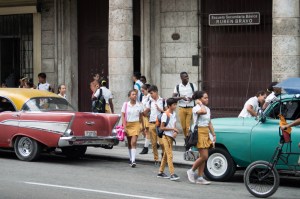
On Prado, cars and shared taxis waited to ferry students back home. These students are lower secondary. The higher levels wear a navy blue uniform. The juniors wear a white top with a maroon scarf with maroon pants and skirts. Cuba has one of the highest literacy rates in the world, 99.7%!

havana8

This morning I decided to wander around my neighbourhood in Centro Habana. Piles of stones and rubble lay on the streets. Several building were under renovation. Is this the sign of new developments?

havana (67)

People queued everywhere. At supermarkets, grocery stores, banks, meat and bread shops. A crowd had gathered at an egg distribution shop. Men and women queued along the sidewalk and waited patiently. At a butchers, stacks of beef ribs with little meat were unloaded from a truck into the shop. Inside was just a solid concrete table and concrete floor. The bones were just plunked onto the table. Some fell onto the floor. The butcher just picked it up and threw it onto the concrete table. Where has all the meat gone? When business began, the buyers just collected the rib bones and either put them into a bag or just carted it away in the their hands, exposed. Forget about refrigeration and hygiene. Transactions were conducted from behind grilled doors and windows. Once all of today’s stock or supply is sold, the next delivery is uncertain. You may or may not get one tomorrow. This is the reality on living in Cuba. Everything is limited and supply is sporadic.

havana (71)

Another queue had already developed. This time mainly women. They pulled out their ration card and waited until the shopkeepers were ready. The ration card, “liberata”, determines what and how much each person is entitled to buy as specified by the State. Basic good included rice, sugar, cooking fuels and oils, eggs, bread, beans, coffee and even salt. Prices are listed on the wall. The quality may not be the best but available at discounted prices. Meat products can be obtained from local “carnicería” (meat store) and dry good from local convenience stores, “bodega”. Most of Cuba’s basic needs are imported and controlled by the State.The State incurred high expense to import, store and distribute these goods.

havana (64)

Along a narrow street amongst the dilapidated apartment blocks, I noticed that some front doors had large carved wooden doors. They resembled Indian doors. The interior of builds had high ceilings. Iron grills covered almost all the ground floor windows for security purposes. On the upper floors, there were ornately designed iron grills on all the balconies. Potted plants added green and colours. Clothing hung to dry on lines tied to the walls. The sun hardly shinned onto the surfaces as they were blocked by the closely arranged apartment blocks.

havana (70)

Business were conducted on the ground floors. I loved those business conducted through small windows, mostly grilled. One of these was a tiny cafe. 1 CUP for a sweet espresso coffee. Pizza, ice-cream and even daily sundries and supplies were conducted behind counters. All transactions were in local peso, the CUP, Moneda Nasional. One must develop a sharp eye to view the prices of items displayed on the shelves. There is no such thing as feeling the items, looking at the instructions or reading the ingredients.

Most business are still controlled and conducted with supervision from the central government. However, this is slowly but gradually relaxing. One example is locals acting a agents selling houses and properties on Prado. Advertisement hung on tree trunks and hand held posters had turned Prado as an open-air real estate ‘offices’. Some are merely exchanges, people move into each other’s property mutually. The new ‘opportunities’ included hotels and accommodations like the Casa Particulars, taxis, and restaurants. Mainly seem to be related to tourism.

havana (69)

A clothing store sold seemed like an extensive selection of dresses and shirts. A Che Guvera T-shirt cost 12CUC. Nearby, household equipment including fans and electrical kettle were displayed on shelves. No many to choose from and the cost beyond reach from most Cubans. I passed a supermarket and the shelves were stocked to a minimum. Some empty.   Supply is hard to get and if available, it is expensive. So, it made sense to keep the inventory low. Turnover is also low. There is a sense that life here is really hard but basics are available. Education, medical, electricity, water, essential food items, transportation are all subsidized or free. Anything more is considered luxury. There are the well to do Cubans. Those I met at the bars, planes and high-end restaurants.

havana (66)

Despite the hardship, I did not see any beggars or people on the street starving. One thing is for certain, naturally Cubans are friendly and love life. They view these major set-back of government control as life’s challenges. Most don’t like it, but they carry on. What have we got to lose but to be happy, said a man. Despite all the daily hardship of rations, limited freedom of speech, long queues and an uncertain future, Cubans are very hospitable and ready to party. You don’t have to have much to be happy. Just walk down to the Malecón!

havana (65)

There are two set of prices, CUP and CUC, at many retail outlets including groceries, supermarkets and general stores. Prices in CUC are mainly targeted at tourist and rich Cubans. These items are usually considered ‘luxury” by the state. This includes anything that is not basic requirements for living.

havana (72)

A neighbourhood fresh produce and butcher shop close to my Casa in Centro Habana. Prices were quoted in Moneda Nasional (CUP). This shop occupied an empty lot of an apartment block which is completely missing. Around this block, half empty buildings as parts of the structure had collapsed. In some buildings, bricks were exposed and only the facade of upper floors remained. The Cubans are resourceful and make the best of any situation.


Earthbound Travel Stories