havana7

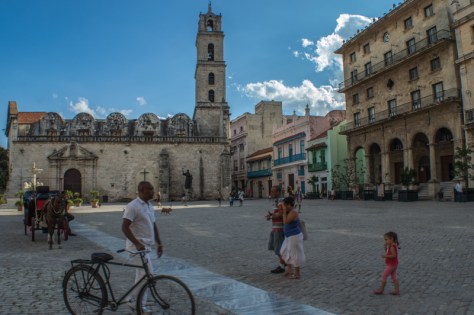
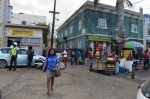
An entry into yet another wonderful and architectural square, Plaza San Francisco. This is the second oldest square in Habana. Potted plants provided some greens on the large cobbled stone square surrounded by buildings. On the opposite end is Convento de San Francisco de Asis. Built in the end of the 16th century, it was later altered into the baroque style in 1730.  Statues, fountains, the church with a tall bell tower and the impressive basilica gave this square a significant nostalgia of the old colonial world. Across a busy street from the square is the “Terminal Sierra Maestra”, Ferry Terminal.

havana (57)

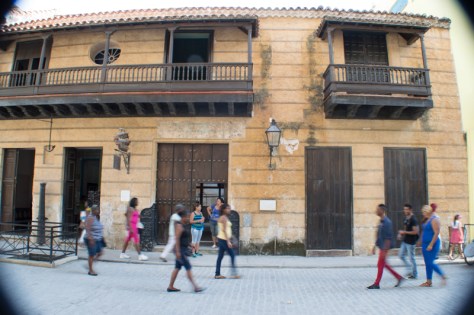
Near Plaza Vieja, a uniformed museum guard explained a little bit about life here. He earned 25CUC a month and it is quite insufficient to buy anything more than basic necessities. He was quite inquisitive about my cost of travel and living in New Zealand. He suggested that he move to NZ to work and better his life. I did not object but suggested that the grass is not necessarily greener on the other side. I quipped that the people here ‘happy’ and seemed to be contended. He agreed. People make do with whatever they get. He reassured to that even though poverty is real for most people, crime rate is very low. It is safe to walk anywhere in Havana after dark. It might sound unreal, I concurred that was my feeling too. Perhaps, it may be that I am not white and blended easily and therefore not targeted! The guard quickly returned to his day job. He is just, only just getting by economically. Crime rate are perhaps low as the punishment for crime is severe. Perhaps, since most Cubans are in the “same boat”, they look out for each other. A sense of community prevailed. I could sense this attribute.

havana (59) havana (58)

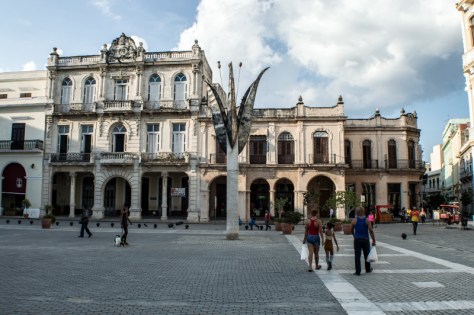
After a long pause and playing with a little kid at the square, I continue my journey on the road of the colonials to Plaza Vieja. This square was once the site of executions, processions, bullfights, and fiestas. The Spanish colonials had brought their traditions to this idyllic Caribbean island. Perhaps I was already tired of walking for the day as I found this plaza not particularly exciting. A few metallic modern artworks occupied some corners of the plaza. The fountain in the middle had ceased operation. One building that caught my sight is the Factoria Plaza Vieja, a restaurant. To quench my thirst, I stopped for a cool sugar cane drink mixed with lime juice. It was heavenly. Sadly, for a country that once produced large quantities, I rarely found any sold on the streets.
havana (60)

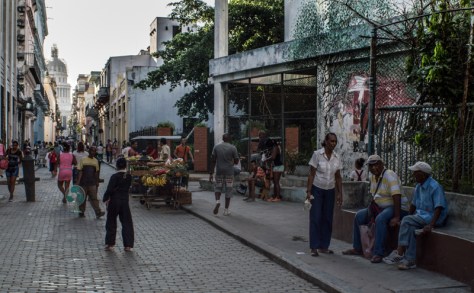
On my return to my Casa, I opted to take a new street. The sun set early in the Caribbean. Street vendors tried to get their last sales of the day before heading home. Older people gathered to catch-up on the day’s events. Office workers clutched their handbags with some shopped items in their hands. Time for me get a nice cool shower too. One interesting feature on the streets are the use of old canons at traffic barriers. Just stuck into the street.  At the end of the street, the massive white dome of the Capitolio faded into the soft and hazy twilight.

On Prado, I met Alfredo. He offered some Cuban cigars. Apparently, today only, they are at half price and this offer only comes by once a month. A great sales pitch but to his disappointment, I declined. We started talking. The population of Cuba is 11.5 million, and in his exaggerated estimate, about 6 million are police officers. In Havana alone, with a population of 2.5 million, there are about 1 million cops! I found these figures incredible. He continued, there are security cameras on every street, about 100 meters apart. Are they to keep a close watch on the society?  Cuba is still a state controlled society. Only then I noticed all the cameras Alfredo mentioned. Fortunately, the Cubans seem not to mind this close public scrutiny. They are friendly, helpful and easy going. What about the lifting of the sanctions I asked. He was happy and expected better things for Cubans.

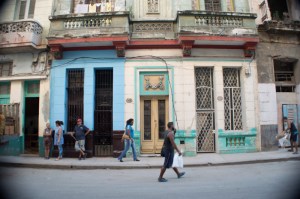
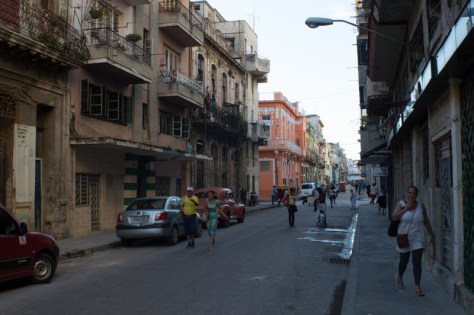
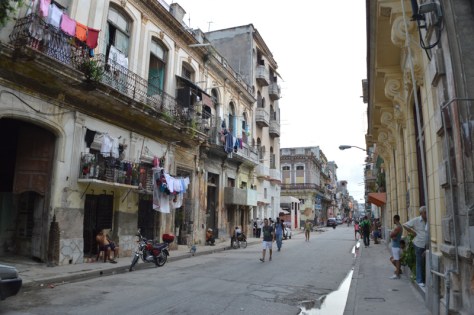
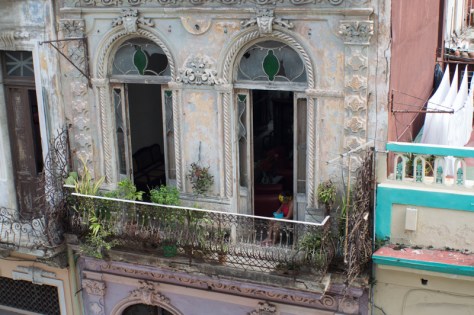
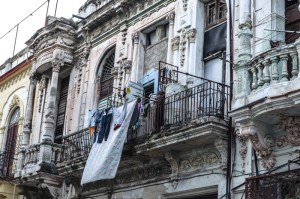
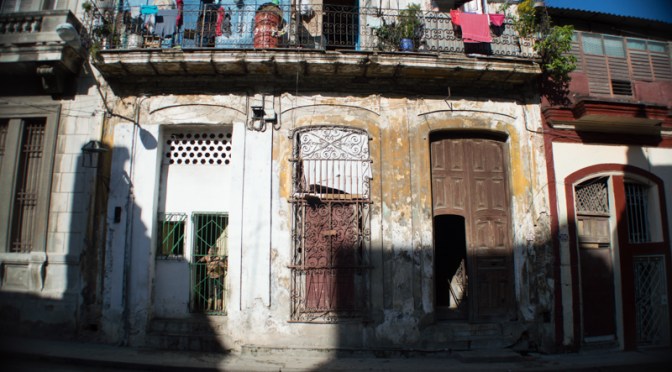
Across my balcony, I peeped into my neighbour’s apartment. A lady meticulously discarded bad rice from a container. The furnishing was a mix of leather sofa and colonial wooden and wicker furniture. As I walked on the streets, I noticed this furnishings almost everywhere. Stained glass windows and potted plants added some freshness to the fading and peeling exterior. Next door, washing hung on line fluttered in the open. There was hardly any sunlight. The houses that were painted were all pastels. This seem to be the norm around here in Centro Habana.   Further down the street, water hoses ran across the street. I know that my Casa had all the basic amenities. Some might not have. People lived in close proximity and tolerated each other. Perhaps there were no options. Neighbours genuinely helped and looked out for each other. A few classic cars were parked on the road. Some had not moved at all. The sun had almost set and night was creeping in.

havana (37)

For dinner, I headed back to Patisseries Francesca. I had been snacking all day and just wanted to have a small dinner. Just coffee and some sweet pastries. There was live music nearby. A full moon brightened the night sky. Unfortunately, the air was intoxicated with fumes from smokers. As I left the cafe, a man invited me to a bar next door. As we talked, he offered “senor, quiero una la chica”, mister, do you want a girl? I suppose, like all other cities, this is the reality of life here.

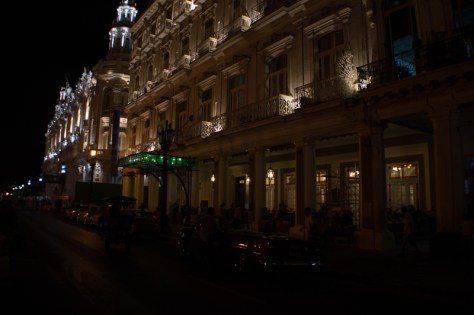
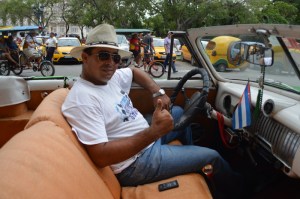
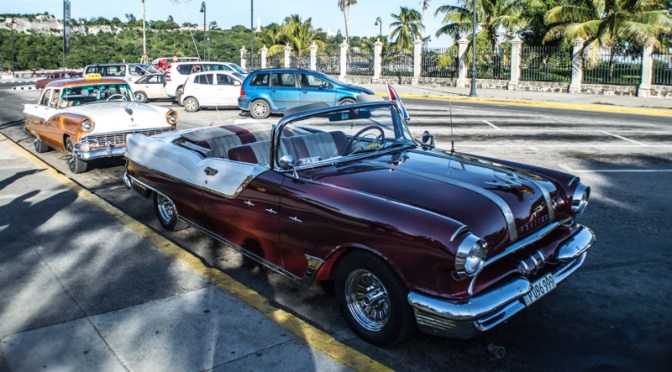
The Gran Teatro de la Habana was lit up like a Christmas tree. It was fabulous. Open top classic cars invited tourist to take a ride. Yellow taxis lined up along the street for a potential fare. The street was busy.

havana (62)

I walked around Habana Vieja after sunset. It is livelier and with a slight coolness of the air, everything seem pleasant. Calle Obispo’s cobbled path is lined up with numerous cafes, bars and restaurants. Live music between three and six piece bands created an atmospheric environment. Everyone seemed to be into the so-called Buena Vista music. The tunes are catch, a mixture of Son and Salsa. The double base, bongo drums and guitars all made fantastic rhythms. People on the street, especially the Cubans moved and grooved to the music. At the end of one street, slightly weaned out of people, a beautiful young girl sat by herself. I passed her but could not help admiring her beauty in the moonlit night. Later, as I returned to the same place, she was seated on a wooden park chair. A man sat on the next chair. He called me over and offered if I would like to have her for the night. She was young and looked innocent. She did not speak English. Hardly out of school, I thought. It disturbed me. I understand that life is tough here. Survival by any means perhaps. I cannot judge. What is her life all about? I don’t know. With the imminent return of American tourist, I wondered if this low profile ‘profession’ of hers’ would be corrupted.

havana6

havana (78)


havana (35)

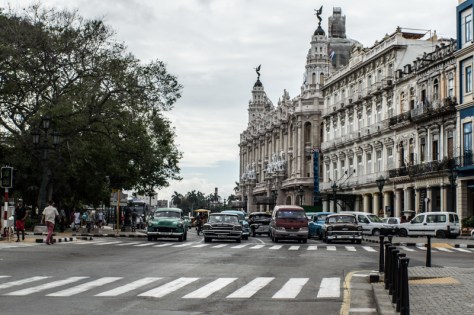
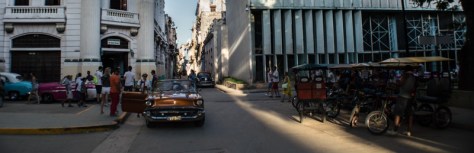
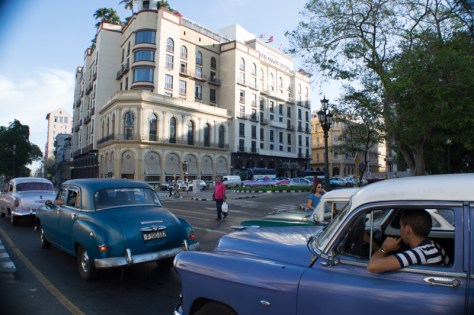
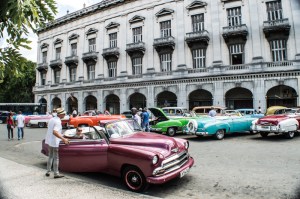
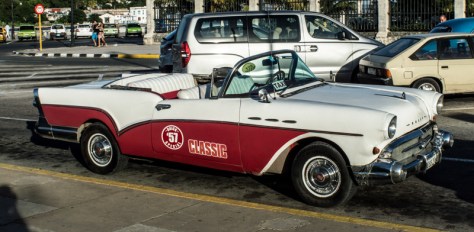
I headed back to Pastelaria Francesca for breakfast. Freshly boiled Cuban coffee was uplifting. Not too sure about the pink interior. Service can be erratic and sometimes you wonder where all the waiters had gone. Today the lady behind the counter was delightful. Paseo de Marti was crowded with cars, buses and people surrounded by impressive colonial buildings including the off white and under renovation Capitolio building, the Gran Teatro de la Habana and Hotel Parque Central bathed in the morning sun. Old American cars and “newer” cars along with bici-taxis, bright yellow egg-shaped scooters, horse carts, “collectivo”, Shared taxis, cramped buses and horse carts occupied this busy main street. Amongst these were immaculate and shiny ‘Old” American cars with open-tops and leather seats parades around the Central Park. A joy ride for a price. This place in Centro Habana is a hive of activities amidst a heavy smell of diesel fumes. Opposite is the green lung Parque Central, Central Park where I caught the bright red open-top tour bus. It is a great way to see Habana’s highlights and costs’ only 5CUC. Part of the ride goes on the grand Malecón, Plaza de la Revolution, Necropolis Cristobal Colon, and the coastal Miramar area. My purpose was to head to the Costa Rica Embassy to sort out my visa. Delays yet again as there was no response from San Jose.

havana (44) havana (49)

This part of Centro Habana is a great place to people watch and check out the high end accommodations like the Parque Central, Inglaterra and Telegrafo Hotels. Then, there is the majestic Gran Teatro de la Habana (theatre) and the iconic Neo-classical and Art Nouveau style Capitolio. Unlike the mellow residential areas, this area is bounty with activities, people and music. To get some respite from the balmy heat, just pop under the canopy of the trees in the Parque Central. Watch the street touts doing thing and the women flaunt their bodies. Everything seemed uninhibited and casual.

havana (48) havana (45) havana (93) havana (90)

My internet requirements are courtesy of Central Hotel – just buy a phone card from the bar and head upstairs into a private room for the terminals. Comfortable and convenient. However, they do have the option of saying no! Be nice. And after that, if you fancy a ride in one of the tuned-up classic American open top cars, there are plentiful around this area. It was not compelling enough for me. From here I headed to the train station, hopefully, to secure a ticket to Santiago de Cuba. The staff however was unwilling to give me one. “No para turista , solo para los cubanos”, not for tourist, only Cubanos. I left disappointed. Perhaps I should have brought a Spanish speaker.

havana (52)

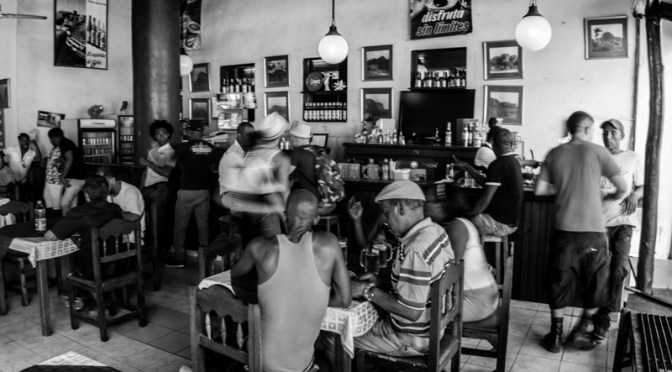
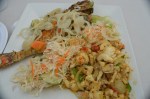
In the hot afternoon, just off the main drag at Parque Central near Calle Obrapia, I entered Cafe de Frances. I was back into Habana Vieja. I was sweating profusely as the blinding sun shone directly into the cafe. The oscillating fan helped a little. I wanted a paella. I have some limitations of what I eat – no meat especially pork and its derivatives, chorizo and sausages, that is commonly used.  I wanted vegetables and seafood. “Jo qiero paella de verduras e mariscos”. Order done and the wait began. This is an atmospheric cafe and bar and fantastically located. Schools girls in short navy skirts and knee-high socks laughed and played in a nearby school. A big dish was served. Perfect – shrimp, fish, langoustine with a few vegetables.  It was a filling but satisfying meal.

havana (53)

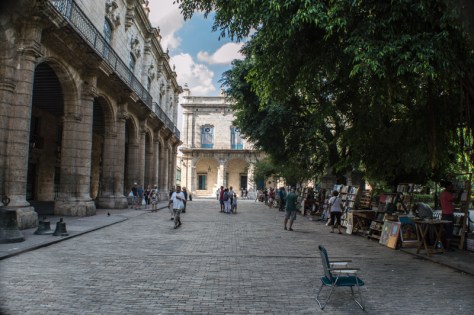
I ventured deeper into old Havana. I started at Plaza de Armas. This is the oldest square in Havana built in the 1519. It is a tranquil place with shaded Parque Cespedes. This part of old Havana is high restored. Cafes, bars and restaurants lined the perimeter of this plaza including a high-end hotel. The huge Palacio de los Capitanes Generales, former official residence of the governors (Captain Generals). On the paved street, many impromptu used books stalls had been set-up. No one is in a hurry and the quiet pace was perfect on this humid day.

havana (56) havana (54)

Walking aimlessly in this part of town was great. In the well restored streets people, tourist and locals, wined and dined. Restaurants staff entice people to try their fare or just to have a drink. Music filled certain parts of the streets. Calle Obispo and Mercaderes (Merchant Street) seem to be the most popular. I refueled with sweet snacks from local vendors along the streets. At one shop, a lion dance and beating of drums caught my ears. A group of Chinese all dressed in traditional outfits celebrated the opening of this outlet. Time passes slowly but the twilight was creeping in. I continued wandering along these wonderful colonial buildings and arrived at a cafe filled with patrons.


havana5

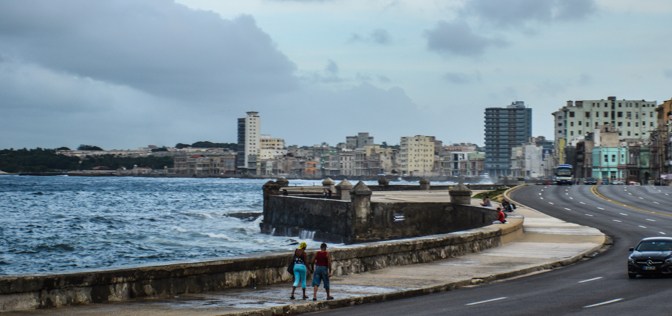
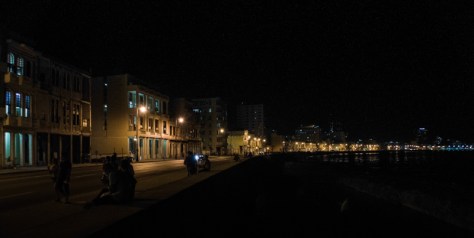
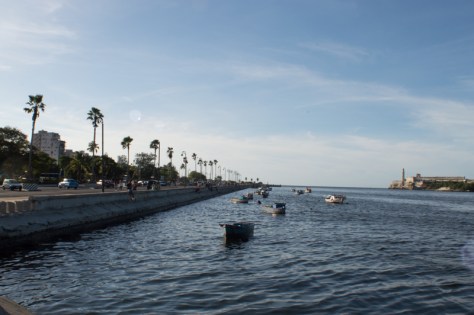
It was past 8.30pm when I arrived at the Malecón. The wide waterfront six-lane boulevard along a wall to protect from the raging Caribbean Sea is quintessential Cuban. It stretched about 8km from Vedado to Habana Vieja. The locals gathered here to cool-off, couples embraced each other and friends chatted and played. Street lights lit up the empty road. The other parts of Centro Habana had very few of these. Today, the ocean waves gently hit the protective wall. Towards Vedado, tall buildings rose along the rocky shores. My first day in Havana had been an intoxicating and enchanting. The romance of old world charm particularly the plazas in Habana Vieja is very tangible. The Cuba that I had experienced today is certainly “lost” in a time warp, going back about fifty years. The people lived out their lives in the open, combined with its crumbling but elegant architectures, it is indeed a living museum. However, change, for better or worse, is inevitable.

havana (40)

I returned every evening to the Malecón. It has a magnetic effect. Perhaps it is the sounds of the crashing ocean. Perhaps, likes the locals, this is the places to come contemplate, entertain and met people. I loved the idea that anyone could just come here and feel free as the cool breeze refresh the mind and perhaps the souls. One day, a small group of musicians played simple tunes and another a single guy revered up the volume of his radio. This prompted spontaneous dancing by a few. Families gathered with little kids running around giving the parents much need time for themselves. Young men fished on the craggy rocks below the wall. The living density in Habana is cramped and dense. This place offered some respite from your family and neighbours. Strangely, no boats on the water.

havana (96)

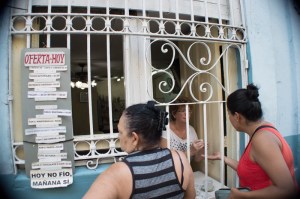
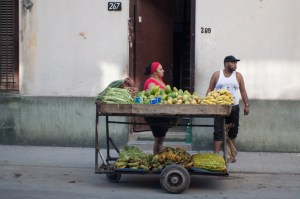
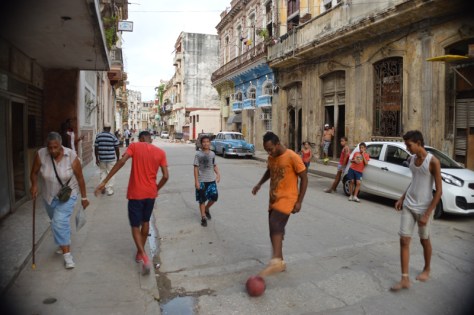
It was a very warm night but I managed to get some sleep. My excitement of being in Cuba had not dwindled. I was on the narrow streets of Centro Habana.  As in the evening, the ‘open living’ style of Cubans played out. While having a chat, they shopped from the mobile sellers. These vendors whistled and called out advertising their wares. Fresh vegetables, bread and few more. People on the upper floors talked through wrought iron guard rails on the balconies. Life here is slow and somewhat mellow. Young children played soccer on the street with a worn-out ball. I know baseball is big in Cuba but I did not see any kids with a ball and a bat.

havana (41)

havana (99) havana (98)


havana4

havana (34) havana (33)

I walked past several American cars with shiny exterior. The drivers sat in the shade in a nearby park. I reached the waterfront.  Beyond the port, a fiery blaze from oil production site. Across the inlet is the Fortaleza de San Carlos de la Cabaa (Fort of Saint Charles), simply called as La Cabaa. Towards the entrance of the bay, westward, was the impressive watch tower of Castle of los Tres Reyes del Morro. I did not venture across. Under the watchful eye of a statue of Neptune, on the Malecón, I met Mandrill. He and his mate were fishing but for the moment it seemed to be futile exercise. I had seen the make-up of the Cuban population and its external influences. The physical appearance of a Cuban in my description – European White to African Black and everything in-between. With this broad skin tones, mine qualified easily. Just need to speak Spanish. The Cubans seem not to distinguish the differences and that was wonderful to see. They were one. I loved this distinctive Cuban culture – singularity.

havana (32)

Mandrill described himself as mostly Spanish, part Irish and part “unknown”. He quipped that his wife is an American and the reason for his spoken English capability. His fishing ability was hopeless for the last three hours. The gas flame continued to puff smoke into the atmosphere. Mandrill commented that the water around the island is polluted with oil drained from the ships. This is a fact as I witnessed slick oil floating in the south when I flew into Cuba. Numerous stretches of dark brown slick oil inter-spaced by the ocean currents and wind. A pristine coast under threat. I suggested that fuel must be cheap here. Mandrill just said, the fuel is low-grade and the reasons for the Habana’s air pollution.
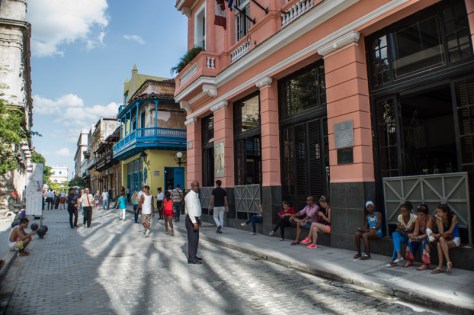
Twilight was setting in. The Cubans understandably due to the heat, humidity and perhaps with no fans or ventilation, resorted to sit at their door steps and sidewalks. The front doors are left open with a view into Cuban’s private lives – watching TV, dining, having a conversation in rustic setting and charming wooden furniture. I remembered my childhood days in Malaysia. We would sit in the porch or on the road having a rest or conversation with family and neighbours. The porch in Cuba’s densely packed housing is the street. The ground floor was most exposed. In the upper floors, people hung around wrought iron balconies amidst hanging cloths conversing with their neighbours. It is a close-knit community. Amongst these people was Umbereto and his sister Ana. Typical Cuban style, shirtless with his belly hanging out and Ana with hair curlers on rested on the front door. Like most Cubans, they were friendly and wanted to communicate with me. When I mentioned that I lived in NZ, it hit his sweet spot. He was cricket mad. He even declared that he is the only one in Cuba. He immediately took me into his home. The path from the doorway led into a small courtyard, tidy and filled with potted plants. The path branched towards several doorways. He was not kidding. The walls and cabinets in his house were filled with cricket memorabilia. A set of crease embedded onto a side of a cabinet. His wife just laughed when he mentioned that his 100% love of his life is cricket. I suggested, perhaps 80% wife and 20% cricket. Umbereto just laughed. As I left his place, his last words were, “me casa tu casa”, my house is your house. I felt welcomed.

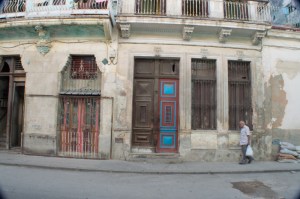
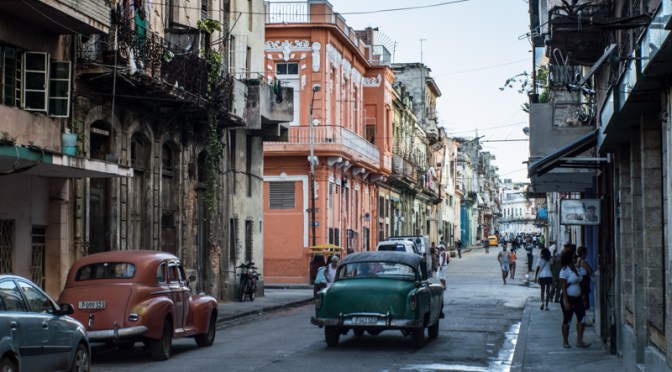
I returned to my Casa in Centro Habana. The slightly cooler air was a blessing in this windless narrow street. Similar to streets in Habana Viejo, the locals were out in force on the streets. Like the Cubans, I too hung around the balcony and watched everyday Cuban life unfold below. I loved these sights were people are living their lives normally. From my third floor room balcony, I surveyed my street. The building facades were crumbling with iron rods sticking out of some. Some were painted in pastel colours and mostly faded and worn surfaces. Renovation work partially completed and some needing urgent attention. The city’s choking fumes from vehicles did not help. Despite the hardships, the streets were clean with bins dotted along the street. Piles of stones and rubble were stacked on the sides of streets. On the far southern end, the towering dome of the Capitolio was under renovation. The corner fresh produce stall had closed for the day. I decided to have dinner at my Casa (well the operator’s) tonight and an opportunity to meet my fellow Casa “mates”. The Casa owner is very enterprising and had a few accommodations for rent both in Centro and Habana Vieja.
havana (38) havana (39)

havana3

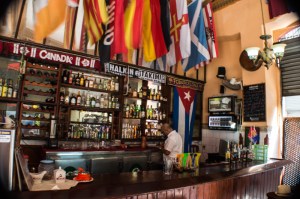
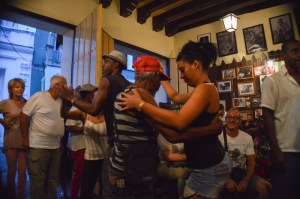
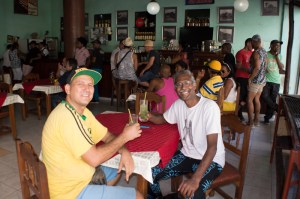
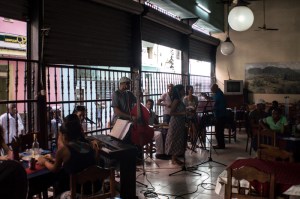
Angelo suggested another place where Cubans frequented. Soothing music filled the hot and humid Habana air. They were Son (with a African beat) music, the precursor to modern Salsa music. I loved it immediately. This is Bar El Vinales. I invited Angelo to join me. He was taken aback. Although he had brought guest and tourist here for several years, he had not had a drink before. He seemed overwhelmed. I seldom drink alcohol. This was an exception, immersing into local culture. The Mojito was refreshingly good and costs 5CUC. There were many locals who could afford to dine and drink here. People danced spontaneously to the live music. It seems everyone and anyone can dance. The ambiance and atmosphere topped up with culture and fun was simply great. Live Son and Salsa music, a bit of Cuban Rum, the laughter and “la buena vida”, living the good life combined with the heat and sweat seemed like a great mix for an intoxicating afternoon. I loved it.
havana (14)

havana (13)

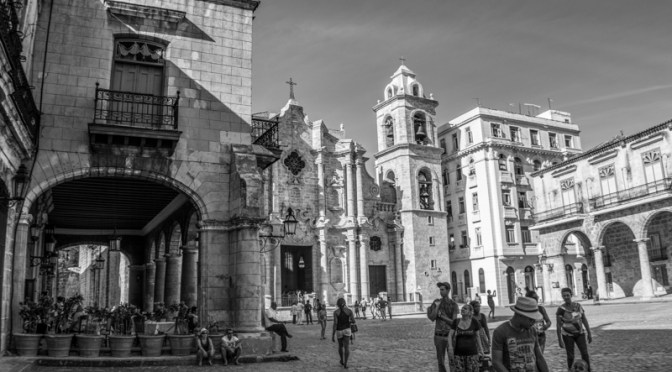
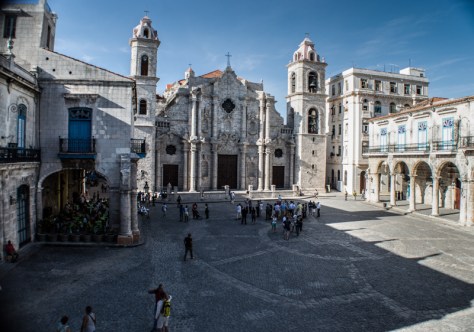
Angelo dropped me off at the end of Calle Empedrado, just past La Bodeguita Del Medio which terminated at Plaza de La Catedral. This lovely cobble stoned plaza with adorned with a wonderful and ornately carved Baroque styled Catholic Cathedral as its centerpiece. The plaza is enclosed with similar building filled with offices, museums, artisanal shops and restaurants. The setting sun had cast a strong light on the Cathedral known in Spanish as La Catedral de la Virgen Mara de la Concepcin Inmaculada de La Habana. Completed in 1777, the main building material is coral obtained from the sea floor. Two towers rose beside the Catedral de la San Cristobal. The interior is simpler than the grand exterior. However, loud music and songs blared from huge speakers took away the sanctity of the church.

havana (28)

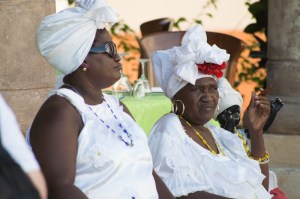
Two ladies dressed completely in white with coloured bead necklaces sat outside one of the buildings. Walking on the streets, I had noticed mainly women with this dress code. A black doll statue on their side. These are practitioners of the Santaria, an old religion or practice with its roots in Africa. It was brought in by the African slaves. Whether it is superstition, cult or witch craft, today it is intertwined with the catholic religion and the practice is widespread and deeply rooted amongst Cubans, particularly of African origins. I frequently encountered women dressed all in white gowns on the streets of Habana.

havana (23)

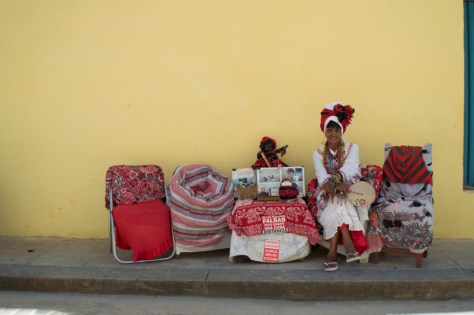
As I exited the plaza, I met another practitioner of this Afro-Cuban religion, Santaria. Initially I just watched her. She had a calm and composed demeanour. On a table, a black doll dressed in red was placed beside a newspaper article with a photos on it. She must be popular. Her outfit was simple with a dash of colour from the numerous beads on her neck. However, her colourful extended fingernails were outrages.  I had to talk to her just to find out what she is all about. My hesitation is my lack (in fact basic is an over-statement) of Spanish. In the meantime, tourist just took pictures of her, paid a few CUC and continued on. I approached her. She had practiced this culture for many years and a fortune-teller. I noticed cards on the table. She continued that her origins are from the Yoruba people of Africa. I managed to converse for over half an hour. Besides the word she uttered, I was caught up in my mind about her personality. The jiggling of the necklaces every time she moved. The unlit cigar she held in her fingers laden with rings.  The gentle smile she gave to the passer-by. She was a colourful lady.  I managed to “translate” some parts of her story. It is a shame that most people just walked past. As I left, she called to me, “amigo, hasta luego”. Her name is Adelaida Borges Senora Habana.

havana (29)

havana2

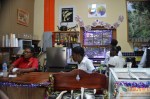
At the end of Prado, a cluster of magnificent buildings appeared. One was Gran Teatro de La Habana, an architectural masterpiece. I was very impressed by its details. A row of restaurants were on the ground floor. My tummy was grumbling in the late afternoon. I entered a patisserie – Pastelaria Francesa. The interior wall was pink and the waiters and waitresses dressed in black and white. The display cabinets had a selection of cakes, sweet and savoury pastry and great smelling coffee. It was busy, however, the atmosphere is wonderful. Service is mediocre but pleasant. Armed with two pastel de guayaba (sweet guava pastry), I managed to get a table outside on the corridor. This is a great place to watch the daily lives on the main street and catching the actions across the Central Park. The street is crowded with taxis, horse- carts, and the iconic beat-up American cars. Some in bright gleaming colours with open tops enticing tourists to take a ride. Salsa music wafted through the humid and tropical air. Musicians played catchy Son and salsa tunes to the delight of tourist and locals a few doors away in the building, at Hotel Inglaterra. Although the food here is average, I loved the relaxed pace, convenient location and reasonable prices. Unfortunately, you are also exposed to “jineteros“, street touts.

havana (4)

havana (43)

I met Alexis at the cafe. He spoke Spanish to me only to realize that I was not a local. He thought I was a “Cubano“, a Cuban, likely from Baracoa, a far eastern town dominated by Afro-Caribbean people, being dark-skinned. Strangely he did not enter into the cafe. A street hustler perhaps or wanting something I thought. Before he continued, I asked him if he wanted to sell or want something from me. If yes, please go away but if you want to talk, that’s fine. I am not one to shun from a conversation. He spoke little English. When popped the question of Cuba opening its doors to the Americans, he was sceptical. This is the reason for my travel to witness Castro’s Cuba before it changed for better or worse.  Alexis wanders off.

I belief, with the imminent relaxation of US trade embargo sanctions, the cost of living will go up as new imports are allowed in. Wages will take time to catch up especially for the State employees.  The upper and middle class, and those involved in the tourist industries will benefit the most. The have and the have not’s at the onset. More importantly, the State policies governing socio-economic has to change. Overall, with the relatively poor living conditions, it doesn’t seem good in the short-term. Time to explore Old Habana, “Habana Vieja“.

havana (8)

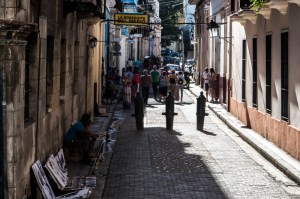
Walking is the best way to explore this part of town. Paseo de Marti roughly separated Centro Habana and Habana Vieja. As I strolled along the narrow streets, its derelict and tired-looking facades of buildings remain elegant and with lots of old-world charm. Balconies, arches and pillars appealed to me. On a street in Centro Habana, I met Angelo, a fairly white bici-taxi (a three-wheeled Pedi cab) driver. He spoke good English. He was trained as a MRI technician and earned about 20CUC per month. He left school at fourteen to provide for his family.  After the revolution life became difficult for the family. When sanctions were imposed, his father couldn’t cope to provide and committed suicide.  His sister drowned while desperately fleeing the country. He had to care for his mother. Initially renting a bici-taxi, he eventually owned one and is quite happy. He earned more than four times his monthly State wages. He has a wife and kids to think about. When asked about Castro, he snapped. “I hate him. Muerte“, death to the Revolution”. He was visibly disturbed. I can understand his bitterness. However, Che Guevara gets a thumbs up.

havana (25)

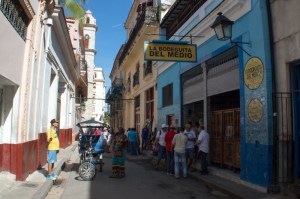
Angelo is one example of educated professionals whom have now abandoned their jobs. My casa owner is a pediatric doctor! Obviously, their income is much higher. This phenomenon will continue to become wide-spread with the removal of the trade sanctions. Will this bring about shortage of skilled personnel to build up the country later? Most Cubans are employed by the State (paid in Moneda Nasional) and for those whom need more, just to survive, there are no options but to get involved in tourist related activities. The real money, CUC, becomes available. I decided to take a ride with Angelo on his bici-taxi for 3CUC. It is quite a sum to pay (compared to what locals pay) but it was more the company. We ended up at Hemingway’s mojito joint, La Bodeguita Del Medio on Calle Empedrado. For obvious reasons, the place was packed with people wanting expensive mojito’s.

Havana 1

It was nearing midday when I arrived at Jose Marti Int. Airport in Havana, Cuba. Immigration formalities were smooth apart from being scrutinized for a few minutes by a police officer. At Immigration I handed my passport and my “tarjeta tourista” or tourist card. I understood that all tourist needed one before arrival. I diligently managed to get one from Copa Airlines at Santiago (at a cost of US$20). I was relieved. To my surprise, the tourist card was returned. “No nesasito“. Well at least not for Malaysian passports. There were no visible signs of police presence nor heavy inspections of luggage. It was a normal entry.

Next was to obtain some local currency. I brought Euros (as there was a 10% commission on US dollars.) The local tourist currency is Cuban Convertible Peso (CUC) at nearly 1: 1 rate (today was 1: 1.18). I was greeted by Julian (my “casa particular” owner) not with the iconic beat-up American cars but a small sky blue Fiat. The drive from the airport was with some kind of unknown or unexplained expectation. I travel with no expectation to all countries as this enables me to accept whatever is thrown at me. A new experience. However, Cuba had been in my mind for a very long time. I hold Cuba both in empathy, triumph, the romance of the revolution and the heartache of big brother bullying.

I had travelled to a few countries but not quite excited as travelling to Cuba. A country that had been “moth-balled and placed on a shelve”, and cordoned off for 50 odd years. There were questions but the response were unreliable. I had waited a long time to arrive here. It wasn’t the iconic cigars nor the promise of idyllic beaches but of the wonderful mix of African-Indian-Caribbean-Spanish cultures, music and perhaps to understand a little of the lives of the people. More importantly, to see and experience the “cocoon of post revolution Cuba” – Castro’s Cuba. Post 1959, Cuba is best describes as a socialist with the state controlling most of the economy, production and employment. The best way to find out is to personally explore and experience this idyllic Caribbean, multi-ethnic, customs, people of diverse origins.

The 25CUC (perhaps a tourist price) drive was challenged with a few pot holes in a very tropical setting. Coconut trees are a giveaway. I felt like I was home (Malaysia). There were very few road vehicles. The drive through Central Havana was eye-opening. I was greeted by tall grey blocks of Soviet-era buildings.  Concrete blocks in a dilapidated state. Perhaps one or several coats of paint might change the uncharacteristic building blocks.

havana (1)

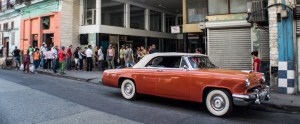
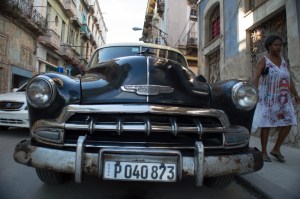
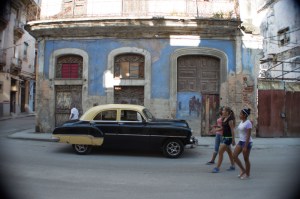
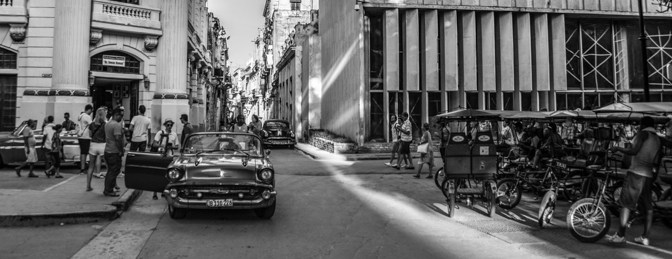
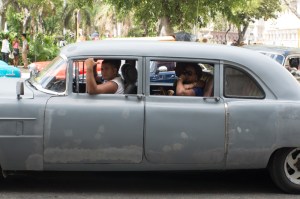
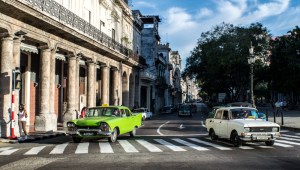
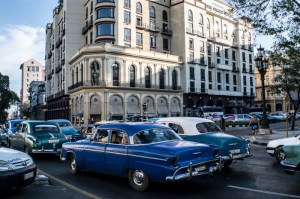
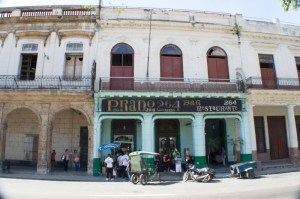
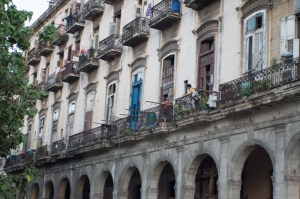
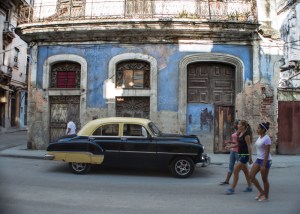
As we approached the narrow streets of Centro Habana, a kaleidoscope of architecture – neo-gothic, art deco and neo-classical. Villas, mansions, low apartment blocks with balconies, mostly in pastel colours all crumbling, faded and at various state of dilapidation were on display. On the road, classic American cars brought over in the 50’s mingled with Soviet- Balkan era and Japanese cars. Many, possibly functioning on borrowed times.

havana (82)

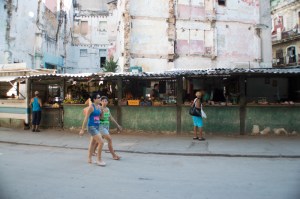
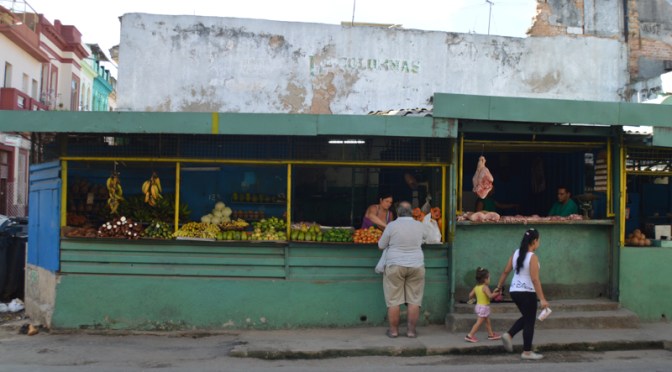
There are basically two options of accommodations, legally, – Hotels and Casa Particulars. To get a near authentic and cheaper option, I choose a Casa Particular. They cost around US$20 – US$25 and meals are optional and cost extra. My Casa Particular, in Centro Habana, has all the modern amenities plus running hot water, internet and look well-off. These accommodations are approved by the State, privately owned and managed with a blue symbol, “arrendador divisa“, visible on the front. Perhaps slightly costly for backpackers, but it provided a homely experience and with plenty of local information. With increased relaxation of State control and expansion of private business, numerous Casa Particulars have sprung up throughout Habana and other tourist destinations. My Casa (an associate of my booked Casa) was on the third floor (with an internal working lift) in a two bedroom low-rise apartment block. My room had a fabulous views of Centro Habana and Habana Vieja (Old) Habana. Casa owner Miguel was a quiet elderly man and spoke only Spanish. A small vegetable market with corrugated iron roof on the street corner was doing little business. The assorted produce were all fresh.

My Casa in Centro Habana, on Calle Consulado, was one block off the wide and leafy boulevard, Paseo del Prado. Alternatively referred as Paseo del Marti which stretched from the coastal coastal Malecón  and Castillo de San Salvador de la Punta to Calle Neptuno, off the Parque Central. I was eager to explore.

havana (36)


havana (100)

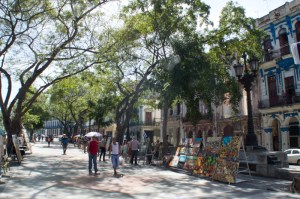
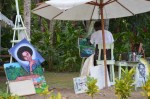
On the Prado, under the canopy of trees, paintings and drawings by local artist depicted daily Cuban life in oil, paint and pencil, were displayed of wooden stands. Little kids, probably between 8 – 10 years old, were mentored by adults in the instilling interest and knowledge in art as they begin to put their impressions of Habana on paper. On the road, classic American cars mingled with Japanese cars. The people I met on the streets were friendly. Buses and cars alike puffed out diesel filled choking black fumes.

Havana
Havana

Rows of low-rise apartment blocks stretched on both sides of this wide and green road. The exterior of these blocks revealed ornate designs, wonderful and colonial architectures. People stood of balconies having conversations and clothing hung to dry fluttered slightly in the hot breeze. I was excited with my journey through Cuba, enchanted or not, I shall soon find out.

Cuba

Journey undertaken in October 2015

Cuba had been on my ‘want to be there places’ simply to witness the harsh reality of politics. The Republic of Cuba with over 4000 islands in the Caribbean Sea has a population of about 11 million. The Spanish colonized in the 15th century. In the late 1800’s, it fell into American control. Then in early 50’s, it fell into the hand of Batista, a dictatorship government. Apparently the American mob had a free hand in running things, gambling, drugs and prostitution, in Havana. After the Cuban Revolution of 1959, in association with Che Guevara, Fidel Castro overthrew the existing government and eventually established a socialist/ communist government.  However, the US placed a trade embargo on Cuba after the failed Battle of the Pigs to overthrow Castro, the Missile Crisis and Cuba’s association to the then Soviet Union. The US did not like this. Things were looking good for Cuba at this stage. In the late sixties, the Soviets, the major importer of Cuban produce like sugar propped up the economy.

hav15

As a result of the sanctions and withdrawal of the Soviets, hardships befell to the State and the people of Cuba. Money become scarce. Castro’s communist or socialist government had to survive with little. So change and development halted. The once thriving agriculture production declined. This situations had created a country where time literally stood still. Cuba is living in the sixties. From the buildings, cars, agriculture and food, all become “rare” commodity. Upkeep and maintenance stopped as funding dried up. The hardships had led to many Cubans to migrate at great expense (including their lives) to the US and other Latin American countries.

The revolution brought Castro into leadership but later hardship to Cuba. The revolution was never given a chance to develop largely thanks to the US trade embargo. In other Latin American countries, where there was no US trade embargo, the revolution had brought about positive changes and developments. Countries like Nicaragua. One could argue that there were still funds and income coming into Cuba, where did these monies go? Corruption perhaps and into political leaders pockets? I don’t know.  What I do know is that the people of Cuba had endured hardships for a long time and continue to do so with poor housing, infrequent basic amenities like electricity and water supply, high cost of ‘anything’ not considered basic needs. It is hard to take in watching the queues at grocery and butchery. However, what is astounding is the basic nature of the Cubans. With all the circumstances affecting their daily lives, they are hospitable, friendly and engaging. The desire to be happy is overwhelming – in their music, dance, smiles, ingenuity and everyday life. For Castro, it had been a battle between David and Goliath. All within a stone’s throw. Surely with America’s might, Cuba could have been ‘neutralized’. Castro had survived till today. In my view, Castro had worn this battle, albeit the hardship Cubans had to endure. Some with their lives. At the moment, with easing of this trade embargo, the only visible sign is an American flag flying in its embassy. This is my personal journey through Cuba.

san24

Earthbound Travel Stories