Tag Archives: Sabah

Danum Valley – One of Borneo’s Last Great Wilderness.


Into One of Earth’s Last Wild Places

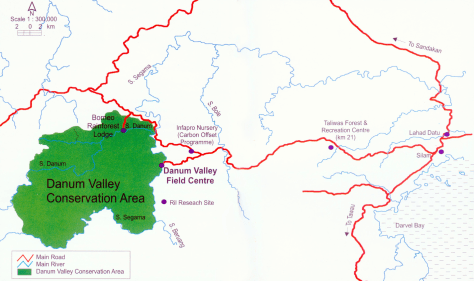
Borneo, a huge tropical island – exudes rawness, untamed and unexplored ecosystems teeming with assortment of flora and fauna. Danum Valley, about 80km from Lahad Datu, offered exciting opportunities, untouched wilderness, to experience wildlife and native tropical forest. There are over 300 species of birds, which account for 75% of Borneo’s bird species. There are also over 500 tree species. Additionally, there are over 120 species of mammals, including 10 species of primates. Danum Conservation Area is 438sq km.  of which 95% is mixed lowland dipterocarpus trees (including shores, hopea and drybalocarpus).

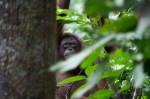
Most areas covered is non-logged. It is a 130 million years pristine primary forest. This forest is a lush, untouched world. Wild orangutans, pygmy (Bornean) elephants, red (maroon) leaf monkeys, hornbills, and gibbons still roam free here. It also has the tallest tropical rainforest tree – yellow meranti (Shorea faguetiana). Locally called Seraya Kuning Siput at over 100m. Danum Valley is truly one of the last wild places left.

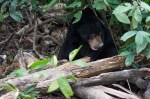
Sabah (Malaysian Boneo) – is an exciting place for exploration and adventure. There are several thrilling experiences to enjoy. You can go diving at Sipadan, Mabul and Kapalai Islands, and Tunku Abdul Rahaman Park. The Semporna coast for diving/snorkeling. You may also climb the highest peak in South East Asia, Mt Kinabalu, which stands at 4000m. Wildlife experiences await at Mersilau, Tabin, and Danum Valley. Enjoy Kinabatangan River Cruises. Nature reserves like Sipilok offer awe-inspiring visits to the Orang Utan and Sun Bear Rehabilitation Center. Visit Labuk Bay for the Proboscius Monkey Sanctuary and Buefort’s Klias Wetlands. The list goes on. There are many ethnic groups. Each has a unique culture. These people call Sabah – the Land Below the Wind – home.

Information and bookings

Staying in Danum Valley

When planning a visit to the Danum Valley Conservation Area, there are two accommodation options — and both offer very different experiences:

  1. Borneo Rainforest Lodge – A luxurious eco-resort, ideal for those seeking comfort, gourmet meals, and guided nature walks with a touch of indulgence.
  2. Danum Valley Field Center (DVFC) – A renowned rainforest research station that’s more rustic, but no less immersive. DVFC is ideal for nature enthusiasts, birders, researchers, and travelers looking for a more authentic, close-to-nature experience.

I chose the latter — Danum Valley Field Center — and it was an unforgettable experience.

Booking & Travel Tips

Accommodation bookings for both places can be made directly. I recommend booking directly. Alternatively, you can book via travel agents, especially if you’re bundling other adventures. These adventures include Kinabatangan River cruises, Sepilok Orangutan Rehabilitation Centre, and Proboscis Monkey at Labuk Bay (Sipilok)/Klias Wetlands (Beaufort). You can also explore Tabin Wildlife Reserve, hike Mount Kinabalu, or go diving/snorkelling from Semporna.

If you’re going through an agent, I personally suggest River Junkie. They were quick to respond, transparent with pricing, and flexible with itinerary options. Note: Travel agents provide their own guides, so experiences may differ slightly.

Contact & Guide Recommendations

To book directly with DVFC, here are the best contacts:

  • Reception: +60 11 1762 3016
  • Ms Rosti (Lahad Datu office): +60 10 931 7612

Ask for Daryl or Henry as your guides — I had both. They were fantastic. Deeply knowledgeable, patient, and genuinely passionate about the forest and its inhabitants.

Once on site, you can choose from several activity packages. Most are optional, including: Sunrise viewing, Night Drives. For specialist activity like Birding, pre-booking is essential.

Accommodation Types & Pricing

DVFC offers two-tier pricing — one for Malaysians and another for international visitors. If you’re Malaysian, ask if the local rate still applies — I managed to get it!

Here’s a breakdown based on my stay (3D2N, New AC Resthouse, single occupancy):

  • Malaysian: MYR 1,770
  • Non-Malaysian: MYR 2,820
Room Types:
  • Deluxe Rest House: Air-conditioning, hot showers, and a basic wired internet connection (no Wi-Fi).
  • Standard Rest House: Fan-cooled, hot showers, no A/C.
Getting There

The jump-off point is Lahad Datu, which can be reached in several ways:

  • By air: Daily MAS Wings flights from Kota Kinabalu (BKI) to Lahad Datu Airport (LDU).
  • By road: Public transport or taxi from Sandakan (approx. 4–5 hours) and Semporna (approx. 2.5–3 hours)
  • Private overland transfer: Can be arranged with your DVFC or travel agent booking.
A Note on Wildlife Viewing

Let’s be real — this is a vast, dense tropical forest, not a zoo. Wildlife sightings aren’t guaranteed, and patience is essential. With the help of experienced guides, regular excursions, and scanning the forest floor and canopy, your chances improve significantly. By listening to the sounds and occasionally detecting smells, the possibilities increase tremendously. Being in this unique natural environment is already a plus!

My Experience: Lahad Datu & the Journey to DVFC

I arrived by flight from Kota Kinabalu to Lahad Datu (mid-June). Then, walked to the DVFC office nearby and completed my registration, permits and payments.

As a solo traveller, I was expected to hire a private guide—which typically involves an extra cost. I was fortunate. A group of three travellers were departing for Danum Valley on the same day. I could join them. That said, this arrangement depends on both availability of guides and group consent, so it may not always be possible.

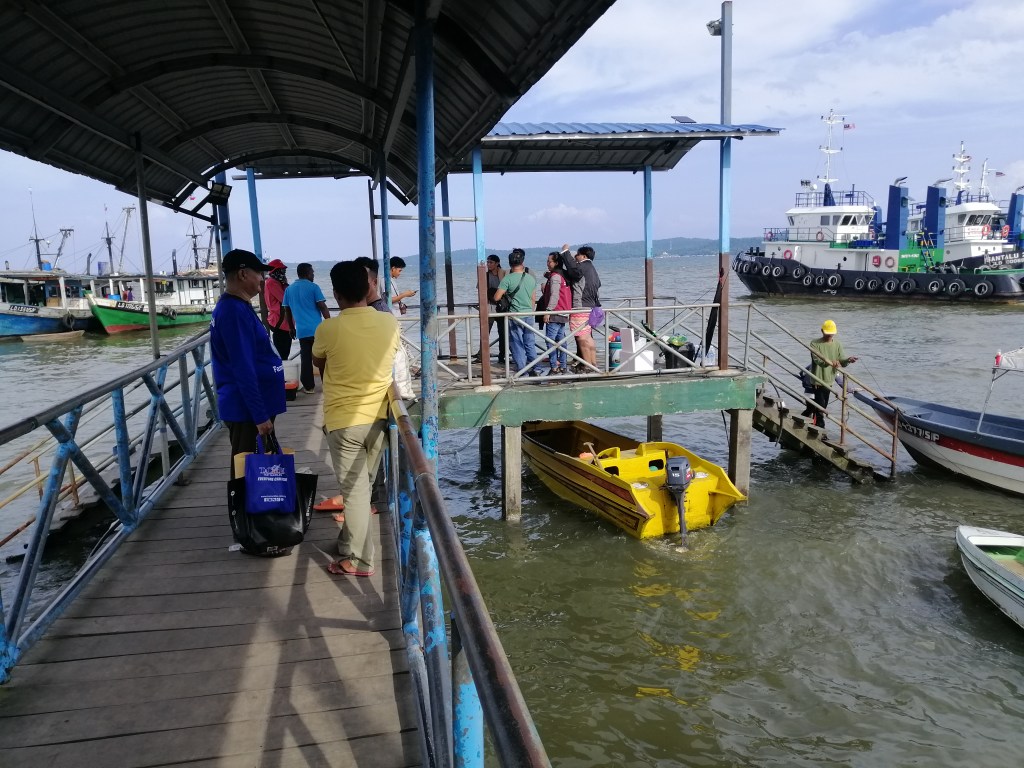
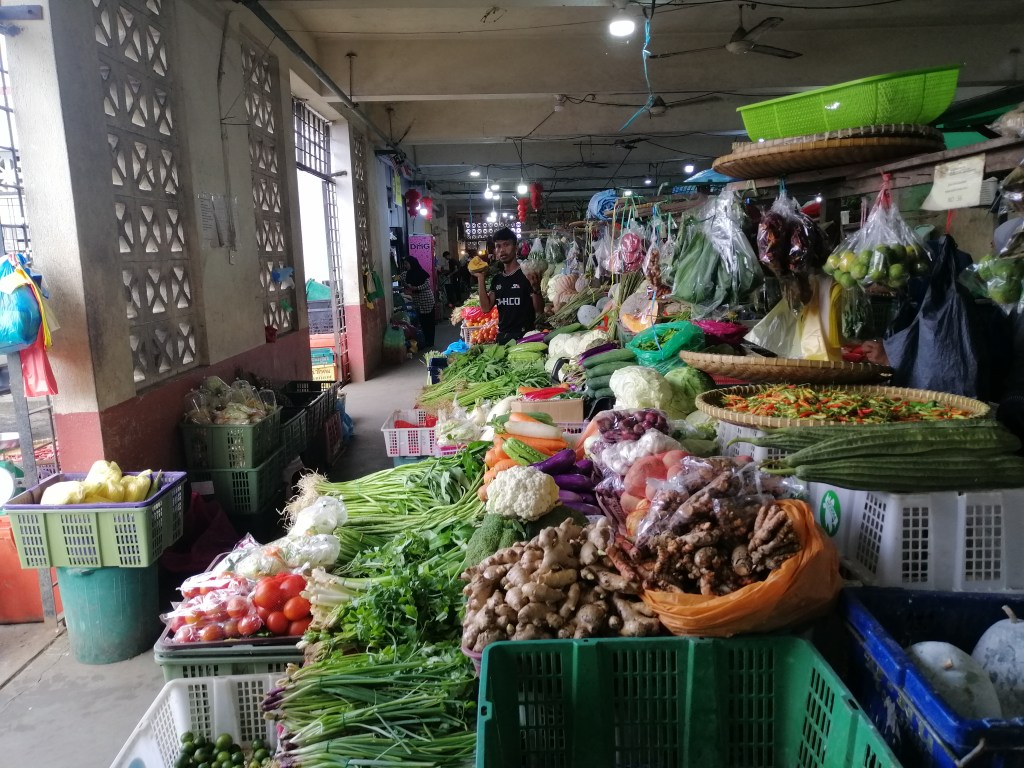
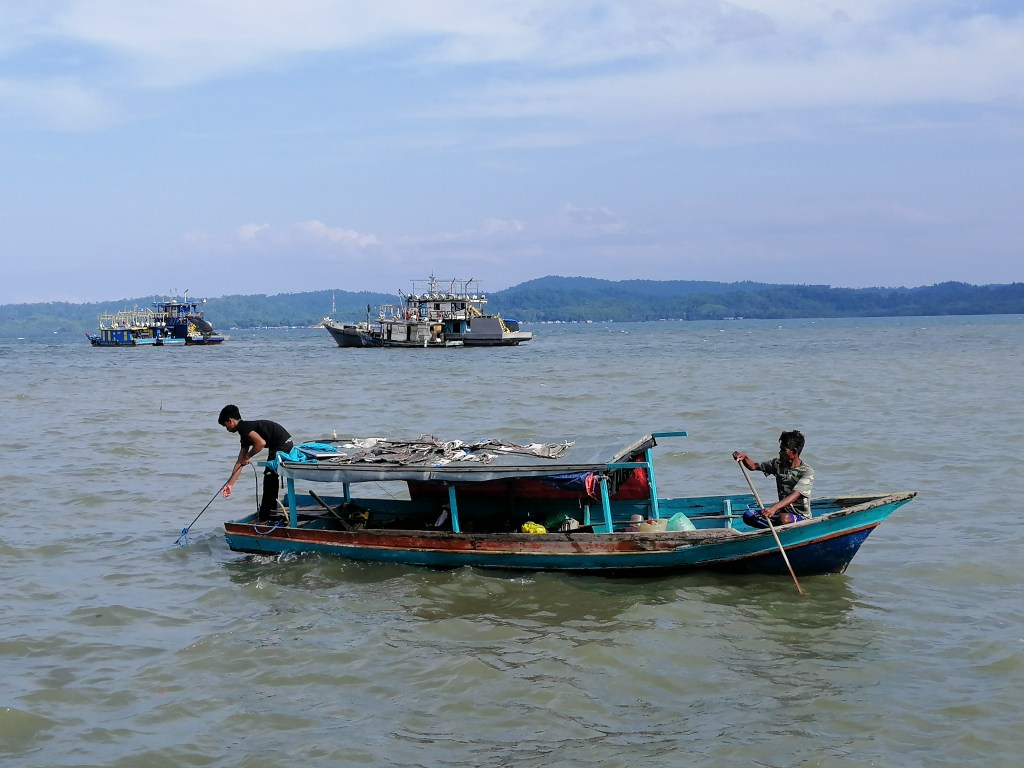
Wanting to explore more of the area, I had arrived a day earlier. Lahad Datu is a small coastal town with a distinct local charm. I spent the afternoon wandering its fish harbour, boat jetty, and the lively wet market along the waterfront.
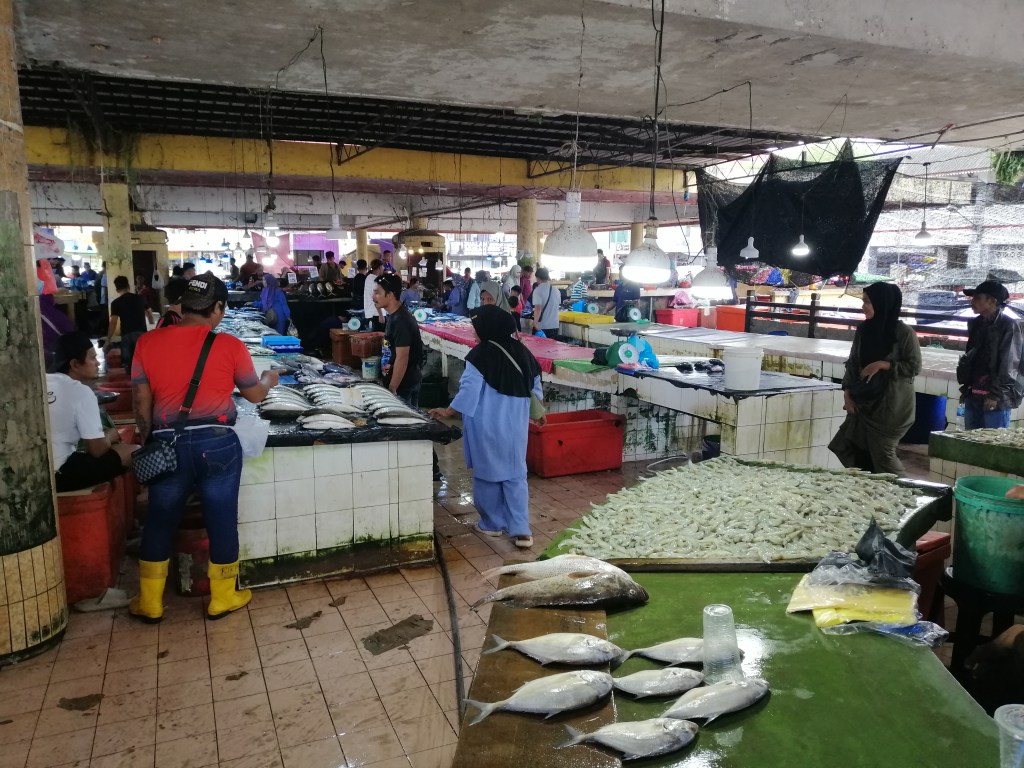
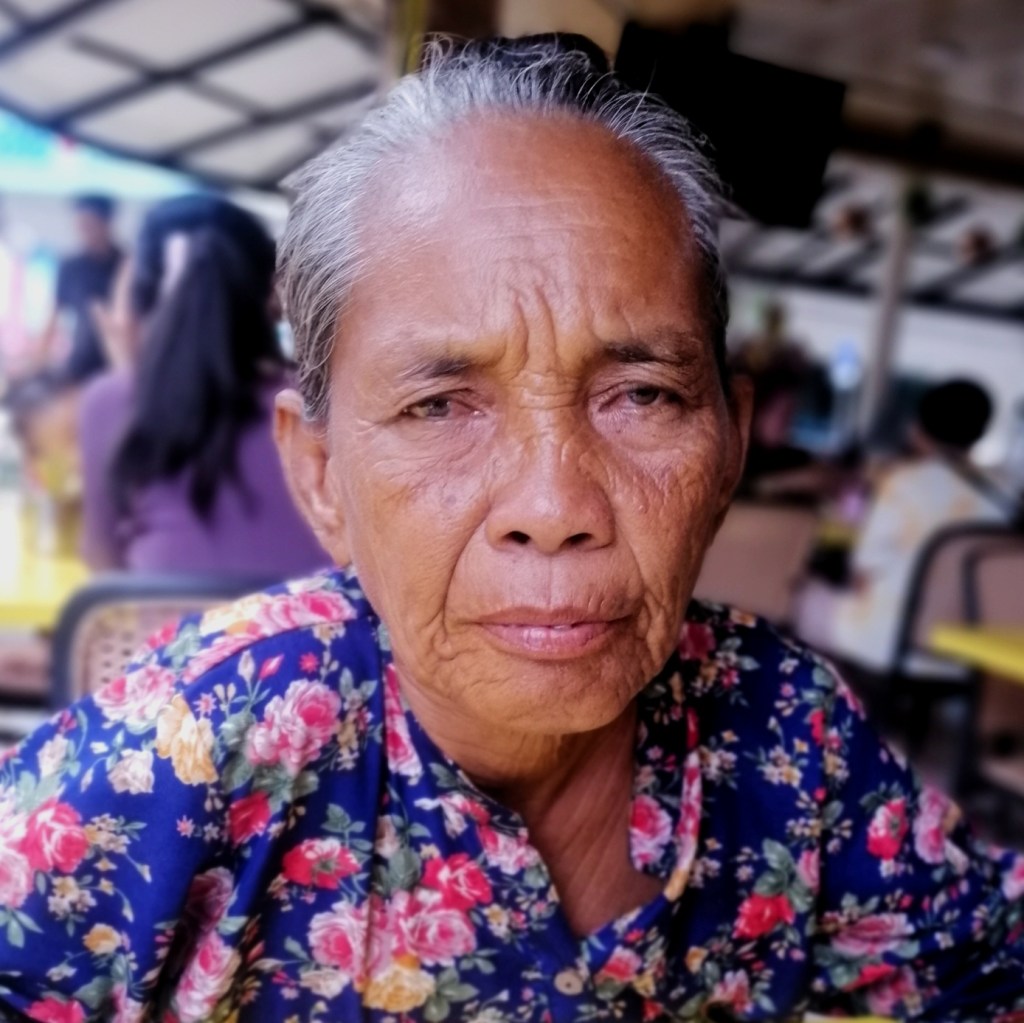
My accommodation in the heart of the town – The Executive, with plenty of local eateries and night markets nearby.

Day 1Into the Heart of the Jungle: My Journey to Danum Valley

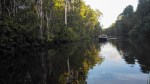
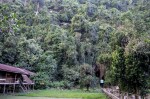
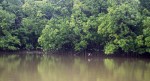
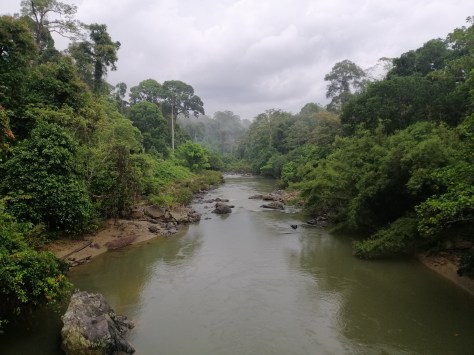
The following morning, a DVFC driver picked me up at 0930, together with three fellow nature enthusiast at my hotel. We headed off south on the highway towards Silam. From thereon, another 63km, on unsealed and winding roads through Ulu Segama Forest Reserve. The journey was quite thrilling crossing through thick tropical jungle. Our driver kept his eyes peeled for wildlife along the entire journey. A Yellow Throated Marten hastily crossed the road. It was an exhilarating drive through thickets of bamboo, mature forest trees standing like sentinels forming a dense canopy. After two hours, we arrived at Danum Valley Field Centre (DVFC), nestled along the banks of the Segama River. The river, slow and shallow, meandered gently through the forest. It separated two distinct ecosystems. There was lush primary forest on one side and the regenerated secondary forest on the other. A reminder of past logging and nature’s remarkable resilience.
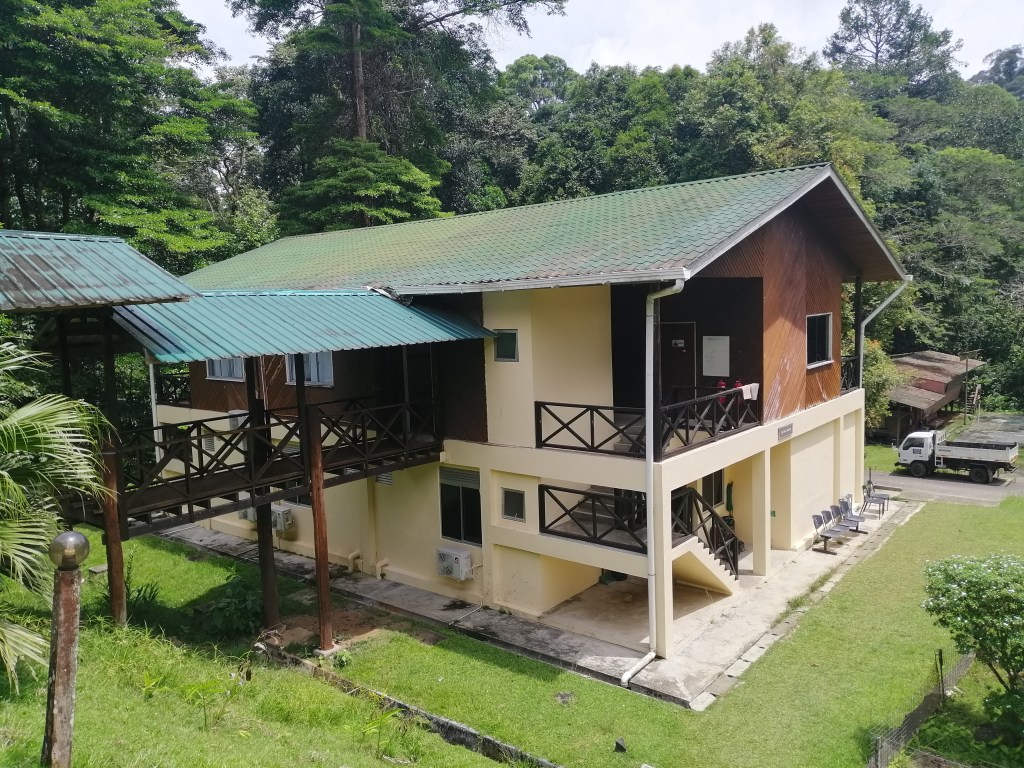
First, some formalities and introduction to our guide – Henry. My AC accommodation was quite good. However, power is from 7am – 11pm only. The cafeteria is separated from the accommodation and delightful place to let the forest environment sink in. Leaves in the canopy rustled in the light wind. Insects singing and bird calls everywhere including Hornbills and ants marching in search of a meal. Lunch was optional. I brought (from Lahad Datu) ‘Nasi Lemak’ – a Malaysian favorite. The weather turned gloomy, but the vibrant forest environment lifted my spirits.

First Steps into the Jungle: A Rainy Start

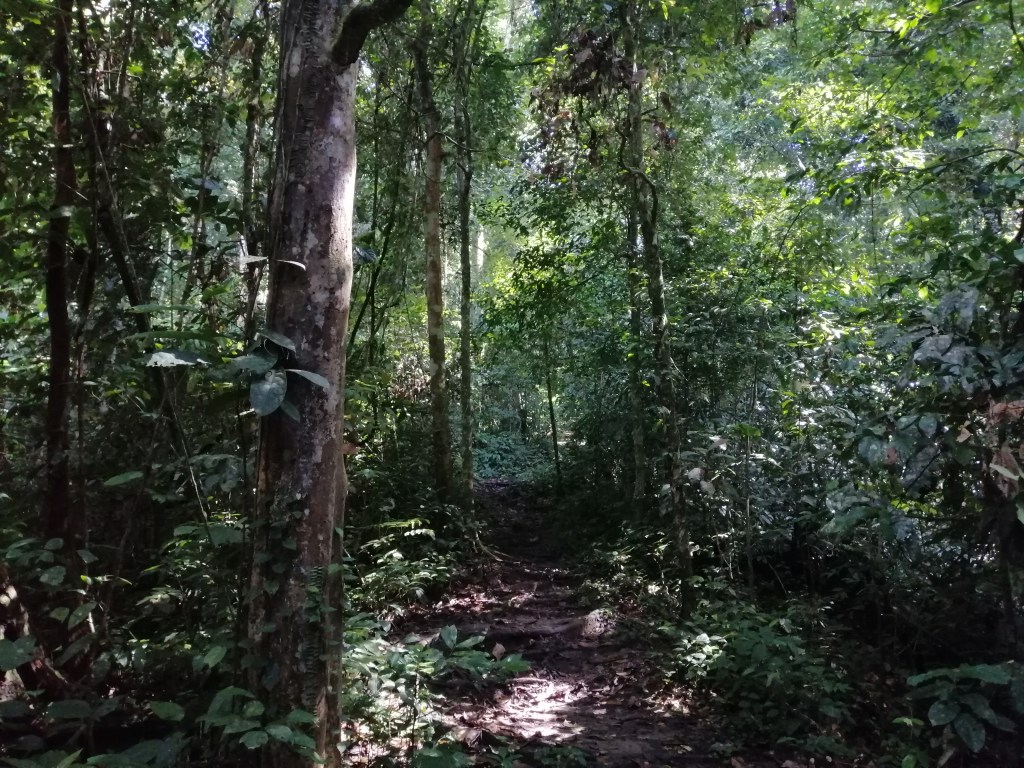
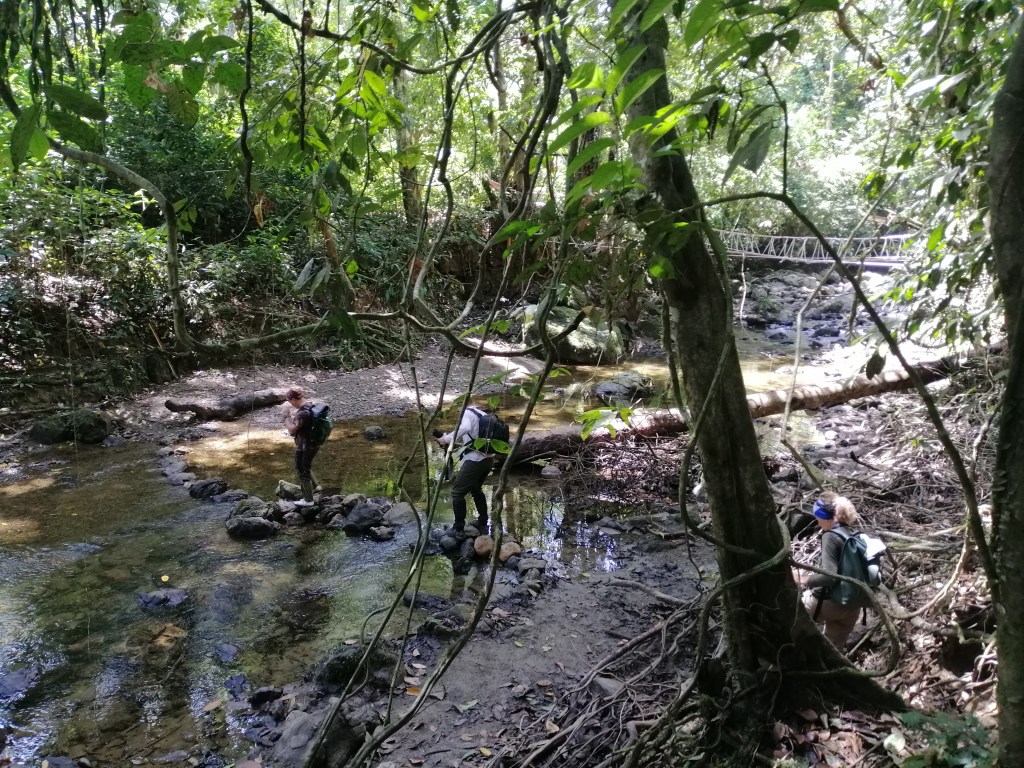
My first trek in the forest was at 1530. Unfortunately, it rained from 1500 onward making wildlife spotting challenging plus the trail slippery. With intermittent rain, Henry led us to an accessible area. We crossed a suspension bridge over the Segama River into the primary forest. DVFC sits in a region previously logged, with the road acting as a boundary between untouched and regenerating forest. The track was muddy and filled with intertwined and tangled tree roots. Leeches are present. We crossed small streams on makeshift bridges amid humid air and the strong smell of decaying leaves.
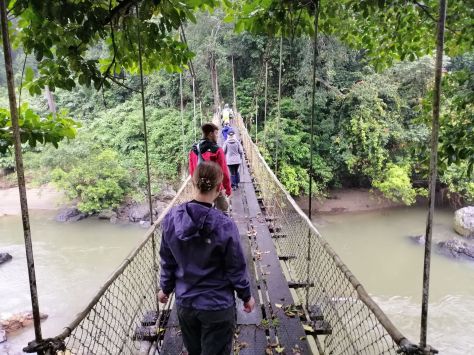
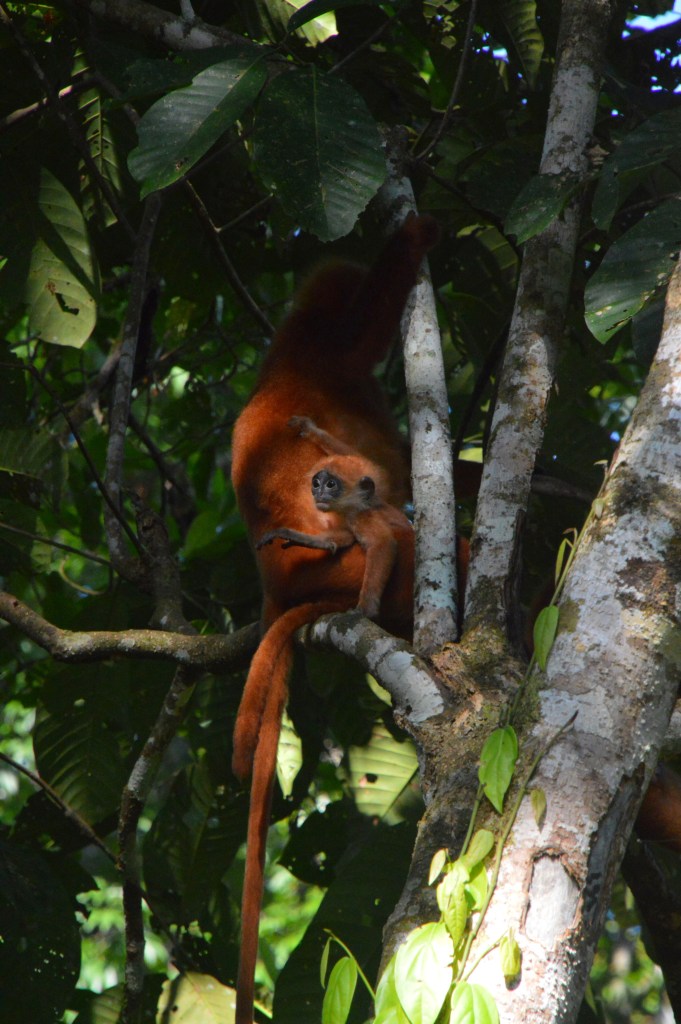
After exploring for just 30 minutes, Henry received a call from another guide. There were Red Leaf Monkeys (Maroon Languor) nearby along the road. We hurried. Sure enough, we witnessed a family of Red Leaf Monkeys feeding on tender reddish leaves. Two babies gingerly learnt the ‘ropes of life on the treetops’. As raindrops fell, with plentiful of fresh leaves, the family was in no hurry to leave. With poor visibility under the dark canopy, we return to our lodge by 1700. That was enough to get my appetite for more jungle treks. A tropical rainfall followed. Back at the rustic dining hall – with a hot cup of coffee, chocolate cake (left over from my flight), listening to rain fall onto adjacent dreamy looking forest trees and insects calls – bliss. Fortunately, the rain stopped by 1800. Dinner at 1900 was simple but hearty, filled with local flavours and accompanied by the forest’s night symphony.

Into the Dark – Night Drive Adventure

At 2000, an optional night drive (MYR80) offered a thrilling ride on the back of a truck through the dark. Spotters – wielding flashlights, sweeping the darkness in search of nocturnal life. A sense of adventure and anticipation of seeing something set in.
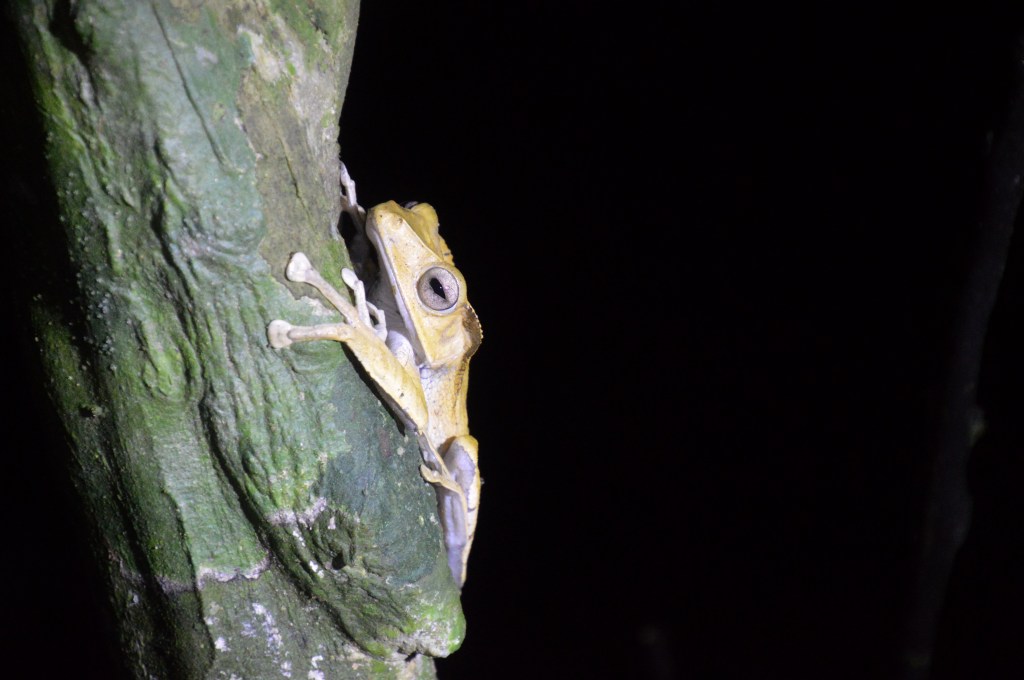
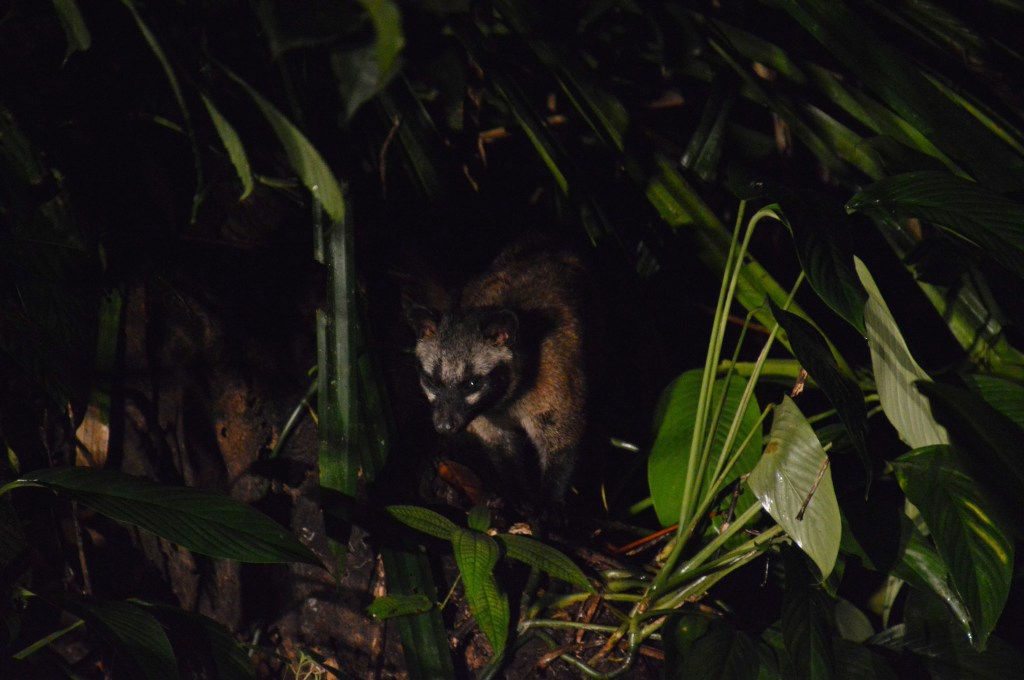
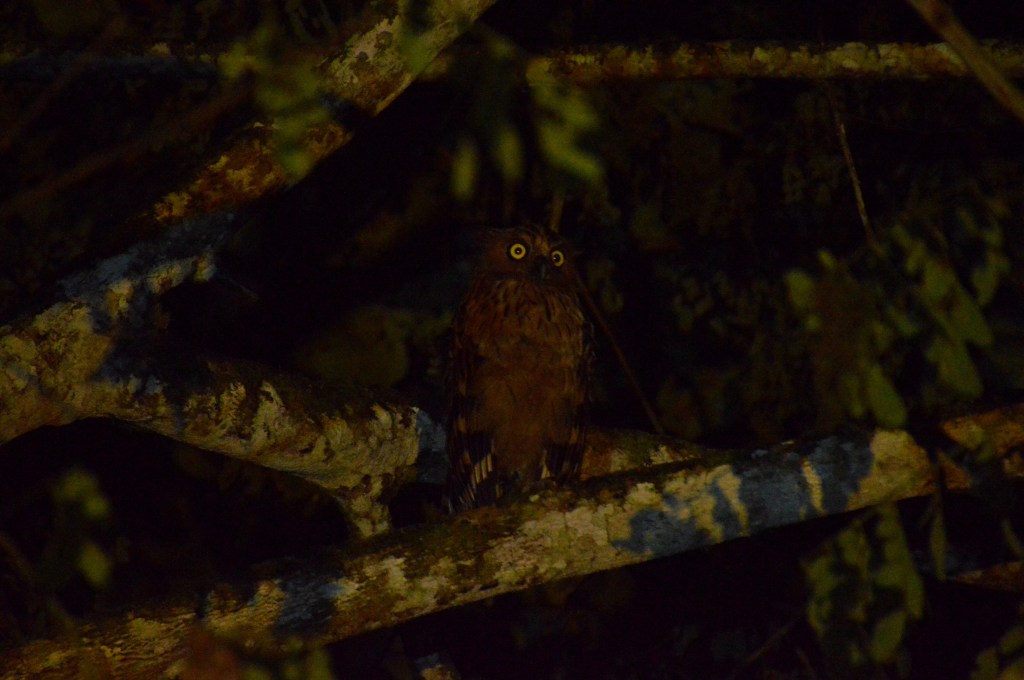
For two hours, we bumped along jungle tracks. Hearts racing with every sighting – Samba Deer, Brown Wood Owl, Red and Black Flying Squirrel, large male Frog-Mouth Owl, Malayan Civet, Crimson Pitta Bird (endemic to Sabah), flying frog, and a male Banded Civet in the shadows. The exhilarating experience more than justified the cost – window into the secret life of the forest. The forest buzzed with life well into the night. What an exciting beginning!

Day 2Morning Mist & Majestic Hornbills – A Daybreak in Danum Valley

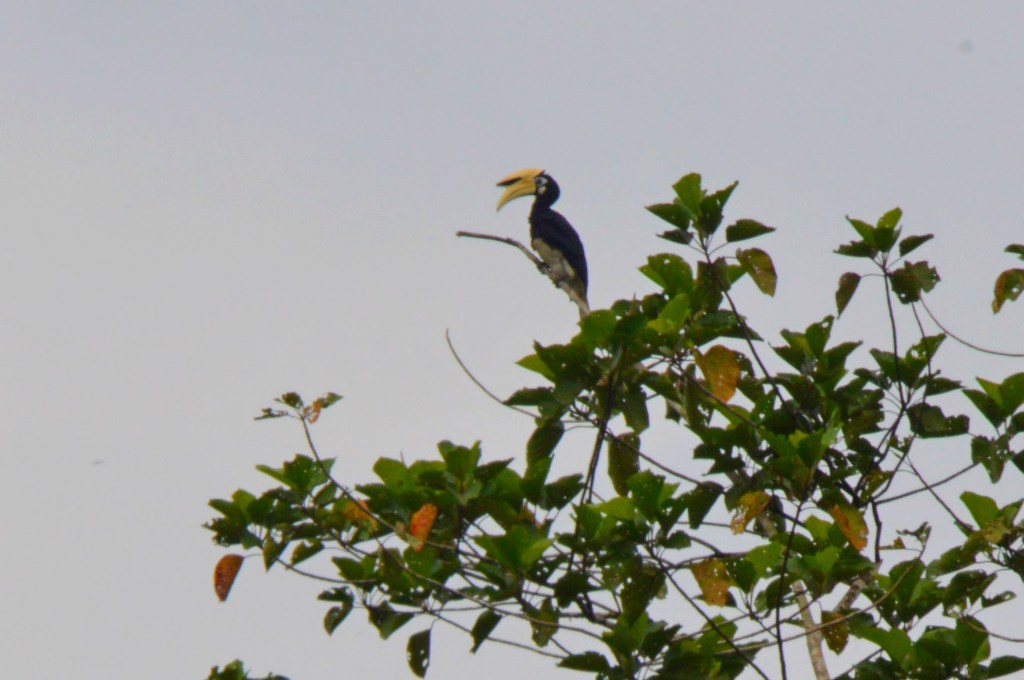
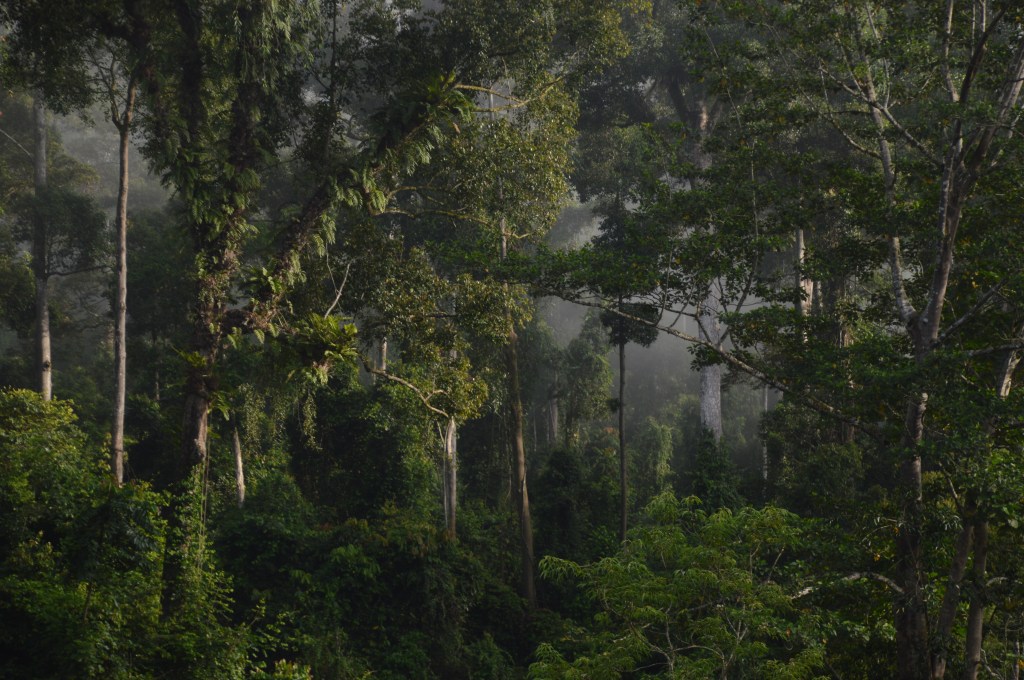
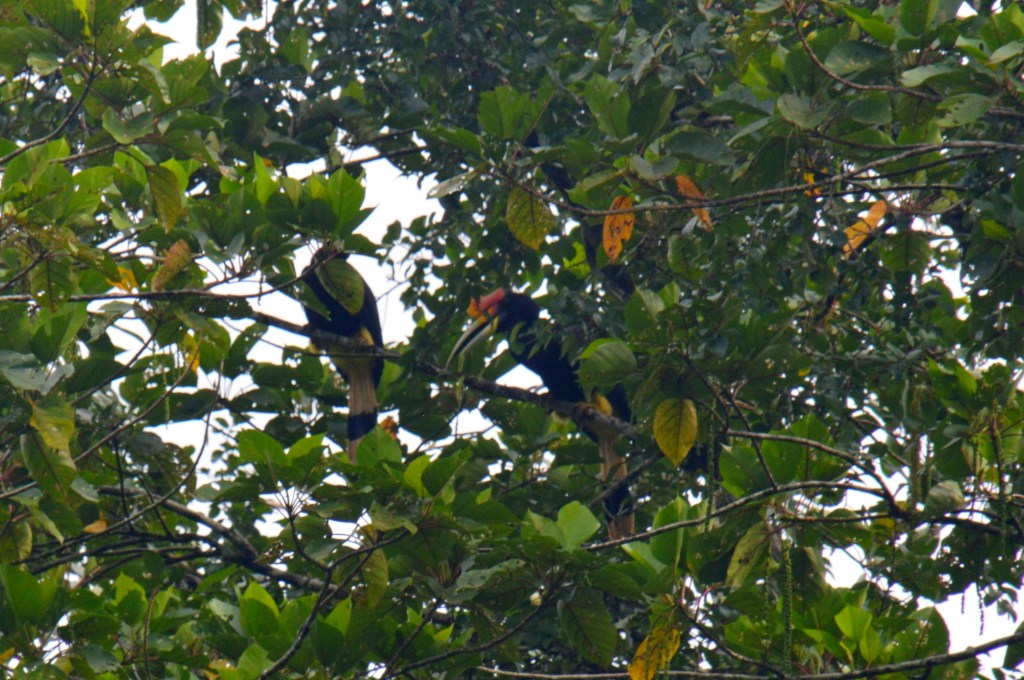
Reeling from last night’s thrilling night drive, I looked forward to a full day of discovery. After a cup of hot coffee and biscuits, we went on a morning walk at 0630. The surroundings was cloaked in dense mist and silhouettes of a hidden forest canopy. Bird calls echoed from every direction. Henry identified one – Helmeted Hornbill, largest of its species. The trails were muddy and made walking slippery. Nevertheless, we trudged on. It was only an hour’s walk before breakfast. I lingered longer waiting for the next trek at 0900. I heard squawks from a fig tree, several hundred meters from DVFC, on the banks of Segama River. Several Oriental Pied Hornbills flew into the canopy. Amongst them, I spotted a striking pair of Rhinoceros Hornbills, the second largest. It was a remarkable sight – these magnificent birds feeding and socialising. Fig trees are rich with fruits in August, attracting birds and primates. Henry noted DVFC’s high wildlife density is partly due to fig trees (Ara) planted years ago in the secondary forest. Even a short walk can lead to unforgettable encounters.

Into the Wild – An Encounter with Orangutans and Pygmy Elephants

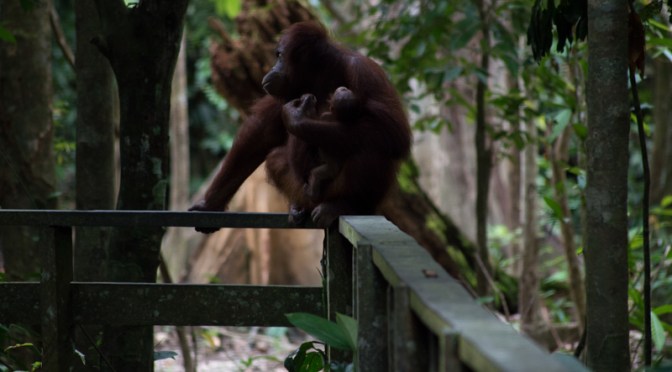
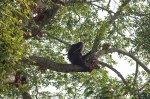
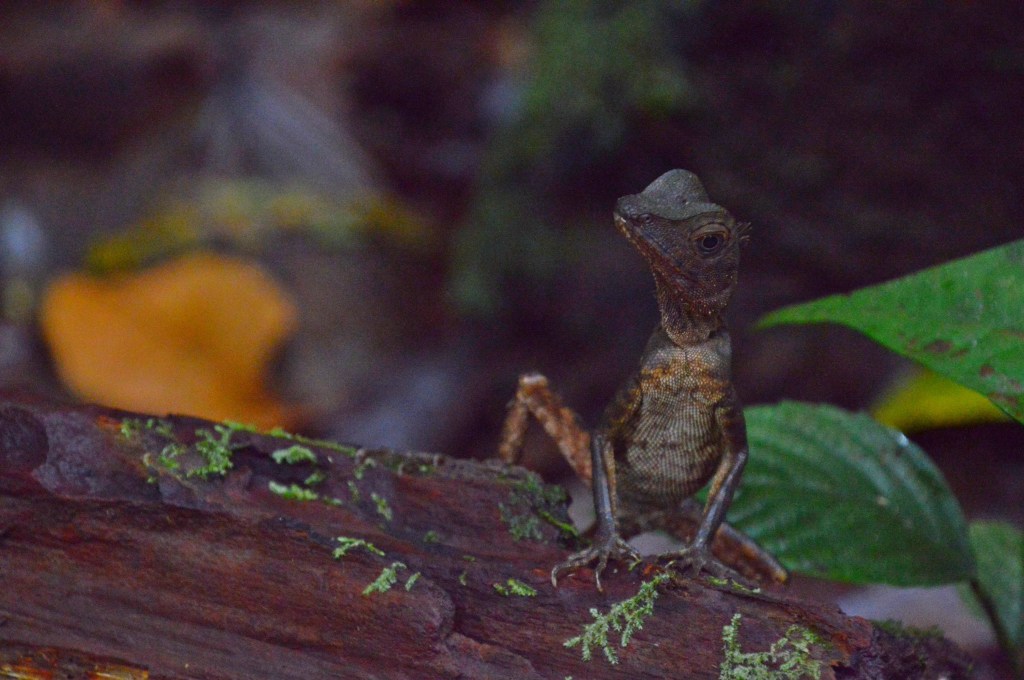
Just after we departed for out 0900 trek, we spotted a venomous Pit Viper curled up of a shrub – reportedly seen for days. Every jungle trek brings opportunities for wildlife encounters. I kept an eye out for leeches as we navigated muddy paths. On a fallen tree trunk, spotted a handsome Angle head Agamit Lizard. We criss-crossed between the secondary and primary forest, across streams and makeshift bridges. Unfamiliar insects – chirping and humming, carried through the forest. Henry got a whiff of a pungent smell – Orang Utan urine. His senses heightened. Moments later, a shaggy, reddish-orange figure appeared in the canopy—a female with her baby. With plenty of young leaves, they lingered. We watched, for over an hour. The mother glided through the treetops, while the baby playfully explored, never straying far. Thoughts of leeches forgotten. A deeply moving and fulfilling day.
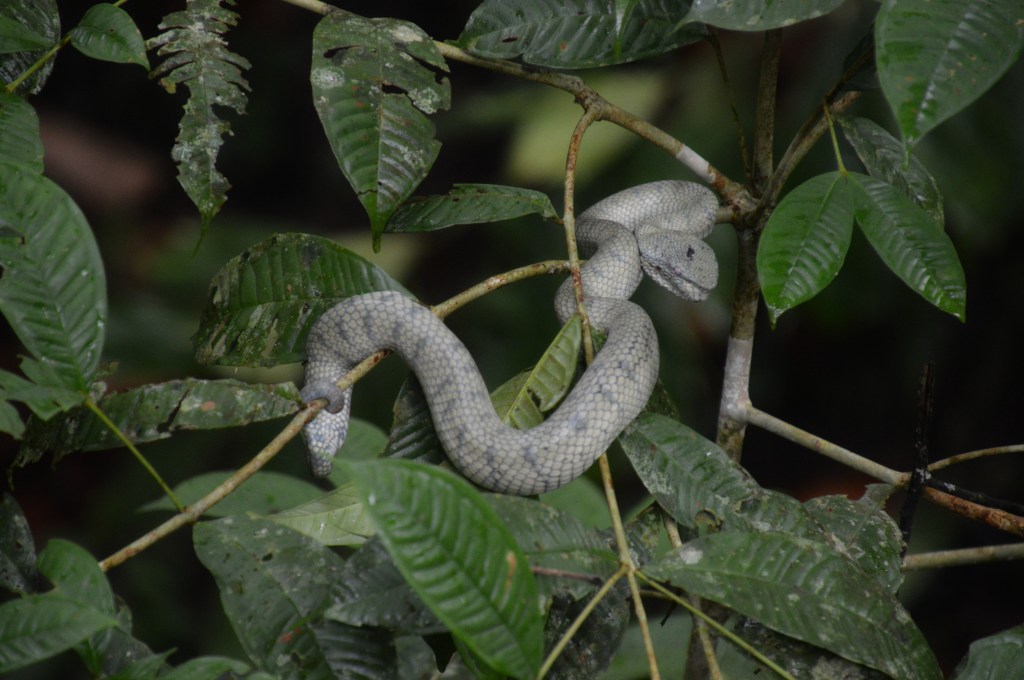
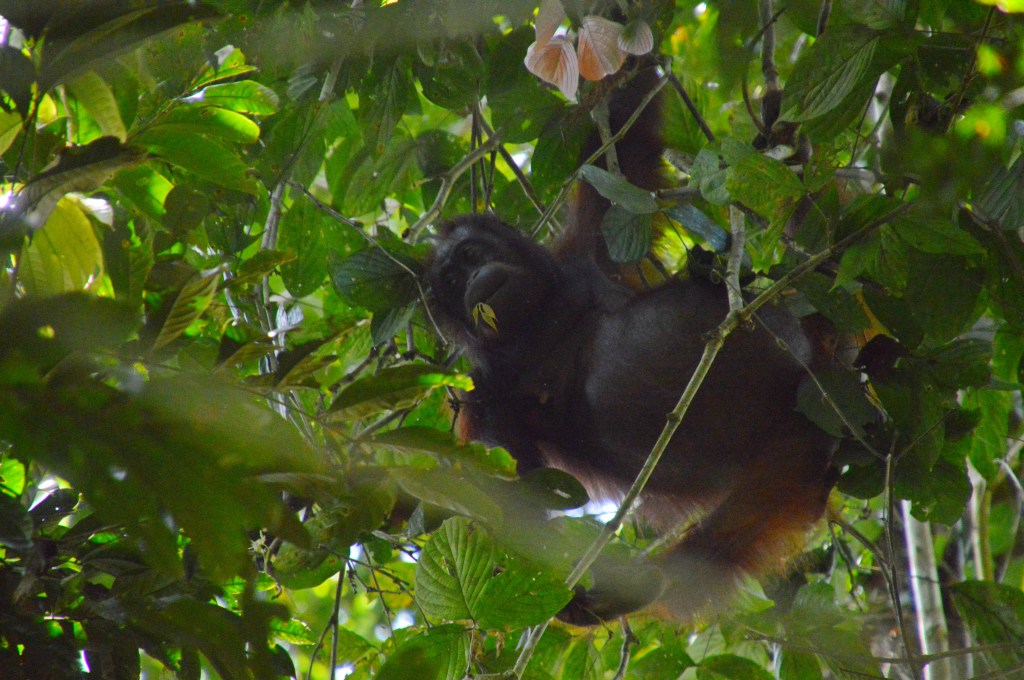
Back at the cafeteria, another sumptuous lunch. Delighted to have some ‘pisang goreng’ (fried bananas). I decided to extend another day at DVFC as the feeling of being here was mesmeric. It was a little tricky as guides are designated to individuals/groups. Henry was assigned to another group the following day. I left it to the admin staff. On a trumpet-like creamy flower – a sun bird fed intensely on the nectar with its long beak. I have seen this bird from day 1. Its tenacity must be appreciated.

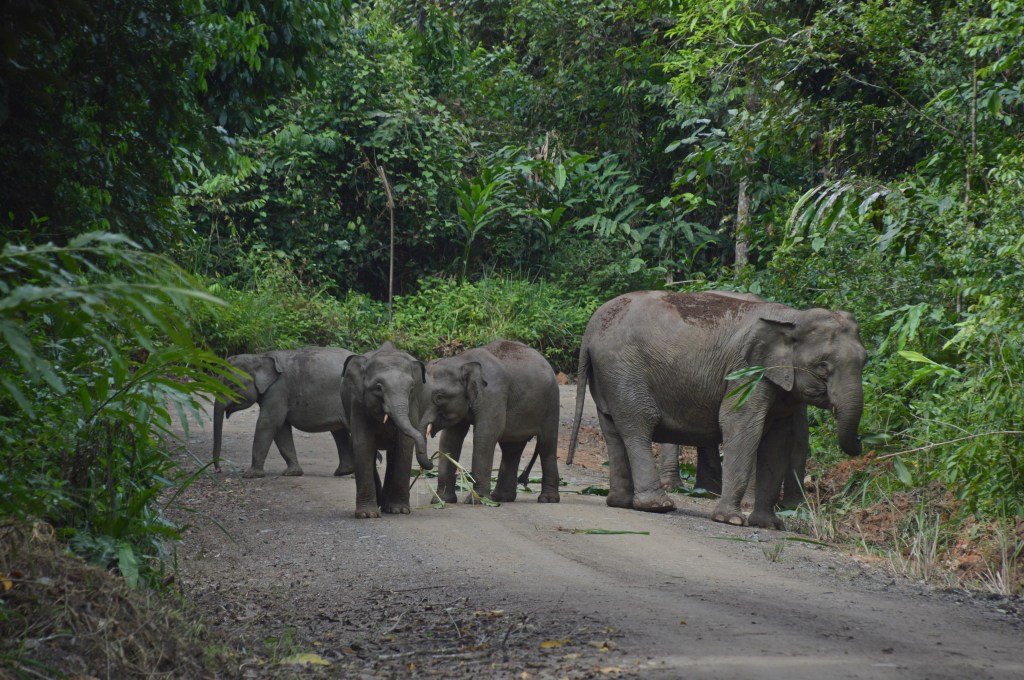
After lunch, headed to a small bench outside the rest house. The view over the small valley and Segama River offered opportunities for bird watching. On a nearby matured Ficus trees, multiple bird species – Bornean Spider Hunter; Malaysia Blue Fly Catcher; and Black and Blue Fly Catcher. The colours were vibrant. We left 1530 for an afternoon walk with Henry. He received a call. Bornean Elephants were spotted along the road, just 1 km away. There were two female adults and 3 babies. We hurried and caught my first views of the Bornean Elephants (Pygmy elephants). A lucky and unforgettable encounter.
The Forest After Dark – Night Walk Wonders

At 2100, we joined Henry for a night walk to discover the rainforest’s nocturnal side — a real highlight. Flashlights in hand, we ventured into the shadows. We spotted Crested Fireback Pheasant, File Eared Tree Frog, Earth Tiger Tarantula, Dark Eared Tree Frog, Giant Huntsman Spider, Banded Palm Civet. Near the rest house, a stunning Buffy Fish Owl. The jungle by night is a realm unto itself – activity invisible during the day. An extraordinary second day.

Day 3Sunrise Over Danum Valley: A Morning to Remember

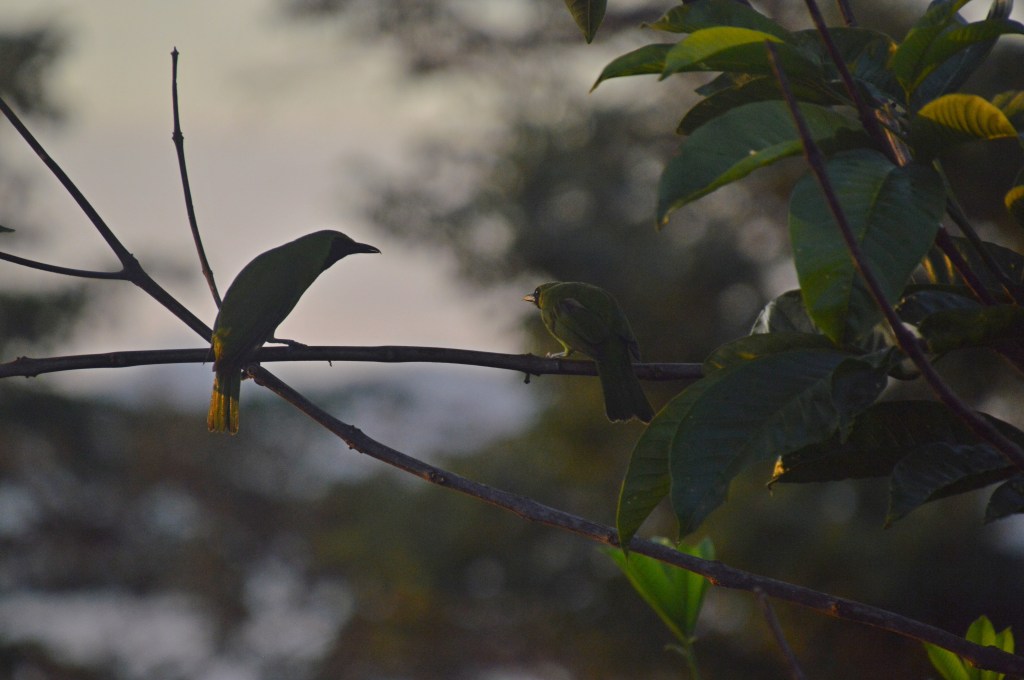
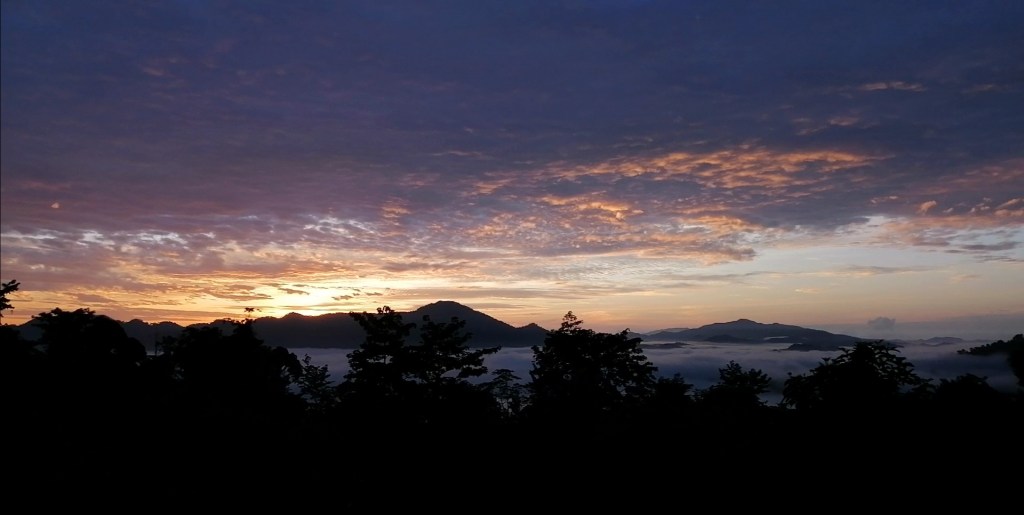
I opted (MYR80) to take the 0500 – sunrise drive to Bukit Atur. It was still dark. In the pre-dawn darkness, our headlights revealed a herd of elephants. They were slowly making their way off the road and into the forest. At the lookout tower, dawn broke. A pair Lesser Green Leaf Bird were perched on the tree top as thick mist settled over the forest.

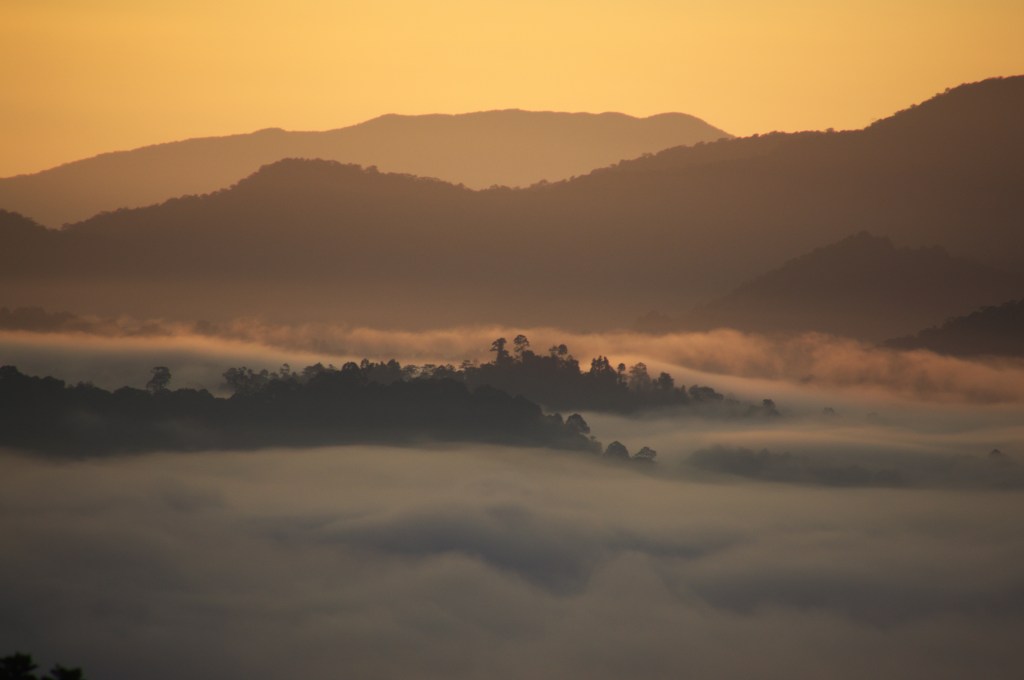
The sky was filled with streaks of fiery red, orange and yellow. Gibbon calls woke the residents of the forest. A sea of clouds blanketed the landscape, broken only by silhouettes of treetops reaching skyward. The cacophony of the forest became louder. Sunrise was spectacular as bands of rays illuminated the forest canopy – a fortunate break in the weather.
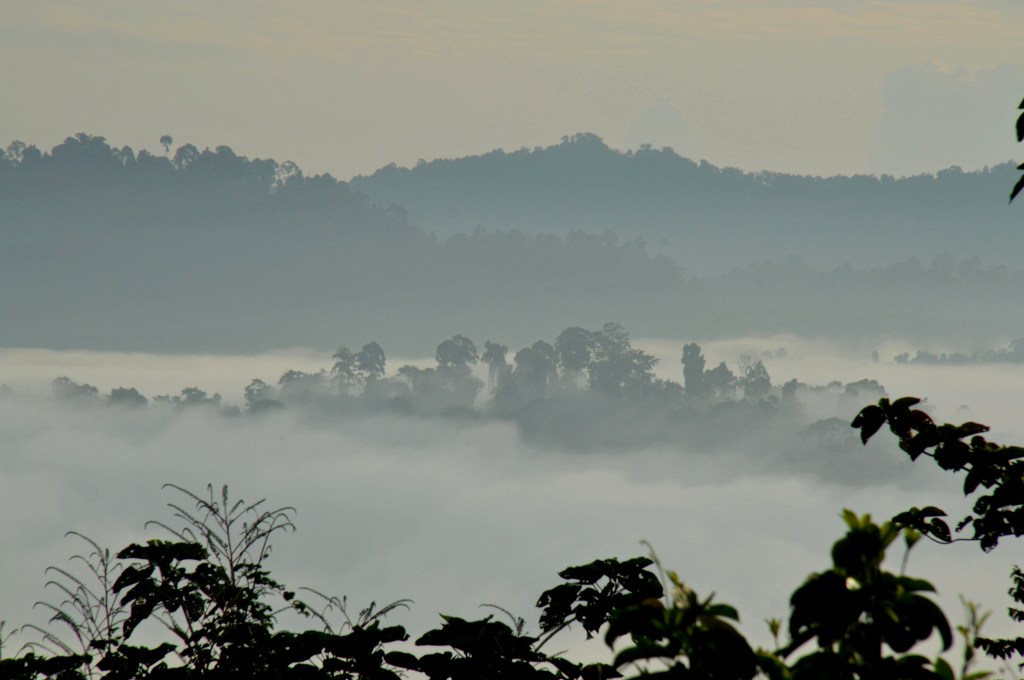
On the drive back, we spotted a White Crowned Shama Bird, Crested Fireback, Bornean Yellow Muntjac , the same herd of Elephants, Pig Tail and Long Tail Macaques. At breakfast, a family of red leaf monkeys foraged adjacent to the dining hall. Just another reminder that in Danum Valley, wildlife is never far.

Into the Wild: Gibbons, Orangutans & Elephants in Danum Valley

For the morning walk, Daryl took the Tongkat Ali trail, guided by the haunting calls of the North Bornean Gibbons. In the canopy, only shadows – hand and the back. Their movements unpredictable. We moved on after half an hour. Then, signs (fresh dung) of a single elephant – a bull. If nearby, this can be dangerous. Daryl was alert. Tracking through the dense and humid forest, a clearing – a bend on the Ulu Segama River. A great place to take a dip. In the early days, they used to pan for gold here. Under a tree shade, Daryl spotted a Greater Angus Pheasant. Overhead, a variety of Hornbills soared, as their deep coarse calls echoed across the tree canopy.
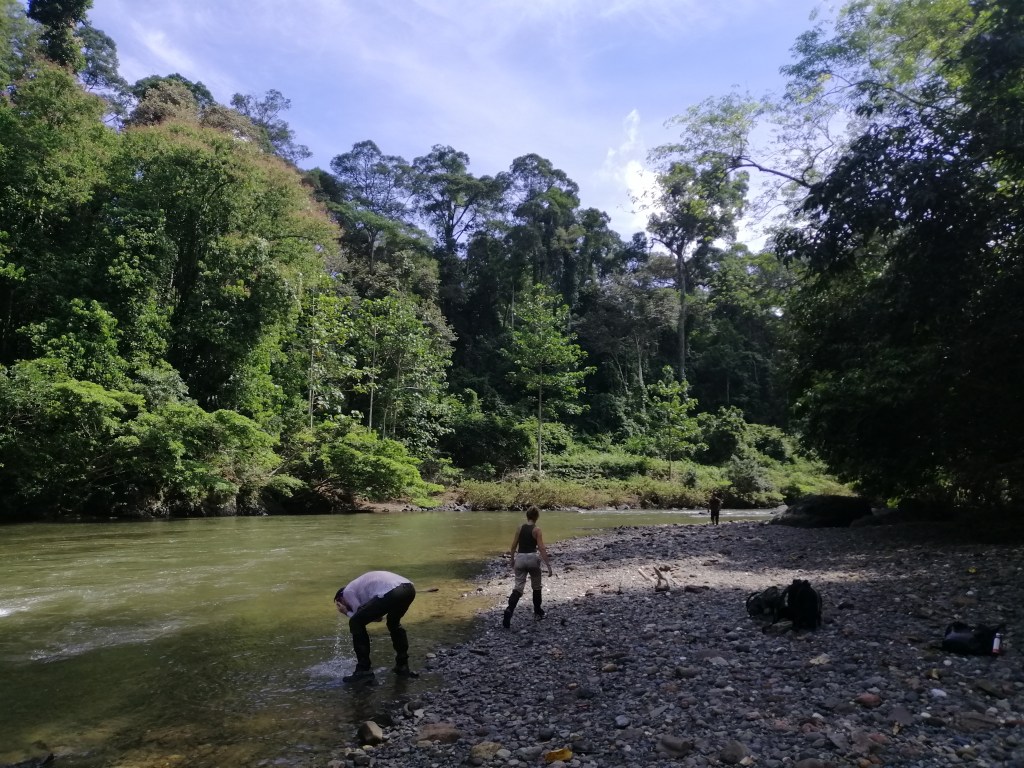
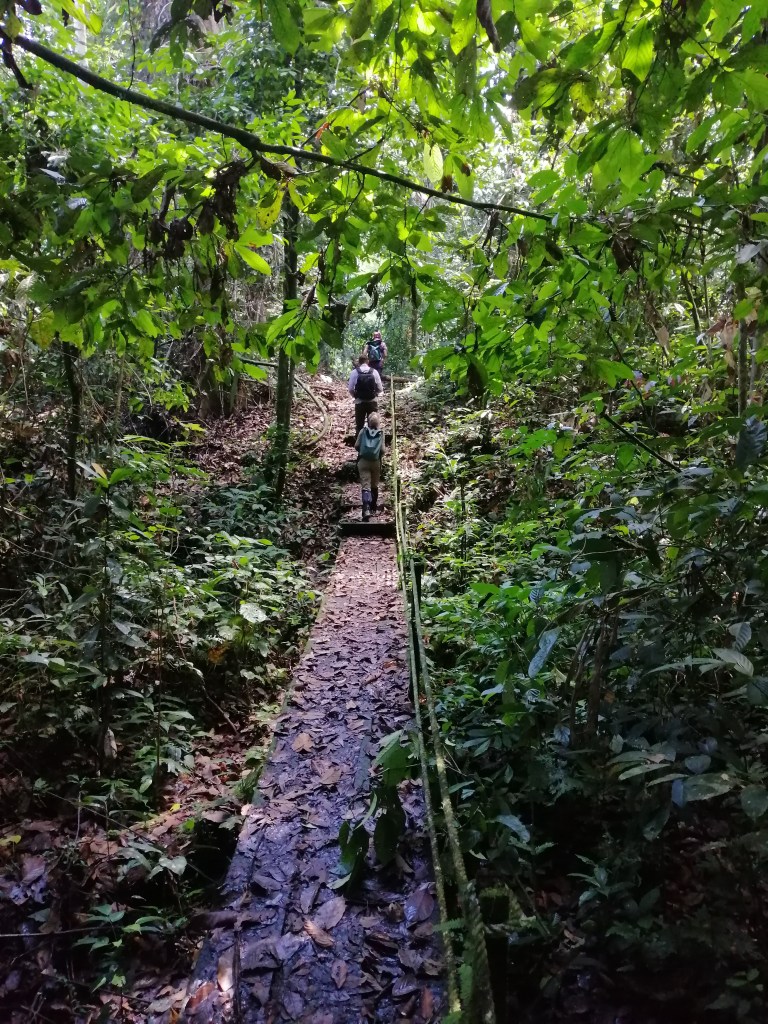
Back on the trail, we managed to see a family of orangutans – mother, baby and a older sibling (perhaps the same one we saw yesterday). It’s a joy to see the baby trying out its antics in climbing. However, always within mum’s long reach. To witness these intimate family moments in the wild is humbling and privileged.

Afternoon walk, with another group of visitors, headed east on the main road. We doubled back. after news of elephant sighting near DVFC. The elephants were restless – trumpeting call and erratic. Soon they disappeared into the forest. After all, these are wild elephants. Several trails were closed from storm damage. The night walk focused on nocturnal insects and crawlies. In places, the sounds were deafening.

Day 4 – Waking Wild – Final Morning in the Rainforest

Sleep in my non-AC room was intermittent. Around 3am, sounds of Sambar Deer grazing outside my room. As dawn crept in, the forest slowly came alive. The haunting, whooping calls of gibbons echoed through the forest. Near the centre, I watched Red Leaf Monkeys leap unhurriedly along a narrow stream. In the bush – a Crested Fireback Pheasant ducked between the dense forest floor. Above the canopy, chorus of deep calls of Rhinoceros Hornbills. Time to pack up. At 0930, a FWD picked us up and returned to Lahad Datu.

Closing Thoughts

My journey to Danum Valley was a thrilling immersion into Borneo’s untouched rainforest. From misty treks and hornbill sightings to intimate encounters with orangutans and pygmy elephants. Night walks revealed the forest’s hidden world, alive with elusive creatures. Danum Valley’s rich biodiversity and serene beauty offered more than just a wildlife experience. It was humbling and raw. It provided a deep connection with the natural world. This ancient ecosystem thrives quietly, revealing its wonders only to those willing to slow down and listen. Sometimes, it’s simply about being present—as the forest continues its mysterious rhythm, untouched and magnificent.

Here’s a list of things to consider bringing :

  • Leech socks (I found it useful to detect and dispose them)
  • Trekking shoes
  • Comfortable t-shirts (long sleeves and quick-dry)
  • Outdoor pants (long, quick-dry)
  • Insect repellent
  • Sunscreen
  • Hat
  • Flashlight/Torch (headlights are not recommended as hornets are attracted to them)
  • Binoculars
  • Cash for personal use
  • Reusable water bottle
  • Swimwear
  • Cash (as there are no ATMs)
  • Dry bag or waterproof backpack for trekking
  • Raincoat or poncho
  • Personal toiletries and medication
  • Basic first aid kit

Sandakan – a rustic old-world vibe

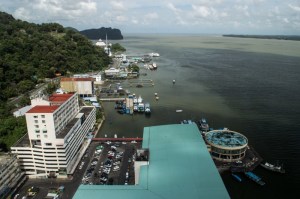
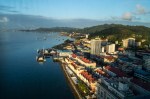
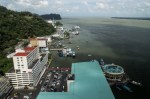
I have been to Sabah several times. Sandakan is a new destination. The main reason – to explore the mighty Kinabatangan River on a river cruise. We checked into Four Point by Sheraton, ideally located at the heart of Sandakan, overlooking Sandakan Bay and Sulu Sea. Nearby is the harbour and fish landing base, central market and a walking promenade. To see my photos, go to Kinabatangan River

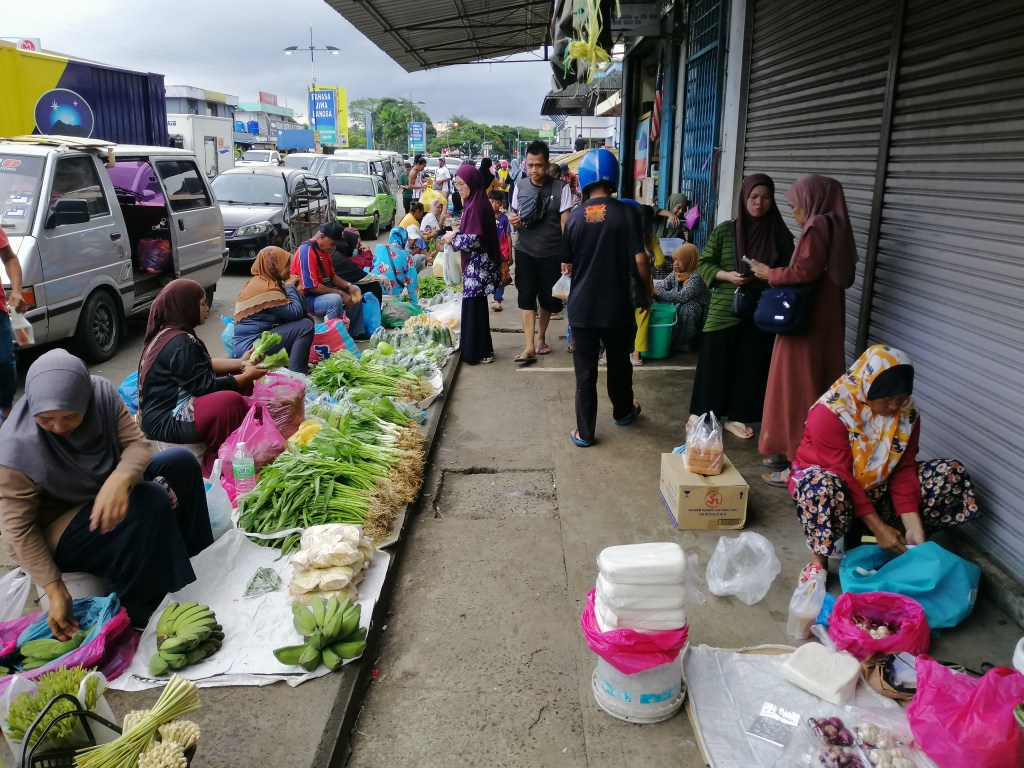
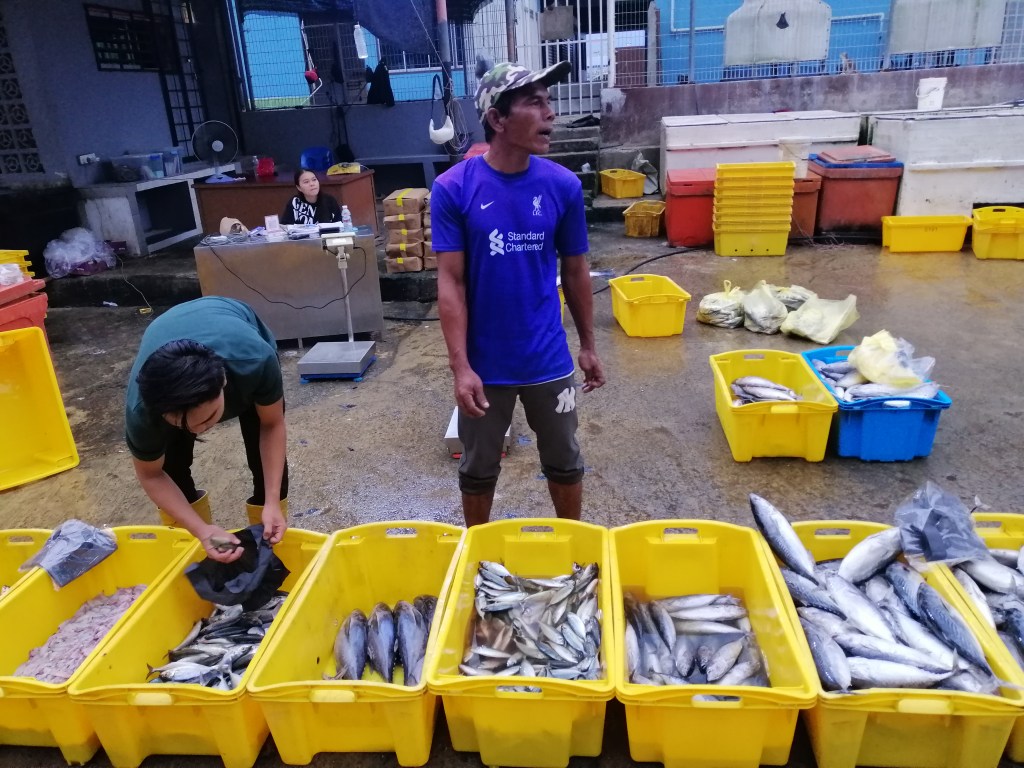
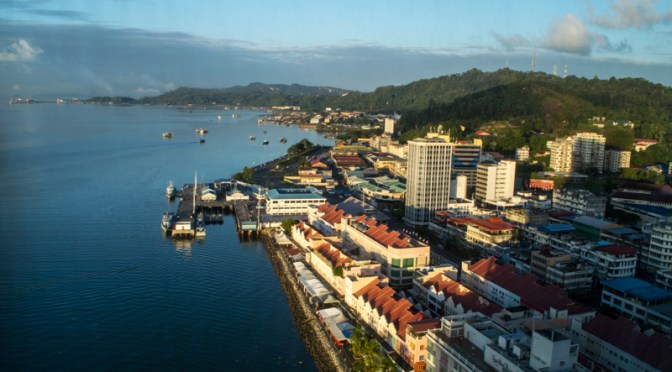
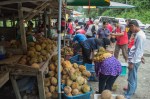
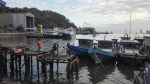
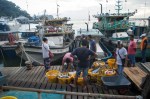
Sandakan buildings looked tired but have a delightful old-world village vibe about it, especially around the central market and harbour. In the morning, rickety fishing boats laden with their daily catch arrived and unloaded. This include, sting ray, prawns, sharks and an assortment of fish. Ice blocks are transferred from lorries to the market via ramps. The fish market is busy. So is the adjacent produce market. I love markets as they are a great way to soak in local culture and gauge the economic prosperity. Outside the central market, impromptu stalls sell all kinds of produce from night to early morning. It becomes a car park after 7am.

A great way to experience this old town is walking the Sandakan Heritage Trail (about 2hrs) – we started at the old town’s 100 year old Masjid Jamek – a quaint square with William Pryer Monument and the Sandakan Heritage Museum – a steep climb on the a rather unkempt 100 steps staircase through a forest surrounding – sipped tea amidst great sea views at English Tea House with an English colonial architecture – Agnes Keith Memorial, then called Newlands. Once occupied by American author, Agnes Newton Keith, amongst which wrote the Land Below The Wind in 1939 – little remains of an old staircase to nowhere – pay respects at Kun Yum Temple (Goddess of Mercy Temple) – Saint Michael’s and All Saints Church – Sum Sing Kung (Temple of Three Saints), opposite the town field and back to town. A short ride to Puu jih Syh Temple, high on a mountain, provides wonderful views of rustic Sandakan and its coast.

In the evening, head to Kampung Buli Sim Sim for some seafood dinner over swaying water. It is overpriced but you should try it once. There are several eateries to choose from. Ask the locals for their recommendation. My favorite is the out of town, Kim Fung market – from breakfast to supper! Try the handmade Youtia (Yew Char Kuey), Tow Foo Fa and many delicious local dishes. Others include Kong Teck (homemade noodles) and San Da Gen Kopitiam, a cafe style and the food court above the central market, in the old town. You won’t go hungry in Sandakan.

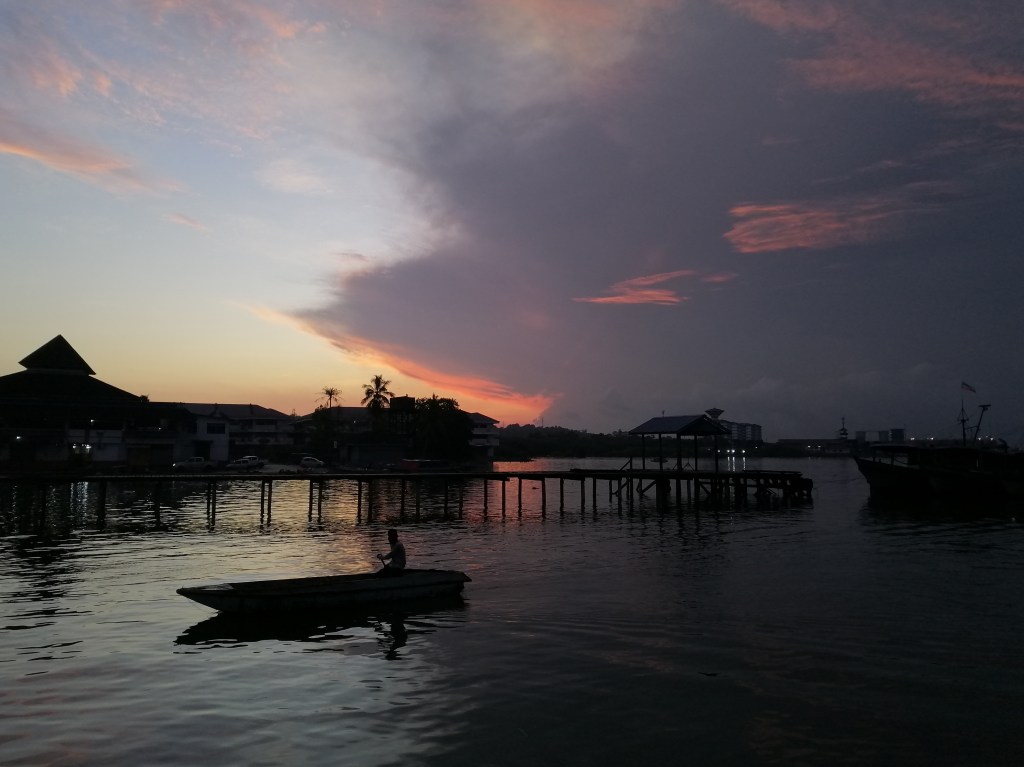
Rhythmic drums echoed through the old town as a golden dragon made it way through. Even dragons use elevators (inside the mall)! Today is Chinese New Year. In the evening, the waterfront is the place to be – watch the sun set and stalls opening for business. After dark – durian, mangosteen and langsat seller occupied the pavements to sell their wares. Nearly everyone eats on site. That way, you don’t pay for bad ones. Just watch out for pick-pockets!

Sandakan is also the gateway into nature reserves – Kinabatangan River cruises, Sepilok Orang Utan Sanctuary, Borneo Sun Bear Conservation Centre, Labuk Bay Proboscis Monkey Sanctuary, Rainforest Discovery Center, Gomantong Caves and Turtle Island. Nature, wildlife, food and cultural experiences in one town.

Kinabatangan River

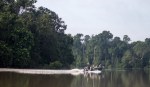
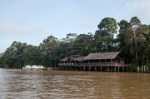
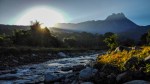
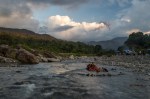
These are photos of my recent excursion on the Kinabatangan River in Sandakan, Sabah, East Malaysia. There are several lodges and we decided to stay at Sukau Rainforest Lodge. It is a luxury lodge. Budget accommodations are available along the river. This 3D/2N package included the Sepilok Rehabilitation Center, Sun Bear Conservation Center, Rainforest Discovery Center and the Gomantong Caves. Sandakan town is a great place to hang around, enjoying the local fruits and local delicacies. After Sandakan we headed to Melangkap, a gravel river with Mt Kinabalu as its’ backdrop. A cool place to chill out.


Climbing Mount Kinabalu 6

25

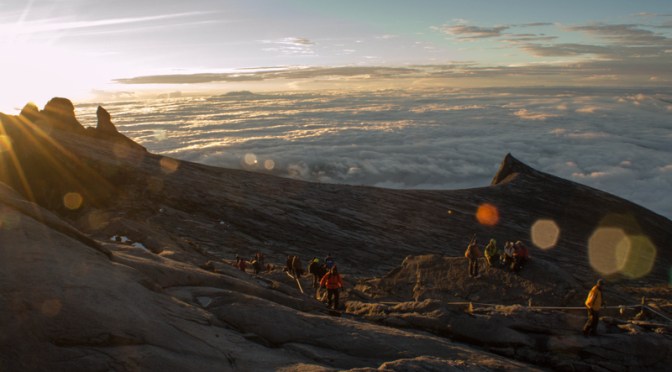
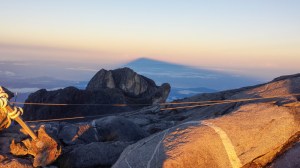
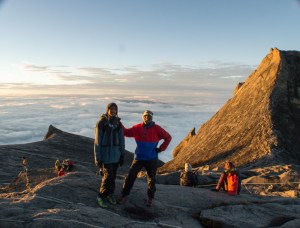
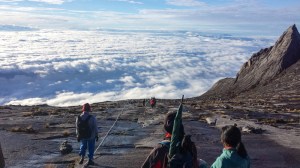
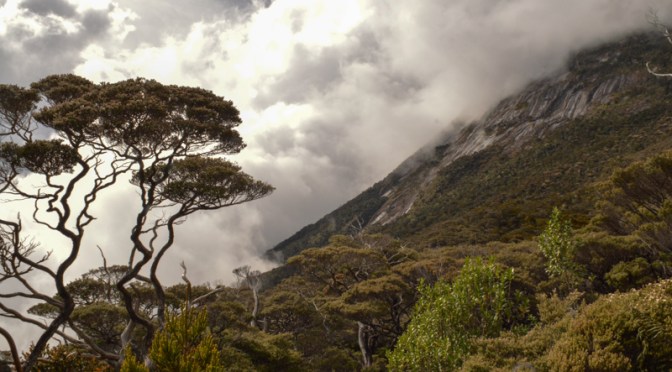
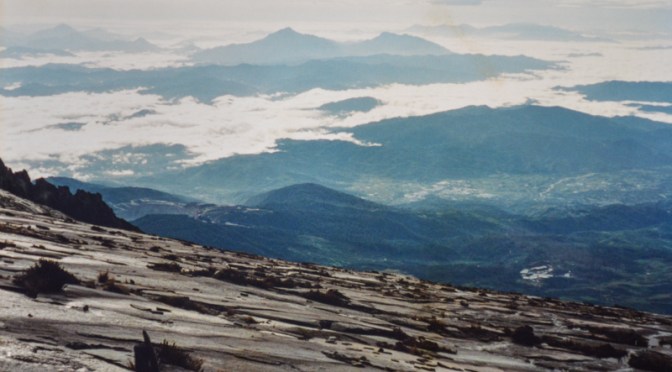
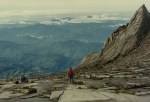
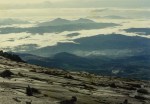
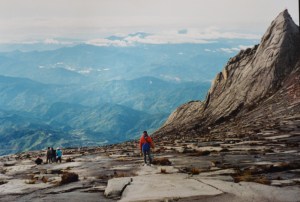
The sky was blue and darkness was just disappearing. The horizon began to emerge with reddish -orange hues. I could barely see the blinking lights of the huts in Laban Rata and Kundasang. My body was already spent but my spirits were high. Navindd and I kept moving. Hikers supported each other and urged us to press on. The thick blanket of cloud below us seem to have taken a life of its own, swirling and weaving. The sun began to rise behind the Ugly Sisters and Donkey Ears rock formations. However, the view towards the summit at Low’s Peak was clear. The serrated surface of the mountain became detailed. The sun peaked above the clouds around 6.15am. It was magnificent. Tired but elated. We continued walking and reached the 8km mark around 6.20am. Shadows formed of the surface. There were sounds of jubilation. About 500m away, the triangular but serrated peak glowed softly. Nearby, a monstrous St John Peak rose abruptly form the barren rocky floor. Several other peaks formed a unique structures. The highest, Low’s Peak is at 4095m, the highest. As we rested,  Navindd developed some cramps in his foot and I was plain tired.

30  35

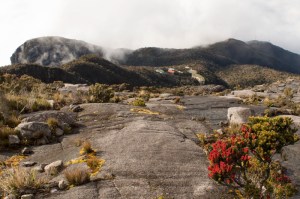
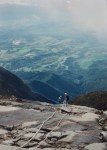
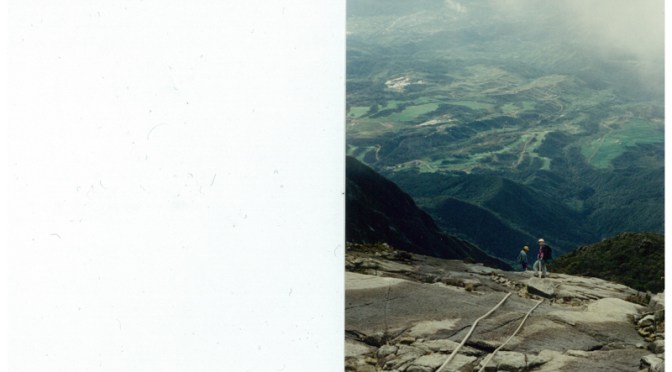
I looked up the trail to the summit. It was crowded and in most places a single file trek. Part of the large group were making the way up to the summit and movement was painfully slow. It was made difficult by the hikers descending from the summit. At times, traffic came to a standstill.. We decided not to continue on, 300m from the summit, as it would certainly take us quite some time to complete the circuit.  Instead, we wandered around and savoured the fruits of our climb with the sun warming our bodies. Views to the valley below were certainly obscured. We were lucky with the weather today. Small pools of water reflecting these unique rock formations, added to the dramatic scenery. For the previous two days, the attempt to hike to the summit was cancelled due to poor weather. The surface in most places is slippery even without rain. Hence the ropes to give a little support along the way.

36 38

We began our decent around 7.30am. It daylight, some stretches were visibly dangerous.  Yes, there are some element of danger if we strayed away from the ropes. We retraced our steps back towards Laban Rata, which could be seen in the valley below. Once again, I had to confront the treacherous rock face rope assisted decent.  I was more nervous now that climbing is in daylight. Navindd seemed fearless. Hanging on to the dear rope, little by little I managed. It seemed like eternity. Past that stretch, my body eased completely. We reached Laban Rata Huts around 9.30am.

45 44 47 48

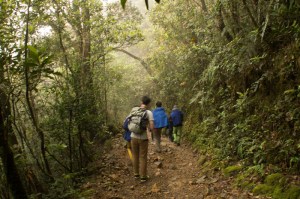
After some much needed breakfast, we prepared to decent the mountain. The weather began to change as dark clouds began to build up. The landscape evolved from barren to sub-alpine to cloud forest. It was humid and the vegetation lush. Epiphytes and orchids hung on trees and rotting branches. Birds darted quickly around the forest. Flowering rhododendrons added some colour to the green environment. As we descended, we met hikers going uphill. The strain of the climb was written on their faces. I was humbled by the heavy pack the porters were hauling up the mountain. Not to repeat my previous day’s error, I packed lunch at Laban Rata. It rained intermittently as we approached Timpohan Gate. It poured heavily as we entered the gate. It was around 2.40pm. Even in “good weather”, the climb is slippery at places and definitely on the barren rock surface towards the summit. I wondered about the predicament of all the hikers on the mountain.

49 51 52 56 58 55

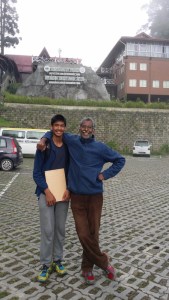
We caught a bus back to the Park headquarters where we received our certificate of achievement. I am proud of Navindd with his achievement and the fact that we had travelled this journey together. I hope this little gesture of climbing Mt Kinabalu would instil a sense of adventure and love for the outdoors. I told myself, I am not climbing this mountain again. (I recalled the same statement after reaching the summit of Kilimanjaro in 2012). In my older age, I may have to find an easier way to bond in the future. Nevertheless, this has been a rewarding, adventurous and fulfilling journey. Well done Navindd, albeit some aches and pain.

1

On 5 June 2015, a 6.0 magnitude earthquake struck on Mt Kinabalu. Eighteen people tragically lost their lives including hikers, porters and guides. Through this story, I hope readers will have a greater appreciation of the unique landscape and environment, the ardours task of porters and guides and of course the enthusiasm, motivation and pain of individual hikers. This is a small dedication to all who have been there, those whom aspire to experience this natural phenomenon and above all, in memory to all those whom lost their lives. I belief they are in a good place. After all, this is a “Mountain of Dead Sprits”.

Climbing Mount Kinabalu-5

Today is summit day. There was quite a commotion downstairs in the dining room. I had little sleep. It was a little cold as I stepped out of my room. The large group members had already gathered and attired to start the morning hike. They were waiting for the food caterers to prepare the morning snack. I noticed a sign with a quote – something like ” breakfast will only be served from 0230″. The time now was 0130!. I could not believe it. Were they just eager or just plain silly? I went back to bed. There goes the plan to leave before and ahead of the group! Navindd was fast asleep.

After a quick hot snack, we were eager to get going. When we stepped outside, the cold wrapped us up. Fortunately, this time, we had thermals, gloves and proper jackets on. We even had our own headlamps to shine the path forward. Azman informed us that we need to be at Sayat-Sayat check point before 5.30 am. Otherwise, hikers may be stopped from continuing to the summit. I am not sure about this. With that in mind, we forged forward….which translated to uphill all the way. Up on a steep wooden belian steps, we climbed in pitch darkness shone only by our head lights. A long thin line of lights streamed up hill. It looked like a formidable task ahead. I stopped frequently as my poor fitness level surfaced. Navindd was still good, perhaps a little cold. We were above the cloud line. Visibility of the valley below was sporadic. We reached a fixed roped section of the trail. Against a solid granite rock face, a narrow crack rose uphill. Gripping the rope, we heaved up with our legs finding traction on a rather slipper surface apart from the narrow crack. I was nervous climbing up as the steep fall did not look attractive. One after another, we all climbed up very slowly. This is a treacherous stretch! I was concerned and wondered how I managed this stretch the last time. I don’t even remember it. Then was about 20 years ago. Perhaps youth had a part to play.

After that wrecking rock climb, we finally reached Sayat- Sayat Huts (3668m), the final checkpoint. It was 5am. We made it. There seem to be some pressure to walk quickly to get here, otherwise….. Our permits were checked and we were off again. The vegetation here is now a few standing shrubs and trees skeleton left. The landscape is now a rocky one. There were a few more tricky stretches using rope to propel forward. We have now passed the 7km mark and it was slow slog up the barren rocky plateau. I could see lights stretching from Sayat- Sayat Hut right up towards the summit. Surreal mountain formations surrounded us.

28 34


Climbing Mount Kinabalu-4

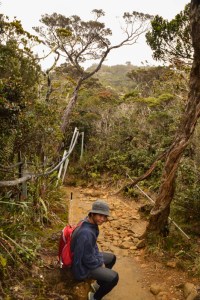
The immediate impact was the crowded trail. A large group of hikers, some with identical attire, climbed the mountain today. Later I found that they belonged to a non-profit group making up to a 100 people. I belief that only about 150 people are allowed to climb per day. It looked like peak traffic on the narrow trails. However, the atmosphere was pleasant. The quiet contemplation that comes with climbing in high places was lost. Trees thinned out and whatever was present, were stunted and twisted. Some were permanently swayed onto one side. Rhododendron plants seem more prolific and some in flower. Undergrowth is thick. Fortunately, it was cloudy which eased climbing. I relived the vivid memories of this subalpine meadow zone. Old man’s beard  (air plants) hung on branches of the skeletonised trees. This added dramatic sceneries. Higher up, I could see the rocky plateau. The walk from here, at over 3000m, was exposed. With chattering from other hikers and the dramatic sceneries, I slowly made my way up. Words of encouragement and support was occasionally heard. Navindd was keen to carry on and he took off. From here, there are no diversions and not likely to get lost. The trail is not dangerous here.

19 21 22 23

We reached Laban Rata, 3273m, our stop for the night, at around 5pm. It was crowded and noisy. Dinner was already in full swing. Weary and tired, we checked in and almost immediately at the dining table with a hot meal. It was satisfying for me to have climbed this far without any injuries or pain. Tiredness is normal. The mantra to climb any mountain for me is try to walk continuously with regular but shot stops. Being fit is a requirement, which I had not heeded this time….again. Our accommodation was warm, although no heating was available. Several other huts were scattered around. It was already misty and cold. The views of the unique landscape were obscured. Fortunately, throughout the trail, it only rained intermittently. The paths and black rocky surfaces were already wet.

24

One conversation that evening was about attempts by hikers to reach the summit in the previous days had failed due to poor weather. We hoped for the better. The other conversation, by hikers not part of the big group was, what time do we start walking the next morning to beat this crowd? From here on, the trail became narrow and in many stretches, probably single file. It rained. I looked around the room, everyone seemed happy just to have arrived here. Like us, just happy to have a hot meal in hand.

Navindd and I had a shower and readied to get some rest and sleep. Our dorm room had four beds. It was certainly cosy and surprisingly warm. However, it was noisy with the large group. It was already dark after 6pm. Hikers were still arriving, drenched and shivering, around 7pm. Some of them just 10 years old. I wondered if the had enjoyed the hike? At these heights, altitude sickness can hit anyone. There were some signs amongst this group. However, help was on hand.We had a plan for next morning. Wake up at 2am and after a light snack, attempt for the summit. Being a light sleeper, I had difficulty sleeping with the constant walking and knocking by people arriving late at the huts. Navindd had no such issues.

Climbing Mount Kinabalu-3

After a quick but hearty breakfast, Albert brought us to our stating point. Unlike most people who start at the Timpohan Gate, we started at Mersilau Gate. This Mersilau trail is longer by about 2km adding about an extra 2 hours trekking time. However, this trail is gradual and the exposure to the mountain environment is greater.

6 7

Through paved winding roads surrounded by pristine native forest, we arrived at Mersilau Gate around 7.30am. There is accommodation here. Being here feels amazing. Breathing the freshness, listening to the sound of a waking forest, seeing the mist lifting above the tree canopy and feeling the coolness of the jungle on my skin, I felt invigorated and spirits lifted. Although, I had been in many forests’ before, this feeling doesn’t seem to ware off. We handed over our documents to the rangers and met our guide, Azman, a native to this area.

We set off on the trail around 8.30am. This time around, I decided on the Mersilau Trail starting from Tambang Gate (2000m). Most people seem to hike from the Timpohan Gate. Mersilau trail is longer by about 2km or about 2 -3 hours walking. Today, there were about 10 hikers. It was hot and humid once we entered the forest. Perhaps, it was due to sweat pouring out of my body. A result of the steep climb. This is Lowland Dipterocarp Forest. Vertical tree trunks reach for the invisible sky as the tree canopy form a thick cover. Within the first hour, I could feel the strain on my body. Again, I am attempting to climb Kinabalu in a rather unfit state. Perhaps, better to have climbed Kinabalu and carry on to China. Wishful thoughts in hind sight! Navindd was as pace with our guide, Azman.

8 9 10

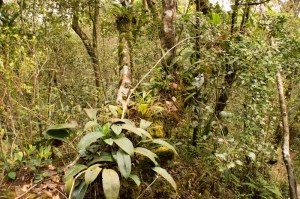
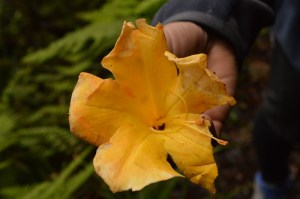
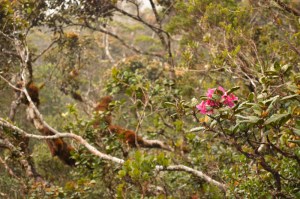
Fortunately, although wet and humid, the trail was good. Not muddy or slippery. The trail is uphill with occasional decent. With regular stops and slow walking, we managed from one shelter hut to another. A slow progress, and thankfully not painfully as I recalled my first climb. Now we entered the Lower Montane Forest. Gradually, the tree canopy opened up as the trees become shorter.  We had crossed a river earlier and now another small wooden bridge over a tributary of West Mersilau River. It is refreshing but no time to linger too long. We have already reached above 2500m.The vegetation here is different. Moss hung off tree branches, dense undergrowth and bamboos and orchids appeared. Azman introduced me to Rhododendron lowii, a bright large yellow flower. Nearby were orchids and other epiphytes.

13 12 14 15 17

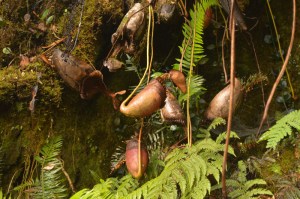
As we continued, we came across an impressive cluster of Pitcher Plants or Nepenthes. I remembered seeing larger ones on the Timpohan trek. Now we had entered the Cloud Forest. These part of the mountain are constantly drenched with moisture. This encouraged epiphytes and moss to flourish. Liverwort and ferns covered shaded parts of the forest floor. Gradually the height of trees reduced and the canopy opened. Grass like plants became more frequent. An assortment of flowering plants also sprouted in pockets. We stopped for lunch at Magnolia shelter, around 2.30pm. We thought the guide would provide lunch as arranged by Sutera Santuary. To Azman’s surprise, there was none. Neither did we talk to him about it earlier. We survived with a few chocolates and biscuits. Shortly after that, we walked into an open area on the ridge of a mountain. Steep slopes on either side. The views were great but partial due to low mist and clouds. The trail seem to be descending. Walking became relaxed. Eventually we arrived at Layang-Layang Hut (2702m) intersection where both trails met, from Timpohan Gate and Mersilau. We had hiked about 5.5 km. The circumstances at this point were in contrast.

 

Climbing Mount Kinabalu-2

In January 2015, my son Navindd, and I climbed Mt Kinabalu. I thought this would be great for bonding as well as planting a seed for the love of travel and the outdoors. It is certainly a trying effort for an old fella like me to carry on with this type of activity. Well, perhaps one more time!

My bookings for the climb were all organised by Lay Yong, my sister-in-law, including accommodation in Mersilau (Alan’s (nieces’ husband) parents place), whom I had not met before. Sabah Parks had privatised the bookings for the climb. Apart from issuing permits ( cost RM30) and organising guides, all bookings are handled by Sutera Sanctuary. Naturally the cost had increased, now about RM480.

Mt Kinabalu, part of the Crocker Range, is the highest peak at 4095m in South East Asia on the island of Borneo in Sabah, Malaysia. We arrived at Kota Kinabalu, in short called KK, just past midday in stormy and rainy weather. Tropical rain bucketed down and views of the surrounding hill and mountains were obscured. A taxi was pre-arranged to take us to Kundasang. Some roads turned to streams with fast flowing water. Carefully our driver negotiated these treacherous metal roads. The drive became more challenging as we hit the mountain roads towards Kundasang, the closest town to Kinabalu Park.

2 3 4

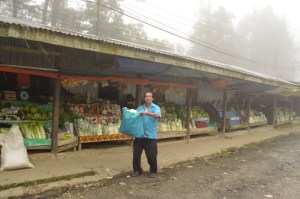
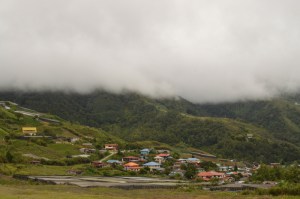
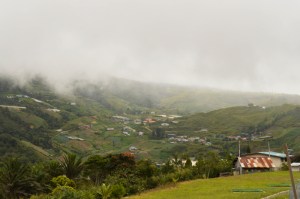
We arrived at Kundasang after three hours, around 3pm. The driver stopped at a row of stalls selling fresh fruits and vegetables. The air was thick with cool mist. Visibility was poor. The ladies, however, were colourful and cheerful. The weather improved dramatically as we approached Kundasang town. I remembered it as a small village market on my first foray here. Now, it is a decent town surrounded by agriculture cultivation. Lay Yong, my sister-in-law, had organised a friend to pick Navindd and I and stay for the night. At 2000m above sea level, the quaint town is cool and has a temperate climate. The local population are mainly of Kadazan – Dusun origin and a small Chinese population. It is a lovely place just to enjoy the surrounding and climate. Its proximity to Kinabalu National Park makes it a tempting place to visit.

5

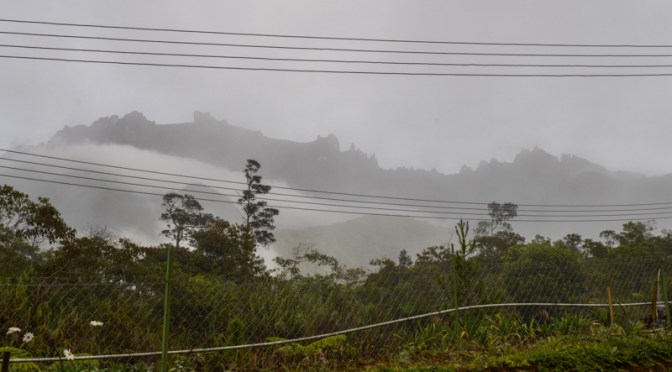
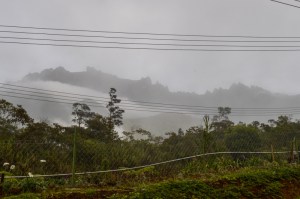
Thomas and his, rather cheery, son Albert waited for us. I immediately got a liking to them although we have just met. Through winding narrow roads, roadside shops and farms, we arrived at their home in Mersilau. Home, is under the gaze of a hazy silhouette of the unique formation of Mt Kinabalu. On the opposite side, a forested valley. I could live here, I thought. After settling in with a hot drink, Albert took us to the Park HQ, the gateway into the mountain, to sign in for the following day’s planned climb. It rained. Local buses and transportations arrived and departed from here. Accommodations and restaurants are all found here as well.  All the bookings were checked by Sutera staff, required fees paid and a guide organised by the Park’s staff. It was around 5.30pm. Darkness came early in the mountains. After a hot meal, we went to sleep quite early in anticipation of the ardours climb the following day. I wanted to be well prepared this time around. However, having a month holidaying in China before arriving here is not quite what I had in mind. I was apprehensive.


Climbing Mt Kinabalu 1

This was 1994. I remember this journey vividly. My company sent me to Sabah for some work. The site was Mamut Copper Mines, one or if not the largest open cast copper mine. My task was to study ways to reintroduce vegetation as well as find new opportunities in agribusiness for the company. This was my first visit to Sabah.

The site was a massive scar on a mountain. Terrain was steep and in places, near vertical. However, the climate was temperate and flower and foliage production may be viable. The discussions ended early on Friday. I decided to climb Mt Kinabalu.

I arrived at the park HQ around noon. I applied to climb the mountain and book accommodation for the night. The rangers looked surprised. Normally, trekkers would start early in the morning. It was mandatory to take a guide. Eventually my guide, Lumborg, turned up. Booking and permits sorted, about RM50, I went off on the trek. The start was from Timpohan Gate. I was naive and my only motivation to climb was to take the opportunity of being here in Sabah. This activity was unplanned. I am always motivated to go and see places.

My guide, Lomborg, a local Kadazan, sized me up – are you fit? I am an active sports person and with a rather free willed spirit. My enthusiasm overflowed. He seemed satisfied with those words. The climb through magnificent tropical rain forest mountain, the oldest in the world, was exhilarating. However, it was taking a toll on my body too. My guide stopped to give me an opportunity for a rest and drink. I had no drink.  I drank from the stream as he did. Part way, my legs were arrested with severe cramps. Four points – both calves and thighs. The pain was unbearable. Tears came easily. We had passed the halfway point. I literally dragged my pants putting one foot forward and followed with the other. The climb was uphill of course! My guide must be having second thoughts to continue. Incredibly, he was patient and encouraging.  Eventually, I made it to Laban Rata, the stop for the night. It was around 6pm. Everyone were in jumpers. I was only in my T-shirt. I felt strange. The solid granite rock terrain with an alpine vegetation was amazing. Stunted Rhododendron with twisted trunks and branches surrounded the accommodation. Heavy mist descended. After dinner I collapsed into bed with the knowledge that I will be woken up at 2.30am to make an attempt for the summit to catch sunrise.

When my guide came the morning, he must have doubted my ability to continue. In contrast, I was up and fully charged for the climb. He was happy but surprised. He asked me to put on my gloves. I had none. I removed one pair of socks and slipped onto my hands. Any torchlight or headlamp? I just said, let’s follow the people in front with lights!   All I had was a day pack with a camera and a light waterproof jacket. On my feet, sturdy shoes with, now, one pair of socks. I was ill-prepared for the climb. The fact is, I was here and therefore just wanted to climb. My guide was stone-faced as if numbed.  I reached the summit just as the sun came over the horizon. Dark shadows, majestic rock formations, heavy mist and the filtered sunlight on glistening black granite surface, created a heavenly sight.  A place for the gods I thought.

untitleduntitled-3untitled-6 untitled-7 untitled-9 untitled-11 untitled-12

The mist lifted. At Low’s Peak, surrounded with deep ravines and gullies, with the warm sun on my face, I sat and savoured the incidental journey. The views of the lowlands were clear and magnificent. From the summit, Low’s Gully seemed like no one would return! We were lucky indeed today as this mountain seem perpetually draped in mist.  We returned to Laban Rata. After a quick breakfast, after a long descend through the tropical rain forest, we headed to Timpohan Gate. I absolutely loved being surrounded by trees and the natural environment. A telecommunication station and a cascading waterfall came into view. By now, I was walking only on excitement and adrenaline. The body held, only just. A  memoir – a certificate of accomplishment is given – “…….had climbed to Low’s Peak, the summit of Mt Kinabalu (4101m) highest in South East Asia on 22 October 1994”.
untitled-14 untitled-15

I returned to the copper mine. That evening and for several days later, my legs were completely stiff, heavy and riddled with pain. This was the low point of the climb up Mt Kinabalu. In bed at home, with strong painkillers doing its job, I felt a sense of achievement and satisfaction. To climb the highest mountain in South East Asia and to have witnessed local people and wild scenery, simply amazing.